
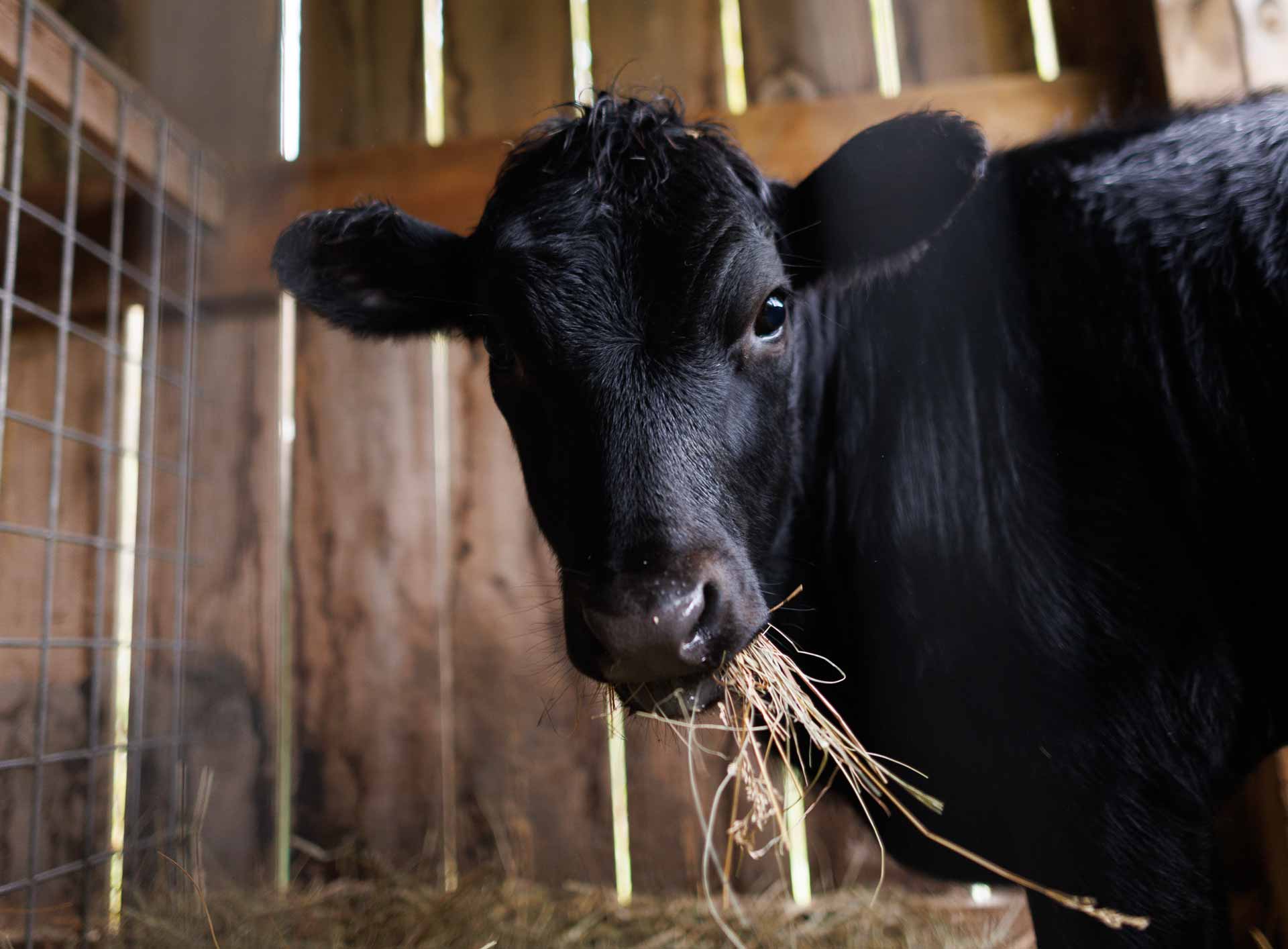
From where our house is perched, halfway up the south slope of Wallace Hill, you can see most of Jeddo’s Run holler, from the woods below Barnes’ field almost all the way to Yankee Run. If we raise our eyes from the kitchen sink, we’re looking over the woodshed roof and beyond, to the fringe of woods that laps down over the brow of Rex Hill, where, last summer, we lost two heifers.
We’ve kept cattle in that pasture for years without any escapees, but this time was special. Something spooked them, and in less time than it takes to tell, they were over two gates and a fence and into the woods. It was June, and the witch hazel, sassafras, and spicebush were so dense that in ten steps, the heifers just disappeared. Fear gave them more than their usual speed, and by the time we knew what had happened, they were just gone.
A Little Local History
Tim, our mechanic down in the village, once told us a story about a cow that got loose in the spring of 1972. It was Easter and there was a parade with floats and wagons and three teams of farm horses, and someone got the idea that there should be a cow marching with the 4-H and FFA kids. Actually, three cows were volunteered, and they looked wonderful sashaying along behind the Buckeye Broncos float right up until they reached the Dairy Isle, and then someone threw lighted black cats into the street and those cows lit out for distant parts.
Two of them were caught after just a couple of blocks—dairy cows aren’t made for speed—but somehow the third one got away. She just disappeared, down an alley, maybe, and no amount of searching could turn her up. She must have made it to the woods along the river, though, because a week later two men fishing at the head of Brown’s Island caught sight of her, swimming across the river to West Virginia. After they’d caught their limit they went down to the White Front Cafe and told what they’d saw, and of course nobody believed them because nobody had ever heard of a cow swimming almost a quarter of a mile. But five months later she turned up in New Cumberland, strolling down the sidelines during a highschool football game. They penned her behind the concession stand, and the next day the owner came and fetched her home.
Lost Sheep
With that story in mind, we didn’t lose heart when our two Jersey girls flew the coop. After we’d combed the woods without success, we went from door to door all over the length and breadth of Rex Hill. It’s mostly just trees on a slope, but there are three twisty lanes and about twenty-five houses; we knocked on doors, talked to people, and left notes where there was no one home. Folks thought it was kind of funny to hear of cows so close to the village, but they took down our number and promised to call if they saw anything.
It was an interesting thing that here we had lived for more than a quarter of a century less than half a mile from most of these folks and had never met them. But there’s no straight road up our hill; the county road that used to cut through the home pasture was relocated so long ago that the grass grows thick in the old roadway and our cows make milk out of it. The woods are so steep that few folks ever venture in, and Yankee Road, which used to be the lane folks on the hill took down to the grocery store, has beech trees over two feet in diameter growing right in the middle. People who want to get down to the village use the blacktop county road and drive fast.
We met Uvalde, whose house just above our farm first belonged to his great-aunt back when black folks weren’t welcome to live in the village. He promised to pray for the heifers’ speedy return, and so did Carl, who lives in a trailer up by the radio towers and took out his phone to show us before-and-after pictures of his spinal surgery. Reverend Bob was patching concrete in his driveway and had to find his hearing aids before we could tell him what we were looking for, but he turned out to be the biggest help, calling us when the heifers were spotted and acting as traffic cop while the neighbors watched us round them up.
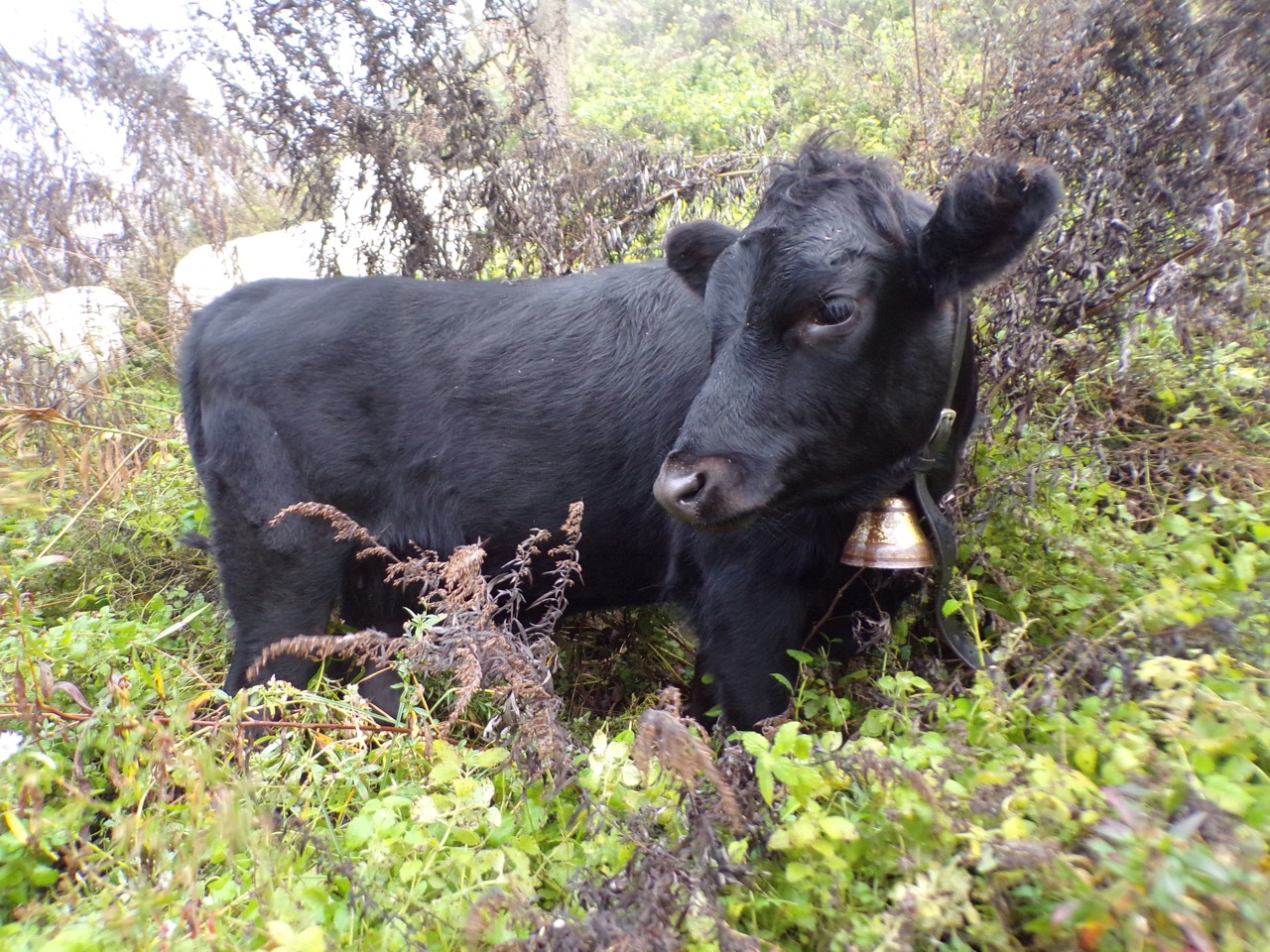
It wasn’t all that easy. The heifers were jittery; we couldn’t get close, and there was not one fenced yard to hold them while we thought about it. Then the boys had the idea of bringing up one of the mama cows from the farm. They ran home, loaded Delphinium into the trailer, and brought her up. That did it! The moment those heifers caught sight of Delphi, they just about laid down and cried; they were so glad to see her. They loaded right up, and in the end we got them home. Now they wear collars with bells, so if ever they get into the woods again, we’ll have some chance of finding them.
The Road Home
Looking out now through the kitchen window, it’s hard to believe those woods were ever too dense to penetrate. A few months can make a lot of difference. Today black tree trunks make stripes against a background of snow, and a red fox who dens under the big fallen oak shows up like a dropped mitten. Deer stepping delicately down the steep hillside in search of windfall apples are easily counted, seven white-tailed does and four fawns. Crows in a sycamore look like a line of straggling quarter notes, marking a silent tune against the pearly evening sky.
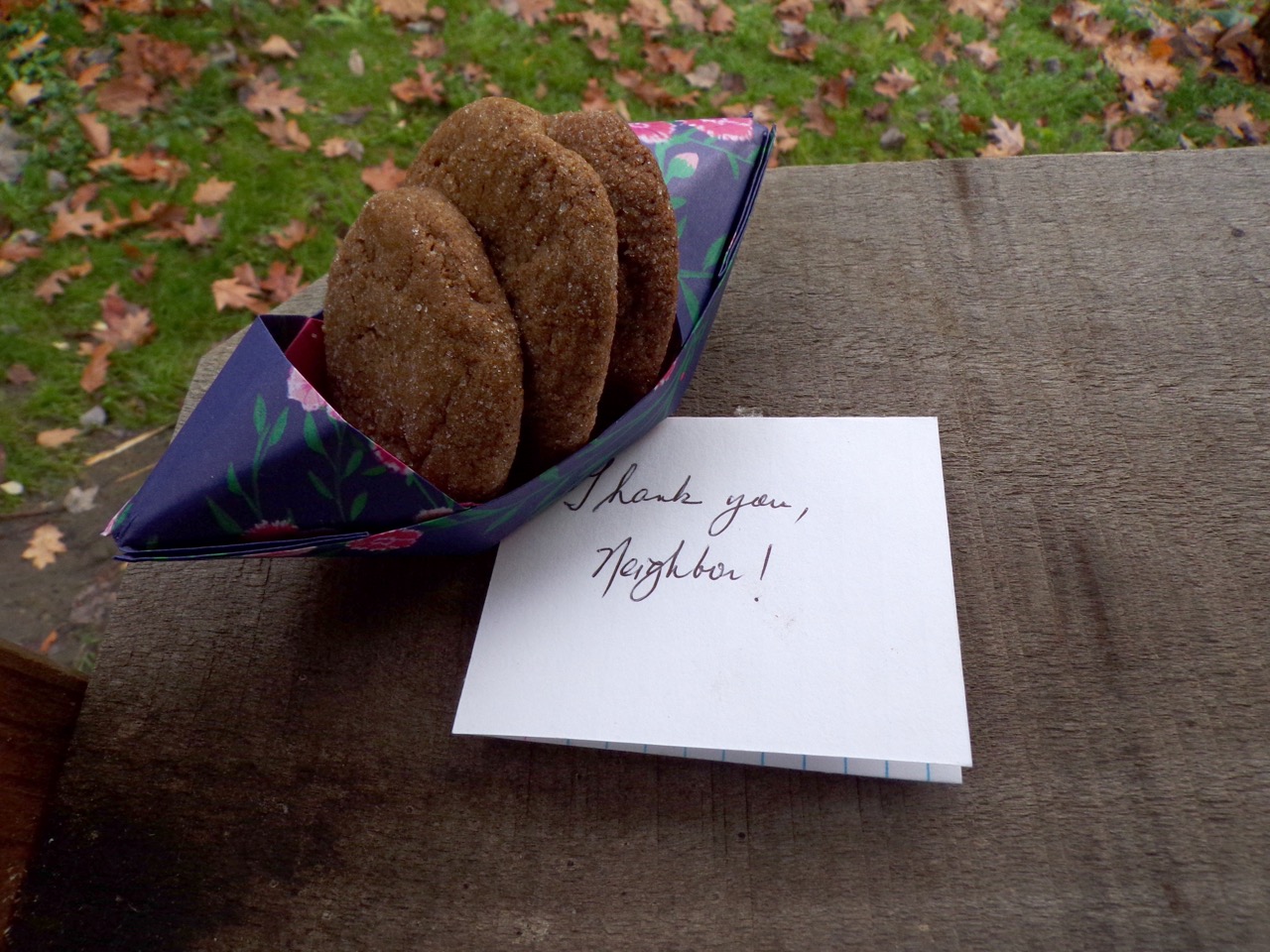
After the heifers came home, we baked cookies for our neighbors up on Rex Hill, taking them around one Saturday when folks would be home. Children asked how the cows were doing; their escape and recapture had figured as an event in the summer. We got some joshing from older folks who still thought it was funny that we keep cows, especially dairy cows, on a little farm in the woods, but it was all good-natured. In that short time, we had become known to one another.
When darkness falls, we’ll see Uvalde’s porch light through the trees on the ridge, and to the west, sometimes there’s a light in the Wilsons’ back window. It’s nice that now we have names to go with them. When the Kreugers’ husky got loose and came down through the woods to visit our chickens, we knew whom to call.
Today, in January, the woods are wide open. Next June, when the spicebush and sassafras are leafed out and we can’t see ten feet, we’ll still know the way up the hill. Then if anything wanders off the farm, we’ll get it back—especially now that the heifers are wearing bells. //
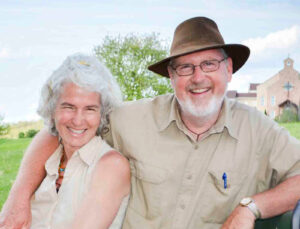
Shawn and Beth Dougherty live in eastern Ohio, where their home farm is 17 acres designated by the state as ‘not suitable for agriculture’. Using grass as the primary source of energy, they raise dairy and beef cows, sheep, farm-fed hogs, and a variety of poultry, producing most of their food, and feed, on the farm. Concerned that farming is too often dependent upon multiple off-farm resources, from feed, fuel, and fertilizer to water and electricity, their ongoing project is to discover and test the time-honored means by which farming may be done with a minimum of off-farm inputs. Their research has led them to identify the daily conversion of grass into milk by dairy ruminants as a key to whole-farm sustainability. They are the authors of The Independent Farmstead, Chelsea Green Press 2016.



Leave a Reply