
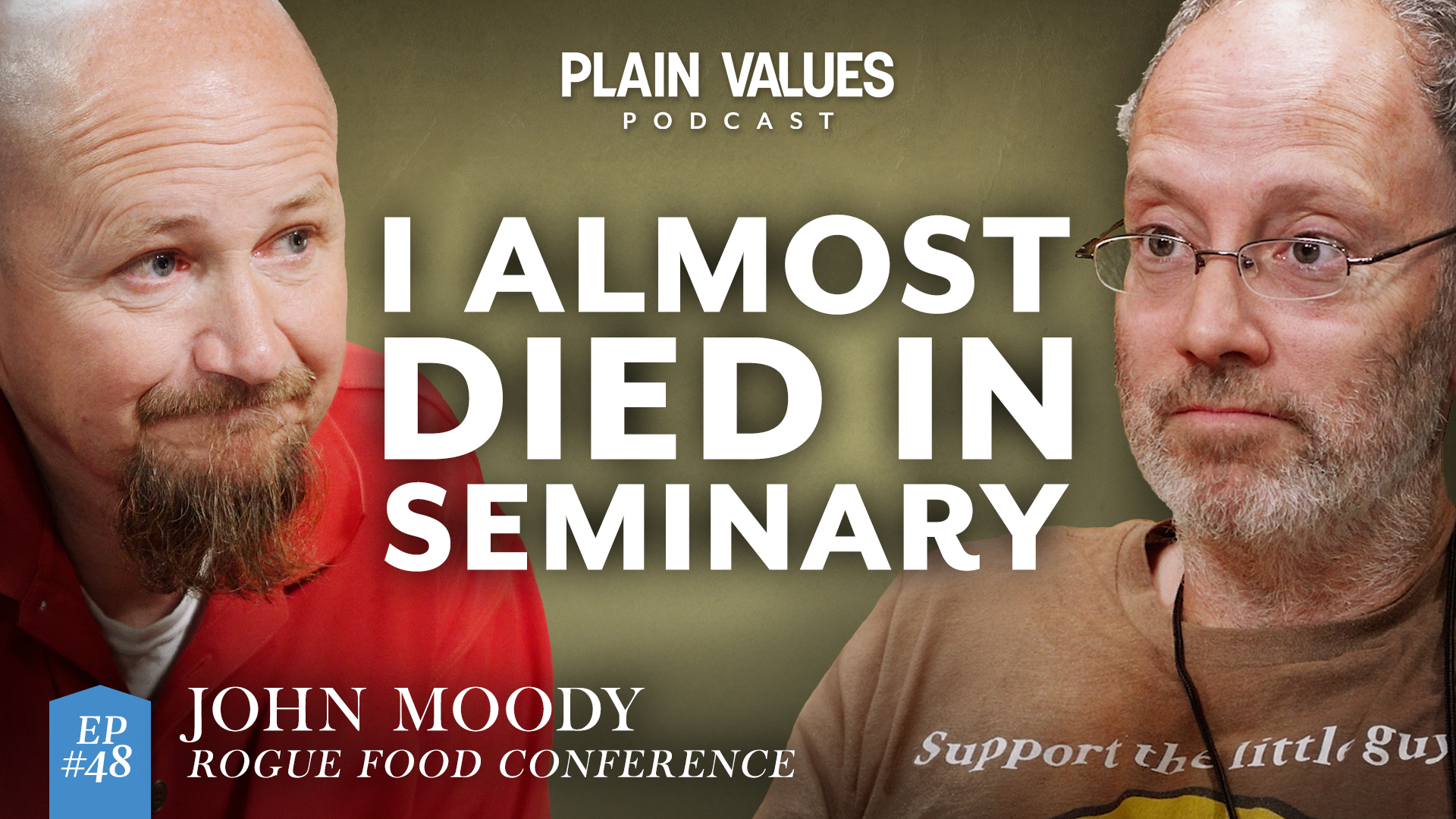
In this deeply personal episode of the Plain Values Podcast, John Moody joins Marlin to share his remarkable story of redemption, resilience, and resistance.
John grew up in Youngstown, Ohio during the devastating collapse of the Rust Belt. His family was shattered by divorce, alcoholism, and hardship. As a latchkey kid, life was chaotic. When his mother was diagnosed with cancer during his junior year of high school, everything changed.
A dedicated guidance counselor, Mrs. Leone, saw potential in John and fought tirelessly to get him accepted into the University Scholars program at Youngstown State University… even when the program initially rejected him due to his family situation. Her quiet advocacy changed the course of his life.
While in seminary, John faced a life-threatening health crisis with severe duodenal ulcers. Doctors proposed strong medication and potentially removing parts of his digestive system. Instead, John began questioning the conventional approach and turned to real, clean food. Within a year, he fully healed, an experience that opened his eyes to the power of how food is grown and prepared.
In 2006, John and his wife Jessica started a local food buying club to help families access nutrient-dense, farm-fresh food. What began as a simple effort grew into a thriving community resource. In 2011, their club became the first in the country to be raided by the state health department over raw milk. They received cease and desist and quarantine orders. Rather than backing down, John rallied over 130 families. Together, they stood firm on their rights and ultimately prevailed, a powerful testimony of community courage and peaceful resistance.
John and Jessica have been married for 21 years and have six children. John emphasizes that the real difference in his life isn’t his own strength, but “Christ in me.” He speaks passionately about stewardship, food freedom, and the need for Christians to thoughtfully engage when government overreach threatens the ability of families to care for one another.
This episode is full of hard-won wisdom, redemption, and a clear call to live faithfully and courageously in uncertain times. John’s story reminds us that one person (supported by community and anchored in Christ) can make a real difference.
Whether you care about real food, parental rights, or standing firm in faith, you won’t want to miss this conversation.
Learn more about Plain Values at https://plainvalues.com
Transcripts
0:00 – Introduction
01:12 – Growing Up in Youngstown
04:38 – The Guidance Counselor Who Changed John’s Life
17:05 – Meeting Jessica
19:50 – A Health Crisis
28:28 – Starting the Food Buying Club
34:26 – Raided by the Kentucky Health Department
41:39 – Standing Up to the Government
51:17 – How to Pray for John’s Family
John Moody:
Well, the short story is while in seminary, I almost died. And my doctor’s like, “Hey.” He’s like, “We’ll put you on this drug. And if the drug doesn’t work, we’ll start cutting out parts of your body.” I’m like, “Is there an option C? An option D?” We started the food buying club in 2006. And so we got raided and we were the first group in the country to be rated, serve cease and desist orders and quarantine orders and walk away complete winners. The difference between me, my siblings, my family, my neighbors in Youngstown isn’t me. It is Christ in me.
Marlin Miller:
Well, John, thank you very much for being here. You have been here as I just learned and embarrassed myself for the last three years at Seed to Spoon. And this is obviously the first time that you’re in studio here. We talked a bit on the way here about your growing up. You were born in Northeast Ohio.
John Moody:
Yeah, from Youngstown.
Marlin Miller:
Tell me about your childhood and about your family.
John Moody:
Yeah. So very non… Well, sadly, it’s a typical story for Northeast Ohio. Northeast Ohio is rust belt, Youngstown especially. Youngstown was one of the best cities in America to live in, in the ’60s and the ’70s. If you go look at just all sorts of stuff until the mills closed and the city just collapsed. And when the city collapsed, the people, as a lot of you know who live up this way, that people collapsed with the city. And so alcoholism, divorce, drug abuse, so much ran roughshod through Youngstown and ran through my family, especially certain parts of my family. So divorce was rampant, alcoholism was rampant. All of those problems that cascad down from bad economic times.
Marlin Miller:
Yeah. I’ve spent a tiny bit of time in Youngstown when I was 20 or 21. I was knocking on doors for an ADT security dealer and we would go visit the hoods in Akron and Cleveland and Canton and Youngstown was probably just a handful of times. But there were many, many streets I remember where every other house was boarded up. Now that was only 20 years ago and you’re talking much more than that. How is your family today?
John Moody:
Yeah. Well, my family today, my mom passed away my freshman year of college. So I grew up broken home. My mom and dad divorced or separated numerous times. So really typical latchkey child of the ’80s and that term, a latchkey kid. That was really me and my siblings to some extent where you basically raise yourself. And my sister’s divorced, remarried now. My brother’s been divorced maybe twice already. And as somebody who the Lord saved me in college. So we grew up nominally Catholic. Don’t want to dig on Catholics, just this is just the story. And it was in college I finally heard the gospel and that is what saved… The difference between me, my siblings, my family, my neighbors in Youngstown isn’t me. It is Christ in me. When Paul says Christ in you, the hope of glory. Anytime I think about why am I not an alcoholic like my dad or this way or that way?
I’m like, it’s not because I’m better than anybody else. It’s because God has been good to me.
Marlin Miller:
If but for the grace.
John Moody:
Yeah.
Marlin Miller:
Yeah. There go I.
John Moody:
Yeah. Is that Isaac Newton or?
Marlin Miller:
That sounds right. I think so. So you and Jessica have been married for how long?
John Moody:
We have been married 21 years.
Marlin Miller:
21 years. And six kids.
John Moody:
Yeah, we have six kids.
Marlin Miller:
How did you guys meet?
John Moody:
So I grew up in Youngstown. This was the story I was going to tell you. So my junior year of high school, my mom was diagnosed with cancer. And my childhood had always been rough. And whenever my mom and dad divorced, I always stayed with my mom. So it’s my junior year of high school and I’d spent, probably it was around eighth or ninth grade, my mom looked at me one day and my mom goes, “You know our family doesn’t have any money.” She goes, “So you… ” And she goes, “I know you’re a bright kid.” Even though I was doing very poorly in school.
Marlin Miller:
Okay. Are you the firstborn?
John Moody:
Third.
Marlin Miller:
Third born. Okay. Okay.
John Moody:
So I’m three of three. And my mom just says, “You’ve got to get out of this place.”
Marlin Miller:
Really?
John Moody:
And she goes, “You’re smart enough to do it if you apply yourself.” So I went from being a CB kind of student to a straight A student.
Marlin Miller:
Overnight.
John Moody:
Yeah, pretty much. Yeah. Just very short time because it was just a matter of me just not caring.
And so my whole goal came to be escape young sound. So by my junior year, I was top student in almost every subject. I was the best person on the science team and the best person on the mathematics team and this, that and the other. And then one day I’m told my mom has cancer. And your junior year is when you start getting ready, that’s when you start getting ready to go to college and stuff. And my mom gets diagnosed with cancer. My dad leaves my mom again. We end up moving into my sister’s basement. Life was just levels of insanity that are even hard for me to look back on and fathom. And I didn’t say this to anyone, but I was just like, “I’m not leaving my mom.” And so all of the colleges that had scholarship opportunities for me, we have no money for college, especially now my mom is fighting cancer.
And so just internally, I’m just like, “Well, this is the end.
I’m just staying with my mom and we’ll kind of see what happens life-wise.” So my sophomore year of college, one of my roommates walks up to me and he goes, “I want you to read this. ” And it’s our local newspaper. And it’s an article about Mrs. Leone who was my guidance counselor in high school. And she had just recently died. And the article is talking about students she helped. So I’m reading this newspaper article and it goes, “When a high school student was denied a prestigious scholarship because his mom had cancer, Mrs. Leone went to bat for him and he’s now a published author.” So this is like middle of the day on a college day. I skip all the rest of my classes. I drive straight back to my high school, walk into the office building, see Mr. Papa, the other guidance counselor who’s still there, throw the newspaper down on the desk.
And I’m just like, I want to know what happened because I don’t.
Marlin Miller:
This episode is brought to you by our friends at Azure Standard. Lisa and I just recently signed up finally and we are loving it. Non – GMO, organic. It is all that you can ask for. Go to azurestandard.com and tell them plain values sent you. You can use the code HL15 for a healthy little discount. Thanks guys.
John Moody:
And so Mrs. Leon had noticed that I had dropped out of pursuing college my junior into senior year. And as Mr. Papa told me, he said, “She realized she couldn’t fix your family. She realized you’re a 16 year old boy with a mom who’s dying. She can’t change those things. But she just thought if I can get him into college, that will hopefully save his future. Let him get on the other side of this. ”
Marlin Miller:
Are you saying she, Mrs. Leone, is how you got into Youngstown State?
John Moody:
Well, so what happened is she… So one day she calls me down to her office. This back in my junior year of high school. And she goes, “Hey John, how are college applications going? ” And me being an unsaved 17 year old boy with a sick mom like, oh, it’s great. Totally lying
Marlin Miller:
To her. Yep. Didn’t tell her the truth.
John Moody:
Yeah. Just totally lied through my teeth.
And she’s like, “Oh, that’s wonderful. Doesn’t confront me about it. Probably totally knows what’s going on. ” She goes, “I know you’ve applied to this school and that school and some of them have given you scholarship offers.” She goes, “But I want you to apply to one more school.” She goes, “I want you to apply to Youngstown State.” She goes, “I know you wanted to go away to college, but they have a program where if you’re accepted, it pays all of your tuition. It pays all of your room and board and it even gives you a stipend for books and other things.” Because again, we’re just dog poor as a family at this point. Years of divorce and then illness. Hands me the application. I leave, throw it in the bottom of my locker. Because again, I’ve totally checked out, practically speaking.
Marlin Miller:
Hold on. Hold on. So you told her that you were applying, that everything was sort of gave it to me and I did. Wonderful.
John Moody:
It
Marlin Miller:
Was all good.
John Moody:
Yeah.
Marlin Miller:
And you hadn’t even done any of the applications?
John Moody:
Well, she gave it to me to do. So a few weeks later, she calls me back to her office and she goes, “Hey, how’s the application going? ” I go, “Oh, it’s going great.” She’s like, “Well, we’ll go get it. Let’s look at this together.” She called your bluff. But without, it was such a beautiful way to handle a person in a hard spot where again, she just understood. She’s not my mom. She’s not my dad. And had she pressed on me, I probably would’ve ran.
Marlin Miller:
Yeah. Had you filled out any other applications to the other schools?
John Moody:
Well, I had, but none of them were going to cover enough for me to go. I would have gotten some scholarships.
Marlin Miller:
Got it. Not to mention the fact that you’d have to leave your mom.
John Moody:
And I wasn’t going to do
Marlin Miller:
That. And that wasn’t going to happen.
John Moody:
And so over my junior year, over the summer, she keeps calling me back to her office. “Did you get Mr. Basco’s recommendation letter done, John? Did you turn in this? “She basically just held my hand through the process. And because I was homeless my senior year, instead of Youngstown State sending me homeless, meaning my mom and me were living in my sister’s basement. So we weren’t without a home, but we were living literally in my sister’s house. They turned my sister’s dining room basically into a hospice room for my mom and I was living in the basement. And so since I didn’t have a formal address, the reply to my application to be a university scholar went to my high school and went to Mrs. Leone. And when it came in, it said I was rejected. Which again, I didn’t find out any of this till my sophomore year of college, like three years later.
Marlin Miller:
And she died in the process.
John Moody:
Yeah. And so Mrs. Leone gets this rejection letter and she immediately calls the head of the university scholars program at Youngstown State University. So Mr. Papa’s filling me in on three years of my story that I don’t know. I just know none of this. None of this at all exists to me until this moment in time. And the head of the program just goes, “Yeah, John looks great on paper. He’s a bright kid. Obviously he has a lot of skills and talents, but he has a mom who’s going to die of cancer probably very soon. And we do not want to waste money on him. Let’s just be honest, Mrs. Leone. What happens two years into this program and his mom dies and we’ve spent $30,000 a year or whatever the price tag is to be a university scholar on John. And he drops out of the program because he has a dead mother and no father.
And Mr. Papa goes, “She just exploded at this man.” He’s like, “I’ve never seen Mrs. Leone ever.” And she is standing at her office screaming into the phone like, “I will make sure everyone in all of Ohio knows what you have done to this young man.” She goes, “I will personally guarantee that he will finish the program.” Oh
Marlin Miller:
My.
John Moody:
So wow. I though I was accepted. At some point, a few weeks later, I go into Mrs. Mrs. Leon calls me to her office, doesn’t say a word about any of this. Just totally insulates me from all of this side. She’s like, “You’ve been accepted into the Youngstown University Scholars Program. You move in on August 14th. It’s six minutes from your sister’s house. Five minutes from your grandma’s house. They’re going to feed you. They’re going to give you a place to live. They’re going to even pay for your books. You just have to get good grades, John. Just show up. Just do the work done. Just
Marlin Miller:
Do
John Moody:
It. ” And so I start college. Three weeks later, my mom dies. Somehow get through my freshman year of college. And it was during that freshman year. And then my sophomore year when a couple of my roommates were good, solid Christian guys and start to evangelize me and share the gospel with me. And so that’s how I got saved. And then eventually my sophomore year, I finally find out, Lord, what mercy.
Marlin Miller:
Yeah. Was Mrs. Leon a believer? Yes.
John Moody:
She
Marlin Miller:
Was. Yeah.
John Moody:
And
Marlin Miller:
She saw something in you. You were just a punk kid trying to survive. Yeah.
John Moody:
Just trying
Marlin Miller:
To make it. Yeah. I
John Moody:
Mean, she just had compassion. I mean, why do you become a guidance counselor in a public high school? Because you’re trying to help young men and women make something of their life. Wow.
Marlin Miller:
And
John Moody:
She was just really well known for being skillful and helping, because again, Youngstown, lots of kids, lots of tough family situations.
Marlin Miller:
Wow. Did you get a chance to talk to her before she passed? No, because
John Moody:
I didn’t find out any of this. I was very, very good as a math student. So my math professor my freshman year had me co-author two mathematics books right out of my freshman year of college. And I dedicated that to Mrs. Leon just thinking she’s the one who got me into college and stuff. She gave me all of this help, not realizing just how much help she had actually given me.
Marlin Miller:
Wow. That’s incredible. Do you know any other stories that she went to bat for other kids like you?
John Moody:
There’s a few others I’ve heard of. I don’t know the details well enough. It’s just a reminder what one person can really do if they use their energy to try and help others.
Marlin Miller:
So let’s fast forward a little bit. You met Jessica in college? No.
John Moody:
So I go to college, the Lord saves me. And my local association of churches say, “Hey, we think you should go on for ministry training.” So I started Youngstown State in 1996, graduated in 2000. And that’s what moved me to Kentucky is I started seminary at Southern Baptist Theological Seminary set by my local association of churches up in Northeast Ohio.
So I all of a sudden am starting life completely over again. Moved to Kentucky, moved to Louisville. There was a couple kids from the church I went to who were at Boyce College. Nobody was at the seminary though. And I find myself in Kentucky. And I’m going to school full-time, trying to make new friends, trying to make sense. My family thinks I’ve just totally lost my mind at this point because they just knew me as part of their family and now John’s going to become a minister maybe. And so while I was in seminary, I started a tutoring business and I was also assisting working at a local church, which is how I met Jessica’s younger sister because Jessica was at college. And so I’m in seminary, Jessica’s at college. And I’m tutoring her younger sister who’s in high school because I would do calculus.
I’d tutor high level math classes because again, I was really good at math and lots of people are really bad at math. So it was very lucrative to tutor people in math. And that’s how I ended up meeting Jessica through her sister and her parents and things.
Marlin Miller:
Was Jessica at Boyce?
John Moody:
No, Jessica was up at, oh goodness, Butler University up in Indiana.
Marlin Miller:
Okay.
John Moody:
So a couple hours north, but she’d be home on holidays and summer and other stuff.
Marlin Miller:
That’s cool. So you went to Kentucky for seminary and you never left.
John Moody:
Well, because I found a wife and then we started adding kids and gravity.
Marlin Miller:
And you dug the roots and you have planted yourself in Kentucky.
John Moody:
For a time. We’re actually at a point right now where we are considering moving. And so that’s a discussion for a different day.
Marlin Miller:
Okay. All right. Well, that’s exciting. Let’s talk a little bit about the whole CSA thing. I know a little bit about a little bit of some of the fights that you have been part of with your –
John Moody:
Food buying club.
Marlin Miller:
Yeah. Sorry. I know I call it a CSA in my head. That’s what it is. Can you give us a 30,000 foot snapshot of all of that? Well,
John Moody:
The short story is while in seminary, I almost died.
Marlin Miller:
We’ve been publishing Plain Values for almost 13 years now. And about a year ago, the team and I decided to put together a compendium, a best of, if you will, of our favorite stories, the most impactful stories of all those years. And Invited is what we built out of those conversations. It is 194 and four pages and it is absolutely a thing of beauty. We do a monthly gathering here where we just simply open our doors. It’s called PorchTime. And the story of how PorchTime came to be and how our family was invited into that and how we are inviting you and every Tom, Dick, and Harry, anybody who wants to come can come and hang out at PorchTime here at the office in Weinsburg. So it was such a natural fit to use the home of the founder of PorchTime and to call it Invited.
You can find it on plainvalues.com on the shop page and you can now consider yourself invited.
John Moody:
So my third year or beginning of my fourth year of seminary, I got down to about a hundred pounds. I just couldn’t eat anything. I was just having relentless debilitating pain through my digestive system. So you go to a doctor because that’s what you do when you’re not feeling well. And the doctor sends me for an upper GI and my upper GI comes back that I have duodenal ulcers. Duodenum is the thing that attaches your stomach to your intestines. It might have holes in it because that’s what an ulcer is.
Marlin Miller:
It’s the acid.
John Moody:
Well, it’s when the stomach lining becomes unhealthy and it allows the digestive fluids of your body to begin to eat through the tissues. It’s similar to rust.
Marlin Miller:
Okay.
John Moody:
And so basically you’re slowly rusting a hole through these walls of your tissues. And as the tissue lining slaws off, it exposes nerves and that’s what hurts because the pain is to make you go, something’s very wrong here. Something’s
Marlin Miller:
Wrong. And you’re what, 25?
John Moody:
Yeah, not even.
Marlin Miller:
Not even.
John Moody:
Yeah. 25, 24. And so I’m down to 100 pounds. Just feel, look like death. And my doctor’s like, “Hey,” he’s like, “We’ll put you on this drug. And if the drug doesn’t work, we’ll start cutting out parts of your body.” I’m like, “Is there an option C? An option D?” We talk about this a little bit. And one of the most influential authors I read during seminary was Francis Schaeffer.
He’s one of the most ecologically oriented Christians of probably the past 60, 70 years. And I’m in seminary and intelligent design was all the rage in the early 2000s. We’re finally going to displace evolution as the primary theory of origin by backdooring in intelligent design because look at all this data we have now on intelligent design. And so this is like what’s running in my mind philosophically as a Christian. And I look at my doctor and I go, “What does this drug do? ” And he pauses and he cocks his head and he walks over to the drug insert.
Marlin Miller:
He didn’t
John Moody:
Know. And he looks, he goes, “It reduces or shuts off your body’s ability to produce hydrochloric
Marlin Miller:
Acid.” That doesn’t sound like a great thing. You kind of need it.
John Moody:
Well, and this is what I say to him. And I go, “If my body…” So this is how I think Christians should think about animals, about nature, about ecological systems, about economics, about their bodies. I say to him, “This is just intelligent design actually applied to real life. If you actually believe God is an intelligent designer. If my body was made to do this, what will be the consequences of making my body stop doing something it was made to do? ” And he sits down. So he sits down across from me and he goes, “I’ve been practicing medicine 15 years, however many years.” He goes, “Never once in all of my years of medicine has anyone asked me a question like this. ”
Marlin Miller:
He had no idea.
John Moody:
And he goes, “Never once have I thought about the human body this way.” So I’m like, “This guy is not going to be able to help me. I am on my own.” And Jessica and I at the time might have been engaged or were getting pretty close to engaged. And we reached out to one of my professors who was into health. And I was like, “Hey man, it seems you and your wife and family are into health and thinking about these things. And I don’t know anybody else who is. Can we talk with you? ” And so we give them a call and we’re sitting there on a speakerphone trying to take notes as him and his wife are talking at us. And within a year I had completely healed my duodenal ulcers. I used to have seasonal allergies so bad Benadryl sent me free stock options as a patronage dividend.
That’s
Marlin Miller:
A good way to say it.
John Moody:
I used to joke that my teeth were so bad, my dentist had to get an EPA permit as an offshore drilling rig.
Marlin Miller:
Okay, that’s pretty funny.
John Moody:
And over the course of a year or so, I cleaned up all of these chronic health issues solely by answering three or four simple questions. What actually is food? How should it actually be raised and where should it come from? And how should it be prepared?
Marlin Miller:
Okay. Let me just set the stage for what I think you’re going to say. Okay. Non – GMO, no glyphosate, of course. The whole term organic is a little interesting in my mind, but you’re talking about going back to real food, clean food. Yeah. Are you going as far as saying raw food?
John Moody:
Now my friend Max Kane, who’s here, he only eats raw animal products. And the thing I tell people, especially in our day, is you should go for the least restrictive diet posible that results in you being robustly healthy.
Marlin Miller:
Okay. And not going outside of your comfort zone so far that you go half nuts.
John Moody:
Yeah.
Marlin Miller:
Right. Common sense applies. Yeah. So how did the buying thing come together?
John Moody:
Well, so this is 2005, 2004. And we go from shopping at Walmart and Sam’s Club to shopping at Wild Oats and Whole Paycheck. And we –
Marlin Miller:
I just now got that.
John Moody:
And
Marlin Miller:
Okay. That’s your best one yet right there, brother.
John Moody:
And we start doing a raw milk pickup and the raw milk pickups on Thursday night in a dark alley in one corner of Louisville.
Marlin Miller:
Because Kentucky…
John Moody:
Well, again, this is 20 years ago.
Marlin Miller:
Okay.
John Moody:
And my CSA pickup is on Saturday morning. Or no, it was on Tuesday afternoon at a business called The Apocathery, which made all of my seminary friends think I was apostatizing. And then the farmer’s market that had properly raised pigs, well, that’s on Wednesday over at Douglas Loop. But the farmer’s market that had actual pastured chicken, that’s on Saturday.
Marlin Miller:
So you’re going all over all the time.
John Moody:
Brother, I reinvented hunting and foraging. All of my free time was spent trying to acquire food to keep me alive. I was like a hunter and forager from a thousand some years ago.
Marlin Miller:
In modern day Kentucky. Yeah.
John Moody:
Louisville. And we’re still going to regular grocery stores. And so at the time, I When I finished seminary, my professors actually wanted me to go get a PhD. Jessica married me under the assumption that we were moving to the University of Toronto for me to do a dual PhD in ancient near Eastern history in the classics.
Marlin Miller:
Ancient near
John Moody:
Eastern? Eastern. Yeah. Because I was the rare student in seminary where I was really good at Hebrew and I was really good at Greek and Latin. So I could read all three languages and I was very good at all three languages.
Marlin Miller:
It makes sense to just go in that direction, right?
John Moody:
Yeah. And then you do a dual PhD and you can teach. And I was a very good teacher, which is how I ended up being a teacher at conferences and stuff. Teaching is just a natural gift for me to be around people, help them understand things. So she married me under this assumption and I already had applications in and scholarships and stuff. And Jessica looks at me sort of in the midst of trying to get ready to move, but we’re also trying to find healthy food. And Jessica goes, “My cousin Anika in Iowa, she does this thing she calls like a buying club where her and some other families order stuff together from farmers and good companies. Because people today just can’t imagine what it was like 20 years ago.
Coconut oil, which you can now find in Walmart. I mean, you couldn’t find anywhere in most major cities. So many pastured eggs, other good quality clean food. This was nonexistent 20 years ago. And I look at her, I go, “Oh, that’s a great idea, but we’re moving to Canada for me to do a PhD and hopefully the food will be better there.” But obviously you can see I failed in moving to Canada and getting a PhD because you don’t needlessly have to call me Dr. John. And instead we started the food buying club in 2006. And the idea was just really simple to simplify people accessing good quality food directly from local farmers or directly from companies that were brokering that food. So back in that time, it was companies like Something Better Natural Foods, Frontier Natural Foods Co-op. So these, again, back then, very, very niche, crunchy granola people companies that everybody else though were crazy, nobody had really heard of.
And here I am, this ultra conservative male running a local food buying club in lieu. All of my conservative friends thought I had lost my mind. And all of the liberal people who were looking to support local farmers had thought they had lost their mind coming to me
Marlin Miller:
Because
John Moody:
There’s such a juxtaposition of worldviews.
Marlin Miller:
So when you started, it was in 06. In 06. I’m trying to give myself some context. I think we’re about the same age. You started at YSU in 96.
John Moody:
I was born in 78.
Marlin Miller:
Okay. In 78. I was born in 77.
John Moody:
Yeah.
Marlin Miller:
So I though we were right there. My goodness. When did Azure Standard start? Didn’t they start in –
John Moody:
Late 2010s, I though. It’s hard for me to say. They expanded. He might’ve started in the late 2000s, mid 2000s, but they didn’t expand outside of
Marlin Miller:
The
John Moody:
Pacific Northwest until 13 or 14 or 15
Marlin Miller:
Because
John Moody:
We were one of the first people to sign up for their drops when it came
Marlin Miller:
To
John Moody:
Kentucky.
Marlin Miller:
Okay. Okay. So are you still doing the buying club today?
John Moody:
I will be for two to four more weeks. And then after 20 years
Marlin Miller:
Really?
John Moody:
I will take on a consultory type role in the club.
Marlin Miller:
Okay. And how many families are part of it? Can I ask?
John Moody:
Currently it’s about 87. Based on our tracking data, I think this year so far we had 187 different families come through.
Marlin Miller:
What are a few of the most dramatic stories that you guys have seen come out of that work?
John Moody:
Well, it was us getting raided by the Kentucky State Health Department. There’s nothing else that even comes close.
Marlin Miller:
Okay. That’s not quite the direction that I was thinking of, but I do want to hear that story.
John Moody:
Yeah. So I started the club in 2006 and that’s also right around when NACE was happening, the National Animal Identification System.
Marlin Miller:
I remember that. Yeah.
John Moody:
Where they were trying to make you put a radio ID tag on every chicken. And I always used to joke, the USDA is not going to answer the question, why did the chicken cross the road? But they have a 1-800 number that you would have to report if the chicken crossed the road. No, this was true. In the NACE program, if one of your animals left its defined boundaries, you had 24 hours to call a 1-800 hotline and report it or you faced fines and possible imprisonment.
Marlin Miller:
Everybody would have been a felon in two seconds.
John Moody:
Unless you raised your animals the right way in giant confined
Marlin Miller:
Barns. Huge cages.
John Moody:
Yes.
Marlin Miller:
Yeah.
John Moody:
And I’m hearing about Rawsum in California being raided at gunpoint and Mana Storehouse here in Ohio being shaken down by the health department and Athens locally grown down in Georgia being forced to pour out raw milk. And trying to remember some of… Gary Oakes in Kentucky got swatted while he was making milk delivered.
Marlin Miller:
Was that when the Amish guy started tons? Feeding
John Moody:
It? Yeah. I mean, there’s just so many people. There’s an old movie called Pharma Geddon by Kristen Canty that tells a bunch of these stories. Cheesy name, really great movie. If you want to understand what the 2000s were like. If you were somebody doing raw milk in the 2000s, doing local food in the 2000s, you went to bed knowing that you were likely to face harassment or imprisonment by your own government for the high crime of feeding your neighbors.
Marlin Miller:
Wow.
John Moody:
So I started the club just with this assumption, knowing these things. And Memorial Day weekend of 2011, an inspector shows up at our buying club and serves us cease and desist and quarantine orders for the high crime of making raw milk available to people. And one of the big things at that time is nobody had yet beat the government. So we had a string of seven or eight years of farmers, local food operations who everybody lost when the government finally came after them.
Marlin Miller:
Okay. Define lost. Do you mean their farms were shut down and they had to sell off their BK?
John Moody:
Yeah. Some completely went out of farming.
Marlin Miller:
All of the above.
John Moody:
Some just cowtowed. House, I believe, shut down completely.
Marlin Miller:
Wow.
John Moody:
Because of the Ohio State Health Department. Athens locally grown agreed to drop any real local products that did not meet every stamp and letter and this, that and the other. So it was a mix. But what the government wanted, people need to understand the reason raw milk has been such a flashpoint issue for the government is how raw milk changes consumer behavior because milk is an item you go weekly to the store to get.
Marlin Miller:
Is it effectively the entry point into kind of like marijuana is the –
John Moody:
Yeah.
Marlin Miller:
All that.
John Moody:
It’s the domino. And if somebody starts drinking raw milk, they start buying pastured eggs. And if they start buying pastured eggs,
They might do a CSA box. And so I’ve only been credibly threatened with physical harm three or four times in my entire adult life. One of them was back in 2013, me and some friends were working on a food freedom bill in the state of Kentucky. And we were required to go to Frankfurt to meet with other stakeholders as they call them. And so me and Christie Arent and John Markack drive up to Frankfurt, Kentucky. We go to the Governor’s Office of Agricultural Policy, Frankfurt, Kentucky. And we go into this beautiful mahogany paneled room, the whole nine yards. And we’re sitting there and in come the stakeholders we’re meeting with, which was the Kentucky DFA, Dairy Farmers Association. I think that’s correct. Hopefully I have my terminology still right over a decade later. And they shut the door and we exchange pleasantries and they began to talk with us about our bill.
And they’re like, “You’re going to kill everybody in the state of Kentucky.” And my friend John Marqaquez, he’s like so and so. He’s like, “When you became president of the DFA, how many dairy farms were there in Kentucky?” And the guy’s like, “Well, there’s 8,000 dairy farms in the state of Kentucky.” And John Marquaq goes, “How many dairy farms are there today?
Marlin Miller:
Silence. He didn’t say anything. Just sat there.”
John Moody:
John Mark goes, “There’s 800. 800. You want to tell me the Kentucky Dairy Federation is for Kentucky dairy farmers when during your tenure, you’ve lost 90% of your farmers. 90% of your farmers have gone under.” And so the conversation begins to get a litle heated. And basically they threatened us with physical harm if we would not drop our bill. They’re just like, “You don’t know what kind of trouble you’re going to cause. Bad things are going to happen to people like you. ” And dairy especially is a bellwether food when it comes to changing America’s eating dietary. Because if people drink raw milk and they don’t see millions of them… And it’s like with Rona, it’s an issue that rearranges people’s brains.
Marlin Miller:
Yeah. Yeah. I can see that really easy.
John Moody:
Yeah. And so we got raided and we were the first group in the country to be raided, serve cease and desist orders and quarantine orders and walk away complete winners.
Marlin Miller:
How did you get out of that? I mean, I know for the sake of time, I mean, we can’t go into it all, I’m sure, but how did that come together like that?
John Moody:
Well, I realized, so I’ve known for years I’m probably going to get raided. So I realized looking at what was happening, what makes the government strong and powerful is they go after one person and they utterly stomp that person into the mud. They isolate that person. They make an example of that person. And then everybody else falls into line because they don’t want to be that person. So I was like, I don’t want to be that person. I’m willing to be that person, but what if I can be that people? So we get raided, we get served cease and desist and quarantine orders. Talked with a good friend of mine who’s a pastor and stuff that afternoon trying to decide what, because now it’s happening. And at the time, this is 2011, I had a five year old, a three and a half year old and a newborn.
Marlin Miller:
You’re in it.
John Moody:
That’s when you’re like… And one thing I’ve always said is like, I’m an imperfect person. I’m going to fail my family and children in a lot of ways, but I’m never going to be a hypocrite. Growing up in conservative Christian circles, I’ve listened to Christians complain for decades and sit on their behinds and do nothing about the things they complained about. And I’m just like, I’m going to fail in a lot of ways, but Lord, kick me in the rear end if I’m the kind of person who’s like, the government overreaches out of control and now I have a chance to do something about government overreach and I’m a coward. So I took portions of the Kentucky Constitution and a few other things and I made a signup sheet by the cease and desist and quarantine order where they pulled it on their milk coolers.
And it basically said, I, the undersigned, in accordance with my God-given and Kentucky constitutional rights, am taking my milk from my cows. And if anyone at the Kentucky Health Department has a problem with this, they can contact me at the name and phone number below. Because see, now it wasn’t me, John Solo
Standing up to the government. It was me and 130 other families.
Marlin Miller:
How many of the families in your buying club signed up or
John Moody:
Signed on
Marlin Miller:
That?
John Moody:
I think we had over 90% conversion.
Marlin Miller:
Wow.
John Moody:
Because the buying club is a family. We have families in our buying club. It’s four generations of people in the buying club now. Grandparents, parents, kids, and the kids have small children at this point. And so I understood like how do you beat an almost inexhaustible foe like a government agency?
And you beat it through strategy. You beat it through community. And I gave a talk years ago at Rogue, which is a conference Joel and I do together. And the talk is titled How to Pick a Fight with the Government and Not Go to Prison. Because me and Max, we’ve now done this probably on eight or nine times. We’ve tried to get arrested by the government by willfully picking a fight with them. And since I’ve never gotten arrested, I’m like, “I’m well qualified to give this talk. I think I know how this game could be played.” And it’s just a fun talk telling stories. But then one of the problems with conservative people is we’re good people. We don’t like to hurt other people. Hurting other people makes us squeamish. And the problem with that is that not like Christ. We have this idea that Jesus doesn’t like to make people uncomfortable.
He doesn’t like to make them hurt. Jesus made people so uncomfortable that they abandoned him. He chased people with whips out of a temple. He made people so upset they eventually crucified him.
Marlin Miller:
One of my best friends says there’s the 11th commandment of thou shalt be nice.
John Moody:
Yes. And I really love, I’m seeing this sea change in a lot of Christians. The way you love an evil person is by stopping them. Honestly, if I love you and you’re about to do something evil, the most loving thing I can do for you, if you’re a drunk, I don’t love you by handing you car keys or another bottle.
Marlin Miller:
If
John Moody:
You’re married, I don’t love you by saying, “Hey man, it’s okay you’re talking to that other woman.” If you’re a government agent, I don’t love you by saying, “Hey, I’m just going to lay down and let you walk all over me and do evil.” And so I’ve always been okay with inflicting pain on people doing bad things. And so I inflicted a large amount of pain on the Kentucky Health Department, which basically involved publicly humiliating them, politically, absolutely dominating them to the point where they had to stop doing this evil thing. And this is something I’ve tried to always make clear to people because there are freedom minded people who are a bit masochistic, I think that’s the word, sadistic, where they want revenge on these people. And I get why they’re bitter. I have so many friends who lost businesses during Rona, businesses their families worked on for generations.
I get the anger and bitterness. And I think we can oppose evil out of love instead of retribution. And it looks really similar though. And I think a lot of people just don’t understand that. And so what we did as a buying club and what Max and I have done in a lot of other situations is we’re just like, we must make judges, elected officials, governmental bureaucrats bleed. How can you make these people bleed? How can you make them hurt out of love for them? Especially if they won’t listen to dialogue.
And so that’s what we did as a buying club. I spent just an entire week creating utter havoc for the whole state of Kentucky.
Marlin Miller:
But the fact that you had 130 families behind you would
John Moody:
Not have been possible.
Marlin Miller:
Yeah. It gave you probably everything that you needed.
John Moody:
Yeah, because they can’t arrest all of us.
Marlin Miller:
Right.
John Moody:
And that’s the worst part. I was telling a story recently. Do you know what is one of the most free states in terms of food freedom in the country? It’s California.
Marlin Miller:
Really?
John Moody:
In California, I believe this is accurate still. You can go into your kitchen and make somebody a chicken pot pie using Lord knows whatever ingredients and sell it to them with nothing but an annual registration. No inspections, no anything. And you could do that for up to, I think it was like $25,000 in sales. Do you know why California is this way?
Marlin Miller:
I don’t.
John Moody:
It’s because of their immigrant population. Because immigrants don’t follow laws for some reason. They come from countries where you just sell food directly to people and you prepare food. And so – Wow. The freedoms you have are the ones you’re willing to exercise. And again, conservative people, we’re very good law abiding people. So when somebody tells us to do something dumb that we shouldn’t obey like, “Hey, you’re no longer allowed to sell food to your neighbors.” We’re like, “Well, okay, because we’re good people. ” No, we’re just dumb people. And then you see all… Again, I’m not a big fan of marijuana and other things. What led to widespread legalization of marijuana? It was the fact that people just kept doing it. I just look at so many of my good conservative Christian friends who complain, “Oh, I want to start a business. I have to have 18 filings and I have to do all of…
” I’m like, “You don’t have to do those things. You really don’t. If we would band together and just say, No, what are they going to do?
Marlin Miller:
Wow. John, last question for the sake of time. This episode is brought to you by Homestead Living Magazine. Homestead Living is a monthly print magazine that interviews all the big names in the homesteading world and they focus and educate in a wonderful way. You can learn more and subscribe at homesteadliving.com. How can we pray for you and Jessica and your family?
John Moody:
Oh goodness. So one of my daughters has some disabilities and I think you have some kids as well who have some disabilities. And that’s one of the reasons we’re considering moving. So we’re trying to think, is it going to be best to move to a spot with better community, especially for the long-term sake of our kids? I’m about to, it looks like, become employed for the first time in 23 years.
Marlin Miller:
Really?
John Moody:
So I’ve had 23 straight years of entrepreneurship and running, building my own businesses, an elderberry business that we built. The Rogue Food Conference, which I’m still going to continue doing with Joel. The buying club, which I’m stepping out of after 20 years. And so that’s a pretty momentous – A big change. Yeah. Yeah, a pretty big change for our family. Though the company I’m going to be working with, I’m heading up my own division, basically rebuilding organic food supply chains directly with farmers.
Marlin Miller:
Very cool.
John Moody:
So those are big prayers for us that you know.
Marlin Miller:
Just before I forget, when is the Rogue Food Conference?
John Moody:
Our next Rogue Food Conference is August 14th and 15th. And so if my stories are resonating with you, you should come join us because that’s what that weekend is really about.
Marlin Miller:
Is it at PolyFace?
John Moody:
Yeah, this one is at PolyFace August 14th and 15th. Dr. Eric Berg is one of our keynote speakers. Dave Steltzer from Azure is going to be there. And four real food meals going to be hopefully two beautiful days at PolyFace where we give people a lot of practical encouragement about how to build real food businesses and how to stand up to the government as needed to protect those things.
Marlin Miller:
Yeah. I love it. John, thank you. Thanks for being here.
John Moody:
It’s great to get to spend time with you in person. We’ve talked on the phone a bunch and we’ve traded innumerable texts over the years, but getting to talk in person is irreplaceable. It’s wonderful. Thank you very much. Thank you.
Brought to you by …

🤝THIS EPISODE’S FEATURED SPONSOR: Azure Standard
Talk about a mission-oriented company; our friends at Azure Standard set the standard of excellence when it comes to sourcing nutritious food for your family.
They have a new program called “Around the Table” that nourishes by walking shoulder-to-shoulder with churches and church communities. It’s wonderful!
Learn more: https://www.azurearoundthetable.com/ from Plain Values’ mission to share the gospel amid infertility, adoption journeys, and special needs advocacy, this 194-page volume renews hope and affirms the beauty of simple, purposeful lives.
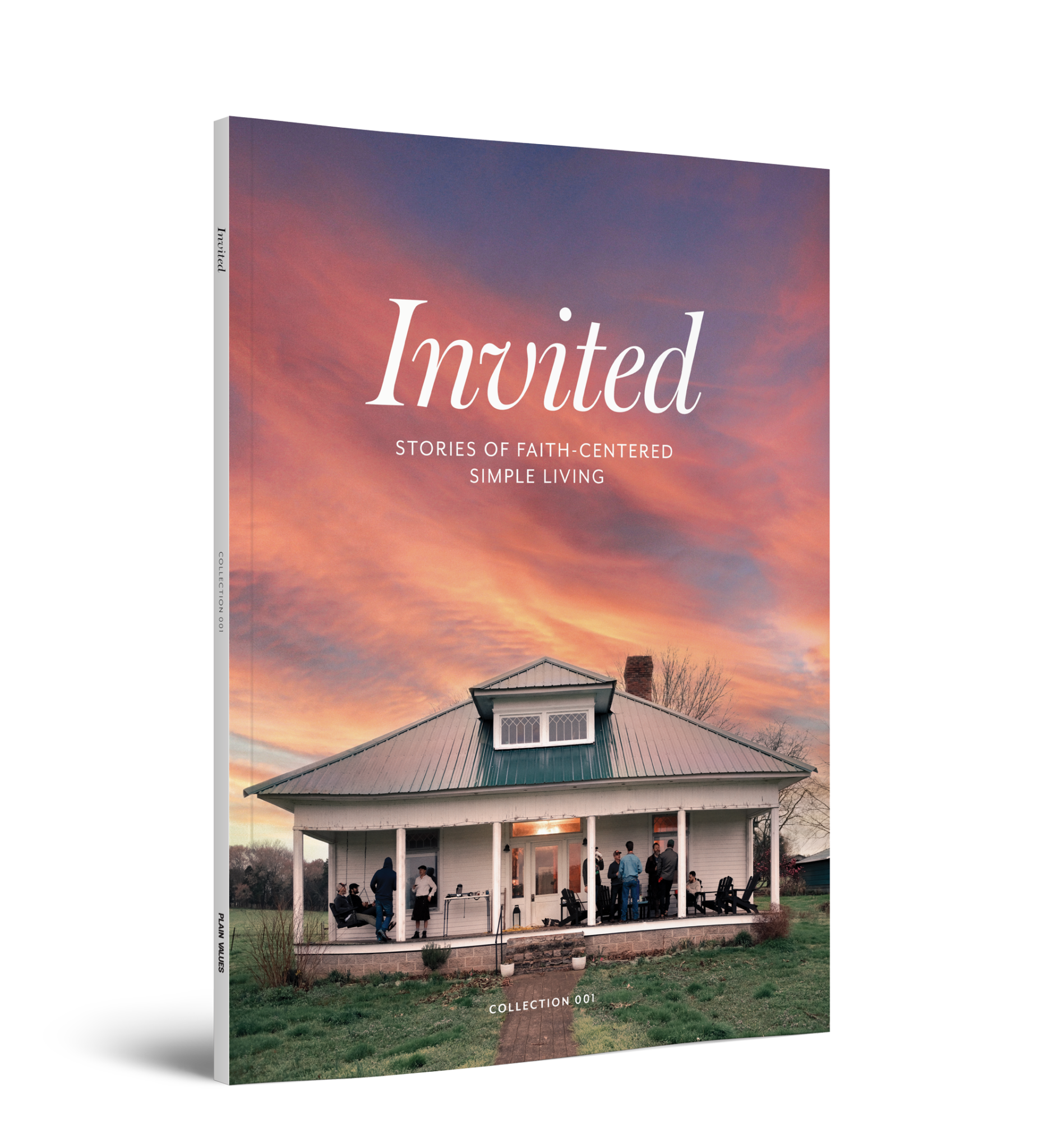
🤝THIS EPISODE’S FEATURED SPONSOR: Invited: Collection 001
If you’re craving stories that restore faith in hard times, Invited: Collection 001 is a handpicked “best of” from Plain Values magazine… uplifting accounts of triumph, simple joys, adoption beauty, homesteading wisdom, and gospel-centered living.
Learn more: https://homesteadliving.com/invited-collection-001/

🤝THIS EPISODE’S FEATURED SPONSOR: Kentucky Lumber
Our friend Derek Guyer at Kentucky Lumber is the type of guy that you want to support. He is a highly-skilled tradesman who exemplifies excellence in everything he does. Kentucky Lumber is an independent lumber yard that truly does world class work!
We would humbly ask you to support them with your lumber needs: http://www.drywallhaters.com








Leave a Reply