
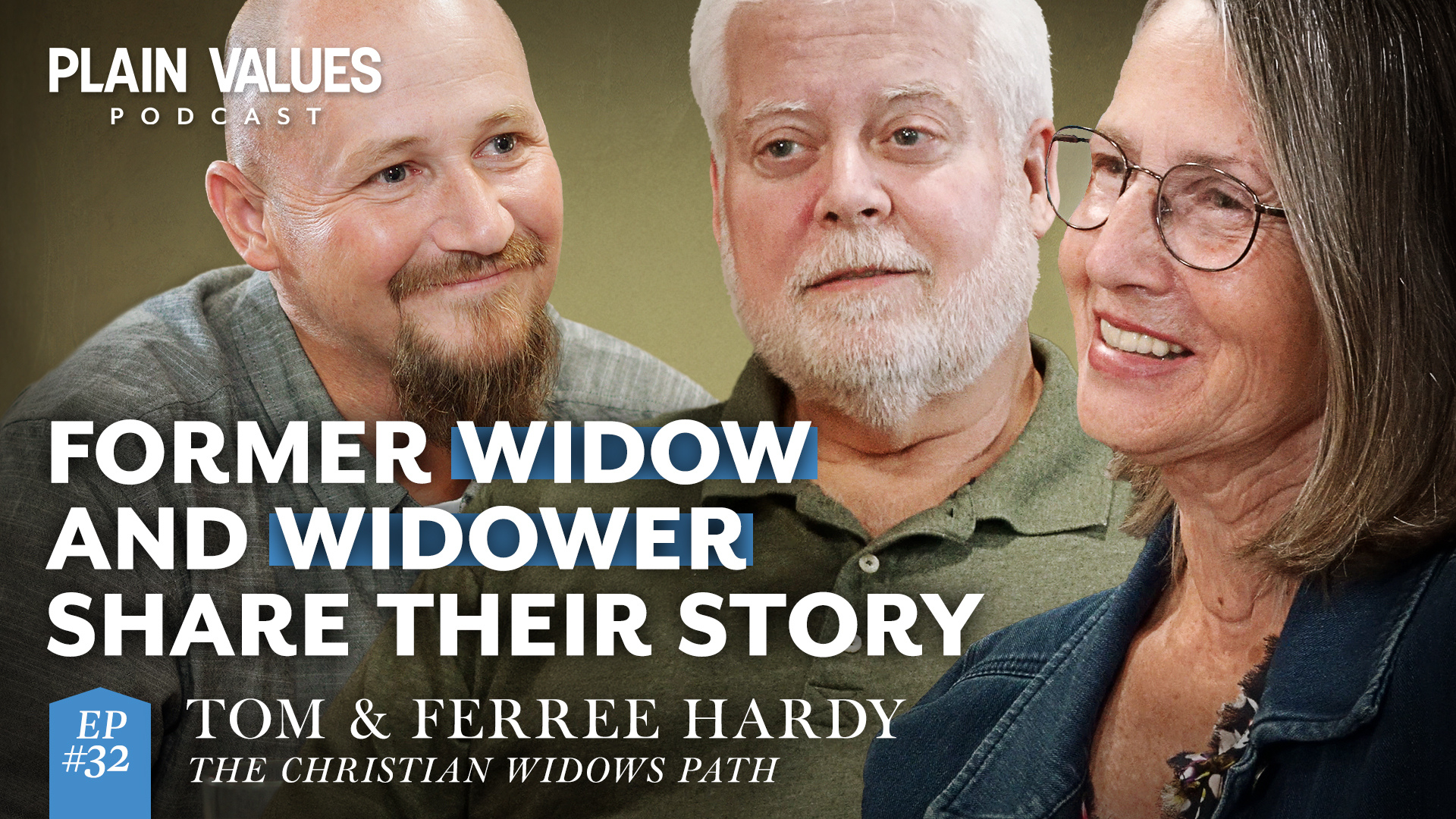
In this episode of The Plain Values Podcast …
Some stories remind us that God writes better endings than we ever could.
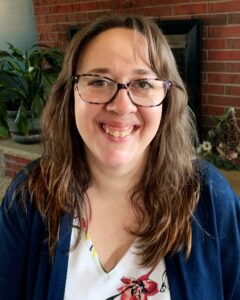
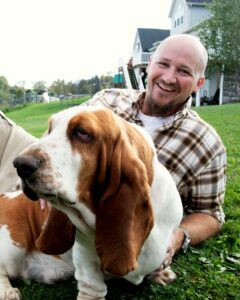
Tom and Ferree Hardy both lost their spouses in 2000. Two hearts shattered by grief, hundreds of miles apart, each raising children and learning to breathe again in a world that suddenly felt empty.
Then, in 2002, their paths crossed.
What began as a simple connection grew into a marriage that has now spanned more than two decades of blending families, navigating job changes, multiple moves, and discovering God’s faithfulness in the most unexpected places… including a few backyard chickens along the way.
Ferree, author of Postcards from the Widow’s Path, has spent years walking alongside other widows through her writing.
Tom, with his steady presence and quiet strength, has been right beside her in that calling.
In this tender, honest conversation, you’ll hear real talk about the long road of grief, the surprising joy of a second chapter, and the everyday faithfulness that carries a family through both the hard and the holy.
Whether you’ve walked through loss yourself, love someone who has, or simply need to be reminded that God redeems even the deepest valleys, this episode will meet you right where you are.
Learn more about Tom and Ferree Hardy at https://widowschristianpath.com
Learn more about Plain Values at https://plainvalues.com
Transcripts
00:00 – Intro
02:45 – Ferree’s Introduction to Plain Values
10:25 – Tom & Ferree’s Early Years
22:05 – Losing a Spouse
25:59 – Parenting Through Grief
34:46 – A Life Perception Change
46:39 – Navigating Faith in Loss
56:11 – Meeting on the Internet
1:05:48 – Navigating Life in a Second Marriage
1:13:42 – What NOT to Say to a Widow
1:19:24 – The Ministry of Presence
1:23:50 – Where to Find Ferree’s Book
Tom Hardy:
I was very proud of the fact that given enough time, I can fix anything. Well, now I was faced with something I couldn’t fix.
Ferree Hardy:
And if you read my book as a widow, I can guarantee that you will see progress. The whole world was on this merry-go-round, going round and round and busy, busy, busy, and I was standing there looking at them like, “What are you doing? Why?”
Seth Yoder:
For widowers and widows to watch this, I think Tom and Free had a perfect balance of humor and just goofiness, and also real depth. You could tell they understood what they were talking about. They were very, I don’t know, just real and authentic. It’ll be a really encouraging episode.
Marlin Miller:
Yeah. Well, they both got married. They both lost their spouses. And it was a wonderful conversation where we talked about some of the hardest things of walking that section of road of having to say goodbye to your spouse. And then also what life looks like on the other side.
Seth Yoder:
With remarriage and walking through the grieving process.
Marlin Miller:
Yeah. Yeah. It’s a great conversation. If you know anybody who has recently buried their spouse, this would be a fantastic episode to share. Please meet our friends, Tom and Free Hardy. This podcast is sponsored by my friends at Azure Standard. A while back, I had a chance to sit down with the founder, David Stelzer, right here at the table. And we had a great conversation. I love the Azure story. They started out as farmers back in the ’70s, and I think in 1987, they began a nationwide food distribution company. And guys, they are non- GMO organic. They do it right. They do it so well. And you can get a truck to drop food right in your town. Check them out at Azurestandard.com and tell them Marlin and Plain Values sent you. So hold my hair. It is a stinking joy to have you guys here.
I’ve been looking forward to this for a while. Tom and Free Hardy. You’ve written for Plain Values for 10 years.
Ferree Hardy:
I know. Yeah.
Marlin Miller:
I don’t remember how we got connected the very first time.
Ferree Hardy:
Well, it almost did not happen.
Marlin Miller:
Okay. Tell me more, because I don’t remember.
Ferree Hardy:
Well, what happened was I got an email and it might’ve been in my junk mail and I was going to throw it out. All it said was, “My publisher would like to talk to you about writing for our magazine.” And I thought, “Yeah, right. Your publisher wants me to pay him to write for his magazine.” I thought it was one of those junk, spammy things. And there was something about it though that wasn’t quite spam. It looked like it was a little more personal. And so I thought, “Well, what could it hurt? I’ll give them my phone number. I can block them if it turns out weird.” And so it was Sue Wengert. And so I emailed her back. I said, “Yeah, have them call me sometime.” And I think it was around, it was December maybe, or early January. And you actually called and we started talking and laughing and that was it.
But you found out … Well, what you told me was, you said, “I’ve got this magazine, goes out to Amish. I can do pretty much whatever I want. I’ve got missions covered. I’ve got orphans covered.” And then God got me with that verse in James about take care of the widows and the orphans and I don’t have anything for widows. I need something for widows. Can you do something for widows? I’m like, “Oh, yeah. Yeah, let’s give it a try.”
Marlin Miller:
That whole thing happened. Would that have been in 2014 or 15, right?
Ferree Hardy:
Well, it was the end of 2015 because my first article then was April of 2016.
Marlin Miller:
Okay.
Ferree Hardy:
Yeah.
Marlin Miller:
So-
Ferree Hardy:
I brought a copy of it.
Marlin Miller:
Did you really?
Ferree Hardy:
Oh my goodness. Cute. The name of my book was Postcards from the Widow’s Path. And so we went with that sort of graphic. It looks like it’s on a little air mail postcard. It’s got a little stamp on it and it was just so cute.
Marlin Miller:
That’s so cool. Seth, that would have been Isaac. Yeah. I mean, Isaac would have busted that out, put that together for us.
Ferree Hardy:
Yeah. So
Marlin Miller:
My
Ferree Hardy:
Goodness. So it was like that for a while. It has since changed and grown, like the magazine has grown and …
Marlin Miller:
Yeah.
Ferree Hardy:
Yeah.
Marlin Miller:
Well, I hope … I know I’ll say this again, but I hope you know how much we’ve enjoyed
Ferree Hardy:
These- Yeah, it’s been great.
Marlin Miller:
These 10 years. Pop passed away and my dad passed away in 2011.
Ferree Hardy:
And
Marlin Miller:
It’s a little embarrassing when I think about it, that it took me four years, three or four years to really notice how many widows and widowers that there are. And when I started digging into it, I think I was … The only number that I remember was 700,000.
Ferree Hardy:
A year.
Marlin Miller:
A year.
Ferree Hardy:
That
Marlin Miller:
That happens to every single year. Just that number, I believe, is in this country alone, I think.
Ferree Hardy:
Yeah. It’s about 2000 a day here in the United States. So around the world, multiply that over and over. And I am the same way, because my first husband, pastor, and we had widows in our church, and you ask them, “How are you? ” “I’m fine. “And then,” Oh, good. Phew, good.
Tom Hardy:
“Check the box.
Marlin Miller:
Right. And you check the box.
Ferree Hardy:
We checked with them. They’re fine. We’ve
Tom Hardy:
Found with our ministry with Facebook groups and all that, is many churches just either feel under-equipped or just don’t realize what they’ve … Or the widows that they have in the church and struggle with how one to minister to them. It’s difficult.
Marlin Miller:
It’s fascinating, and I don’t think I mean that in a great way, but it’s fascinating how we as individuals and corporately as a church can completely forget an entire group of people. And it’s a command. I mean, the Lord says,” Hey, take care of the widows and the orphans. “And we’re too busy and we’re too focused on ourselves, which is obviously the sinful nature kicking into play there, but it’s so easy to just, like you said,” Hey, how are you doing? “Which by the way, is not the greatest
Ferree Hardy:
Question. Horrible question.
Marlin Miller:
It’s a horrible question to ask because we know how they’re doing. Typically, we know how they’re doing.
Ferree Hardy:
Well, some of us do.
Tom Hardy:
And we’d done that years ago at a CNMA church that I attended before we got married. We were looking to come up with a mission statement. And so we did a survey of the church and we were kind of blown away with widows and also single or divorced women who came to church, but who didn’t have the leadership of a husband at home or a non-believer, didn’t have control. Some ladies going, ” I would love to tithe, but my husband won’t let me. “And we were really surprised that a good 50% of our church was made up of women that fell into that category and went,” Wow, and we’re not ministering to them.
Marlin Miller:
“Half.
Tom Hardy:
Yeah, it was interesting. And so we did things like the deacons would get together. And if a lady had a problem with … I can remember changing fuel pumps on cars and issues like that there, that once we realized that we tried to minister and the pastor’s wife would help some of their finances, pull them aside and help them work out a budget and all, but you had to kind of come to that realization first.
Marlin Miller:
Wow. Well, let’s go all the way back. Let’s go all the way back. Tell us about your family. Tell us about your growing up years. Growing up
Ferree Hardy:
Years? Yeah. My growing up years?
Yes. I feel like I had an enchanted childhood up to the age of 14. We lived with my grandparents in a big old farmhouse in Wisconsin, had a pond. We went swimming morning, noon, and night, five miles out of town. So I love rural areas and coming to Ohio when we moved up to … We first moved to Giaga County, and I loved it up there, but I’ve lived in Morrow County, Central Ohio, farming community there, and then in Dayton. So I was actually in Ohio longer than I was in Wisconsin, but those rural roots, that’s where I belong.
Marlin Miller:
Did you grow up with a bunch of brothers and sisters?
Ferree Hardy:
I was the oldest, and I have two brothers and one sister, 10 years between me and my sister. So lots of fun things. We had an old barn. I don’t know why we’re still alive. Tunneling through the hay mouse and all the farm equipment and swinging through the hay bale and rope from the rafters of the top of the barn up in the hayloft and swimming in that pond without a lifeguard. Riding our bikes, we would ride our bikes all over the place.
Marlin Miller:
Yeah. Was your dad a farmer?
Ferree Hardy:
No, he was not. He actually … Both of my parents grew up in Chicago, very metropolitan. They met in art school and my mother’s parents moved to Wisconsin, gave up a little grocery store that they had, moved up to Wisconsin. I don’t know that my grandpa had any farming background. My grandmother grew up on a rice farm in Arkansas. Well, that’s different.
Yeah. So they both got into farming. My grand grandpa had a small herd of dairy cows. I remember the day he sold them. We watched out the window as they loaded the cows into the truck. Yeah, so we were just on this farm. He had probably about 200 acres that he rented out then to other farmers for them to do the fields. And he kind of semi-retired, but he was stuck there with us four little maniacs. And then my father worked as what they called photo engraving, which is a form of printing. No longer … It’s obsolete now. Computers-
Tom Hardy:
Computers
Ferree Hardy:
Came along with this. Took over that. Yeah. So he drove. He commuted to a larger town about 40 miles away. And then when I was 16, they decided they were done with that and they moved us to that town.
Marlin Miller:
You just said that you remember the cows being loaded onto the trucks.
Ferree Hardy:
Yep.
Marlin Miller:
Was it a hard thing for you to see the cows?
Ferree Hardy:
No, because they were stinky. And I was like four years old, and so you go in the barn and you’re always kind of peeled back against the wall in case the cow, let’s go.
Marlin Miller:
I get that. Yeah, I get that. I’ve talked to a handful of farmers who had to sell the herd
Ferree Hardy:
And
Marlin Miller:
They wept.
Ferree Hardy:
Oh yeah. I mean, if that’s been your life, that’s … Yeah.
Marlin Miller:
It’s brutal.
Ferree Hardy:
It’s
Marlin Miller:
Brutal on them.
Tom Hardy:
Yeah. Dairy’s, her uncle had dairy and also up in New York there. There’s a family that goes to our church, has like 10 kids and they had to sell the family farm. We’re in a process of it there just because you don’t get anymore for a hundred way to milk now than you did 25 years ago. And it’s just gotten very expensive.
Marlin Miller:
Right. And the feed and fertilizer costs are astronomical. So how did you and Bruce meet?
Ferree Hardy:
Bruce and I met at Moody Bible Institute. We were both students there.
Marlin Miller:
Did you go directly into the pastorate … Well, I’m sorry, I should ask you first. Did you get married right after school?
Ferree Hardy:
No. No. We started dating right the end of his senior year and then I broke up with him over the summer and he got engaged to somebody else, but he kept thinking about me because I lived near Nina, Wisconsin. And whenever you pass a manhole on the street, it’s always from Nina Foundry. And so he knew that he could not marry this other girl if he’s still being reminded about me. So he came to see me and I still wasn’t ready to start dating again or anything. I had too much on my plate and Buddy broke off the engagement and then about a year after that, we started to write and shortly after that got engaged and shortly after that got married.
Marlin Miller:
And then he
Ferree Hardy:
Was a
Marlin Miller:
Pastor.
Ferree Hardy:
And then at our wedding, some of the guests referred him to a church. He put in a resume as a youth pastor at Riverview Church in Ohio and about two months after we were married, we came out here.
Marlin Miller:
When you say Riverview, do you mean down by Kashockton?
Ferree Hardy:
No, it’s in Giaga County.
Tom Hardy:
Just above
Ferree Hardy:
Shagrin Falls. Okay. Just north of Chagrin Falls.
Marlin Miller:
Okay. Okay.
Tom Hardy:
Right on 306. There’s
Marlin Miller:
A different school down there that’s also called … Yeah,
Ferree Hardy:
I think there’s a lot of river views. Yeah.
Marlin Miller:
Yeah.
Ferree Hardy:
So we started out there. We had one baby there. Then he went … We moved to Warsaw, Indiana. He went to Grace Seminary a little bit. We had another baby there and that was in the 1980s and the recession made it very difficult. But after that, then a church in Ashtabula, Ohio, which had just started from a Bible study. They called him to be their pastor and it was … We were living pretty much at like poverty level, but we didn’t know it. We didn’t know we could have applied to food stamps and all of that. So getting 12 or getting a thousand dollars a month paycheck was a big pay raise. And we thought, oh, we can live on that. So we moved up to Ashtabula and started that little church.
Marlin Miller:
So how many kids did you and Bruce have together?
Ferree Hardy:
Three.
Marlin Miller:
Three. And are they all grown and married and …
Ferree Hardy:
They are all … Yeah, they’re really old now. Don’t let them listen to this podcast. Absolutely.
Marlin Miller:
Yeah. How many grandkids do you guys have?
Ferree Hardy:
We only have one.
Marlin Miller:
Okay.
Ferree Hardy:
And she is nine years old now and she got to finally visit us in New York this summer. So that was a big thing for grandma.
Marlin Miller:
So Tom.
Tom Hardy:
Oh.
Marlin Miller:
How did you grow up?
Tom Hardy:
I grew up in the Adirondacks up in the mountains and the town that I’m in, very small, Paper Mill town, that’s pretty much it around there. But Lake George, which is a gorgeous lake and Lake Champlain and just the mountains. So I grew up bouncing around the fields back then, just as long as you came home for dinner. Mother didn’t worry about things, or she said there’s probably a lot of boy things that went on that it’s better off I didn’t know about anyways. And then the neighbor or the surrounding fields around our house, we had a view of the valley was all dairy. And so I used to hang around the dairy barns all the time. But yeah, it was just a very nice rural set up there. And we’re back there now, but with about a 20 year gap in there.
Marlin Miller:
Siblings?
Tom Hardy:
One, yeah. A younger brother.
Marlin Miller:
About
Tom Hardy:
Four years younger.
Marlin Miller:
And did you go to school to become a pastor as well?
Tom Hardy:
No, no. I went to Bob Jones for about a year and a half, and then went to Word of Life Bible Institute. It’s about a half an hour from us that word life youth ministry and camps and all there. So that was always nice to have close by there. So they would bring in Bible teachers. We had somebody that would cover theology and Bible survey, but they would bring in really some big guns. I mean, we had like Charles Roderick teaching us first Corinthians and Joe Stoll teaching us Philippians and they’d bring in some
Ferree Hardy:
Very
Tom Hardy:
Unique, but very good theologians and all that to teach us. So that was a privilege. And then, but I was back in a paper mill, spent the last 40 years in that career. So yeah, she took a little step down from a pastor to a paper mill engineer.
Marlin Miller:
So you met your wife a long time ago, right?
Tom Hardy:
I mean,
Marlin Miller:
Yeah.
Tom Hardy:
From our church, her mom was our organist. She was a little older than me, had babysitted for me, very attractive lady. And yeah, and we had a boy, so we’ve got four between us here.
Marlin Miller:
How long were you guys married in your first?
Ferree Hardy:
I was married for 22 years.
Tom Hardy:
Okay. We were only married like 10, about 10 years or so.
Marlin Miller:
So can I ask how they passed?
Tom Hardy:
Marilyn died of ovarian cancer. Okay. It’s kind of about a 15 month trek there. And she’d had a lot of difficulty having Erin. She didn’t have Erin until she was like 39. She was a professional, was a banker, vice president of loan operations and all. But once she finally, after numerous operations, was able to finally get pregnant there, she just retired, roll up her sleeves and became a mom. But yeah, cancer’s very insidious and some of the things you got to go through to try to fight it, that’s difficult. Yeah. And Bruce?
Ferree Hardy:
So Bruce died … Well, actually Marilyn died in December of 2000, and Bruce died in February of 2000. The day before my 44th birthday didn’t make for a very good birthday, and I didn’t even have a party that day, but he actually had a brain aneurysm, so it was instant. Life changed forever in an instant.
Marlin Miller:
Yeah. I have a hunch that you guys have talked about this quite a bit. Is there a better way to go through that process? One, to have time to try to prepare and try to talk through things, or is it easier in a sense for it to be a shock, a very quick thing?
Ferree Hardy:
Well, what I would talk about with so many people, Bruce’s friends and I all agreed this was really easy and nice for him, but it sucked for us.
Marlin Miller:
Yeah. Because it was totally fine one day and the next day it’s over.
Ferree Hardy:
We’re talking one moment.
Marlin Miller:
Yeah.
Ferree Hardy:
Yeah.
Marlin Miller:
Wow.
Ferree Hardy:
Yeah. So that first year was very numb, very just you’d wake up every morning and then remember all over again. He’s gone. He’s gone. Did not get to say goodbye. About a year and a half after that, someone suggested to me that I write him a letter to say goodbye. And so when I was ready, I did that. And that was a really good thing. That helped him. Just to get all that
Marlin Miller:
Out.
Ferree Hardy:
Oh yeah. I told him everything that had gone on the last year and a half. And I closed with saying, “I wish we had never had to go through this, but I am so grateful for the years that we had together.”
Marlin Miller:
How old were your children when he passed?
Ferree Hardy:
My oldest was sophomore at Moody, so she must have been 19, and then Lisa was 16 and Brad was 13.
Marlin Miller:
What goes through your mind in those first couple weeks and then a month, and then the couple months, as you’re trying to acclimate to that whole thing, what goes through your mind when you look at your children?
Ferree Hardy:
Well, for me, I don’t think anything was going through my mind. I was just trying to breathe, really. I look back and I wish I had been a little more proactive in dealing with the kids, in trying to find counsel. I did put out a few feelers for some Christian counselors, but didn’t get any feedback or the one that I really wanted was not available and he was very far away. So we didn’t have much of anything in the way of counsel. And then being the pastor’s wife, well, the congregation, they were still all mourning. They were all in shock. And me as the pastor’s wife, I must have had my act together and they thought I’d be fine. And of course I told them I was fine. So it was just a very lonely, lonely time.
Tom Hardy:
There wasn’t some of the material back then too. We’ve been involved with grief share with a couple churches and grief share groups and kind of leading those. And also they have a grieving during the holidays that we’ve even done since up in New York. But that kind of material, I can remember the first time we went through that, I’m like, “Boy, I wish I had this back then and I probably would have taken a little bit different tact with my kid, even with your kids and stuff, because they were going through it too, but there’s a little more material and some knowledge out there and wisdom that we just weren’t equipped with back then.”
Marlin Miller:
How old was Aaron?
Tom Hardy:
He was-
Ferree Hardy:
He was 10?
Tom Hardy:
Yeah, he was 10 when he just turned 10. He was nine when she got sick.
Marlin Miller:
So I just had some other friends on and Zach lost his wife three, four years ago, I think,
And they had three children as well, also teenagers. And he talked about the same thing where he was just trying to survive and he said, “Marlon, I regret so many things that I should have done different or better and I just cannot imagine.” I know that when my dad passed, Lisa has told me that I was in a bit of a fog for a year. I think it was probably about a year and I don’t remember. She was parenting, I think, alone and it makes me sad that I just kind of mentally checked out in a way.
Tom Hardy:
And I think guys dive into their work a little, which is very easy to do in a paper mill that’s a twenty four seven operation and- You just pour
Marlin Miller:
Yourself
Tom Hardy:
Right in.
Marlin Miller:
Yeah.
Tom Hardy:
And I was fortunate that I had my parents around to take Erin places. I mean, they would take them on trips all over the place and also Marilyn’s family was there and a bunch of sisters and nieces and all that were … So I I had a lot of support and time. I could talk about that. I don’t think you were able to tap into sometimes.
Ferree Hardy:
Well, you knew ahead of time.
Tom Hardy:
Yeah. Oh yeah. Yeah. Having that 15, 18 months, that was a process that, I mean, you could even see Aaron and we probably did it purposely there where he was able to kind of disconnect a little from mom and connect a little more with me before she died. But yeah, we had time to be able to do that kind of stuff.
Marlin Miller:
What was the hardest thing from a very, very practical standpoint? For you, you’re used to doing a lot of the maintenance and changing oil in the cars and that’s a guy thing. That makes total sense. What was the hardest thing for you to adjust to being a single dad now and trying to keep a handle on things?
Tom Hardy:
Yeah, just probably keeping him fed. We had a lot of spaghettios and a lot of them and a lot of packaged meals. Yeah. But yeah, that was a lot of it. We had homeschooled him up until about third grade. And then up near where life was a church that a lot of the world life folks went to, they had a Christian school. So he ended up going to that just to also give him some interaction with other kids. Interacting with mom and dad forever just probably isn’t the best. But that would gave him a lot of support too. And so I had people really alongside me a lot from church and out inside and all that.
Marlin Miller:
Do you still talk with Aaron about his mom?
Tom Hardy:
Yeah. I mean, we’re very open about it there. And I’ll send old pictures his way or something there that I think he’s become a little more interested too as he’s grown little older. He’s in his 30s now. We’ve talked being nine or 10, there’s not a whole lot that he remembers. Some of it, the pictures will kind of bring some memories and I just try to fill in the gaps. But it’s a little more difficult being that young when you lose them.
Marlin Miller:
How about you, Free? What were the hardest things? Like for an example, my mom, my mom didn’t know how to fill our gas tank because Pop did everything. He just took care of all those things. And that was a bit of a wake up call for my brother and I, because we didn’t really realize that. Was there something like that for you that …
Ferree Hardy:
I think the hardest thing for me was that my schedule rotated around him. Everything was around Bruce, so everything was around the church. As far as cars and stuff, he had a good friend who was a car mechanic who took care of all that for me. But yeah, it was just loss of structure. We grieve over a lot of different things, loss of a future, loss of a person, but loss of structure. Some people have loss of faith and all those things are things that we grieve over. But for me, I think it was just loss of structure and not having him to ground me to be that anchor to know what to do next. I would cook supper and nobody wanted to eat anyway because there’s that empty chair at the table. So I’d just kind of throw money at the kids and they’d go get McDonald’s or whatever.
It’s just … Wow. Yeah. There’s a great big void there.
Marlin Miller:
How has your perception of life changed after walking these hard
Ferree Hardy:
Sections of life? I will tell you, I was just thinking about that. I’ve thought about that a lot. My values totally, totally changed. And I would say before, I’m just naturally very task oriented and man, I don’t know how I accomplished all I did. I was working, helping with the church, with junior church, with ladies, Bible studies, all kinds of stuff there. I was working full-time and I was working on a bachelor’s degree, finishing up my bachelor’s. How did I do all that?
Marlin Miller:
How soon after he passed did you
Ferree Hardy:
Do that? I did that two years before he passed away.
Marlin Miller:
Okay.
Ferree Hardy:
Two years before he passed away. And then after he passed away, it was like just my whole values changed around quite a bit and not reevaluating how busy I was and what I was going to do. And they’ve continued to change too. I’m much more … I just, I’m not interested in careers or material things so much anymore. It’s just what can we do with people? How can we connect in this moment? It’s living in the moment a whole lot more than living for getting something accomplished. And distinctly recall feeling like the whole world was on this merry-go-round, going round and round and busy, busy, busy. And I was standing there looking at them like, “What are you doing? Why? Why are you doing all that? What does it matter?” A lot of good thoughts like that.
Marlin Miller:
Any thoughts, Tom?
Tom Hardy:
Yeah. I mean, unfortunately, after Marilyn died, I guess I went through … And kind of that whole process with her sick there, it kind of challenged my faith too, I guess because in a paper mill, I’m in maintenance and engineering and living there quite often when things break and I come home when a paper mill runs again, but was very proud of the fact that given enough time, I can fix anything. Well, now I was faced with something I couldn’t fix. And then I spent a lot of time on the internet and a lot of time researching all this. Doctors would comment, “How do you know all these things?” Because I would get into it and trying to find something that we could do, but that was ovarian cancer is very insidious and incurable. So that was kind of a shift in that realization. And also just realizing that I probably spent time in the mills that was somewhat optional too.
I would be following up on something and I spent more time or wasted more time in the mill than I really needed to. And so when we were married, I’m like, “I’ve got to do better at that, which I haven’t.” That’s what twenty four seven manufacturing demands of you.
Marlin Miller:
That’s a topic for late
Tom Hardy:
Maybe. Yes. But God has blessed me with two wives who understood that I come home when the paper mill runs and because paper mills have ruined a lot of marriages, but it’s been kind of an eye opener too when we … I appreciated her call to write her book and that’s been a ministry that I just financed. She’s the one that had the Facebook groups and all that, but I’ve always appreciated watching her work with people and has included me on some of it. And it’s been very enjoyable, just ministering that way. And even when we first published the first book there, I think we finally found a publisher in Dayton and so we met at the publisher so that I could announce that we were shutting the mill down and I was without a job now and then we just felt that the Lord
Ferree Hardy:
Wanted to keep going. Explain that. I guess she’s got details. We have this book and- She’s
Tom Hardy:
Been working on for quite some
Ferree Hardy:
Time. I worked on that book for six years and during that six year time, the publishing industry totally changed because we didn’t know if there would even be print books anymore. Everything was coming out digital. And the editors that I had talked to at a writer’s conference who all wanted a book proposal from me, when I finally got the book ready for that, they were all gone. Nobody was working. So lo and behold, God provided a local printer who was just getting into self-publishing. And there’s all kinds of printing houses online that you can self-publish with. And I just could not send it into cyberspace. My little precious book, I just could not push the button and not know where it was going. So we found this local printer, toured the place, they had graphic artists on board, they had editors and everything. And so we’re going to go sign this contract, pay them to print this book.
I was working at a library. He’s at the paper mill. We met after work in the parking lot. He rolls down his window. I got out the car. I walked up to his car and he goes, “Do you want the bad news now or later?”
Marlin Miller:
Oh no.
Ferree Hardy:
Like, “What? What?” And he says, “They’re shutting the paper mill down. I won’t have a job.” And I said, “Well, then we just may as well turn around and go home. We can’t print this book. Why spend thousands of dollars to do this when we may not have … We might need that. ” So he said, “No.” He said, “I don’t care if I’m working in a gas station, we’re going to print this book.” So we went in, signed on the dotted line. Two weeks after that, God provided him not one, but two job offers in South Carolina where we were never going to go south, but-
Tom Hardy:
She told me
Ferree Hardy:
Didn’t was as far south as we were moving. Never say never. And so there we are moving south. I think I remember- With a book. With a book contract.
Marlin Miller:
I think I remember when you shared with us that you were moving and … Yeah.
Ferree Hardy:
When we were moving back, we’ve moved so many times. It’s … Yeah.
Tom Hardy:
I spent 42 years in Ticonderoga and then I married her and we’ve moved like every seven years since.
Marlin Miller:
So how long have you guys been married now?
Ferree Hardy:
23
Tom Hardy:
Years.
Ferree Hardy:
Yeah, 23
Tom Hardy:
Years. 23 years.
Ferree Hardy:
Yes. When’s your anniversary? May 26th.
Tom Hardy:
Okay. She makes me use … It’s my password, so I remembered.
Ferree Hardy:
I have to
Marlin Miller:
Change it now. That was fantastic. Okay. Did …
Tom Hardy:
But she had already had a ministry with the Facebook groups and it was just … It was a blessing to me to see all this stuff
Ferree Hardy:
Going on.
Tom Hardy:
While she was working on the book, and it just impressed me that the internet had allowed her … I mean, you mentioned to me one time, she thought about being a missionary when she was in Moody, but then married Bruce and went into the pastorate, but the internet allowed her to be a worldwide missionary. She had a widow out in Vanuatu that’s a toll in a Pacific Island, way out near the bikini islands. And she got pictures from the widows group in Africa that had been put together and stuff. And so she was able to reach out all over the world with these Facebook groups and kind of be a worldwide missionary sitting in our home.
Marlin Miller:
That’s amazing.
Tom Hardy:
And that’s what it’s allowed with the Zoom counseling she does now
Ferree Hardy:
And just a really good sense of humor. Yeah. Africa.
Tom Hardy:
So the book was just something that was needed. Yeah.
Marlin Miller:
Yeah.
Tom Hardy:
And she worked hard on it.
Marlin Miller:
This episode of the Plain Values Podcast is being brought to you by my friends at Kentucky Lumber. Derek and I were talking this morning and he shared a story about how they like to do business and they like to do business with people that are like them and they like to be treated in a way that they treat their own customers. He told me about a customer of theirs that he had to fire and this was not going the way that it typically does. And this guy was not being happy with anything that they did and nothing was good enough. And finally Derek said,” You know what? You’ve disrespected my team enough and I think we’re done. And so you can go find your lumber someplace else. “And the attitude and the heart behind the way that Derek sees the world is exactly the way that I see the world and I have a hunch you might as well.
If you call Kentucky Lumber, just know that they might fire you if you treat them poorly.
I’m kidding, of course. But they will treat you with the utmost respect because it’s how they want to be treated. And I think there’s a golden rule thing in there somewhere, but if you need anything at all to do with any lumber, wood flooring, wood siding, any type of wood product that has character just baked into it and a great team to match, call my friends at Kentucky Lumber. You can find them at drywallhaters.com. Now you mentioned a little bit of a crisis of faith. Did you guys deal with the big question of, how can God still be good if I’m finding myself in the middle of this? I mean, effectively, it’s a hell of
Tom Hardy:
Loss and grief.
Or my challenge was, like I say, Marilyn, she had had a lot of female problems with endometriosis and a number of surgeries. And it took many years for her to finally get pregnant and have this child. I mean, she had all her nieces and nephews and we had a fortune in toys and teddy bears and everything else that she played with all the nieces and that. So we were all equipped when Erin finally came, but she worked so hard and rolled up her sleeves and retired and homeschooled for a number of years and just delighted to finally have this child. And he’s like nine years old when she was diagnosed. And so that was a real challenge as to why is all this happening, especially to her. And why is a nine year old losing his mom?
Ferree Hardy:
Yeah.
Tom Hardy:
Right.
Ferree Hardy:
I love what somebody said that for the Christian, this life on earth is as close to hell as you will ever get. For the non-Christian, it’s as close to heaven as they will ever get. That was really sobering to me, but I totally agree. We do experience a little bit of hell. For me, my prayers were bouncing off the ceiling. I didn’t even know if I … Bruce was in heaven if it exists. It did not feel like there was anything out there. And I did find a grief group at a different church and one of the dear little ladies in there, she was a pastor’s wife and she gave me that verse in Isaiah that says,” Your maker is your husband. “And at about the same time as when I learned there’s 2000 women that are widowed every day here in the United States, I thought one little verse for 2000 women a day.
I didn’t appreciate that at all and I didn’t appreciate the verse either. “Your maker is your husband.” I wasn’t impressed.
Marlin Miller:
I’m sorry to laugh.
Ferree Hardy:
It’s okay because it should be something that we can laugh at and I think God understands that. And it really, really, really hurt because inside, I guess, a wounded child, but I had this picture in my head of my happy childhood and that Bruce and I were just little four year olds outside playing in the Kool-Aid kid yard, swinging on the swing and God came out of his house next door, great big boots was all I saw and he came into our yard and he swooped up Bruce, took Bruce away, cuddled him up, went off into his house next door, but with his fist, he smacked me and I went flying off the swing and landed in the gravel, got gravel embedded in my knees and my palms and I was just so hurt, so hurt. So when I found those, when that lady tried to comfort me with, “Your maker is your husband.” It’s not happening for me, but I thought if he is my husband, I have a question for him.
And so in my mind, I went over to the house next door and I started knocking on the door. “Where are you? Where are you? “And there was no answer. Well, it took about three days for Jesus to rise from the dead, right? And it was about three days of me knocking on that door. I mean, I was hanging on the doorknob saying,” Please, please, please help.
“And the only thing that came to me was just this tiny little thought. “Why don’t you read the book of Ruth? I have more than one verse in the Bible. I have a whole book about widows.” And I was like, “Ruth, are you kidding me? That’s a love story. I’m not going to torture myself with a love story.” But that thought just kept the hound of heaven. And so I finally decided, looked at four chapters. How long is it going to take? 20 minutes, I’ll read it, get it over with. And I was hooked within the first 10 verses, and that started like this obsession with the book of Ruth, because there are so many layers, so many ways I saw my situation, all widows, situations, God knows widows, and he chose to tell us a story of two women that we could relate to.
You got Naomi full of despair, Ruth full of determination, and the rest of us falling in the middle on good days. So that’s what started it off, was that empty prayers are hit in the ceiling, what’s happening, nothing, and knocking on the door.
Marlin Miller:
How long did it take for joy to come back around?
Ferree Hardy:
Joy. I remember shortly after Bruce died, and I looked out my kitchen window, and there was still snow on the ground, and crocuses were popping up through it, and it was the best thing I’ve ever seen in my life. So if you call that joy, I think joy is just a deep thing that sustains you and gives you hope, and might not really be defined by Christmas carols and that sort of thing. It’s just a deep thing. What do you think, Mr. Tom?
Tom Hardy:
I don’t know. It was a long couple years before I met you.
Ferree Hardy:
Long couple of years. And then you found joy when you found me.
Tom Hardy:
That was part of it.
Ferree Hardy:
Aw.
Marlin Miller:
Do you feel that it’s a very different journey for a man to get back to joy than it is for a lady?
Tom Hardy:
Oh, yeah. I’m sure. I mean, like I said, I had a lot of support, but I just didn’t have somebody rarely walking by my side or …
Ferree Hardy:
Yeah.
Tom Hardy:
I mean, after we met there, of course we were 512 miles exactly from my doorstep to her doorstep cleaning away. So we burned up back then you could buy a $35,000 minute Walmart phone card. So we did most of our talking, discussing, dating by phone.
Marlin Miller:
So hold on. I’ve even got it on my list here. How did you guys meet? We haven’t gotten there. So you guys live 500 miles apart.
Tom Hardy:
Well, she told you your email was kind of sketchy. Well, we met on the internet, so- Oh my goodness. It could have been pretty sketchy too.
Ferree Hardy:
I had a girlfriend. This girl had cystic fibrosis. She, at the time, she was a veteran. She was 35. They did not live that long at that point. She was fearless. She would do anything. She lived to the hilt, and she was like one of the very few people that were not afraid of me. A lot of times people will treat a widow like it’s contagious. They’re scared. They don’t know what to say. They’re afraid they’ll make her cry or something, so they avoid her. But Laura was a great friend, and she took my picture and uploaded it onto a Christian single site.
Marlin Miller:
Did you give her the okay to do that, or did she just
Ferree Hardy:
Go do it? Well, we had gone out for dinner, and then we were back at her place, and I had found this site, and I said, “Oh, should I do this? Should I do this? ” I’m like, “Oh, I’m so scared.” And she’s like, “What do you have to lose? You’ve already lost everything. Click.” And there she goes, and there I am. And then a couple weeks later, you got on at about the same time.
Tom Hardy:
Yeah, because we didn’t spend any money on each other. There was like a 15
Ferree Hardy:
Day trip to trial or something. Cheap skates.
Tom Hardy:
And I didn’t even have a picture on it. I just-
Ferree Hardy:
No, he did not have a picture.
Marlin Miller:
So
Ferree Hardy:
Did you
Marlin Miller:
See him first or did you see her first? She
Tom Hardy:
Reached out to me first.
Ferree Hardy:
He gave no pictures. So he saw my picture was really cute picture of me. But that was
Tom Hardy:
After
Ferree Hardy:
You happened very often.
Marlin Miller:
But you’re taking a total turkey shot here. I mean, you have no idea. This guy could-
Tom Hardy:
Because
Ferree Hardy:
He just
Marlin Miller:
Emailed
Tom Hardy:
Me, “Do you know where Screon Lake is or something?”
Ferree Hardy:
Well, that is another thing. I mean, there were so many things that, like coincidences, coincidences, divine appointments that God had lined up for us. So it just so happened that I went out to word of life and then when I came back, I did a search for widowers between ages 40 and 50, and I didn’t put a mileage thing on it for some reason. And then his name came up and I knew where Ticonderoga was because I’d just been in that area. And so I just said, “Hey, ever hear of Screw Lake, New York? I was just there last week.” And then-
Tom Hardy:
I said,
Ferree Hardy:
“We just emailed.” We just emailed that. Well, the Lord had prepared-
Tom Hardy:
Back in what, 75, you were a counselor?
Ferree Hardy:
Yes. I had been there- Screen
Tom Hardy:
Lake Knew
Ferree Hardy:
Whrega was. 76.
Tom Hardy:
76?
Ferree Hardy:
Yes.
Tom Hardy:
Or
Ferree Hardy:
The bicentennial.
Tom Hardy:
Back then the Bible Institute was just starting up, was very small. And by the time I went there in the 80s, all students were camp counselors also in the summer, but I don’t think they had enough there. So they were Moody and some other schools there as counselors. So she spent a soggy summer out there and we
Ferree Hardy:
Had her on this. Study summer out there, which is why I broke up with Bruce.
Tom Hardy:
Okay.
Ferree Hardy:
But anyway- So she knew where it
Tom Hardy:
Was
Ferree Hardy:
Anyways. To your question, how we met, we met on the internet.
Tom Hardy:
But then she disappeared for a couple months and I didn’t know who you were because her internet name was Freebie, but I didn’t know really where she was and then name, address, any of that kind of stuff. I guess some-
Ferree Hardy:
Well, they were
Tom Hardy:
Creepy. Somebody kind of figure out or something. There were creepy
Ferree Hardy:
People on there too. So you
Tom Hardy:
Didn’t get back
Ferree Hardy:
To me till my birthday. You sent me
Tom Hardy:
An email and said happy birthday.
Ferree Hardy:
I said happy birthday.
Tom Hardy:
Yep. And I’m like, who are you? I need a little more information. And actually, I had a big capital project at that time with my paper company. And so my Rockwell Automation was in Cleveland and I had to be doing a lot of traveling. So I kind of made it a habit of passing through Cleveland. And we got … Well, I mean, I went out there for training. There was kind of an option. I could either train in November or I could train in February because I had a two-part project. And so one of her emails, she was telling me about a date she had with a guy in Columbus. And I’m like, “I didn’t realize she was dating already. So maybe I need to get out there and throw my name in the hat.” So I decided November was better than waiting to February.
So I went out there for a week and showed up on a Monday there. I think you were finishing up your finals on something at Kent State or something.
Ferree Hardy:
It was right after Thanksgiving. I had a horrible professor at Kent State. I was doing graduate work at Kent State. Horrible man. And I don’t care if he hears this or not. But I don’t remember what his name was anyway. So our final exam, we all went in for the final exam and we sat down, get our pencils out, and then he tells us, “Oh, let’s do an oral exam.” And so it had to … Yeah. And not a dental exam, oral speaking exam. So we had to give him our answers in front of everybody.
Tom Hardy:
But she had … I
Ferree Hardy:
Knew this was great. So I was revived.
Tom Hardy:
We were emailing, so I knew this was happening.
Ferree Hardy:
Yeah. So we had set up our very first phone call to find out if I survived. Yeah,
Tom Hardy:
We hadn’t
Ferree Hardy:
Phone yet. Exam. And that was our first phone call.
Tom Hardy:
Yeah.
Marlin Miller:
So you go to Cleveland in November early to get your hat in the ring.
Tom Hardy:
Yeah. Well, he was paying to send me out there to do the training. And then I called her- He happened to be
Ferree Hardy:
There. And so we’re going to call. Well,
Tom Hardy:
There was a reason I was there instead of February, but it’s yeah.
Ferree Hardy:
So he happens to … We have our first phone call and you know, you don’t know what somebody’s voice is going to sound like over the phone, right? I mean. And that would’ve been
Marlin Miller:
Over. Game over.
Ferree Hardy:
Game over.
Tom Hardy:
Not that there’s anything wrong with all the people that talk like this.
Ferree Hardy:
Nothing wrong with them, but they’re just not for me. So we’re having a nice talk. I’m thinking, oh, I’m talking to this nice man. He’s up in the Adirondack mountains, probably has a flannel plaid shirt on. And then he tells me he’s in Cleveland.
Tom Hardy:
I was in Euclid, yeah.
Ferree Hardy:
And I should have had red flags going off like stalker flags, right? But I just thought that was the funniest thing. And so- Well,
Tom Hardy:
There was silence for a minute because I was like … She survived her final and everything. I said, “But we ought to have dinner and celebrate that sometime.” And she’s, “Yeah, yeah.” I said, “Well, how about tomorrow night?” Because I’m in Euclid and Cleveland there and there’s kind of total silence for a while.
Marlin Miller:
And you totally got her on the spot, put her in a pickle. I love it. So-
Tom Hardy:
Now I did find out that I couldn’t have a date Tuesday night because she had a date Tuesday night, so I had to have a date Wednesday night and she had another date Thursday night. So after the first date, I had to move my flight Friday so I could get a second date in because she had them lined up.
Marlin Miller:
Different guys?
Tom Hardy:
Oh yeah. Different guys.
Marlin Miller:
Free.
Ferree Hardy:
Marlon.
Marlin Miller:
Wow.
Ferree Hardy:
I hadn’t had a date for 20 some years. Okay? Yeah. When it rains, it pours. That’s just the way it was. That is true funny. Yeah. So- It just happened because God has a sense of humor and he wanted it on this podcast. Thank you very much.
Marlin Miller:
I love it. I love it. Thank you. Yeah, I almost called you Bruce. I’m sorry. Tom, how has your second marriage been different than what you imagined in your mind?
Ferree Hardy:
Oh, what you imagined.
Tom Hardy:
Oh, well, like I say, I probably would have spent the last 65 years in the Adirondacks, but I married her and when I got to Ohio, it was just a little flat for me. I’m used to the mountains and stuff and that was a little unnerving. And then South Carolina was probably even flatter. That’s just a big old sandbar, but it’s been interesting there. And now we’re back. The Lord provided an opportunity. My dad hadn’t passed at that point, but he was getting real sick and now I take care of mom. And so he opened that door. But yeah, it’s been quite a ride. But like I say, the ministry that she’s been in and being involved in the grief share and just working with people in the different churches and stuff, that’s been a blessing. I don’t know that any of that would have come about.
And so that just realization of how people are hurting and that we can do something about it or at least come alongside. Sometimes you just keep your mouth shut and listen or just be there. But even like she has a widow’s get together once a month in Taikanteroga there and from all over the community. And a lot of them I know or knew their families and all that kind of stuff. And so they all get together and have a grand old time there, but it’s cute to see.
Marlin Miller:
How about you? How is this guy different and how’s your … Yeah, how’s it?
Ferree Hardy:
Well, part of our marriage vows were that we would never compare. And so Tom is just, he is very, very different from Bruce. I think a lot of people would be- Bruce
Tom Hardy:
Was an athlete.
Ferree Hardy:
Surprised. But bottom line is he loves the Lord and we have such a common background. So we had so many things in common and we both knew how to be married. We both knew how to have a good marriage. A second marriage is totally different from a first marriage. First marriage, you’re growing up together. This one, you’re bringing two families together and there … Yeah, I don’t know if there’s really any comparison, but I kind of did ask myself that when we were first, right before we got married, how can … Because I still love my first husband and I know he still loves Marilyn and how can you love somebody else without feeling betrayal or anything?
And I love the way Tom explained it. He said, “Well, when you had your first baby, you totally devoted, totally loved them. When you had your second baby, did that take away anything from your first? What about the third one? Then did you have just this X amount of love that you had to divide three ways?” And it’s not. Love multiplies. So that was really, really helped me having a second marriage, knowing that I still love my first husband. He still loves Marilyn. Every once in a while, I’ll still catch him. He’ll still catch me with a little tear running down our face and that’s okay. We get it.
Tom Hardy:
Of course, when I proposed she went upstairs and
Ferree Hardy:
Ball, but- When he proposed, I was absolutely
Tom Hardy:
Mad. Is it the reaction I was … I think it would be good, but that’s …
Ferree Hardy:
Yeah, that was … Wow. It was such a relief. It was huge, huge relief, I think. Yeah.
Marlin Miller:
How can we pray for you guys?
Tom Hardy:
We’ve been married now 23 years and I’m probably going to retire probably April at this point because I’ll be 65 in about a couple weeks and just pray that being together constantly will not … No. But just-
Marlin Miller:
Tom, you need to come back. Okay?
Tom Hardy:
Oh, no,
Ferree Hardy:
No. He said it out loud.
Tom Hardy:
That’s why we’re in the Northeast and we were talking, retiring at the end of the year and I’m like, “Yeah, I think you had mentioned it. ” So what are you going to do? You’re going to blow snow, sit on the couch, stare at me. I’m like, “Okay, well, we’ll wait until April.” Let’s ease into it. Yeah.
Ferree Hardy:
Oh, that’s hilarious.
Tom Hardy:
But yeah, just where her ministry takes us and kind of where I jump … There’s a couple things I’m looking into, including getting into real estate. I’ll have time that I never had. I mean, even just music and the church and stuff there, we’re in a very small church and it just needs. And so missing prayer meeting Wednesday nights because I’m still in the mill and many times even on Sunday, especially if I have a weekend duty, it’s kind of hard to really connect on a consistent basis and work with people in the church there. So it’ll be interesting.
Ferree Hardy:
Yeah. I think we’re just going through a-
Tom Hardy:
It’s a next
Ferree Hardy:
Steps
Tom Hardy:
Thing. We’re kind of … We don’t know
Ferree Hardy:
What’s going on
Tom Hardy:
Yet, but …
Ferree Hardy:
A lot of changes ahead probably, and I’ll be looking … I don’t … Yeah, maybe some different writing projects. Mostly, I think just getting back in touch … I looked at the word sabbatical, and I’m kind of looking at it that way. A time of refreshment, and maybe repositioning, finding out what else is there that God wants to cultivate.
Marlin Miller:
Yeah. So I lied. I said that was my last question.
Ferree Hardy:
Oh, dear.
Marlin Miller:
Or I think I did. I actually have two more. As you guys walked through those initial first couple days, first weeks, a month of losing your spouse, what was the one line that was just the most … What’s the right word here? Not funny, but what was the worst thing that someone trying to encourage you said? Is there any that really sticks out?
Tom Hardy:
I don’t know that a line did, but there were a lot of people that tried to help by
Giving me books written by cancer survivors, Dave Dravecki, all that kind of stuff. And it just, for me, it was the knowledge that these are all people that survive cancer and my wife is not going to survive this. This is terminal. In fact, the doctors actually did us a favor because when she decided not to do her third course of chemo or so, we said, “Well, how long is it going to be? ” And Danny told us, three weeks with, three weeks out. I remember people getting upset like her sisters that, “I can’t believe he told you that. ” But we were able to do a Christmas at the 1st of December and a good friend in our church got a whole bunch of people in the community together because she knew them from being a banker. Everybody in town knew Maryland and brought a whole bunch of people to Carol on our porch, give us a little Christmas tree, which we’ve still got to this day with a whole bunch of handmade ornaments and signed ornaments.
And so we celebrated that like December 1st and she died December 18th, so we wouldn’t have made it to Christmas,
But it was people trying to do the best thing and with these books, but it just, I’m like, “I really don’t have anything to hang on because that stuff has nothing to do with me. ” Now I was able to give some of those away to some later people that had some cancer that was a survivable. So it wasn’t like they went unused, they just didn’t have an application to us. It was difficult.
Ferree Hardy:
I don’t really remember anything too terribly negative that anyone said to me, but there’s a slew of wrong things to say. And one year, Tom and I had a weekend with an author and about 20 widows came and they stayed at a hotel, but we had them over to our place for a Christmas party. It was near Christmas time. And there was a song that one of the widows groups, a secular group has, they had just put out, and just the words, anybody can sing it, it’s the 12 days of Christmas. And so we sang that because it just made a parody of what not to say. And I can’t remember all of them, but like the first day my husband died, someone said to me, “You’re young. You’ll get married again.” And it just went through like that. And number five, the five golden rings was time to move on.
And it was 12 things that everybody could relate to. And we just, the lady sang that, they had tears of laughter, tears of reality, relief, that we can laugh about some of this stuff. And I myself, I have probably said terrible things to people too.
Tom Hardy:
Yeah. Well, what we found too with a lot of the widows is their social structure, whether it be church or outside of church. In a lot of cases, they’re close with families, but it’s the guys that are the buddies. They like football, we get together, we do a barbecue and the families get together. So when they lose their husband, they lose a lot of their social structure. And in many cases, the married wives don’t want the widow around their husbands and even in a church atmosphere.
Marlin Miller:
I never thought about that.
Tom Hardy:
Yeah. And it really … So they lose a lot more than a guy loses when they lose a husband.
Marlin Miller:
So it ostracizes her even more so.
Tom Hardy:
Yeah.
Ferree Hardy:
Yeah. Some women are very insecure and … Wow.
Tom Hardy:
Yeah.
Ferree Hardy:
So it’s very sad. More so
Tom Hardy:
Probably for the younger widows, but
Ferree Hardy:
Yeah, it’s just
Tom Hardy:
The- I
Ferree Hardy:
Mean, I even had one younger widow at the very beginning years ago, she had been the church secretary and she’s widowed and she lost her job because they didn’t want the pastor working for an unmarried woman.
Tom Hardy:
Working with unmarried women,
Ferree Hardy:
Yeah. Which kind of … It makes sense, but they needed to deal with it a different way.
Marlin Miller:
Wow.
Ferree Hardy:
Yeah.
Marlin Miller:
Is there a one line or a single piece of encouragement that you guys would share to someone who has a sister or a brother or a friend who all of a sudden finds themself in that situation?
Ferree Hardy:
One thing that I’ve talked about a lot in the articles in Plain Values is the ministry of presence. And if you are not present in someone’s company, you’re not going to be able to help them. First off, there are no words that can fix this, so give it up, quit looking. Don’t worry about words. Just be there, be a friend, continue to be a friend, and say the name of the loved one who is gone. Say their name, please.
Marlin Miller:
Can I ask why? What does that do?
Ferree Hardy:
What that does is helps the person know that they’re not forgotten and that they meant something.
Tom Hardy:
I think legitimizes their life with that person because we try to tell them with the grief share that the grief is … It’s never going to go away. People want to tell you that somewhere along the line, this journey’s going to end, or you’re going to get there or get over it. And that loss and that grief never goes away. It’s just under the surface and it’s just like a car accident happen out of the blue. Somebody will say something, somebody … I mean, we came back to Ticonderoga, my hometown, and I run to issues where there’s a lot of places that trigger memories of Maryland. That was where … I was married to her until I was 42. And just something will trigger those things out of the blue, and it’s all right to cry about that and to grieve about that, because it also legitimizes that relationship and that life you had with that person.
You’re not trying to tuck that away, forget about it. And unfortunately, a lot of people are sort of encouraged to do that. I mean, that’s kind of … We talked about early on. We’re going to talk about our spouses without a problem. We
Ferree Hardy:
Don’t
Tom Hardy:
Hide that. Wow. I asked questions about how Bruce would handle this and what he did and she does the thing. And it’s interesting to actually learn about someone or meet somebody through her eyes and her relationships. Yeah.
Marlin Miller:
Guys, this has been so stinking good. Thank you.
Ferree Hardy:
Well, thanks for the opportunity.
Marlin Miller:
Yeah. Like I said, I’ve been looking forward to it for a long time.
Ferree Hardy:
Thank
Marlin Miller:
You. And we will have to do it again. We will just have to keep it up. That’d be fun. Yeah.
Tom Hardy:
We enjoy coming this area. I enjoy her ministry, especially with the Amish and the Mennonites has been very eye-opening and something I appreciate because of kind of the simpler seemingly. I’m sure they’ve got their own set of problems and piled on. You’ve shared some personal stuff there, but it really is a vacation that you can relax with people that love the Lord and live a much more simple life than what’s going on. And it’s been unique. The Lord’s kind of prepped her from years ago when she wrote for the newspapers when she lived in Central Ohio and kind of connected with the Amish community. And then through your magazine, it’s been just amazing to be able to have her speak at different Amish widows and Mennonite Church. And the Mennonite Church there in Apple Creek there, she came back going, “Man, I joined that church in a minute.”
Marlin Miller:
Yeah.
Tom Hardy:
Unfortunately, we live 700 miles away.
Marlin Miller:
Hard to do on a Sunday morning, a little bit. Where can folks find your book and your site?
Ferree Hardy:
It is at widowschristianpath.com. I do not sell on Amazon, but you can get my book there. I also, once or twice a year, I do Zoom groups, seven week groups, and we go through the book. They love it. I keep the groups small and intimate, and they become such good friends. And if you read my book as a widow, I can guarantee that you will see progress. I just absolutely guarantee it. If you don’t, I’ll give you your money back, but it’s a good thing. It’s so good. God is so good.
Marlin Miller:
It is a beautiful book and it’s … Yeah, you have been a blessing to a lot of folks.
Ferree Hardy:
There is life. There is life after death.
Marlin Miller:
Yeah.
Ferree Hardy:
Seems like we’ve heard that somewhere
Marlin Miller:
Else. I’m not
Ferree Hardy:
Sure.
Marlin Miller:
Yeah.
Ferree Hardy:
In many ways.
Marlin Miller:
Guys, thank you.
Ferree Hardy:
Yeah, thank you. I so
Marlin Miller:
Appreciate it.
Ferree Hardy:
Thanks a lot.
Marlin Miller:
My wife loves Jill Winger’s old-fashioned on- purpose planner, and this year’s is better than ever. It has all sorts of tabs, from your gardens, to your animals, to your meals, anything and everything that you can imagine that needs planning, Jill has built a spot for it in here. You can find this at homesteadliving.com. Order yours today for 2026. So hold my hair. In his book, Rembrandt is in the wind, Russ Ramsey says that the Bible is the story of the God of the universe telling his people to care for the sojourner, the poor, the orphan, and the widow. And it’s the story of his people struggling to find the humility to carry out that holy calling. Guys, that is what Plain Values is all about. If you got anything out of this podcast, you will probably love Plain Values in print. You can go to plainvalues.com to learn more and check it out.
Please like, subscribe and leave us a review. Guys, love y’all. Thanks so much.
Brought to you by …

🤝THIS EPISODE’S FEATURED SPONSOR: Azure Standard
Talk about a mission-oriented company; our friends at Azure Standard set the standard of excellence when it comes to sourcing nutritious food for your family.
They have a new program called “Around the Table” that nourishes by walking shoulder-to-shoulder with churches and church communities. It’s wonderful!
Learn more: https://www.azurearoundthetable.com/ from Plain Values’ mission to share the gospel amid infertility, adoption journeys, and special needs advocacy, this 194-page volume renews hope and affirms the beauty of simple, purposeful lives.

🤝THIS EPISODE’S FEATURED SPONSOR: The Old-Fashioned On Purpose Planner
Talk about a mission-oriented tool for homesteaders; my wife loves Jill Winger’s Old-Fashioned On Purpose Planner from Homestead Living … it sets the standard for organizing real life with wisdom and hard work.
The 2026 edition is better than ever, packed with tabs for gardens, animals, meals, food production trackers, habit builders, and goal-setting pages to tame the chaos and amplify your dreams.
Learn more: https://homesteadliving.com/the-old-fashioned-on-purpose-planner/

🤝THIS EPISODE’S FEATURED SPONSOR: Kentucky Lumber
Our friend Derek Guyer at Kentucky Lumber is the type of guy that you want to support. He is a highly-skilled tradesman who exemplifies excellence in everything he does. Kentucky Lumber is an independent lumber yard that truly does world class work!
We would humbly ask you to support them with your lumber needs: http://www.drywallhaters.com





Leave a Reply