
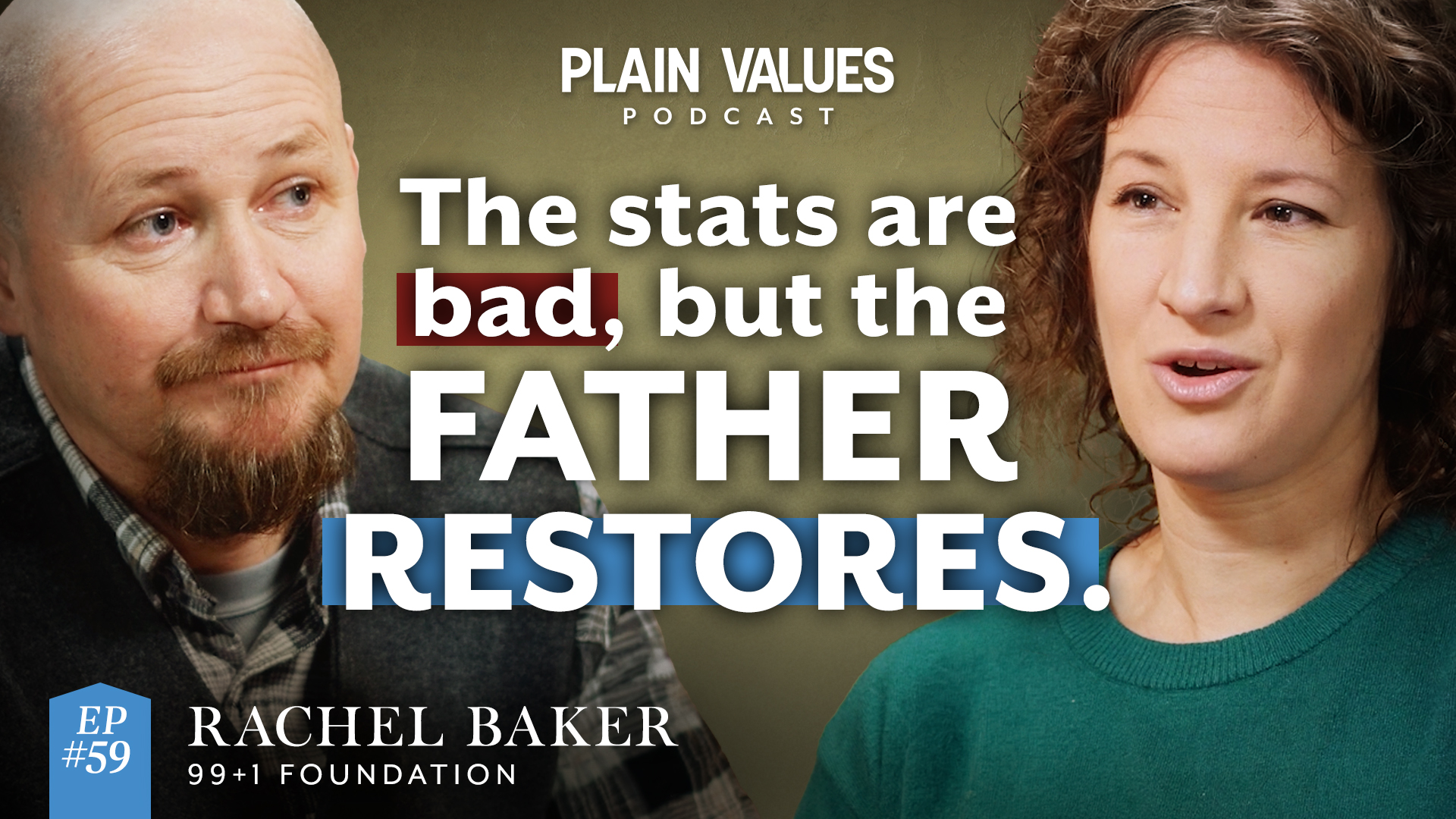
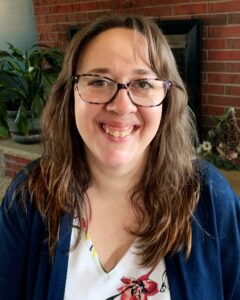
In this episode of the Plain Values Podcast, Marlin sits down with Rachel Baker of the 99+1 Foundation. Rachel grew up in Holmes County but now lives in Oklahoma where she works for a foundation caring for young people who are aging out of the foster care system.
If a child enters the foster system above the age of ten, there is a very low chance of being adopted, and a very high chance of them ending up homeless, in prison, or dead within three years of aging out of the system. The 99+1 Foundation exists to change that story.
The Foundation cares not only for the young aging out, but also for widows who may be in need of a place as well. This creates a beautiful dynamic of the older mentoring the younger.
Neurofeedback is an exercise for the brain that helps calm the central nervous system. Rachel uses Neurofeedback to work with young and old people who have experienced trauma and has helped correct anything from poor sleep to seizures.
Like George Mueller, the ministry often runs on prayer alone. Meals show up out of nowhere when needed. Buildings get renovated. Needs are met. The heart of the Father is not to disregard the broken, but to take what is there and restore it to something beautiful. This is the story of the 99+1 Foundation.
🔵 If you want to learn more or support this ministry restoring the Kingdom, go to www.99plus1.foundation.
Timestamps & Transcript
00:00 – Intro
00:48 – Rachel’s Backstory
03:29 – Hardships of Aging Out of Foster Care
07:02 – Education Challenges for Foster Youth
10:02 – Unconditional Love and Trauma
11:46 – Neurofeedback and its Huge Benefits
17:00 – 99 Plus 1 Foundation: Restoration and the Father’s Heart
22:35 – Coffee Shop Initiative: Job Skills and Community Outreach
24:31 – Trusting God Just Like George Müller Did
26:15 – Don’t Forget the Wise Older Generation
27:29 – 99 Plus 1 Today
28:29 – How to Support 99 Plus 1
29:42 – How Can We Pray for You?
A child that ages out of foster care, 80% will be homeless, in prison, or not even surviving after three years. The Stratford House, it’s an old nursing home. It sat abandoned for 13 years. Everyone told us, “You just need to level that place.” So this building, the thing I love about that is that the Lord restores. Society would say, you know, “That building is too old. That situation is too bad. Let’s just get rid of it and start over.” Mm-hmm. But that’s not the heart of the Father. What kind of stories have you seen come out of neurofeedback? I have seen some pretty amazing things. Rachel Baker, thank you very much for coming, for making the trip. Um, you, we, we just figured out that you are not my wife’s first cousin. You’re her second cousin. That’s right. I, I thought… I have always, when I think about the Baker family, when I think about that entire side, I always think, I just assume that you guys are, are first cousins, and that’s how I’ve seen you. Uh-huh. So I’m sorry. We grew up close. That’s all right. Yeah. Yeah. I know you guys were always church and family and- Uh-huh … all that stuff. Um, well, tell us a little bit about what, like, where you grew up, how you grew up, and then of course, h- how you ended out in Oklahoma. Sure. Well, I grew up here in Holmes County, um, close to your wife, as you know, and we were homeschooled growing up. Um, always loved the history and, you know, reading about missionaries and things like that. So, um, growing up I had heroes like Hudson Taylor and Amy Carmichael and Elizabeth Elliot. So I always, um, the Lord put just that desire in my heart early on to serve, um, to serve, you know, the underprivileged and just to show His love to people around the world. So, um, fast-forward a lot of years and a lot of different experiences and, um, I… So I started traveling with an international children’s choir and spent some time overseas, and then made some friends, you know, along the way and got to know, um, one of my good friends that was also traveling with the choir. Her family, um, worked with youth aging out of foster care in the state of Oklahoma. Um, so over time, you know, our paths kept crossing and I ended up down there in 2019 to work with some of the kids. Um, often they’re very behind in their education. Um, being in foster care, it’s hard to actually learn and be caught up, you know, as the kids are moving around from home to home. So I would work with some of them that were behind, um, doing some tutoring and just trying to help them catch up with their learning. And, um, I went down just for the summer, intended to stay for three months, and the Lord just kept opening up doors there and seemed like He was closing doors here. Um, and so I’ve been there for seven years now. Really? From three months to seven years. Yeah. So let’s talk about the, the aging out process a little bit. Yes. Am I, am I thinking straight that that is often a very overlooked reality? Yes. Um, there are a lot of kids that if they enter foster care beyond the age of 10, there’s a very low chance that they’re gonna be adopted or ever put back into a family situation. Most of the time they end up in a group, group home or a group facility, um, or a shelter of some sort. In Oklahoma, they still have, like, shelters, um, which would technically be like a homeless shelter, but they have children in them. Really? Yeah. Wow. So it’s really sad situation. Um, and then once a child is 18, obviously they’ve aged out of foster care and they, there are programs to try to help them, but you know, when you’re put into independent living at 18 years old and you’re behind in your education, um, you know, you don’t have a support system, there’s so much trauma that’s happened in life, you’re really not ready to be out on your own. I don’t think I caught exactly what you said. In Oklahoma, they have homeless shelters for children, or they just allow the children to stay? Allow the children to be there. And these are children in foster care? Sometimes, if they can’t find a home for them. So you’re, you’re basically describing a bit of an orphanage almost. That’s a bit far reaching maybe. Yeah. Yeah. Yeah. I, I had no idea that that was still- Even a thing … yeah, going on. Yeah. Just, you know, there’s always some that fall through the cracks, and then- Wow … they’ll end up in places like that. A, a child that ages out of foster care, I, I think the statistics are 80%, and I could be wrong, I haven’t looked at it recently, but, um, 80% will be homeless, in prison, or, or not even surviving after three years. Three years? Yes. So from 18 to 21, 80% end up… In one of those three places. Wow. I have… I, I remember, I remember reading that a lot of those girls end up on the street. Prostitution- Yeah … is huge. Yeah. Yeah. Because they’re trying to survive. And, you know, they, they get taken advantage of, they get put into these, you know, rings, and that’s just kind of the way that it ends up. Does, does this reality ever get talked about in churches? Um, I don’t know. I mean, I’m sure it does probably sometimes, but not that I’m aware of. Um, you know, I think it’s kinda like you, it’s just something that people don’t even… You don’t even think about it. You hear foster care and you think of, of younger children, or you think of, you know, kids that, you know, are, are currently in the system. But once they turn 18, they kinda fall off the radar, and people just don’t even, just don’t even think about it, I think. It’s not… I don’t think it’s necessarily intentional. Mm-hmm. I think it’s just one of those kind of forgotten realities. And for them to be able to get up and out of that situation is just exponentially harder. Yes. Let’s go back to, to what you said about the education side. I remember the first time I realized that w- when something, something happens in the home, you know, Mom and Dad get into, you know, a domestic situation and, and, and the children are taken away, they often go to school the next day. Right. Or they’re, they’re, they’re made to. Mm-hmm. It’s, that’s what, that’s what they’re supposed to do. Mm-hmm. And they’ve just been torn out of everything they’ve known. Mm-hmm. And I remember thinking about that kind of reality, to the best of my little ability- Mm-hmm … for the first time, and, and it’s no wonder, it’s no wonder that they act out, that they get angry, that they get into- Right … all sorts of trouble and- Right … and end up, a lot of them end up, you know, in jail or in juvie or- Mm-hmm … in, in all sorts of things. I guess I shouldn’t say jail, but, but- It, well, it might be detention in school. Yeah. You know? Or maybe they had to change schools, and now they’re going through this, you know, huge life crisis. Because of the foster care. Right. I’m sorry. Oh, I, that’s right. Right? Oh, my goodness. So sometimes they stay in the same schools, you know, if there’s a family in the same district. Um… Right … but often they have to change schools, and that’s traumatic, you know, for a child at any time, let alone going through also, you know, now living with a new family and the, experiencing the loss of what they knew. Yeah. Even if it wasn’t healthy, it was still familiar. And so losing everything that’s familiar is, I think is another one of those things that often gets overlooked, and we expect kids just to be able to move on quickly. And kids are very resilient, um, but we often don’t give them time to mourn what was lost, and that’s important, too. And so, you know, think of all those things- Yeah … that have just changed in your life, and now you’re thrown into a classroom and told to learn, you know, how to read or how to do, you know, addition, subtraction. Mm. And you just, your brain just can’t even absorb that information at that time. Mm-hmm. So these kids keep getting pushed through the system. They haven’t really learned. And, you know, they might get an IEP or a 504, um, but they’re still not really ready with the skills that they need- Mm … you know, to have a job or… I know what an IEP is. I don’t know what a 504 is. A 504 is just another type of, uh, like, individualized learning plan- Okay … um, for special needs. Okay. So it’s a- Yeah. Okay. Um, I was with a group of guys last night, adoptive and foster care dads. Mm-hmm. And the, uh, the main speaker was a guy by the name of Keith, and Keith works with a counseling organization that almost zeroes in on fostering and adoptive families. Mm-hmm. And, you know, missionaries that are, you know, home on sabbatical or, you know, all that sort of thing. You know, that they’re trying to, you know, to come back into the American society, that sort of thing. Mm-hmm. And he made a comment that, again, I’ve never thought of. He said, “Parenting is learning how to love uncon- unconditionally.” Uh-huh. If I can talk right. Um, and he said, “That’s a real thing for parents.” Mm-hmm. But he, but he, he told us a story about when he saw, for the first time in his role, children that were taken out of a hellish situation at home. Mm-hmm. Mm-hmm. And they were w- just weeping because they were removed from that situation. Uh-huh. And, and, and he said, he said that was the first time that he saw that children love their parents unconditionally. Yeah. And I had never thought of it- Yeah … in that way. Mm-hmm. Even if it’s bad. Mm-hmm. It’s wh- it’s who they are, it’s where they came from, it’s what they know. Mm-hmm. And to be torn out of that and moved is, is a hard and traumatic thing. Um, so you were, you, you went there thinking you’re just going to do some tutoring. Is that what you did? Yes. So I went, um, for the summer months, um, I was doing, working with a few of the kids that were pretty far… And at this time, they were children that were under 18. Um- Mm-hmm … and, you know, just working on some Developmental skills, some visual skills to help them be able to learn to read better, some, uh, work with some kids that were kinda like dyslexic, so some difficulty reading. Um, did that for a few months, then I started to learn about neurofeedback. Uh, I don’t know if you’re familiar with that. Just a little. Okay. So it’s basically if you think about like an exercise for your brain, um, and one of the, one of the benefits of it is helping to calm down the central nervous system. So, uh, once again, a lot of these kids or, or people that have had, you know, traumatic experiences, they’re in that fight-flight mode, um, and so the neurofeedback just helps to calm the whole system and bring them back into a state where they can, they say, rest and digest, um, or be able to learn and feel safe in their environment. Yeah. Um, so I took some training then and started into doing some neurofeedback with these kids that were under 18. Um, but over time, that kinda morphed into working with the ones that were over 18, um, and also just needing some of that extra attention to be able to… A lot of them have, you know, they’ve graduated high school, um, but they still, their reading comprehension’s very low. Um, it’s very difficult to, you know, do math or just be able to keep up with their finances, and, you know, all that stuff that you still ask your parents for help with when you were, you know, learning to be out on your own. Um, so we just try to bring support alongside of them. What kind of stories have you seen come out of the neurofeedback? Um, I have seen some pretty amazing things. Um, there was one, and this one was under 18 yet, um, but really had a lot of struggles with seizures. Um, and they said that the seizures were situational. Mm-hmm. Um, so the way that, that this child dealt with stress, um, in their environment, but after a few months of regular neurofeedback, they’re seizure-free. So they were able to get off of medication and be able to function normally. So that was huge. So that child’s body responded to any stress or some kinds of stress, and it would seize up. Yeah. I’ve never heard of anything like that. Yeah, so especially in early, early childhood trauma- Wow … that can be one of the outcomes. Um, so yeah, I’ve seen seizures are often very much help because neurofeedback helps stabilize the brain, and a seizure is basically a misfire in the brain. If you think of it that way, it’s simplifying it quite a bit. Mm-hmm. Mm-hmm. Um, but the neurofeedback helps the brain to be regulated and to be able to, you know, function properly. Um, it also has been very helpful in helping kids be able to focus, you know, so sit down and be able to, be able to maintain for a longer period of time when they’re actually trying to learn or read or, you know, whatever it is that they need to do. So focus has been a big thing, as well as helping them sleep. A lot of times they have a lot of disrupted sleep, um, not getting into deep sleep, so they’re not rested, and then- Wow … the neurofeedback helps calm their, you know, the central nervous system again so that they’re able to rest, which makes everything function better. Mm-hmm. So… The reality of all the effects of what stress, and, and, and this sounds so cliched and, and so tacky almost. I’m sorry. I’m sor- I feel bad to even bring it up, but it’s interesting because it really does mess with us in ways we don’t know- Yeah … and probably can’t even understand. Yeah. Especially when you’re the person that’s living it. Yeah. You don’t, you don’t stop and go, “I wonder why my body is doing that.” Yeah. Especially when you’re a child or when you’ve lived with it for the majority of your childhood, you know, to- It’s- … now being an adult. It’s just the way things were. Right. Sorry to cut you off, but- No … it’s just how life is. Yeah. And you don’t know to think about it. Uh-huh. Wow, that’s fascinating. My goodness. Um, so tell us about the organization, the foundation that is now your home, basically. Like, you moved out there. Yes. And you’re there s- still. Um, how many kids do you guys have? How many do you take care of? Are they coming and going all the time? What, what is that, um, that like? Yeah. So the, the foundation is called 99 Plus One Foundation, and the origins of that name came from the scripture that talk about Jesus leaving the 99 sheep to go after the one that was missing. Mm-hmm. Um, and the idea is they’re, you know, that these are the forgotten ones of our society right now, um, or one of the groups, you know, that have been forgotten. Um, so in our, the Stratford House, which is a completely different story in itself, um, it’s an old nursing home that was donated to our ministry. Um, it sat abandoned for 13 years, and everyone told us, “You just need to level that place and start over.” But we said, “No, um, the Lord gave us this place. You know, we’re gonna try to paint the walls and scrub the floors.” And turn it into a beautiful place. Um, and the Lord just blew us away with that because He brought in so many different, um, churches and groups of people, um, churches that, you know, would disagree on their doctrine, but they came together to help restore this building. Really? It was really beautiful. There was actually a group of Amish folks from here in Holmes County that made the trip to Oklahoma and helped do some renovation there. So that was pretty neat. Wow. Yeah. That’s cool. So, so many stories of God’s faithfulness along with that, that home, but now, so it’s an old building that’s been renovated. It’s beautiful. Uh, we have 17, we call them micro apartments, um, within the building, and so we can, we can have up to 17 ladies living there. Um, some of the rooms are equipped for children if it was, you know, a mother with some children, um, then there’s space for them as well. And then some of the rooms are actually set for, um, like if we would have a widow or an older person that was also in need, there’d be a space- Wow … for them. Yeah, so. So this is not the kids that have aged out. Yes. Okay. It is. So it’s, it was intended for kids aging out of foster care. Um, but we wanted at the same time for it to be a place for widows as well. So it’s girls aging out of foster care and widows that might be in need, which we’ve had a few of them come and go, but they don’t often end up staying super long, which is, you know, we’re happy if they can find a, you know, somewhere else with family or something like that. Yeah. But it’s really a neat experience for the, the girls, the younger ladies, to have an older lady there as well, you know, that can pour into their lives and they can have some of those intergenerational relationships as well. Yeah. Lisa and I have talked about that exact thing- Uh-huh … that as many folks get older, they, th- they seem to at times struggle with purpose. Mm-hmm. What a beautiful, you know, bringing together. Mm-hmm. Ironically, I think, I think the Bible has talked about this. Yeah, yeah. Uh, you know, where th- that’s how He designed it. Yes. Uh-huh. For us to learn from the elders and, and for the elders to pour into the younger, and I, oh, man- Mm-hmm … I just love it. I love it. Yeah. Yeah, so this building, um, you know, the thing I love about that is that the Lord restores, and He redeems, and He takes what society would look at and say, “You know, that building is too old. That situation is too bad. Let’s just get rid of it and start over.” Yeah. But that’s not the heart of the Father, and what He does is He takes what’s there. You know, He takes the broken things. He takes, He takes us, and He redeems us and restores us and turns us and our situations into something beautiful. Yeah. And so even this, this building, this home, you know, is a testimony of His goodness and the way that the Lord works. Did you have to go in and, like, redo the wiring and the plumbing and strip it down to… I mean, everything. Oh, yes, yes. Everything. Everything. Everything is different. It was not a coat of paint and call it done. No. That was our intention. We thought, “Well, we can scrub the walls. You know, we can make this place smell better,” because it was an old nursing home. Um, but there was a local contractor that came in and he said, “You know what? Like, I’m gonna lend you my people. We’re gonna make this place functional and beautiful,” and we redid plumbing, we did electrical, we did, everything was painted inside and out. The flooring was redone. Um, all of the heating and air is new. Wow. Um, there was an older building separate outside that had been, like, their, I think it was the laundry room for the, for the nursing home facility, and, um, that was completely gutted and turned into a home for our house parents that live there on site. Um, it’s a beautiful little house now, completely new. Um, yeah, I just don’t even know how to describe it all. Uh, the other thing that happened was there was, in the, you know, the lobby of the old nursing home, we thought, “Well, let’s put in a coffee shop,” because it will give the ladies an opportunity to learn some job skills. Um, it would be a place that we could serve the community. Um, people could come in here and just, you know, feel welcome. Um, so we renovated that, m- that lobby area into a coffee shop. So now we have a fully functional coffee shop there as well. We serve breakfast and lunch and coffee drinks, and then the ladies when they come in- Wow … they start getting trained, and they can, um, earn some job skills, some job history. Mm-hmm. Um, they learn how to do an interview and write a resume, and then we’ll help them, you know, as they move forward to be able to get other jobs. Are you guys in a town? We’re in a small town. It’s pretty rural, yes. Okay. But it’s enough, it’s big enough to be able to support… The, the coffee shop … the coffee shop. Yeah. Yeah, and the ministry. It’s not, yeah, it’s not booming, but- Wow … but the Lord provides, and, um, it’s been really neat, you know, just even as an outreach to the ministry or to the community. I’m sorry. Mm-hmm. Um, so when the food stamps, uh, went out in, when was that? November, October. Right. Yeah, just a few months back. Yeah. So we started providing evening meals in our coffee shop for community members if they- Wow … needed it. It’s just open to the public. So we’ve been doing that ever since. No kidding. And it’s been really fun to see, once again, the local churches stop by, drop off donations of food, drop off, you know, some cash and say, “I want you to buy some food for the, the meal tonight.” Um, and every day we’re just, “What are we gonna cook today? Well, we’ll see what comes in the door.” And then- Get out of here … we make some dinner So it’s just been really neat to see the faithfulness of the Lord in sustaining what He began. Rachel, that that is completely the story of the guy that had the… Oh, my goodness. I’m gonna embarrass myself. Do you remember the story about the guy in Europe? He, he- George Mueller? Yes. There you go. Yeah. There you go. Yeah. Thank you. Yeah, yeah. He would pray, “What are we gonna have? W- we don’t have any milk for breakfast” Uh-huh And somebody would walk in- Here comes the milk … and here comes the milk. Yeah. Never ask for a dollar. Yeah. So it’s a walk of faith, and, uh, you know, it’s good to sit down and remember the stories like we’re doing now because there’s times when, you know, you start to think, “Oh, we don’t have anything for dinner,” and it, it can feel scary, you know, or, like, what’s gonna happen? How are we gonna pay the electric bill this month? I mean, literally no food for dinner. But- How many people come on average? Oh, it just depends on the day. Usually around, like, 8 to 10, 12, 15. It’s not huge. But that small of a number would… I’m, now I’m making a big assumption here. I think my limb is getting pretty small. But it seems to me like that, that small of a number would allow for some really wonderful and intimate conversation. Yes. Because- Yeah … it’s not a room packed full of 40, 50, 100 people. No, it’s just a few, and we’ve definitely gotten to know them and their stories, you know, and built relationships. Um- Wow … and the Lord’s set work, you know, and He’s, His work is to redeem. Wow. And so it’s been pretty, it’s been pretty amazing, yeah. I love it. Just what He’s doing. I think that’s, that is just amazing. I, I… Going back to the multi-generational thing, it’s, it’s so interesting to me how so many, so many of our, of our, you know, churches and just organizations, community, you know, driven things tend to forget about the older generation. Yes. And, and the value and the wisdom. Mm-hmm. And we are pouring everything we have into, you know, other things. Mm. And they’re all good. I’m not saying that this is a horrible idea to do something else, but I feel like we miss, we- There’s a wealth of knowledge- Oh … and wisdom and, and just life experience, and when you sit down, you know, with some of the older folks, it’s so much … I leave just being refreshed and like, wow. Yeah. There’s so much there that we do easily overlook. Yeah. Um, and they, you know, they might need a slower pace, or they might need a quieter environment. Um, but when you can provide those things, you can see that it’s, that it’s so im- it’s so, makes them feel so valued- Mm-hmm … which is important to the heart of the Father. Yeah. So how many, how many kids do you have at 99 Plus 1 right now? So, um, so all adults, young ladies, um, and we have space for 17. Mm-hmm. Um, and they kind of come and go. Right now, mostly young ladies, um, you know, finishing up some high school classes- Mm … some that are going through some online college courses. Um, we’ve had some in the past that have done, uh, like CNA work from, or learned CNA, um, at a local vo-tech- Okay … so vocational school, um, and have worked in the nur- in the hospitals, and then from there, started taking more classes through the hospital and have moved up in the nursing world. Wow. Um, yeah, we’re working towards driver’s licenses and- That’s cool … you know, first cars and some of those big life monumental steps. Man. Um, so. So how can people find you online if they wanna help, if they wanna send you a check, if they wanna send you a blanket? How can they do that? Yeah, uh, that would be great. So we have a website. It’s, um, 99, the numbers 9, 9, the word plus, and then the number 1, .foundation. Um, and if you just Google that, it’ll pop up. Um, we also have Facebook pages. We have a 99 Plus 1 Stratford House Facebook page and then a 99 Plus 1 Coffee House Facebook page. Okay. And you can follow those to get updates and kinda get a glimpse into life there and what’s going on. Um, we do have a sponsorship program if people are interested, where they can sponsor one of our, our ladies- Mm-hmm … for $50 a month. Um, if you’re local, that means you get a free coffee. But, uh, if you wanna travel down from Ohio for a free, we’ll give you a free coffee, too. That’s an expensive cup of coffee. Yeah. It’s worth it, the best one you had. No, that’s cool. Um… But, uh, we do appreciate, you know, every donation, um, and it’s definitely goes towards the work there and the needs of the ladies, so. Very cool. Mm-hmm. Uh, last question. Yes. How can we pray for you guys? Well, we would just love prayer for, for wisdom as we keep moving forward. Um, we do discipleship with all of the ladies, so just for that, um, wisdom and the Lord to work in their hearts, um, and to bring about that redemption and restoration that He wants to do. And then of course, you know, for all of our financial needs and just, yeah, just for Him to continue to get the glory from everything- Yeah … that’s going on there. And for dinner tonight. And for dinner. You know, I hope it’s good. I love it. That is so great. Rachel, thank you. Yes, thank you. I’m so glad. I’ve enjoyed our time. This is so good.




Leave a Reply