
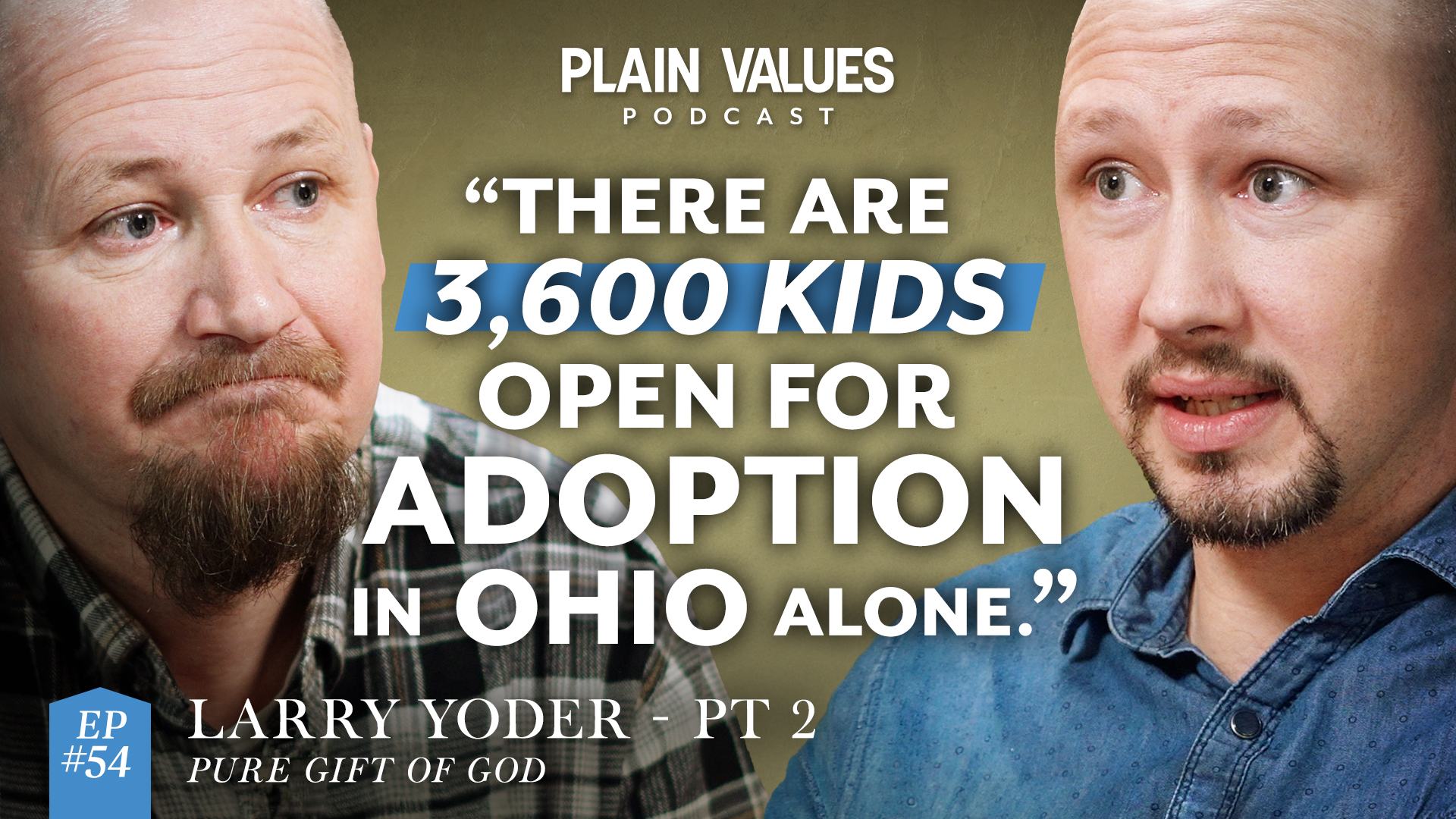
In this episode of the Plain Values Podcast, Marlin continues his conversation with Larry from Pure Gift of God. What began as a simple fundraising and mentoring effort in 2013 has grown into something far deeper… therapy services, TBRI training, family support groups, and practical help for adoptive and foster families who refuse to walk alone.
Larry shares how the hard parts of adoption rarely end when the paperwork is signed. Ongoing struggles surface, and Pure Gift responded by building a therapy center and bringing in trusted practitioners.
Larry explains how trauma rewires a child’s brain and why traditional discipline often fails. The work is not about fixing kids with a magic tool. It is about helping parents understand the need behind the behavior, lower unrealistic expectations, and raise their acceptance.
He is honest: even those who know the principles still only get it right part of the time. Grace is required on every side.
They talk about the loneliness many families feel, the weight on marriages, and the simple ways the wider community can show up (meals, respite, laundry, presence) without waiting to be asked. Larry’s dream is larger still: more space, educator training, and a community strong enough that fewer children age out without a family.
The work is hard. The timeline is long. But the God who provides is still working on our behalf.
Timestamps
0:00 – Introduction
3:55 – Relying on God’s Provision
12:26 – Funding the Mission
16:27 – What is TBRI?
23:50 – All Behavior is Explained With Enough Information
36:54 – Larry’s Favorite Story
50:55 – Finding Healing by Lowering the Mask
1:03:07 – Remove the Pedestal
1:09:37 – The Fall Festival at Walnut Creek
Marlin: You and I left off with your story right?
Larry: Yup.
Marlin: With your story. So my hope for this one is simply to sit and talk about all the things that Pure Gift does,
Marlin: how like, how Kurt and Erica, how that whole story went.
Larry: Yup.
Marlin: How they found that. How it has grown. How you guys, you know, became involved. Yeah. And then I think we could end with all the things that you’ve got planned, because you guys have really grown it into a lot more than a curtain. Erica. I guess this is a question I just. I need a notepad.
Marlin: did curtain. Erica, it, like, counseling center and.
Larry: So.
Marlin: All of that stuff.
Larry: It’s interesting because it’s something that wasn’t really on the radar in the beginning for them. In the beginning, it was like, hey, how can we like we’re done adopting personally, but we’re not done with helping with adoption. What can we do to help serve other families that are wanting to adopt? And, so it was a couple years in when I think, like Erica and the board, most of the board members had adopted, there was one board member that hadn’t adopted, you know, their kids, they had adopted, you know, eight years ago, homeschooling home said.
Larry: Yeah. And and all of a sudden, you know, stuff starts popping up like, man, like.
Larry: Adoption is more than like like the the hard parts of adoption are just the finances in the beginning. It’s like the ongoing struggle is that things that pop up and and so I think that’s kind of what got the wheels spinning of like, okay, if we really want to make a big impact, like we need help with with therapy, services, psychiatrists, you know, all that stuff, and there’s not really good support out there for for that.
Larry: And so that kind of got the wheels spinning. And the first board meeting that Amanda and I were ever at, both Rose and Cheryl’s name came up. We were talking about like, man, wouldn’t it be amazing to start a therapy center? And hi, Rose and Cheryl, and have a therapy center. Well.
Larry: That was that was probably about a year, maybe not even quite a year before we got hired on. And then the first person that I’m in and I hired about within, within about 4 to 6 months was Rose. And then the second person that we hired was Cheryl. About six months later, we started a therapy center.
Marlin: So when you and Amanda adopted and how long ago was that?
Larry: Yeah, that would have been okay. So we adopted Eva in 2018 and then in 2019 adopted Victor. So they’re 11 months apart. Weren’t planning on it.
Marlin: Was there any support or anything?
Larry: So our first adoption. So with Eva, we didn’t we were pretty naive. We just, you know, we had known one family that adopted, it was a close friend of ours that their parents had adopted. So a good friend of of mine would have grown up with adoptive siblings. But other than that, that was the only connection with adoption in in Baltimore.
Larry: We were living in Baltimore at the time. Another crazy part of the story is years ago, Rose was living in Colorado. She was working at New Horizons, and she would come back to church and do a little missions, Sunday night missions thing at at, at, the church in, in Orrville, eat East Union. Okay.
Larry: So that’s where we were growing up at is Union Church. And that’s where Rosa growing up that so Rose came back to share. Amanda was probably, she could say it better, but, if I remember right, she was somewhere probably between 10 and 12 or somewhere like that. Rose came back and shared some stories about what they were doing with adoption and stuff like that.
Larry: And Amanda went home that night and told her mom, like, I want to adopt one day. So here’s Rose. You know how many years ago talking about adoption sparked something in me? And it’s hard. How many years later? I mean, and I became the directors of Pure Gift. We we had adopted and hired Rose on, as administrative as administrator for Pure Gift.
Larry: And. Yeah, just a crazy, full circle moment. Just crazy how God works, I guess. But back to the question of support. So we hadn’t we didn’t really have any support. You know, we were pretty naive going into adoption.
Larry: We didn’t even know about adoption grants. We, you know, we saved up some tax returns and, and, you know, paid out of pocket, you know, went into credit card debt.
Larry: But don’t tell Dave Ramsey.
Larry: But, you know, we just were like, well, we don’t know. We tried to do a little fundraiser, so we were inner city, small church. It is it, you know, we did like, a cookout after after church. And, you know, I think we made enough to cover the cost of food, but it really it’s very different, you know, like around here you can do a you can do a fundraiser for an adoption and after church and, you know, get most of your adoption paid.
Larry: It’s crazy, but, you know, maybe not every time, but then I’ve seen that happen. So, but as far as other resources. No, I feel like our agency did a great job with training. I feel like you did a really good with training. Had a great experience with our caseworker. You know, but but as far as support.
Larry: Yeah. Then our second adoption. So we adopted even we had wiped ourselves clean, and we’re still in debt. And got a phone call about Victor. So if it would have been ten months old, we were actually in the process of moving back to Ohio. Got a phone call from the agency saying that birth mom was pregnant again.
Larry: And asked if we would be open to adopting again. And, so we were like, oh my gosh. Like, of course. Yeah. Like we want to keep them together. How amazing would it be to keep them together? And we were in the process of getting our house ready to put on the market to sell and move back to Ohio.
Larry: Victor was born about a month later. So they’re 11 months apart.
Marlin: That’s close and that’s close.
Larry: He he was in the Nikki for a few weeks. We had him home for a few weeks and then moved to Ohio. And that was a crazy but so but going into it,
Larry: we’re like, okay, God. Like you have to provide like like, how are we going to pay for this? We like we don’t know what we’re going to do.
Larry: During that time, we were, we had we had explored an opportunity, at a church down closer to DC. And we were we were back and forth quite a bit, with that church at the time. And we had on Sunday morning. The pastors there had actually adopted, they had they had adopted and we’d shared stories and talked a little bit about that.
Larry: And, and Sunday morning, randomly, they got us up on stage how to share a little bit of our story, and they took up an offering for us. We didn’t even have a vehicle that would fit for four kids. And and they they took up an offering for us. That was enough to buy a van. We bought it.
Larry: We bought a little mini van. So then we had we had enough, you know, seats to have all six of us. It was crazy. But, like, so, I mean, there’s so many. I can tell you story after story about God’s provision all throughout our life. I mean, from from a ring. I don’t know if I touched on this at all in our previous podcast with how God provided even a ring for when we got engaged and oh, there’s so much I feel like we did.
Larry: But God’s provision just all along and you know, we were laying in bed one night and Amanda was like, we were just talking about like, how are we going to pay for this? Like, what are we going to do? And I mean, I was like, you know what? I feel like I feel like there’s like adoption grants out there.
Larry: And, so I think I, I think I fell asleep. You know, it’s like, whatever, like, and Amanda’s aminos was looking through some stuff on Google and, and felt like God highlighted this place. And and so the next day, she called it, and it was, it was an organization similar to Pure Gift of God. I don’t think it’s a faith based organization, but it was a they do adoption grants for families that are adopting and and Amanda called in and she was like, hey, you know, we’re just wanting to inquire about adoption grants.
Larry: She’s like, oh my. She’s like, well, you’re you’re too late because the review is in a couple days. And our application, it’s closed for now. And, and like, you’ll have to wait and reapply and the it’s like, well, like like we’re literally, like, weeks away from this baby we’re adopting. It’s, you know, kind of just told our story.
Larry: And she’s like, hang on, let me let me call you back. So this lady goes and like talks to someone and the organization advocates for hours for us. And they were like, hey, if you can get your paperwork in in the next two days, we’ll add you to the review. So they added us to the review and we get a phone call less than I think a week later.
Larry: And they were like, hey, we you guys were chosen for Grant and we’re going to give you more than what we typically do. We want to give you a $10,000 grant towards your adoption. And it was like, what? Like yeah yeah yeah yeah. Amazing. Like like one the world like, it was, it was just another God moment of like, okay.
Larry: And I feel like, you know.
Larry: If, if,
Larry: if there’s a calling on your heart to adopt. And not everyone is called to adopt or foster. I believe that God will take care of that. And like God, you know, it might not look exactly like we want it to all the time or, like, whatever, but God’s got you. There’s there’s enough resources.
Larry: There’s enough support out there. That I, I, I firmly believe that God will take care of it if he places on your heart to not go for it. Don’t don’t let finances hold you back. And I know that was like one of the themes of pure gift. All along has been like like we don’t want we don’t want the finances to be the thing that holds the family back from adopting.
Larry: Like, that’s that’s the last thing that should be holding you back.
Marlin: So how long ago did Courtney Erica actually start?
Larry: So it was 2013. So peer groups started in 2013. Yeah. Okay.
Marlin: They adopted.
Larry: Two. Yep. So they have two biological, two adopted.
Marlin: Did they start out only to be a fund raising vehicle?
Larry: That’s. Yeah. It’s like a fundraising vehicle and a mentor program or not even a mentor program. Like they if families would call in and would be interested in learning more about adoption. They would either meet with them themselves, someone from the board, someone from the team, or they would connect them with a family that has adopted. So so if let’s say someone calls in, hey, we’re interested in adopting from India.
Larry: You know, we have we’re connected with families that have adopted from India. I mean, the Hales, you would know the, you know, the hills. We’ve we’ve sent quite a few families their way. And. Yeah. So we have resources out there like that that they can talk specifically about the country.
Larry: How do you guys go about actually doing all the fundraising?
Larry: Yeah. So it started off when when pure gift started, Kurt. And, Jesse and it and Wally, a couple guys were, were running, the Columbus Marathon and they were like, hey, why don’t we why don’t we start raising money through through this race? We’re running it anyway. Like, why don’t we go try to get some sponsors and and raise some, raise some funds that way?
Larry: So that was actually the first fundraiser that progressed ever did was through the Columbus Marathon and still going today is still one of our biggest, biggest, fundraisers that we do. So that’s cool. And then and then a banquet came. We started, they started a banquet. There was a bike ride for a while. We don’t do the bike ride anymore, but, there’s a bike ride for a while, and then the Amish Country Half-Marathon, is another fundraiser that we that we,
Larry: So part of the part of the proceeds from that race go to peer gift. So it’s, there’s actually three of us. So there’s pure gift and then, sacred grounds and, the East Toms fire Department. Okay. So, and then and then when Covid hit, everything kind of shut down. And so we’re like, well, what are we going to do?
Larry: This is right before we came on. And Kurt was like, hey, I got a motorcycle. Let’s do a raffle. So they started, they did this raffle. It went pretty good. And then someone was like, hey, we got a car. That’s. And so we raffled, a Camaro. That was a first year we came on. And so we did this, you know, it was like a 72 yellow Camaro.
Larry: And, and that, that took off. It really did. Well. And so we’ve we’ve been doing the car raffle now for five years. Five, six years.
Marlin: One of my cousin’s sons won. Yeah.
Larry: Okay. Yup yup yup. Short. Timothy. Yup. Crazy. Oh my goodness.
Marlin: Yeah. My cousin is is having a good time driving.
Larry: Yeah, I bet, I bet. Oh, yeah. Well, it was his dream car. It was literally his dream car. He said that he used to have one and ended up selling it when they started having kids, I think. And, but it was his dream car. And here his son won it. And 69 Chevelle.
Marlin: Yeah.
Larry: It’s pretty. It’s it’s sweet.
Marlin: Gave me a ride before it, you know?
Larry: Yeah.
Marlin: Was,
Larry: Before we raffled it off. Yeah.
Marlin: What actually happened? Yup. And then Jason Gold, he said, hey, check it out.
Larry: Yeah. We have a this year. We have a, we are actually I have the car for this year, so it’s, it’s a 79 Trans Am smoking to be in the Trans Am. It’s got the 404 speed black with the bird on the front. It’s beautiful. It’s sweet, T tops. You can’t hardly drive it without burning tires on it.
Marlin: So what was the process like? Did you and Amanda know the TBI, the counseling, the, you know, did did that work? Start well, like, who’s whose dream was that?
Larry: Yeah. So somehow and I don’t even remember how somehow pure gift got connected or found out about the Hope for the journey conference. But it used to be called empower to Connect. Yeah. So Karen Purvis. Yup. Karen was so. So they started offering peer groups, started offering, empower to connect a few years prior to us coming on.
Larry: So that was the and I’m not sure what that connection was initially, but so we would host that at Grace church and so still do we host at a Grace church every, every April. And, and then when, when a man and I came on so Amanda’s dream, even before we moved back here, was to go back to school and do something in the therapy world.
Larry: So we were planning when we moved back, we were planning for her to start school. And then we ended up we ended up adopting Victor and kind of put that on the backburner. And when we got connected with Pure Gift, everyone was talking about this conference. You know, we were like, okay, sounds, you know, like, okay, there’s huge hype about it.
Larry: And so we went, we’re like, oh my word. This is amazing. Like, how do we not know about this before? Like, like I wish we would had this stuff when we had our biological kids. Right. And just found it really helpful and found that it’s helped so many families. And, so we were like, hey, we want to we want to offer more in the realm of TBI to families.
Larry: And so Amanda pretty much right away went and got worked on her TBI practitioner license. So she got her TBI practitioner license within the first within the first year before we started the therapy center. And we’re just, wanting to help more families that way. And then when we, when we started our therapy center, we, Cheryl is actually a TBI practitioner as well.
Larry: And, and we use a lot of TBI stuff in our, our therapy center.
Marlin: But pause for a second. Can you just define what TBI don’t. Yep. Somebody you know.
Larry: Yeah. That’s it. Yeah. Yeah. Unknown Lisa loves rustic strength soap. Lisa is my wife, and she wrote a few words about each of the of her favorites. This is the the ultra concentrated Castile soap. This is a staple in our home. It is so versatile. A little goes a long way to make your own cleaning spray for nearly everything. Unknown It makes the best bathroom cleaner. Add a few drops of your favorite essential oil and it leaves your rooms and surfaces smelling great. You can be confident in knowing your home is clean without harsh chemicals. Guys, go to Rustic strength.com to order your first batch. Use PV 15 for a nice little discount. Thanks a ton.
Larry: So TBI arise trust based relational intervention and it Karen Purvis and Doctor David Cross from Texas Christian University TCU. She was she was a foster parent for years and worked with worked with David Cross to Doctor David Cross to create this curriculum. And she was a solid Christian, very, very much a Christian, and wanted to bring some of those studies, you know, bring Christian principles and, scientific principles that scientific studies into the mix and learn about the brain, learn about how children are affected by trauma.
Larry: And what are ways to kind of rewire the brain. What are ways to, to help a child navigate through, through this stuff and, so that’s yeah, that’s what TBR is.
Marlin: Hold on a second. Trust based relational intervention, was.
Marlin: When did Kurt Thompson appear on the scene?
Larry: I don’t know.
Marlin: Well, I feel I feel like I feel like he took his own research.
Larry: Yup.
Marlin: And wrote a book.
Larry: Yeah.
Marlin: Incredible. And and I think it was I have it was it, Oh, don’t.
Marlin: His book.
Larry: Yeah. Oh, my word on our word.
Marlin: It’s it’s in my shelf.
Larry: Yeah. We have copies at home and in the office.
Marlin: The deepest place. The soul of shame. The soul of,
Marlin: It’s got the. Oh my goodness. Yes. Sorry. It will come back.
Larry: Yeah, it will come back. Yeah. He’s he’s a genius. That guy.
Marlin: He is a genius.
Larry: He he spoke speak once. Yeah, I heard him speak once and absolute like. But he’s got a podcast to have you listen to. I like listening to summit. Yeah. He’s. Yeah. Just a genius. So I don’t know at what point. So I know that he really he he’s really been involved more in the adoption of foster care world in the last number of years.
Marlin: I remember the first time that I heard about TBR. I they were talking about. I almost feel like they were talking about when a child is born and is born into a family where they do not get. Yes, you know, the joking and the. Yeah. And the calming. Yep. And you know, you cry and you’re changing. You cry and you’re fed and you cry.
Marlin: Yeah. All of those.
Larry: Things. Yep.
Marlin: That’s what basically what like builds the, the the foundation.
Larry: Of.
Marlin: All of this.
Larry: The attachment cycle. Yeah.
Marlin: And I remember hearing this person say that she literally held her teenager.
Larry: Yeah.
Marlin: And would start to.
Larry: Yeah.
Marlin: Like she saw that. That’s what this little girl had missed.
Larry: Yeah.
Marlin: And missed out on.
Larry: Yeah.
Marlin: And she was rocking her teenager to bed at night.
Larry: Yeah.
Marlin: And I remember honestly, I think if I’m just being honest, I was like, that’s really weird.
Larry: Yeah. Yeah. But it worked it and that’s what she. Yeah.
Marlin: She said it worked and and just, just you know, this girl’s, you know, this girl’s behavior. Yeah. Started to change.
Larry: Yeah.
Marlin: And it it blew my mind.
Larry: Yeah. It’s
Larry: it’s amazing how God created us. I mean, God created us with the ability to to heal, to, you know, but it’s it takes intentionality,
Larry: like, to rewire the brain, you know, because there’s, there’s those needs that that don’t get met. And when those needs don’t get met as a baby, then it I mean, our attachment style or plays into everything that we that we do in life, all of our relationships, all of our connections, our attachment cycle plays into that.
Larry: And it’s, it’s beyond my brain. I mean, I, I, you know, I’m no expert in this, and, and my wife and others could talk way more knowledgeable about this stuff, but there’s yeah, TBR I has like the, the, the correcting principles, the connecting principles and the empowering principles and it just goes through. But but one thing that stuck out to me the first time we, we went through hope for the journey, was this whole thing of, appropriate receptive input.
Larry: So when a child is dysregulated, you know, TBR talks about the lids flipped, and when they’re in that space.
Marlin: Let’s just let’s just explain that. Yeah, the lid flipping is the is the front.
Larry: The prefrontal cortex of your brain.
Marlin: That’s right. Something happens and it literally goes offline. Goes offline. And you don’t know really what’s going on.
Larry: Yeah. Yup.
Marlin: Emotionally.
Larry: Yup. All that. Yup. And so and so one of the things that they talked about was, you know, when that happen, like a lot of times when that happens, and proprioceptive input is like like a way you can get that message through like a squeeze, like a hug or, you know, there’s different ways. But one thing that I started doing with my daughter was, you know, she would get start getting dysregulated if I could, you know, TBR, I talks a lot about playful engagement stuff.
Larry: And if you can, if you can do it playfully and and try to get her like if I could get her to like, let me give her like ten big squeeze I was I would say like even like, did you miss out on your squeezes today? If I could get her to let me give her ten bucks, we just immediately come down.
Larry: Now, you can’t force that. You know, if you try to force that, you know, it’s only going to get worse.
Marlin: That’s not going to.
Larry: It’s not going to help, but, you know, just simple tools like that. And another thing with purpose of input in schools is, you know, we teachers will have a backpack full of books, heavy books and, well, another thing is like weighted blankets that plays into proprioceptive input. Need. But they’ll have a backpack full of books and kids start fidgeting around, you know, you know, getting dysregulated in the classroom.
Larry: Whatever. Like, hey, can you take this backpack, put this backpack on, go down to the office, drop this off and bring something else back. And and the office knows what’s going on. If a kid shows up with a backpack full of books, they give them something else to bring back. That gives them some purpose to them, but gets them out of the classroom, gets his mind off of that for a second.
Larry: Then he comes back in, can sit down and and engage again. You know, just simple stuff like that. Like TBR, right, is full of like simple tools on how to help a kid navigate through stuff like that.
Marlin: It has got to be a near impossible task for a teacher. Oh my. Yeah, for a teacher.
Larry: Yeah.
Marlin: No TBR. I thought.
Larry: And yeah.
Marlin: Methodology.
Larry: Yeah.
Marlin: You can’t walk up to a kid in a in a high school classroom, you know, in elementary classrooms, say, hey, can I give you a hug?
Larry: Yeah.
Marlin: You can’t do it. Yeah, for good reason. Yeah, but that is, that’s amazing that they actually have figured out ways. Almost like a sensory room.
Larry: Yeah. Yep.
Marlin: And some can go and they can get that tension out of there. Yep. But the backpack with books that is.
Larry: Yeah. That is mean. Yeah. So simple stuff like that. And we’ve you know as, as pure gift has evolved. We’ve you know we started with a therapy center doing one on one with kids. And pretty quickly realized that the, I don’t know, just felt like the best way to help a child is by helping the whole family, not just one on one with the child.
Larry: And so we started looking for some resources. And, you know, what can we offer? And found the Halo program. And the Halo program is is a TBI based program that was created by, Cindy Lee out in Oklahoma. And so we sent my wife and our, our therapists, actually our wife, and we had two therapists, full time therapists at the time.
Larry: We sent, them three out to get trained in. And Halo came back, started offering that. And that’s been that’s been a game changer because that really that’s a ten week program that, has three different parts to it. It has the the parents, the parents are grouped together, kids are in group together. And then there’s a, another evening, a week where the parents and the therapists sit down for a family session.
Larry: So they’re getting two nights a week for ten weeks.
Marlin: Is okay. All right. I have been in those situations more times than I care to.
Larry: Go.
Marlin: Where something goes off the rails. Yeah, and I know in my head, I know what I should be doing the way that I should be responding, the way that I.
Larry: Yep. Yep, but I don’t. Yeah.
Marlin: 100% I get frustrated or I whatever.
Larry: You know.
Marlin: And I revert back to.
Larry: You know.
Marlin: We’re not doing this.
Larry: Yeah.
Marlin: Or whatever.
Larry: It is. Yep, yep.
Marlin: It doesn’t go the way that it could.
Larry: Yeah.
Marlin: Is it simply and I that simply is not the right word. Yeah. I’m sorry, but is it. Is it a result or is is the goal of the Halo program to almost train mom and dad how to parent? Yeah man, that I, I, I, I almost feel like that’s disrespectful to the parents. I don’t mean it to be that way.
Larry: Yeah, but.
Marlin: It is a whole new.
Larry: It is, it is.
Marlin: For example, for example, I remember the first time I heard, I think it was Brian Post, say when a child has a major, you know, dysregulated event. Yeah, he is way off the rails. Instead of instead of reverting to there’s going to be a spanking or, or you’re going to go stand in the corner.
Marlin: There’s going to be a punishment of, of, of, of some.
Larry: Sort. Yeah, yeah.
Marlin: That’s how you and I were.
Larry: Oh yeah. Yeah. That 100%.
Marlin: Yeah. Back to mom. You.
Larry: Oh, man.
Marlin: Right.
Larry: Yeah.
Marlin: And when I heard Brian say.
Marlin: You get him back to being.
Larry: Regulated, you know, and.
Marlin: You move on.
Larry: Yeah.
Marlin: And I thought, is that even biblically that even. Okay.
Larry: Yeah, yeah.
Marlin: But when you have a child, who is that? Dare I say his brain is just messed up, you know.
Larry: Because of all.
Marlin: The things that have happened.
Larry: Yeah.
Marlin: Yeah, I have lived it. I have tried to dole out punishment in different ways and creative things. In those situations, you can take. Yeah, anything and everything away from that child.
Marlin: You don’t get it, does.
Larry: Yeah.
Marlin: Yeah it does.
Larry: Nothing. Yeah.
Marlin: Right. And I’m talking way too much.
Larry: But no.
Marlin: That whole thing yeah is absolutely fascinating.
Larry: Yo, Marlon, I wish I could sit here and tell you that, you know, I’ve been exposed to a lot of TBR. I. And I wish I could sit here and say that I respond great every time. You know.
Larry: Yeah, I might maybe for maybe 30%, you know, where I respond. I’m like, man, I was good. You know, I it it takes a while. And I think it takes a lot of intentionality, to it takes a lot of work to an intentionality to.
Larry: Do this right and to switch your brain and to really rethink, relearn on how to parent because, you know, well, you know, we had our one of our kids has hardcore ADHD just like me. And we had we had struggles. You know, this is a biological kid. And so we started looking for different ways to parent back in the day and ended up stopping, you know, we could spank that.
Larry: We could spank him five times a day if we.
Marlin: Meant nothing, nothing.
Larry: Nothing. We were like, this is not right. Something is not right. Something. And so we started looking into some stuff and and there’s, there’s a, there’s a book called Loving You Kids on Purpose by Danny Silk. And, and we read that. And anyway, it’s similar some of the lines to some TBR TBI stuff and but it’s, you know, to be honest, when I moved back here, so I would have grown up Amish, I didn’t know any families that adopted, and when I moved back, and especially after getting connect to a pure gift, there’s so many Amish, and Mennonite from the community that are adopting all of a sudden.
Larry: And at first I was like, man, I was like, I know what the culture is here growing up here, and I know the culture of raising kids. And I know that you can’t raise kids with trauma the same way as you can your biological kids with discipline and things like that. And there’s more going on. And I would, you know, but I’ve been Marlon.
Larry: I’ve been blown away by the humility and the the willing to learn and the longing to learn on how to parent these, these kids from the Amish and Mennonite community in this area. Like, I’ve been blown away. I’ve been blown away. And you know, it.
Larry: There’s a saying, and it almost is hard to say, but I do believe it that, you know, a child would do good if if they can and, like a kid wants to do good a kid, you know, a kid wants to do good and there’s an TBR, right? We talk about finding, finding the need behind the behavior.
Larry: And so, you know, if you take a kid that has had massive trauma, let you know they’re they’re literally God gave us the ability to step into survival mode, where our brain literally kind of just shuts down and we go into the survival mode like the only parts of our body that work are like the most vital things to keep us alive.
Larry: And so kids that, you know, there’s kids that step into this survival mode and, you know, you have a kid that’s doing stuff, you know, stealing, stealing because they, they grew up not knowing where their next meal was coming from and feeling like they have to they have to do this to survive. And so it’s not like, oh, this kid is bad.
Larry: He’s trying to steal or he’s lying, or this kid lied to me on my word. That’s like, you know, this cannot happen. We gotta deal with this right now, you know? But he had to lie to survive in the past. I mean.
Marlin: The kid’s fears don’t go away.
Larry: No, no. You take a kid out of foster care that’s been through hell. Stuff worse than I would wish upon my worst enemy. And these kids have went through it, and then come into, you know, get removed out of that situation, which to them was normal and get put into what we view as a normal family.
Larry: And they they’re like, this isn’t normal. Like we don’t. And we expect them to be grateful and to, to be grateful and to feel safe. They don’t feel safe. What? Why would they feel safe? They haven’t felt safe. They’ve never been safe. They don’t know they don’t trust you because every person that they’ve trusted has let them down.
Marlin: How what what are some of the stories that that you can share that have come out of the Halo work?
Larry: Yeah. So one of my favorite, you know, and and and you know, I’m not going to sit here and say that that halo is the magic pill because it’s not I mean, you know, I’ll share this story, but there’s also stories of opposite. But we had a family that, that reached out to Pure Gift and they were that they had fostered to adopt.
Larry: They were a foster family. There was a kid that had been in now I could be I could get this mixed up a little bit. Let me see the best I can. I think he was he was nine years old and had been in like 12 plus families, bounced all over the place. More, more homes. And how old he was, and there had been at least a family or two that had planned on adopting him and got to the point where they were like, we can’t like we can’t handle them.
Larry: And so they passed him on and happened again and again. And so this family took them in with the plans of adopting. And, you know, all of a sudden reality hit stuff started going on and they were like, we don’t know if we could do this. And it was going to be another situation where he was going to have to get moved again.
Larry: And every time that a child gets moved to another home, there’s another layer of trauma. There’s there’s another there’s another check. And they reached out. They were like, hey, we don’t know what to do. You guys have any resources? What can we do? She came to mom’s group and talked to us of her, some of our staff, and, we told them about the Halo program, and so they ended up going through the healer program.
Larry: Came, you know, and, you know, the the husband expression, I think, was a little bit leery, like, you know, about halfway through is like, hey, there’s some like, we’re seeing some stuff, like, we’re starting to believe in this, got through the Halo program and felt like, hey, like we we have the resources and the support to adopt.
Larry: Ended up finalizing the adoption beginning of 2025. Yeah. So, you know.
Larry: Without that, he would have been put in another home and just another cycle. And, you know, but then, you know, then we also have, you know, other stories of, of kids, you know, getting shipped off to camp after, you know, so feel like they’re struggling and, you know, and, and again, every child’s different, every every parent’s different, every story is different.
Larry: I wish I could sit here and say, we have a magic pill to fix everything. And, you know.
Larry: I don’t.
Marlin: Sorry. One of the most. Both. Both incredibly hard and amazing and wonderfully great.
Marlin: In my mind, is this constant, tension between.
Marlin: God knows exactly what’s going to happen.
Larry: You know.
Marlin: He he he allows us to engage in those journeys, but at the same time, it’s like you, I don’t know what to do with those stories where things go off the rails and it ends up in a horrible, pain.
Larry: Yeah, I know.
Marlin: Because you don’t like, there’s this big part of you that goes. If they could only turn that key that. Yeah, that little bit more, you know, or something would, you know, would. Yeah. Would it just go a little differently I know and yet it’s okay at the same time it is okay. But it’s not.
Larry: Yeah. I mean, you know, and I.
Marlin: I know if that makes any sense.
Larry: Yeah.
Marlin: But it is for me it is the absolute best foster care adoption, the whole concept. Yeah, is why God made the.
Larry: Universe is to.
Marlin: Prove to us that he still loves us, even though.
Larry: Yeah.
Marlin: You know, get dysregulated.
Larry: Yep. Yeah, I know, I know, he.
Marlin: Never.
Larry: Disengages. Yeah. He doesn’t.
Marlin: Walk away. Yeah. And yeah, it’s an incredible. Yeah. Beautiful picture of what he does for us every day.
Larry: Yeah. Yeah. She, you know I, I was just again reading you know in Genesis the other day where they had the apple or the fruit, and, you know, God came walking and they hid and just reminded me again of shame. You know, it’s and it’s interesting that shame was one of the first things that they experienced. And with sin and, and, you know, that’s God came looking for them.
Larry: Now, you know, God knew where they were. God came. Look, God came after them. And they they were hiding. And it’s, you know, that that’s how that that’s our nature. Our first instinct with, with sin, with, with is to hide. And it I don’t know, I see it in kids. Kids feel shame because they feel rejected or they feel shame because they can’t seem to keep it together.
Larry: And we put these expectations on these kids. Like, you got to keep yourself together like like their their their needs. We need to create space and create a space where it’s okay to be messy. Because adoptions messy. Foster good. Messy. We’re messy. I’m I’m I’m messy.
Marlin: You were. That was good.
Larry: And we need to have space. We need to have grace for each other, for our kids, for. Right.
Marlin: So two things. Two things. Number one, I’m going to say a phrase, and I want to hear your thoughts. Okay.
Larry: Let’s do it.
Marlin: Lower your expectations and raise your acceptance.
Larry: Yeah hundred percent 100%. Like we put unrealistic unrealistic expectations. You know, I, I think especially in our culture, I feel like the expectation is for your family to look a certain way for your for your kids to to be perfect, for your kids to walk the line. And if they don’t, then why you just haven’t whooped them enough for ministry?
Larry: Yeah. You’re. Yup, yup. You’re doing something wrong and I feel like, you know, our churches, our schools, our community. Like like we have to we have to make space for for this. Because.
Larry: Yeah, yeah. I want to touch a little bit on, on the school thing because. But let me go back for I lose it. I was, I was going to say something else about the whole thing with, with the Halo program and the Halo program. I think one of the things that, you know, you said it was like to maybe reach, retrain the parents and teach parents whatever, and that’s that’s something part of it.
Larry: I think, I think a big part of the Halo program is to just to inform the parents on, on how trauma affects the brain, how and just do a little bit of a deeper dive into that, and then also to look at ourselves and what what do we bring to the table? How is our attachment style affecting our relationship with our kid?
Larry: And what, you know, what can we do? And
Larry: when someone comes and sits down and just like, well, what’s what’s one thing you’d recommend to do to prep for adoption? Just like go to therapy like work on yourself like the best thing that we can do is for our kids is to work on ourselves and to
Marlin: And this is another Ryan post thing that I’ll never forget Lord willing I’ll never forget Yeah he said you cannot help your child deal with with that Yeah whatever that is
Larry: Yeah
Marlin: If you haven’t dealt with your own
Larry: Yeah
Marlin: And so, so there’s in the last couple months I have noticed, or maybe even the last year or two, I’ve noticed that trauma that word is being thrown around a lot.
Larry: It is. Yeah. I’m not saying that’s bad. Yeah, yeah I’m not. Yeah.
Marlin: But it’s become a bit of a buzz word.
Larry: Yeah, yeah, very much so.
Marlin: It was for a while.
Larry: Yeah.
Marlin: Where do you, where do you see those lines? Because it’s so easy.
Larry: Yeah.
Marlin: And I’m going to, I’m going to hop on a different train for a second.
Larry: Yeah.
Marlin: I think the, the whole concept of self-care.
Larry: Yeah.
Marlin: Has become a bit of an excuse.
Larry: Yeah.
Marlin: Yeah, a lot of people.
Larry: Yeah, we, we get tired of we’ve gotten away from serving and moved into the space of like, well, I got to protect my little bubble.
Marlin: And I don’t put the that on myself. I can’t put it on you.
Larry: Yeah. The airlines.
Marlin: Yeah I get that. But I think it’s gone a little far.
Larry: Yeah I think there has to be a balance, you know. And I think that even, even the whole thing with trauma, being a buzzword and kind of grouping everything into trauma, I don’t think it’s healthy, you know, I, I do
Larry: I think the unprocessed pain will come out one way or another at some point in your life. And so whether you know, you know, whether that’s trauma, or whatever, like, I think, I think trauma is a buzzword because it’s, it’s a way to kind of just, you know, glean or we kind of group stuff into that and whatever.
Larry: So I don’t really have like huge thoughts on, on that or any whatever. But I, I do think that everyone, whether it’s whether you want to call it trauma or whatever, has things in their life that they, that they’ve experienced, whether it’s, it’s a real thing that they experienced, like a physical, you know, or, or emotional abuse, whatever.
Larry: And then also perceived, you know, so, so you can go through life feeling like you can go through life, have a having had an experience as a kid that you take on this, this lie that that was your fault. And so you go, you know, for example, I, I won’t say who this was, but there was, there was, someone that I know went through therapy, grew up amazing childhood, pretty much said, you know that.
Larry: Yeah, yeah. Great childhood. But they had there was an accident when they were a child, and they, where one of their parents was driving and they had unbuckled in the back seat, the parent was driving. They ended up getting into an accident. And, they felt and and they felt like, oh, that accident was my fault.
Larry: I was unbuckled and blamed themselves and felt like now I got to live this perfect life. So I don’t cause anything, you know? So, so. But really so. But it can but it it definitely played into their life and and and changed. Yeah. Like does that make sense. And so, so even perceived stuff like that you you know so until you work through that that’s what you’re, that’s what your thought process is going to be.
Larry: So take this on in your head. And our belief system, we’re always looking for things to validate our belief system. So whatever, whatever we believe, we’re looking for things to validate. So if I believe that I’m rejected, if I believe that, that people don’t like me, I’m going to be finding ways my brain is going to be looking, scanning everything, every every, every sound, every word, every every action to find ways to validate that I’m rejected or that I’m not worthy, that I’m not whatever.
Marlin: The confirmation bias.
Larry: Yeah. Confirmation bias. And so I think that happens a lot. And, you know, in the lives of those with trauma, in the lives of everyone, I think everyone does that. So again, you can cause of trauma. You can call it whatever.
Marlin: But it’s I don’t know. Yeah. And I, I feel bad that I brought it up. No I think, I think there’s, I think there’s a balance.
Larry: Yeah.
Marlin: You know I, I’ve, I’ve heard people, you know, referring to trauma as having to wait in line at Starbucks and, you know what? I’m exaggerating.
Larry: Yeah.
Marlin: Yeah, I think you get the point.
Larry: Yeah.
Marlin: You know, and and I kind of want to say, you know, I think you need to get out a little bit.
Larry: Yeah, yeah. Actually learn. Yeah.
Marlin: What?
Larry: Yeah.
Marlin: Real trauma. Yeah. Sexual abuse.
Larry: And yeah.
Marlin: All of those things can.
Marlin: Do know to.
Marlin: Someone’s brain.
Larry: Yeah.
Marlin: Actually.
Larry: Yeah.
Marlin: In childhood. Yeah. Absolutely. Yeah I know so bad. So yeah. So the second thing you said and I think so wisely so talking about shame and you know, God walks into the garden and says, hey, where are you? As if he had to say that.
Marlin: But they hide.
Marlin: We hide from everybody.
Larry: Yeah.
Marlin: Our spouses, you know, our friends. Yeah. We’re always there. Yeah. So many times that we’re wearing a mask and we don’t even know it.
Larry: Yeah.
Marlin: I don’t even think we know.
Larry: Yeah, yeah.
Marlin: And yeah. How can people intentionally keep from putting it on or if they have it on, you know, kind of remind themself and go, oh, you know what, let’s take that off.
Larry: Yeah.
Marlin: Be real.
Larry: Yeah.
Marlin: And so huge. It’s so huge. My wife and I have talked about this a lot, where the things that, a foster parent and adoptive parent feels.
Larry: Yeah.
Marlin: And, and the thoughts that they have.
Larry: Yeah.
Marlin: We would never.
Larry: Yeah, yeah.
Marlin: We would never share those with. Yeah. That road because they think we would be I mean unbelievable.
Larry: Yeah. Exactly.
Marlin: To be able to to take that filter off.
Larry: Yeah.
Marlin: And just.
Larry: No judgment. Get it out. Yeah.
Marlin: And and then know that there’s no judgment but.
Larry: Yeah. Yeah.
Marlin: Probably thought the same thing.
Larry: Yeah. Yeah. And that’s what we hear all the time from you know, especially with the dads group of like, hey, you know, this is space where I can come, I can be real. And without judgment, I get, you know, I can feel seen and heard and valued.
Marlin: I have to tell you.
Marlin: When I walk into that, even number one, I had no idea what to expect. I didn’t know who the guy was, Keith.
Larry: I knew who he was. Yeah.
Marlin: And when you guys started talking about the fact that in the adoptive world, almost, I was gonna say almost never, rarely does the marriage of the family, the husband and wife that are doing the work of fostering and or adopting.
Marlin: That is a hard thing. Yeah, because the pressures that happen in the stresses and the load.
Larry: Yeah it does.
Marlin: It takes a toll.
Larry: Yeah it does.
Marlin: Yeah. I will freely confess.
Larry: Yeah.
Marlin: That was a really massive thing for me to hear.
Larry: Yeah.
Marlin: Because we were in the middle of it.
Larry: Yeah.
Marlin: And it was just, it was a hard thing, you know. And for me to hear other people say marriage inside this. Yeah. Set of.
Larry: Parameters know is.
Marlin: Not always.
Larry: Easy. Yeah.
Marlin: It’s never easy.
Larry: Yeah.
Marlin: But it just adds to this other.
Larry: It does.
Marlin: Yeah. And I really appreciated the fact that you guys put you know effort to that.
Larry: Yeah. Yeah yeah yeah.
Marlin: Which by the way Keith is coming and sitting in that seat in a couple of weeks.
Larry: Nice, nice.
Marlin: Yeah. What a.
Larry: Guy. Yeah he is. Yeah. Keith is one of them. Yeah, yeah.
Marlin: How can we pray for you and pure gift Unknown We’ve been publishing playing values for almost 13 years now. And about a year ago, the team and I decided to put together a compendium, a best of, if you will, of our favorite stories, the most impactful stories of all those years, and invited is what we built out of those conversations. It is 194 and four pages, and it is absolutely a thing of beauty. Unknown You know, we do a monthly gathering here where we just simply open our doors. It’s called Porch Time. And the story of how Porch Time came to be and how our family was invited into that, and how we are inviting you and every Tom, Dick and Harry. Anybody who wants to come can come and hang out at porch time here of the office in Winesburg. Unknown So it was such a natural fit to use the home of the founder of Porch Time and to call it invited. You can find it on Playing values.com on the shop page, and you can now consider yourself invited.
Larry: Yeah. Just for wisdom. You know, we’re we’re in a we’re in a stage where we’re in a season of, like, we need more space. But we also want to do things right. We want to have structure in place. You know, we’ve been working a lot on structure for pure gift. Like, hey, if we grow as much as the next five years, as much as we have in the last five years, are we set up to do that?
Larry: Like, can we handle that?
Marlin: Can we that type of a trajectory?
Larry: Yeah.
Marlin: To be able to really.
Larry: Yeah, yeah. And one of our goals, one of our future goals is to create a space where families from outside the community can come in, receive services. And right now we’re like, hey, how can we wrap around families here? What else can we do? How else can we better support and come around families within our community? And then how can we do that for families outside of the community?
Larry: And how can we how can we grow that? Because there’s so many there’s so many families that are in our own space where they don’t have a lot of good resources in their community. And they’re struggling. They’re not, you know, like, how can we navigate through this? So, so pray for wisdom as we as we grow, as we expand, right now we’re in the in in the season of looking for land.
Larry: So we’re looking for land in the community where we can, where we can build on or, and, and get everything we have to offer spaces. Right now, we’re maxed out on offices, for therapy. Looking to get looking to get both locations under one roof, and be able to have a space where for our healing program to grow and things like that.
Larry: So yeah. So wisdom as we’re growing, expanding and and wisdom on, you know, I really I really want to do a deep dive into and I don’t know, I want to pick your brain and have because I know that you’ve you’ve experienced stuff and we have insight on on this. But I, I really want to take a deep dive into, I’m just tired of seeing kids get into that teenage years and just struggle and, like, stuff just fall apart.
Larry: I’m like, man, what? What can we do? What, like, I don’t know, I, I, I don’t know what, but I, I want to pick people’s brain, try to go places to learn whatever we can. Like how can we catch some of the stuff early? Is there is there anything we can do? Like, even if it’s hard, what can we do early on in in children’s lives to help set them up and help them heal to the place where they can grow up to be healthy, engaging adults, living fulfilling lives.
Larry: Like what?
Marlin: What? If it’s huge.
Larry: And it looks impossible, it looks impossible. And I’m not saying it is possible. I’m saying that, like, let’s let’s like, I want to try, like, because I.
Larry: It just it destroys me and and I know it destroys the parents even more to see their kids off the rails.
Marlin: I think I just had this little mental snapshot of you and your wife. Number one, you’re doing your. You’re living it as well. You’re doing it to.
Marlin: But you guys have a pretty front row seat to, dare I say, the depravity of man.
Marlin: And what those couple choices do, and then the effects.
Larry: You know.
Marlin: The havoc that it creates.
Larry: Yeah.
Marlin: You know, it’s been it’s a, you know, it’s weak.
Larry: Yeah.
Marlin: How do you keep you keep from from going down. I mean, just how do you keep doing it.
Larry: I, you know, I laugh, but I, I, I, I think I just try not to let myself go there too much, you know, you can I and I’m pretty optimistic on life in general and things. And I think.
Larry: Yeah, I, I that’s all I, I don’t know because if you, you can really let yourself go down a rabbit hole that looks depressing and that looks impossible and that.
Marlin: So.
Larry: Overwhelming it is overwhelming. I mean, if you look at, you know, you even looking at the number of kids, I mean,
Larry: in Ohio alone, there’s 3600 children that are with the parents. Rights terminated, open for adoption in Ohio alone, three 600 kids, hundred kids.
Marlin: That’s like half of the Guardians Stadium, right? Or how many? Like, when you think about how many kids that actually is and one child would be too much.
Larry: You know, 100 or 36,030 630 600. Yeah. That that those are just kids that I don’t know. I’m not sure exactly how many are in foster care total, but those are just those are kids that are in the system with the parents rights terminated. That means that there’s no chance of them going back. But they also but they’re also yeah, yeah, but they don’t have permanency.
Larry: They don’t have a, forever family. No chance of being, you know, going back and or looking for families to adopt them. And, you know, and then the statistics of what happens with kids that age out without family is like beyond horrific and crushing.
Marlin: I was going to go next.
Larry: Yeah. And it’s like, yeah. So so, you know, I have I mean, I have I had this dream of, of like, I want to create community where families can feel like, hey, we have we have the support that we need because like, and I know adoption isn’t for everyone, foster care isn’t for everyone. And I’m not saying it is.
Larry: And I, and this is far out, but I like why. Why can’t we wipe that out? Why can’t we wipe that number out? Why can’t we? Why can’t we, you know, clear out orphanages? Like, you know what? Why? Why are there? You know. Yeah, but I, I takes a lot of intentionality. It takes a lot of it takes a lot of support.
Larry: It takes a lot of even even raising awareness of, like what? What are the needs in that way?
Marlin: I can push back on on one thing, and I will I will confess again, I used to I used to push everybody.
Larry: Yeah.
Marlin: You should consider adopting. You should consider fostering. Yeah. I don’t say it anymore.
Larry: Yeah. Yep, yep. Exactly.
Marlin: And and the dumb joke that I always say is, you know, I want to be careful. I don’t want to shoot all over myself.
Larry: Yeah. Yep.
Marlin: But that does not excuse everybody.
Larry: Yeah.
Marlin: James 127.
Larry: Yeah.
Marlin: He does not say, hey, I think it’s a good idea.
Larry: Yeah, yeah. It is.
Marlin: A command.
Larry: Yeah.
Marlin: To take care of the widows and orphans.
Larry: Yeah.
Marlin: And just because you’re not up to it.
Larry: Yeah.
Marlin: Does not mean that you can’t make a meal and take it in, and, hey, how can we help? How can we help for you? What do you guys need?
Larry: Yeah, exactly.
Marlin: Not everyone’s called to do something.
Larry: Not everyone is called to to foster, adopt, but everyone’s called to do something. You’re right. And and and one thing I always say, like if I go into a church and talk, one of the things that I say is like, don’t, don’t,
Larry: don’t tell a family,
Larry: don’t tell a foster family, like, hey, let me know.
Marlin: You know, just show up.
Larry: Show up with a meal, show up. Mother yard, show up with cookies. Show up. You know, go, go get trained to, to provide respite care for them.
Marlin: Go do something for them. Like don’t, don’t. Because, you know, foster families are some of the most selfish, selfish, selfless, oh my goodness. Foster families are some of the most selfless people that I know.
Larry: And and they’re laying down their lives. I mean, you know. When I, I’ve talked to businesses about this and one thing that I want, but, you know, bosses, business owners to understand is when you have a foster family, when you have a foster dad working for you, a foster mom working for you, they don’t go home and check out, like, they don’t have the luxury of going home and shutting it off.
Marlin: That’s when the real work begins.
Larry: That’s when the real work begins. And and there’s so many unexpected things that pop up and things that are out of your control. You know, you know, maybe you have a teenager in your home that is opening up for the first time and and it’s midnight, 1:00. And like, you’re not going to shut that down. Like, have grace it believe that they’re doing the best that they can and have grace.
Marlin: I never thought about that I, I never thought about that.
Larry: Yeah. Like they don’t get to go home and shut it off. They’re going home and they’re in it. And that I’ve thought of.
Marlin: But I’ve found the employer side. Yeah. The, the dad that is young. Yeah.
Larry: Yeah.
Marlin: That’s an incredible observation.
Larry: Yeah.
Marlin: Wow.
Larry: Yeah.
Marlin: You and I still have a date with a fly, right?
Larry: Yeah. We got to make it happen.
Marlin: It’s.
Larry: Oh, my goodness. Yeah.
Marlin: any of the closing thoughts?
Marlin: I mean, if we miss anything big that should talk about.
Larry:
Marlin: Oh, wait, I have one.
Larry: Okay, I have one.
Marlin: For anybody who has fostered or adopted at the end of the fall.
Larry: Oh, yes, a fall festival.
Marlin: Yes. An unbelievably cool thing.
Larry: Yeah.
Marlin: Walnut Creek?
Larry: Yep.
Marlin: Wild. Yeah, the fall festival. Tell us about the fall festival.
Larry: Oh, my. One of my one of my all time favorite events. Love the fall festival. So when I mean, and I first came on, we were like, we do all these big events for fundraisers. And I was like, I want to do something at that level with that, with that level of, of, at that level, just to be able to serve families like, what can we do?
Larry: And we started throwing around some ideas with our, with our team. And came up with the with like, let’s do a fall festival. And someone recommended the farm at Walnut Creek and I wasn’t I’ve never been to the farm, Walnut Creek, I wasn’t really sure. So we went and met with them and they were like, hey, we love this idea of we wanted.
Larry: We wanted a day where families can come, they can connect with each other. We would serve a meal and they could just hang out and connect with each other. And the farm said, hey, we want to do that. We want to create the space for that, and we want to give it to you guys for free so the farm doesn’t charge us a thing.
Larry: And, and families can come, go do the tours of the farm, do the wagon rides, feed the animals or drive through and feed the animals. And we just create space for families to connect. And it’s been I mean, we’ve had 12 to 1500 people, all foster care in adoption. And those impacted by foster care adoption from, you know, anywhere from Washington state, Florida, Maryland, I mean, all over.
Larry: They they come from that farm. So, so pure gift gives adoption grants to families all across the United States. And, you know, so, you know, we put it out there like, hey, if you want to come, I would say probably majority of the families there are from Ohio. But we yeah, we definitely have families come from all over the place.
Larry: And, and it’s typically Saturday afternoon, you know, 1:00 to 7:00 and we have, you know, barbecue chicken or we did burgers this past year.
Marlin: But there are also groups. Yes. Come in and hang out for dinner. Yeah.
Larry: Yeah, yeah. The India.
Marlin: Group, come together and spend I mean, effectively close to a week.
Larry: Yeah.
Marlin: Just talk and get to know each other.
Larry: Yeah.
Marlin: We have made some of the coolest friends.
Larry: Yeah.
Marlin: And our kids look forward to it.
Larry: Yeah, yeah.
Marlin: It’s just.
Larry: One of the things that we hear from kids is, is it’s, you know, they come in, they’re like, look like there’s other families that look like ours. Yeah. And they. Yeah. Kids, you know, parents have said, like, our kids won’t let us miss this and parents love it. I mean, it’s yeah, it is a great place to connect.
Marlin: Thank you for putting it on.
Larry: Thank you for all the.
Marlin: Work that goes into it. I cannot imagine you guys have a ton of. Yeah to come.
Larry: Out to help. You know, I think the first year we had like 70 volunteers. But anyway, we’ve scaled a couple of things back and simplified a couple of things. And then I think the first year the fruit line was like, you know, 45 minutes long. And so we changed up some stuff. So it’s like in a. Yeah. Anyway, it’s a great time.
Larry: It’s a great time. Right.
Marlin: Awesome.
Larry: Yeah.
Marlin: Thank
Marlin: you. Yeah. We will go fishing and we will get the.
Larry: Thanks for having me on. Yeah. Appreciate it. Yeah. I appreciate you and and all that, you guys, I know that. Yeah. You guys have been. Yeah. A pillar in this community. And you’ve you’ve lived life. You’ve given your you’ve laid down your lives for so many things. Worthy things. And I just want to applaud you. Marlin, you know, these are amazing people.
Larry: And. Yeah.
Marlin: It’s the same. It’s it’s the same.
Brought to you by …
🤝THIS EPISODE’S PREMIERE SPONSOR: Rustic Strength
Rustic Strength is the real deal. This hardworking family-owned company in Missouri makes high-quality, non-toxic laundry, home, and body care products in small batches… completely free from harsh chemicals, dyes, and synthetic junk you don’t want around your family.
Learn more: https://rusticstrength.com/

🤝THIS EPISODE’S FEATURED SPONSOR: Azure Standard
Our friends at Azure Standard have been quietly setting the standard for clean, wholesome food since the 1970s. Family-owned and values-driven, they make it simple to fill your pantry with organic, non-GMO groceries, bulk staples, and household essentials delivered straight to your door or a convenient local drop point.
Learn more: https://www.azurestandard.com
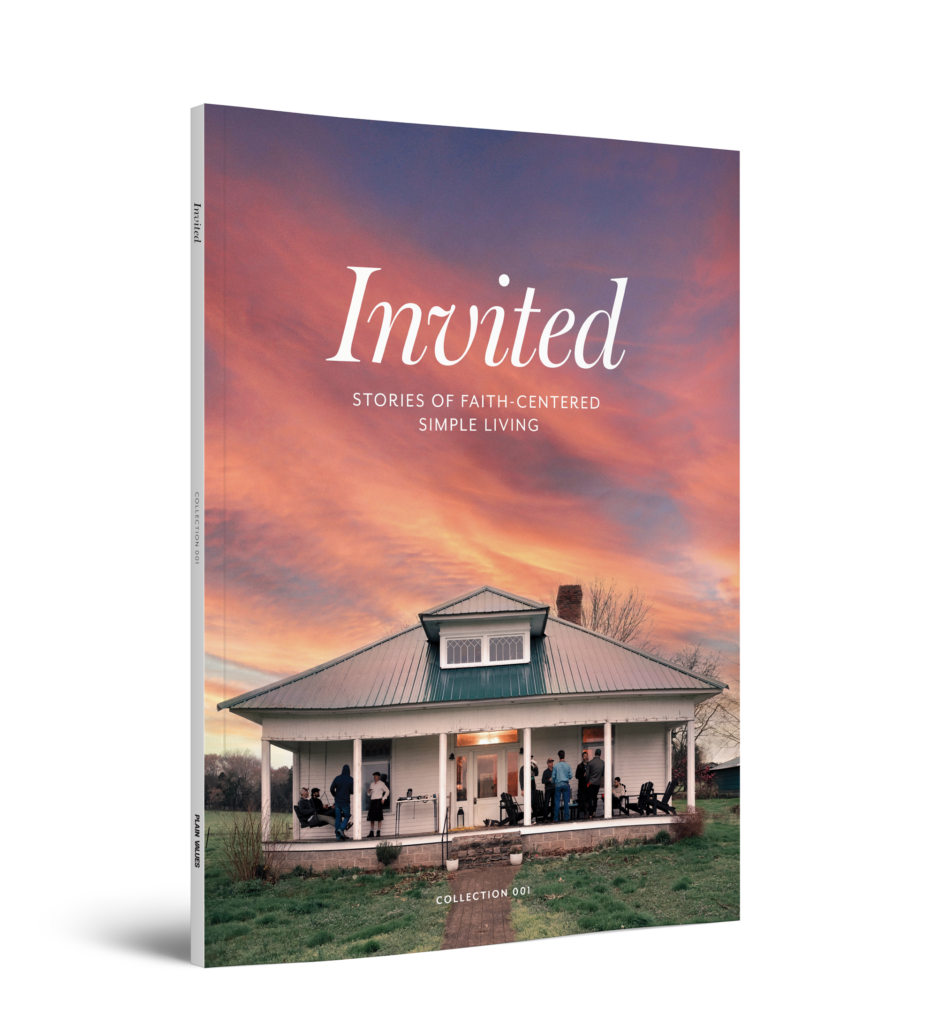
🤝THIS EPISODE’S FEATURED SPONSOR: Invited: Collection 001
If you’re craving stories that restore faith in hard times, Invited: Collection 001 is a handpicked “best of” from Plain Values magazine… uplifting accounts of triumph, simple joys, adoption beauty, homesteading wisdom, and gospel-centered living.
Learn more: https://plainvalues.com/invited








Leave a Reply