
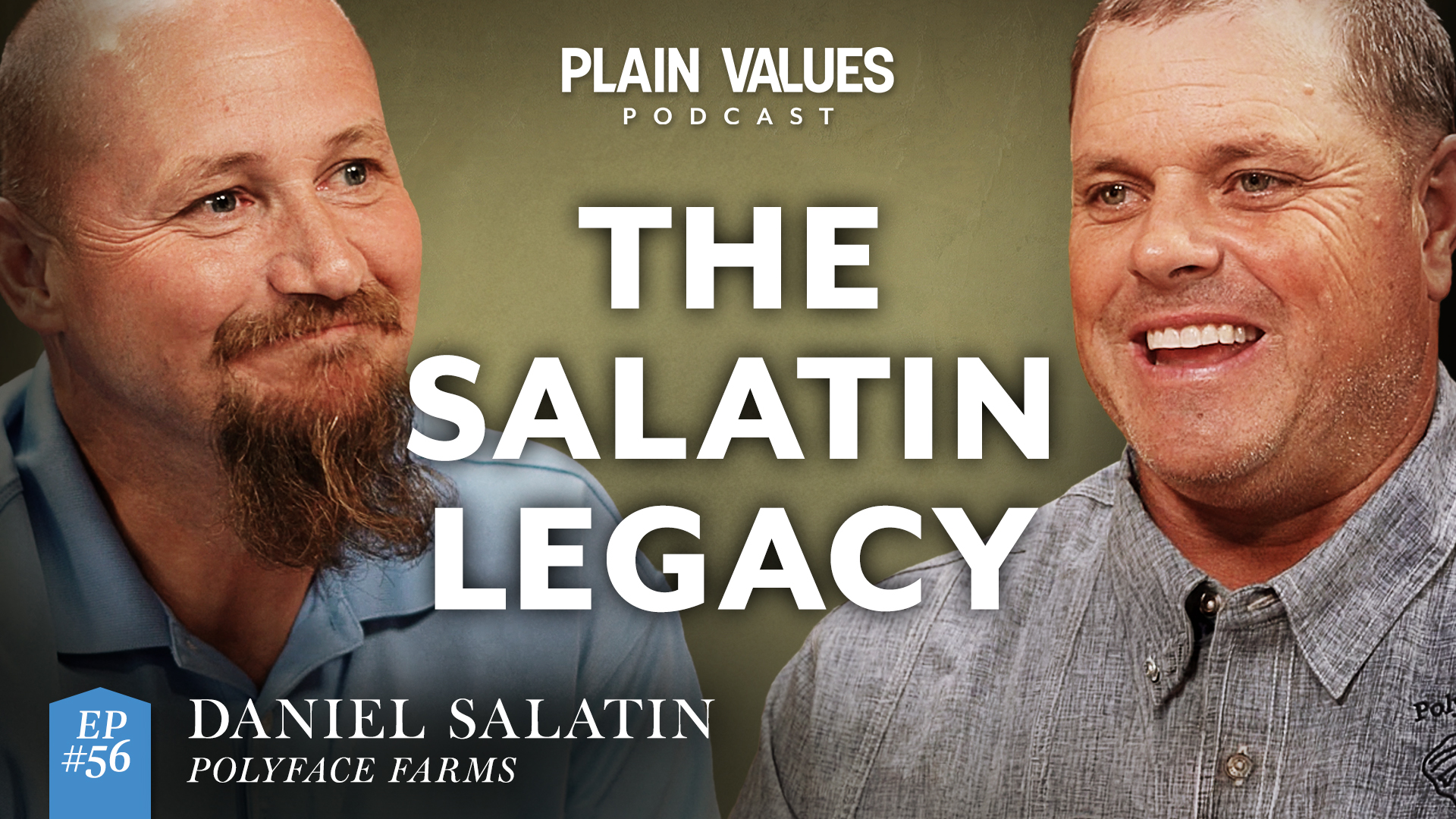
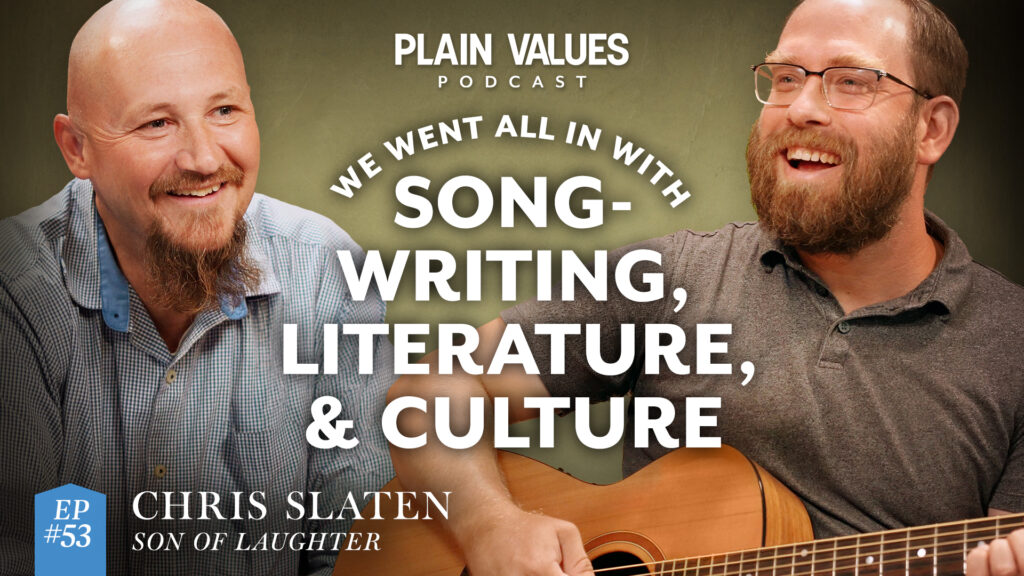
In this episode of the Plain Values Podcast Marlin finally sits down with Daniel Salatin—son of “the most famous farmer in America.”
The conversation begins with Marlin asking Daniel about his childhood. Daniel reminisces of his very normal years on the farm, long before fame and documentaries placed his dad in the spotlight. His dad’s love of literature, as well as his many roles in the massive chicken butchering operation, played a part in shaping Daniel’s life.
The conversation moves on to some of the different programs Polyface has each year. Their Steward program brings many interesting people from all walks of life (including Veterans) to the farm, creating plenty of memorable stories.
Daniel’s favorite routine farming work happens in the cattle corral. He loves to see how certain farming methods, like the low stress technique and others, have been scientifically proven to bring about health and healing.
Daniel is a farmer and doesn’t think a whole lot about Artificial Intelligence, but he says, “You can’t Google experience.” AI gives facts but cannot give you the context of “talking story,” which largely affects those facts.
Daniel and Joel ask for prayer for the legacy of Polyface Farm. Not for the Salatin name but for the practices of healing and restoration of the land.
Timestamps
00:00 – Intro
01:11 – Daniel Salatin’s Childhood Days
06:28 – When Daniel Got The Farming Bug
08:02 – The Joys of Chicken Butchering
12:54 – Daniel’s Favorite Farming Memories
14:55 – Memories of the Late 102-year-old Grandma Salatin
16:27 – About the Polyface Farm Intern Program
20:04 – Memorable Intern Stories and Learning Moments
25:55 – Farming, Healing, PTSD, and Navy SEALs
29:12 – Daniel’s Favorite Aspect of the Farm
30:10 – ANYBODY Can Farm
31:12 – Daniel Loves Creating Teams and Restoring the Land
34:38 – Thoughts On AI
41:07 – The Most Influential People in Daniel’s Life
43:26 – Ongoing Projects at Polyface Farm
45:19 – What is the Best Cereal of All Time, and Why?
47:25 – One Tradition that Daniel Would Pass Down to His Children
49:23 – Where Does Polyface Get it’s Water?
50:53 – What Advice Would You Give Your 16-Year-Old Self?
53:29 – Where Would Daniel Be if Not on the Farm?
54:36 – Which Biblical Character Would Daniel Chat with Over Coffee?
55:22 – “…and they hewed them in pieces.”
56:32 – Why You Shouldn’t Drink Goat’s Milk (LOL)
57:03 – Tough Farm Women & Animal Husbandry
59:41 – How Can We Pray for You?
Do you have a favorite memory of growing up on the farm? Everything from- Yeah … playing cops and robbers with friends in the hay mow to building your own hay fort. I was dragging and helping- Yep … with the dead birds before I was, you know, using the potty, right? Yep. Right. Let’s talk about your intern program a little bit. Mm-hmm. Your 6’7″, 21-year-old dude is no more effective than your 4′ nothing- Little lady … 100-pound soaking wet little lady. My 4′ nothing has complete power over this 2,000-pound animal, just like this 6′ 240 guy. What does Daniel Salatin think about AI? Daniel, I am so glad- … that this finally has come together. We’ve talked about it for a while. Yes. And you emailed me out of the blue on Monday. Yeah. And wa-pow, here we are. Here we are. That’s right. Ah. Yep. So- Perfect timing. Looking forward to it. I’ve- It’s- … been excited about it for a while myself. Yeah. Thank you for having me. It’s, it’s a, it’s an honor. Um, if you’re good- Yes, sir … I’m just gonna jump right in. Absolutely. Uh, tell me about your early childhood days. Ooh. Uh, we’re going there right off. Okay. Um, no, that’s great. Uh, so for me, yeah, it wasn’t one of those where I looked at it originally and thought, “Wow, this is an amazing childhood.” It wasn’t that at all. It was just childhood, right? So I mean, I think that’s the important thing is that, yeah, so you’re… And, and at that point in life, um, even, even my parents, you know, Joel and Teresa, didn’t really think this was anything special. It was just, we want a farm, we want to make a living farming, and we wanna live around family. I mean, very simple, similar to a lot of people who get into farming. Um, the idea that we would be, you know, on a podcast or you know, write some books or be in a couple of documentaries was the furthest thing from our mind at that time. So it was a very s- normal childhood of, um, helping parents, uh, in the garden, um, you know, trying to figure out how to be motivated to snap beans and can. My mom canned a lot. Um, so certainly a lot of childhood stuff there. Um, g- got into certainly the ag side and, and just, you know, being involved. I mean, I can remember little, you know, little bits and pieces of those, those snapshots that you can think of as a kid. Um, just, you know, kinda waking up on the tractor, you know, having gone out to ride with Dad and, like, you fall asleep, and you kinda wake up, like, on a turn or a bumpy spot, and you’re like, “Oh, yeah, I’m here on a tractor.” Like, uh, and then you’re back asleep. Um, things like that. And, and then, and then certainly just the, um, Dad being an English major, being homeschooled, um, he enjoyed literature. And so, you know, our entertainment, no TV, um, no videos, no movies, no video games, no iPhones. You know, this is back in the dinosaur age, right? And, uh, and this would’ve been the, you know, late ’80s to then certainly the early ’90s, but, but mid to late ’80s. And, um, so entertainment was either some, some old style board games or, um, Dad had studied classic literature in college, but in college you just read the CliffsNotes, right? You just get through, pass the test, and you’re done. He had very rarely read, now this is his words, not mine, um, he had never read the unabridged versions of said classics, right? ‘Cause you don’t have time. You’re, gotta pass the test. And so everything from Swiss Family Robinson to the original Robinson Crusoe to, um, you know, Robin Hood, uh, of course, our The Narnia series- Right … um, Hardy Boys, Laura Ingalls Wilder, um, and Three Investigators. I mean, all, even then my sister came along and started getting older, um, American Girl dolls, you know, American Girl collection books. I mean, I can talk Felicity, Samantha, Molly with you toe-to-toe. Like, bring it on, brother. Like, I got you. Did, did your mom and dad read to you guys? So, so, yeah, so, so they, he read them aloud, you know, mostly in the winter, not so much in the summer, ’cause we were hot and busy and tired. Yeah. But, um, in the winter, you know, it’s dark at 6:00. Um, it would be several hours of reading aloud. Um, yeah. Did, do, do you think… Number one, I’m not surprised at all. Okay. I think that’s, that’s super cool. Yeah. Um, do you think it, it, it gave you, like, an, an, an activer imagination? Um, so for me, uh, part of my childhood was that had I been going… We was, I was homeschooled, of course, and had I gone to public school, um, I would have been most likely certified as dyslexic. Um, and so I was a very… I, I hated reading. I hated spelling, I hated reading. I hated all literature stuff, and that was very gut-wrenching for my dad, who was, you know, all into words and English and literature to have a son who didn’t wanna read. And, uh- Wow … and that was tough. And so I didn’t read until I was, um, my parents will say 12. I would say more like 8 to 10, certainly 10. Um, but either way, fairly late. And because of that, I was an auditory learner, and so, you know, kinda like people who have other disabilities, whether you’re deaf or blind, the other, the other senses pick up, right? And so because I couldn’t write stuff down or read stuff, I just remembered stuff. And so, you know, if I’m auditory, like if you said something to me today, you come back to me five years later and said, “Hey, remember we were talking about…” I can remember the conversation, and that’s kinda part of being slightly on the spectrum, possibly. I don’t know. No, no offense or, or making light- Right … of anyone that’s on the spectrum- Right … but you know what I’m saying, so, um- Yeah That, yeah, it, it gave me a very broad out r- imagination of course, but then again, no distractions from TV, smartphones, and all the other things. Um, and I wasn’t reading the books myself, so you had to really engage in them, and that’s the way I like to learn anyway. Um- Yeah … that works. So, yeah. That is interesting. Uh, when, when did you first realize that you wanted to be a farmer? Mm. Like, the farming bug. Sure. Sure, sure, sure. Well, I, because of disliking just about all school, I was always eager to get outside. Like, that was an early age. I mean, like, anything I could do to come up with an excuse to not do school. Yeah. Yeah, to get out? I was, I was out. Yeah, I was like, “I’m out.” So- “Let me get outside.” Um, and so that was a good feeling. And so I remember those. Um, I think two, two things in life I remember, one being that I really… When I looked at other vocations as I was, you know, 15, 16, 17, just not really, like, what am I gonna do? Like, why would I go learn, um, another vocation? I’ve already done this one for 10 years. You know, the whole 10,000-hour rule, right? Right. So- Right … for me, I was like, “Why would I go learn another job at 17 when I’ve already got a thou- 10,000 hours in this one?” How, how old were you when you butchered your first chicken? Oh, goodness. Well, I mean, I was dragging, I was dragging and helping- Yep … with the dead birds before I was, you know, using the potty, right? Yep. Right, two, three, four years old. Two, two, three, four years old. Right. Absolutely. Got pictures of that. Um, before, when I was… I would, I would, um, uh… What’s the word? I would, um, lobby or, or negotiate with my par- negotiate with my parents to get… So they used, they used to get up at 5:00 and butcher about 100 birds, and then do breakfast and chores, and then butcher another 100 birds, ’cause it was just the two of them. And I would lobby them and, and to go, to get, to be able to get up at 5:00 to help. I was the lung puller, so I would pull lungs. Yeah. And that was my job, and I wanted to make sure that I was there to, uh, to pull lungs. Wake me up. Yeah, wake me up. Don’t let me miss it. Don’t make… You know, I was mad when if I woke up and I didn’t get pulled up. Uh, first killing was probably at 12. Yeah. And started in the, in the actual killing station. With the knife? Yep. Right. Yep. And then from that perspective, then I was the k- I didn’t, I didn’t look back after that. That was awesome. I loved it. You were all in. I, I was all in. I did that station. Um, kill, kill through pluck. So anybody who does the poultry thing, it’s, you know, the killing, the scalding, the plucking, and that was my job. And then the, the, um, the, um, switch off job was, um, the legging and the heading. Mm-hmm. So if I was going faster than Dad was gutting, then I would do the heads and the legs. And if he was catching me, he would do the heads and the legs, right? So that was kinda the, like, whichever, who got to it first. Wow. So that was our game, to see who was actually doing it. And we wanted to do it. Like, so I wanted to do the heads and legs, and so I would try to go fast enough so that he only had to ever gut. And his job was to gut fast enough to see if- To keep up … to see if he could ever do heads. And so if I, if I’m over there killing and I look down the aisle and see him picking up the knife to do h- heads and legs, I’m running down there … to keep him from doing that. So, so two things. Yeah. You, earlier today, you know- Right … you met Ivan. Yes. Uh, and, and two of their, two of their four kids. Yes. Uh, they help us butcher- Okay … our, you know, our meat birds. Right. We only do 50. Sure. You know, 45 or 50, 55, whatever. Yep. And they are, they’re, they’re probably not as fast as you guys- Right … but they’re good. They’re good, huh? They’re very, very good. Fantastic. They’re very good. And the girls will fight over who, who, like, who gets to gut- Right … when it starts to get to c- you know, in the colder season, ’cause it keeps their hands warm. Right, keeps hands warm, absolutely. And- Yeah … it’s so, it’s so much fun. Yeah. How long did it take your folks to, to dispatch- Right, yeah, mm-hmm … and have them sitting in a cooler- Right … 100 birds before breakfast? Right. Did they do it in an hour? Yeah, so they would, they would do it about two hours. So they would run roughly 25 birds per person hour, so they would do about 50 birds an hour. Okay. And so they would do about 100 birds from, like, 5:00 to 7:00, and then go do chores. Mom would come in and get breakfast for us kids and, you know, my sister, who maybe wasn’t up yet or whatever. When we got older, we were all out there. Yeah. And, um, he would do the chores, catch another 100, ’cause we only had crates for 100, right? Yeah. ‘Cause crates are expensive and a pain. Yeah. And then he’d bring in another 100, and then we would do the other 100 from, say, 9:00 to 11:00, clean up. And our first customers, ’cause that was the only way you could get chickens from us back in that day- Okay … was to get a fresh chicken on day of processing, and you had to bring your own bags. No freezers. No freezers. None. If people didn’t pick up, it was kind of a scramble. I mean, we had enough freezers to handle a couple. But, like, people would come and they would bring their own vessels, their own coolers, their own bags. I mean, we had some trash bags or some, you know, some bags. Right. Um, we didn’t provide ice. I mean, it was bare, like… I mean, so people- Wow … were dedicated back then. Did… You, you would’ve been putting them into a big stock tank to cool them and- Right, right, yes … and to bleed them out and all that. Yes. No, everything was chilled and- Right … taken care of. Right. Yes. And I, yeah, sorry, I wasn’t- Yeah … alluding to the fact that it wasn’t done right. No, no, no, I- But, but your customer was pulling them out of the tank. Yes. Yeah, they would r- They would roll up. We had a, we had a, a, you know, a tiered- … container that we put on the scale. Yep. And so we’d go over and we’d pull the birds out, drain them good, put them in that scale. I love it. And, and then that was the charged poundage, you know? Handwritten invoice and a check or cash. Wow. Um, and by the end of the day, the idea was that by the end of the day, that, uh, 200 birds would be processed and chilled and sold, and they’d be gone. They would- And paid They’d… And paid. Right. All, all money collected. Yeah. Wow. Goodness gracious. That was super great. Um, do you have a favorite memory of growing up on the farm? Oh, man. Um, I think being able to have the run of the place was certainly a huge part. Like a, a lot of those memories are gonna go back to that. It’s everything from- Yeah … um, you know, playing cops and robbers with friends in the hay mow, to building your own hay fort, to, um, you know, when we’re reading Swiss Family Robinson, my sister and I go in and making our own, like, booby-trapped fort all over the place. So most of them… And then having my parents, like, try to come through it and- They were, they were pretty good booby traps. I mean, they weren’t quite exactly tiger traps, but they were getting there. They were decent. They were, they were all right. That’s awesome. Um, and so we, um, just things like that where you could just, just lose yourself for a long time, I think. Um- And you’re not talking 50 acres. No, no. You’re talking- We’re, yeah, we’re talking- … quite a bit. Yeah. I mean, we wouldn’t go far. We could always either see the house or- Yeah … you know, could hear the house. But, but as we got older, there were times we’d ride our bikes a good bit further. That’s so cool. And that was fun, yeah. Uh, did, did… Sorry. That’s- When, when did your grandpa pass? He passed in, um, 1986. Yes. So you would’ve been a little kid. Yes. I was five or six years old. Do, do you remember? Um, a little bit. Again, they’re the snapshots, you know? I remember him reading a few books to me, like… And, and then the problem was, too, he got, um, cancer, and so he was sick the last two, pretty, pretty sick the last, you know, 18 months of that. So he, um, he passed there, uh, pretty early. And so he was inside a lot, and so there were times that I’d stay in ’cause Mom and Dad are out working or Dad’s out working. And so I would hang with him, and, and I couldn’t… He wasn’t, like, the active grandfather that you might think, obviously, because he wasn’t doing well at that time. But, um, still, you know, would read me a story or would, you know, wonder why I wasn’t doing school or something like that. Yeah. Uh, yeah. How long ago did your grandma pass? My grandmother passed in, um, in this June. So, um, what is that? Two months ago? Yeah. Roughly two months ago. Yeah. Yeah. Yep. Uh, and she was 102. 102, correct. 102, yeah. 102, and I think like six months or something. That’s correct, yeah. Her birthday was in December, so two and six months. Wow. Yeah. Wow. So she lived a, uh, you know, um, 30-plus, or no, 40 some almost years, um, single, you know, as a widow, um, there on the farm, and, uh, was incredibly active in, in all of the, all the local volunteer work and everything. So, yeah. But, but was also there a lot. I mean, a lot of fun things. Even my kids, um, they… She was the only great-grandmother that they really knew. Their other grandparents had passed away. Mm-hmm. And so her, their, their memories of her being very active and stuff, they were still part of that when she was still very, very active. Um, and her, her gifts to them were typically, um, like, adventure trips. Not like to safaris, but like- Right … well, although, there is a local safari park in Virginia, so I think that was one of them. But, you know, going to a cavern or going to a play or something like that, that would be kind of their birthday or Christmas gifts, and she’d take them to those kind of things. So yeah, lots of adventures. That’s so cool. Well, well, the stories that I’ve heard about your grandma- Yes … are pretty doggone special. Yeah, she was quite the- I, I can’t- … quite the gal … I can’t wait to meet her. Um, it… Let’s talk about your intern program a little bit. Mm-hmm, mm-hmm. Um, you, uh, it’s, it’s… Now, it’s about right now- Yes … that the, that the program opened up for ’27? 2027, that’s correct. 2027. That’s right. When does the intern thing start? Right. Like, if I’m the intern- Yep … I’m 18, 20 years old. Sure. And I’m gonna intern, and you choose me- Right … when do I get there? Yeah. You get there April 27th, so that you got two days to settle in or so, and be ready to roll May 1st. On that year. May 1st. So it’s not… Right. Right. So, so you would be… So the way it works is, yeah, um, we’re recording this, uh, August 1st. So August 1st, the, uh, website opens up an email account- Mm-hmm … that says, “Hey, you, you can write in and say, ‘I wanna be a Polyface.’” And, um, so just for the sake of the conversation, we call them stewards at this point. Um, same position. Yeah. However, we believe that, that names and titles mean things, and so they have just as much stewarding power over the animals, the plants, the soil, the good Polyface name, reputation, et cetera, as anybody else. And so we are very cognizant of that, to elevate them. We want them to be elevated, so we call them stewards. Anyway. Yep. So to be a steward, um, a steward is, um, so they’re gonna try out in 2026, or go through the application process in 2026, and then become a steward actively May 1st of 2027, the year, the following spring. Does it last a full 12 months? So then the stewarding program is a five-month program. It’s May through September. We don’t believe in doing, um, a lot of frivolous make work, and we don’t wanna do a bunch of book classroom time. We want them to learn as they’re doing something of value. Yeah. Now, is there a lot of things that we do that we don’t get paid for? Of course, them as well. But, um, it’s all important stuff to make the farm go. We’re not just gonna go, “Hey, you know what? We have all this work. Let’s build a rock wall.” Right? Now, if there’s a reason for the rock wall, it’s pretty fun to have- 15 of us jump in and have that rock wall just kind of happen- In an hour … in like, yeah, a day. Right. Right. That’s cool. But if there’s absolutely no reason to do the rock wall, we’re not gonna do it, right? And so we, so what would happen is the wintertime would be so slow that they wouldn’t have anything of value to accomplish, and that makes the people bored. Yeah. And that’s a bad place. Yeah. Right? That’s not great for anybody. That’s not healthy, no. So, so you’re saying you’ve got May, five months- Yes … that is when the lion’s share of all your work is happening. That’s a lot of our production, yes. Your chickens, your pigs. Chickens. Now, so pigs and cows are all year-round. Okay. And laying hens are all year-round. But the meat broilers, the meat birds, and the meat turkeys- Okay … are in the summer, as well as a lot of the other prep. Um, uh, certainly, you know, cows and calves, and, um, the pig pastures, pigs being outside. I mean, pigs, when they come inside for the wintertime and they’re on deep bedding, the care is a little easier than checking electric fence and going up the mountain and checking on them and things like that. It’s just a matter of, oh, they’re in their pen, they get feed, their water’s good, and they’re done. Yeah. Um, same with the laying hens. They go in the hoop house. It’s easy. Um, so the labor does go down considerably, um, as well as certainly the day length and jobs. So boy, you, you select 11? Mm-hmm. Nine to, nine to 11? Correct. Um, what is your favorite story- … of, like, you know, the- Yeah … this kid comes in- Sure … and this light bulb moment happens, and they’re like, “Dog gone, I get it.” Mm. What, what is- Mm. What, what are some of those like? Yeah, so, so, so there are some very hilarious certainly what we call a checkout. So we have a checkout, so just to back up a second. They send in a written application, which also includes a video question. Okay. It helps you kinda get a feel for how they are on paper as well as on film, um, as verbal, right? Some people are great on paper, terrible on film, and vice versa, so it kinda balances it out. Then they all, the ones that get selected, we’ll have, you know, maybe 100 applicants, and we’ll winnow that down to, say, 35 or 40, and those people will have to come for a two-day checkout on the farm, and they’ll live at the farm for two days. We’ll work together. We’ll eat together. And in those two days, um, so it’s about 10 people every two days, they kinda rotate through, and, um, those are some funny things. ‘Cause they’re, I mean, they’re hot to impress, right? They, they wanna stand out. Um, they want to make a memory. They want to be remembered. Um, and, uh, and so they’ve got two days to, um, to, you know, make an impression. and, and there’s some funny things. There’s some funny things, um- Can you give me one? Oh, gosh. Um, trying to think what’s, what’s a good one that, that keeps people from being too embarrassed, but I mean, it’s everything from, like, okay, here’s a simple one that, that, that can happen. It’s not that funny, but, you know, you’re, you, you pull up to a gate with a tractor and a trailer. You tell… It’s electric fence gate. You tell, “Hey, can you open that gate handle?” “Oh, sure, sure,” so they hop down. They open it up. They let it down. Say, “I’m just gonna…” You’re very specific in your words, ’cause you don’t want them to get confused. Say, “Open it up. I’m gonna drive across, put it back up, and hop back on.” “Okay, fine.” So you, they get out, they drop the gate. You start to drive forward. The tractor gets over the fence, and then they start to put the gate back up. Yep. Some funny things like that, little things like that, or, or, um, you can really tell when you have a bunch of them together, like you might be, uh, chipping pieces of brush and wood and stuff, and so you got all this brush all over the place, and, uh, you know, everybody’s kinda grabbing right here close to the chipper. And you got that one, like, lone wolf that’s, like, going way over there and coming way back, and you’re like, “Ugh, okay.” Anyway, um, so as far as getting that, like, I think, um, once they’re here, so once they get selected and they come, yeah, there’s a lot of those moments, those aha moments, and those are super special. And that’s why you do it, right? I mean, ’cause it’s a lot of work, and it’s very expensive, so it’s not free help. Yeah. And you wouldn’t do it unless you could just get this amazing, like, light bulb moment, right? And that’s, that’s what happens. Um, and it’s, and it’s everything from just figuring out how to pull the guts out of the chicken, like, “Oh, okay, I turn my hand this way,” to, “Well, okay, that’s what an earthworm casting looks like, and that’s how the wormhole looks like.” And, um, so I think a lot of it’s just, you know, they’ve read it. They’ve seen it on video. They’ve watched it on documentaries or whatever, and then to actually see it in person and go, “Oh, wow, it is as cool as it’s written about,” or, “It is as neat, um, as it, as we, we thought,” is, uh, is a really special moment. Are a lot of these stewards coming out of the city, or are these already farm kids- Yes, and- … that wanna up their game? Yes, and. We get a very, we get very few farm kids because a lot of the farm kids have already either, A, have their own opportunity- Right … and so they just stay and learn from their own families- Yeah … or they are not interested in learning this kind of agriculture ’cause they’ve grown up in conventional ag. Right. Um, so we get very few conventional ag anybody. Okay. Like, we get a couple of people who’ve… Like, for right now, we’ve got one young lady this year, and her family is a very large grain-producing, uh, family in Iowa. Mm-hmm. And I mean, thousands and thousands of acres, uh, hog barns, the whole bit, and she kinda grew up, was like, “I don’t think that’s what I wanna do,” but I l- but I… She couldn’t get away from her agriculture roots. Yeah. And, uh, anyway, so she’s working with us and really excited about going back and maybe getting a hold of about 50 acres of the big, of the big farm and, and doing a little bit on her own. Wow. So she’s excited, but, um, you know, there’s things like that. But most of them, most of the people are coming in lieu of college or immediately following college with the idea of this being their, their transition from- From something to vocation. So almost, almost a gap year? I mean, but aren’t the gaps usually before college? Yeah, yeah. So this… Most of these people that are coming from us right after high school are typically not going to college. Okay. They’re just gonna go on into workforce- Into a vo- … into vocation, right. Right. Uh, those that are coming after college kind of went to college thinking, “Well, it’s the next thing. I don’t really know what I’m gonna do,” and then they stumble onto us somehow, or stumble onto agriculture in this way- Yeah … and say, “Oh, this is, this is way more exciting than college. But I’m, you know, whatever, two years into my degree, three years into my degree. I’ll just go ahead and finish, and then I’ll do this afterwards.” Mm. Then we have a few, a very, a very f- you know, a smaller percentage, um, of people who are coming to this as a second career. Um, and I don’t mean like 60s, years old, retired, but I mean like they went into the field of whatever, engineering, you know, and they’re designing duct work for skyscrapers, and they’re like, “This stinks, you know? This is not what I thought I was gonna be doing.” Or, “This is what I thought I was gonna be doing, but I really don’t like it like I thought I would.” And they just are looking for something of meaningful, meaningful work. And those people will come to us in their, anywhere from late 20s to through their 30s, and we have some people that are through… Also military is a, is another popular one. They might do four years, six years, eight years of military service and go, “Well, that was kinda fun, but it also left me, you know, broken and damaged in many ways, uh, mentally, emotionally, spiritually, physically, and I wanna go try to do something better with my life.” And so we got that, and that’s pretty cool. Do you see effects and impacts in that? I mean, effectually, it’s PTSD. Absolutely. Yeah. For sure. For sure. And doing something with your hands, and doing something tactile- Mm. Mm-hmm … and that’s a healthy thing, right? It’s, it’s very therapeutic, yeah. Wow. Yeah, there’s lots of that. I mean, whether it be with, you know, dogs or horses or all that. Right. A lot of animals are involved in- Yeah … that PTSD, uh, recovery. And so this is even more so, ’cause it could be actually a job, you know? This is something you can do- Mm … that has meaning. And farming is kind of like one of those things, you can take it and be in a kind of an adrenaline junkie, and like work on farming till, like, your hair’s on fire. And, and I’m not saying I recommend it- … but you, you can. And so that, you know, that kind of firefighting, EMS, like a need that adrenaline rush, um, cow chasing you, uh, pouring down rain, I need to save the chickens kind of go, go, go, um, is somewhat therapeutic and, and familiar to them, and they enjoy that. And so that’s kind of a cool, cool experience to, to see. Now we’re gonna be doing… We have a two-day seminar on our farm, and, uh, for the last three years, one of those in two-day seminars, we do, like, several of them, and one of them has been completely filled up and sponsored by the SEAL Future Foundation. So we’re talking, like- The Navy SEALs. Yes. Right. And these are guys who are either currently SEALs or have been, gotten out of the teams and are looking to get into agriculture and farming and, and be part of this. And so you’ll have 30 people, 30 guys at the farm for a class, for a two-day class, and they’re all SEALs, you know? And the funny part is a lot of them look very… You know, some of them you look at and you’re like, “Yeah, that’s a SEAL.” Right? Right. And other guys- Necks. Yeah, right. Yeah. Yeah. No necks, no arms. Yeah, exactly. And then the other guys look just as plain as you and me, fortunately, and they’re also in the teams ’cause they went through BUD/S- Yeah … and now they’re, you know, support staff. They’re making sure that, you know, they’re, they’re doing- Wow … recon. They’re doing other things, and so they’re not having necessarily, like they have to be able to run up a hill, but they don’t do it every day. Yeah. And, uh, but they’re great guy, re- really super chill, like super calm guys. Like all of them are- That’s a- All of them are very calm. Like, they’re not the macho, like I’m gonna blow your, rip your head off kind of guy. They’re not. Yeah. They’re all incredibly chill. Yeah. Well, I, obviously I have- … you know, so much framework for what that’s like. You know, not the case. But I- I can imagine that a farm would be a really- Mm … really healthy- Yeah … place. Like a- Yeah. That’s what we’re told … just a, a healing thing. Yeah. Yeah. Uh, obviously there’s tons, you know, there’s tons of, of organizations like that- Sure … you know, that will take guys hunting, or they take them- Yeah … fishing and all that- Right … sort of thing. And it is, it’s really… That’s just a fascinating thing. Yeah. My goodness. Um, okay. For you, what is your favorite part of the farm? Like, what’s your favorite aspect- Mm … of the farm itself? Yeah. Um, for me, it is, from a farm work perspective, it’s probably just sorting cattle in the corral. Like, that’s super fun. Really? Um, we use the low-stress handling techniques of, you know, Temple Grandin or Bud Williams or what have you. And, uh, so it’s, you know, we’re not chasing cows, we’re not yeehawing, we’re not, you know, whipping- Shocking them … whipping and be- Right. No, no, no. It’s all very quiet, very still, very intricate movements. Um, and so it’s a really… I think that, back to the a-ha moment question, I think that’s a really, ’cause a great equalizer, right? Because it doesn’t, it’s not about brawn. It’s about your s- intricate movements and pressure points and, and, uh, response zones and all these things. And so your, your 6’7″, 240 pound, you know, 21-year-old dude is no more effective than your 4’0 nothing, you know, 100 pound- Little lady … soaking wet little lady. And it’s a great equalizer. And so some of those a-ha moments are- Wow … the guys going, “Oh, wow, I gotta slow down,” and the girls going, “Hey, I can do this just as good as anybody else, and I have incredible power here to… I can… My 6 foot, my 4 foot nothing has complete power over this 2,000 pound animal, just like this 6 foot 240 guy.” Yeah. And, uh, that’s kind of a cool moment. And, uh, when you start working together and you start seeing things, and, and that person and myself get to begin working together in a dance, um, that’s probably the most enjoyable thing that we get to do, and, uh- Yeah … super fun. Yes. Um, I think that’s… The, the next thing I like to do, I say as far as bigger picture, would be, um, having them have those moments. That’s a big thing, of course. And seeing them, seeing them really take off, and seeing that team gel and, like, just be effective. Um, and then on, again, on the farming side, it’s land husbandry development, watching a piece of poor, infertile ground in three, four, five years turn into just a beautiful, green, healthy, vibrant- Yeah … life-filled place. Building ponds- Yes … and all that. Putting in roads, putting in fen- well, uh, uh, temporary fencing, bringing in animals, and then, you know, coming back a few years later… Not coming back, but- Right … but watching the, the evolution of it, the, the, the healing, not the evo- the healing of it- Um, and, and then seeing your, your, your birds, your pollinators, your rabbits, your deer, your wildlife just explode in that, and watching those, um, animals, um, just come to, come to f- to life. Mm-hmm. And instead of what it was just, uh, eaten off golf course, brown gr- or, or half dead, you’ve got all of this life growing, flowers and plants and, and forbs and grasses. The… I mean, the thing that I can… The only thing that I can think of as you were saying that was Allan Savory. Mm. And the, you know, his, his TED Talk on desertification- Yes … if I’m saying that correctly. Correct, yes. That is exactly what he found. Mm-hmm. You know, killed the 40,000 elephants, did all that stuff- Right … and then come to find out, running sheep and cows- Yeah … does a much better job. Yes, it does. It’s incredible. Yes, it does. Um, boy, that, that’s really fascinating though to, to be able to, to live and breathe and do- Mm … to do all that work and- Right … watch it right in front of your face- Yeah … and have these youngsters and have these… Well, it’s kinda like… I kind of equate it- Wow … to a cooking show, right? ‘Cause you’ve got polyface that’s been this care for 60 years plus. Yeah. And then you’ve got a new property that you take on today, and then you’ve got multiple properties in between. We rent some properties. Yeah. And, uh, and so to be able to like, you know, do the mixing up like a cooking show, you mix it up over here, you set it aside, and here’s one I prepared earlier. You can hear Julia Child. Right. “Here’s one I prepared earlier.” And, and, uh, she brings it out, you know, and, uh, and, and it’s done. And to be able to look at the different echelons and time… It’s like a time lapse right in front of your face. Mm-hmm. And, um, and then to know that it happens, it’s, it’s predictable. Every time, you know that this, uh, th- the, these activities and these protocols will result in health and healing. And very few things in life give you, like, known results. Like, I mean, you know, it’s you’re in a relationship or a marriage or whatever and your counselor says, “Do this and do this and it will work,” you’d be like, “Okay.” And it, and it should, but it doesn’t always, right? And, and, and the result of the, um, of the, of the, the extent of the result is always varied too. But we know that if we do these things to the land, that good things happen and, and it happens really fast. And that’s really exciting. Much quicker than you’d ever think. Right, exactly. Much quicker. Absolutely. Yeah. Yes. Um, I’m gonna shift gears. Okay. What, what does Daniel Salatin think about AI? Well, Daniel Salatin doesn’t know really anything about AI except that you can now, you know, talk into your device and it’ll give you all sorts of answers, whether they’re true or not can be very def- very argued. It’s a pretty huge distinction there. Right. Yeah. Um, and I think that, I think that, you know, the, the adage of you can’t Google experience, which means, in my opinion, you can’t AI… You can problem solve many, many things with AI. Which I- But… Yeah, go ahead. No. Sorry. However, you can’t do with AI the healing necessary that we just talked about. Right. AI can’t do that. Right. It, it will never be able to do that. It’s artificial. Absolutely. By exact definition. By its, by its, by its own definition. By its own definition, it is- Right … a false reality. Right. Um, do, uh, so, so what I I was gonna just jump in and say I, I am not a huge AI fan. Right. Okay? Right. That does not mean that this goober does not think and, and also realize that it can have some really great- Sure … effects and, and- Sure … and impacts on- Sure … life and culture and all that. Of course, yeah. But I don’t, I don’t especially like what I’m reading and seeing- Mm-hmm … and, and it’s, it’s intense. I, I, I equate it to this. You know, it’s, it’s a f- it’s a fact-giving capability. So, you know, if you wanna know how many people are in the, in the world, boom, AI gives it to you. If you wanna know how many cases of cancer have been solved or have been cured by XYZ drug, it’ll give it to you. That’s facts. That’s great. Right. However, it cannot give you what past cultures called talking story. It can’t give you the context of talking story, and I like that word because it’s like you’re, you’re explaining the breadth of it. Like, I can, I can ask AI, “How much rain does Virginia Shenandoah Valley get in a year?” Well, it’ll come back, “Uh, the average, uh, is 35 inches per year, plus snow, but…” Okay. Right. So that’s the facts. What talking story gives you is typically, you know, most of your rain, moisture comes in the form of, of early spring rain, and by the middle of May, you’re not really gonna get anything except thunderstorms, which can be hit and miss. Um, this year, our farm’s gotten six and a half inches in two weeks. Four miles to our south, one inch, right? So- It’s a total turkey shoot. Total turkey shoot. Total turkey shoot. Yep. If you get a great hurricane, you get a bunch of rain in August and September. That’s the talking of story that gives you the breadth. You know, could AI give you all of that? Yeah, but you don’t know to ask. You don’t know how to ask. So some of the best things that I’ve heard on AI is actually teaching people how to think proactively so that you can ask better questions. So you’re saying that AI would take the hurricane and the early spring rains- Mm-hmm … add them all together and average them out- Yeah … and that’s it. Yeah. And it can- That’s all you get … and if I had asked that, and but then if I had transformed and, and gone into saying, “Hey- When is our biggest ra- when is the seasonal and biggest rain month? Well, it might be August if you get a hurricane. Or when does the rain kind of appear? It will give it to you, but you have to ask specific questions. Whereas if we’re just- Right … having a conversation, I can go into all of that because I’ve been there for 40 years or 50 years or, or, you know, my grandparents, et cetera, and can give you that breadth and story. Um, and even, even little things like if we drive, we have a little creek that we… kinda comes down by our barn, and if you drive by that and it’s dry by… My birthday is June 2nd, so, you know, I accept presents. It’s fine. Um, but if it’s dry by my birthday, it’s a dry spring. If it’s still running by my birthday, it’s a good wet spring. AI’s not gonna tell you that. Mm-hmm. And, and as, as we just talked about with the, with the turkey shoot of the, of the, of the thunderstorms, that can be very regional to regional, seasonal to seasonal, and literally, like, mile to mile. Wow. And that’s what talking story gives you, is I can go by and say, “Hey, you know, your grandparents’, your grandparents’ anniversary is the date that you need to start saving stockpiled forage for winter.” Yeah. And that’s, that’s the va- And that gives you the picture of not just a date, right? It’s not just the War of 1812. It’s actual breadth and, and information. Do, do you… Would you call that, in a way, wisdom over knowledge? You could. I don’t know if I would call it that. I think I would call it more just- Life experience … full, full, full context of, of, of li- yeah, full context of life experience. Yeah. And because at the… You’re, you’re trying to get… You need to empower other people or future generations or whatever that looks like to make decisions leveraging your experience. Mm-hmm. And if you don’t pass on knowledge or true wisdom with that in mind, then you’re just giving them a bunch of facts, and they have to make a lot of the same mistakes you made, and you don’t get anywhere, right? Because they don’t have the context for what those decisions were made in- Correct … and why you did that. Yes. Ah, exactly. So why do you- Makes sense … not run chickens in this field during these months? Well, typically, that’s your highest chance of a flood, so you don’t put them there ’cause the floodplain, even though it’s a beautiful flat field where you think you could run chickens. Yeah. So just those kind of things, even though the, the AI might tell you it’s perfectly fine. Right. Right. That, that, that makes perfect sense. Um, who has been the most impactful or most influential person in your life? Hmm. Um, well, certainly, um, past, past is be, would be Jesus. Right. He’s, he’s had a fairly amazing impact on my life. That’s a good answer. Yeah. That’s kind of, that’s kind of the, the no-brainer answer if you’re a believer and, and, you know, a Christian and so on. Um, for more within my lifetime, um, certainly my dad. Uh, you know, I’ve learned probably, you know, everything really, um- Yeah … from my dad. Um, I lived a very special childhood from that perspective of growing up in the season of giants early on before, like, alternative ag became, you know, really popular. So, you know, being able to hang out with Allan Nation, Bud Williams, um, um, Alan Savory, not as much, but I met him a couple times and- Yeah … got to talk with him a little bit. Um, um, uh, I said Allan Nation already, just a wealth of knowledge there. Um, others. So the Mount Rushmores, if you will, certainly Greg Judy, et cetera, of current- Right … current day, um, and, you know, Justin Rhodes and whatnot. So being able to, to rub shoulders with them and, and just talk with them a little bit and being an auditory learner, like we talked about earlier, like, that’s a great… That’s exactly the way I need to learn. Like, you know, coming to a… Like, I was up here doing a conference, um, and, uh, being able to attend one of those as a 12, 13, 14-year-old and hear Bud Williams talk about his Bud Box and how to sort cows low-stress. And like, and him, I mean, goodness, I was probably a nine-year-old and… or eight-year-old. He’d say, you know, “Come here, buddy. Come here, sit on my lap. Let me tell you this story of when I, you know, brought in the caribou,” or whatever. Wow. And you’re like, “Oh, wow, this is super cool.” And you didn’t think about it then as being super cool. It was just a great story, and he was a great storyteller, and so you listen to it. Um, and, you know, stack all of those things up, auditory learner, all those things. What a… I couldn’t have learned in a better way- Yeah … for my own personal, um, skill set, you know? Yeah. And, uh, so yeah, so tho- those would be some people that have had some, some major impact on, on my life. And, uh, yeah, I’m blessed to, blessed to say that I’ve known them. Wow. Um, what, what are you working on, on at the farm right now? Hmm. Like, are there any big projects, you know, going on, building a big pond or- Sure … anything like that? Um, the big one right now, we did, uh, procure this year, we procured two different, uh, land leases on two different new properties, and so that whole development, land development, building some ponds, roads, fences- Yeah … and then watching that healing has been going on this year, which has been super fun and really exciting. Um, those are some big ones. Navigating, um, navigating the, the road as we go through the fact that the next certainly mid to high level leaders of Polyface might not have the last name that matches- Right? Mm-hmm. And so at this age, you know, when my dad was my a- when, when Joel was my age now, young Daniel was taking over the day-to-day, taking on all these things. My kids are on other paths, which is great. Love ’em, support ’em, couldn’t be more proud of ’em. Um, but they’re not in the farming world at this point of their lives. Yeah. And so looking at making sure that that next level is filled with people, and looking at how to navigate that is, uh, is a, is an interesting challenge. And, and building in that longevity into their time with the farm and with Polyface, even though they may never have it. Um, just com- coming up with ways that they can feel value, connected, ownership, authority, um, and, and build longevity. Yeah. So that’s kind of a challenge on the soft skills side of things Which, which doesn’t net, uh, automatic results like putting in fence and a waterline. Right. Right, it’s a little different. It’s very different. Man, uh, I’m gonna jump into a lightning round. Mm-hmm. Okay? Okay. Um, what is the best kid cereal of all time? And, and then you have to defend your answer. Cinnamon Toast Crunch. That, that was a- Best snack- … that was quick … best snacking cereal in the world. I- is it natural? No. Is it delicious? Absolutely. It’s like eating a s’more with a handful. No milk, just dry. I, I was almost picturing you, you know, y- you, you, you being you- … having to say like, “Well, you know, my mom’s granola,” or something. Oh, yeah, yeah, yeah. And that is… And her mom- my mom’s granola is very delicious. I have no doubt. Very delicious. But yeah, yeah. The, uh, d- would, would Cinnamon Toast Crunch exist if I was, if I was… if everyone bought as much as I did? No. But when you have to buy something to snack on, that’s a good one. It, it’s a winner. Um, if you could pass one family tradition down to your next generation- Ooh … to your kids, what would it be? Well, I would love to say the reading out loud of, of books, although I dropped the ball and did not do that. Yeah. So I can’t really pass that down, ’cause I kinda dropped the ball there. Um, I think for me, uh, just l- learning that, learning that work has value and shouldn’t necessarily be rewarded with fun. Work can be fun. So just the mentality of like work should be enjoy… You should love your work. And so loving your work to the point of not that you workaholic, but that you love the work. Mm-hmm. And that is the reward. It’s in the work. Yes, yes. And not just, “Oh, let me finish this work so that I can go take a vacation.” Yeah. No. Let’s finish this… And I mean, yeah, you can turn into a game. You can do all sorts of things to make it more fun. But at the, but at the end, the heart and soul of it is that you loved it and you love the result of that work. And, and that’s a tradition that I think we do a really good job of passing down, even to the stewards. We, we work at saying, “Hey, if we finish up, you know, uh, an hour early on butchering a bunch of chickens, it’s not that we can all go jump in the pool,” although that is some of the reward sometimes- Right … and that’s a great reward. But some of the reward is, hey, we get to go do something else that has value that we’ve been wanting to do, and it’s been on the back- Yeah … of our brain, it’s been driving us crazy. Let’s get this done, or let’s go out and look, count earthworm holes, or let’s go, um, you know, uh, uh, go up on the top of the mountain and, and, and dream about what this place could look like, or let’s go to this spot where we’re thinking about building a pond, and just talk about and dream. Like, why would we wanna build a pond here? What do we have to do to make a pond here? Right. And spend, you know, 30 minutes dreaming about that. And- How- … yeah … how do, how do you guys go about finding your water? Um, for us, water is fairly easy to find. We’ve got enough water that rains, and so we can capture it. And so we’re pretty much finding, uh, catchment ponds probably most of the time, and, and catching winter runoff and holding it, and then using it through the summer. With, with your hundreds and hundreds of acres, you’ve got springs everywhere. Um- Yeah? … believe it or not, not as much as you’d think. Really? A few. A few. Um- So that’s where the catchment ponds comes into play much more importantly. Yes. Got it. Exactly. Got it. And the other thing about the catchment pond is you can always… I would… Even if I had a spring here, I would rather a catchment pond there, so that I’ve got the water that I can measure, as opposed to it just turning dry and that spring getting less and less and less and- And then you’re hosed … and stopped, yes. Yeah. Yeah. The ta- the, the wa- the pond is just a great big holding cistern that you can see, you can look at, and you say, “Hey, there’s my water.” And- W- when you start using it, you can watch it go down, you can measure it, you can count it, and you can make plans accordingly. Yeah. Awesome. And so, and, and our soil is real good for those pond buildings, which also means it packs really well and compacts nicely, which means we don’t have a lot of springs. You go four or five miles down the road, a lot more limestone, which is hard for building ponds, but great for springs. So each- I got it … each landscape has its different ups and downs. It’s interesting. Wow. Um, what advice would you give your 16-year-old self? Oh, man. This is one of my favorite questions of all time. Yeah, yeah, yeah. Oh, gosh. 16-year-old self. On the, on the just straight up, straight up advice side, it’d have been buy some investment houses for property investment and rent them out, and- Really? … have… That’d been the, the best, like, it doesn’t matter, it doesn’t matter how old you are and it’s like, I’m not saying buy gold, but like, you, you, you look back and property is always cheaper before. You know? Like, when’s the best time to buy a property for investment? Today. Yeah. Yesterday. Yesterday. And today’s the next best. Right? Tomorrow’s the worst, right? And so I think, um, I wish I had, would have invested a little bit more in that just because it would’ve taken care of some other things, just made a few of the other things easier. Um- Yeah … but aside from that, I think my 16-year-old self would have been better off to probably do a little more school even though I greatly disliked it. There are times that I do wish I could spell cat, so that would be nice. Right? K-A-T. Yeah, yeah, K-A-T, of course. Um, as it should be, thankfully. Ugh. Uh, but on top of that, I think, um, you know, a lot of the things that I’m glad that I did, you know, involved people early, I practiced leadership early. I failed a lot, I messed up a lot, but I practiced early. Um, I- And- Yeah … and, and you learn from it. Yes. Oh, absolutely. Absolutely. Yeah. Um, I think one of the, the, I think the other, the, the biggest thing that I’m blessed by, and I’ve, I run into more people and then I realize how blessed I am the more I talk to people, is that at that young age, I really was sure of what I wanted to do. There wasn’t this 18-year-old m- um, mission-less, vision-less wanderer time in my life. And so I know that I gained, you know, I kinda cheated the system, if you will. I, I, I- Mm-hmm … beat the house, I beat the odds- Yeah … and, and stole from the casino, if you will, when I could leverage that 16 to 22-year-old timeframe and no, and not be getting to 24 and going, “Oh, yeah, I went to college for- Yeah … physics, and I actually wanna do PE.” And then go back and go back- And go back. Yeah … I wish I would’ve. Right. You didn’t have that… I- Yeah. One of the questions that I didn’t ask you was if you were not on the family farm, what would you be doing? Ooh. What do, I mean- Sure … you, you probably haven’t really even thought much about it, have you? Well, and so I’ve thought a lot about it, especially, you know, through some personal issues that I’ve went through recently, thinking about, well, what, you know, should I not be on the farm? Is that detrimental to my health, to my family’s health? Where am I at? And, uh, and the, where it came to is I love leading, I love teaching, and so I would probably, uh, as I k- thought about it, I would probably be a, a coach of some sort. I enjoy coaching. I love- Nice … a little bit of, you know, little league coaching or that kind of thing, the church league coaching. And, uh, so I, you know, I don’t know a lot about different sports, but I’ve, it’s not that hard. Um, we could, we could find some, some, you know, coaching jobs that would work. And, uh, and, and being that motivator of like know- knowing how many times I’ve work, work at putting the right person in the right spot to succeed- Yeah … and to support everybody else, and vice versa. Um, you know, that’s no different than a basketball team, a volleyball team, a, a football team, and that’s, that’s exciting. I enjoy that. That’s cool. Um, so two more questions. Yep. Take Jesus out of the picture. Mm-hmm. If you could chat with one biblical character- Ooh … over coffee, which you don’t drink- … uh, w- who, who would it be and why? Um, mm. Joshua’s pretty cool. Like, he’s a warrior’s warrior, man. Yeah. Like, he is the bomb. Um- I, I, it’s- … it’s, it’s almost hilarious to me how we look at Joshua and we’re like, “Oh, he was such a g- he was such a nice guy,” right? Like, they- I know … they killed a lot of people. Right. Yeah. It was soldiering and killing- Right … and warring- Right … and everything in between. When we had the family devotions, and of course dad would read through the scriptures that I’d, we’d, we’d flip back and forth between New Testament and Old Testament, and I always enjoyed the Old Testament as long as we weren’t like in the minor prophets or something where it gets long- Right … and boring. But, um, or in, you know, Leviticus where it talks about all the different- The rules. Yeah, yeah. Um, but, uh, you know, I, I like the Judges, you know, where it talks about it, it kind of, a lot of the stories ended with, “And they hewed them in pieces.” I know. I know. I was like, “Yeah, right on, man, they hewed them in pieces. Let’s go.” That sounds terrible. Um, like I said, I’m not, I’ve, I started butchering when I was 12. I’m not a serial killer yet. We’re okay. We have a respective life. But anyway, um, to go- I have a feeling, I’m, uh, dude, I have to jump in here. Yeah. I have a feeling you were reading King James. R- oh, yeah. Yeah, yeah, that was, yeah, yeah, the, the only version, right? Of course, back then. Hewed them in pieces. Yeah, hewed them in pieces. Very King Jamesy. That’s not- Yeah … in The Message. It’s not in The Message. It’s not in The Message Bible. EASY. Um, but, uh, yeah, so that, that would be fun. I think, um- You know, any of the judges would be pretty cool. Um, you know, those guys were always pretty awesome, and, and, uh- Samuel and- Yeah. Or yeah, yeah, Gideon, uh, Ehud- Yeah … right, Jael- Yeah … you know, the girl that could swing a hammer, like she’s pretty awesome, so. It’s, it’s- She’s, she’s the one that killed the- Yeah. She gets- Yeah … the guy drunk on goat’s milk. See, that’s why you don’t drink goat’s milk, right? I’m not a big goat’s fan, so that’s why, kids at home, don’t drink goat’s milk. Especially warm, ’cause you warmed it up. That’s, that’s, there’s a, there’s a, y- all you homesteaders out there, don’t drink warm goat’s milk. And then she, uh- That is hilarious … then she- I never- … and then put the tent sp- peg through his head, so yeah, watch out. I never caught that. We had, we had a, a young, a young lady- … and she grew up as a steward. She grew up, um, on a fencing crew with her dad. Her dad was a professional fence c- builder. Yeah. And so she grew up with a fence builder, and we, her nickname was Jael ’cause she could swing that hammer, man. She was good. She was better than all the boys. She could absolutely- That’s awesome … out-drive the na- yeah, anyway. I’ve, I’ve shared this with a few, a few other folks. Um, there are, there are some gals, and Josh and Carolyn Thomas’ daughters- Yes … you shake their hand- Yes … and you know you are talking to a farm girl- Yes. … because they are milking cows. Yes. And- Yes … I mean, it, it betrays it every time. Right. It, it is, it is so cool to do that. Yeah. Uh, last question. And, and confidence, you know? That’s- Right … you know, confidence and self-worth, like that is really, uh, what you see in those kind of handshakes is that they’re, they, they’re, they’re meaningful. Yeah. Isn’t it interesting how often when you have that type of childhood- Right … where you’re working on the farm and you’re working with animals and you’re husbandering- Yes … husbandering. Yes. Is that a word? Yeah. Husbanding. Husbanding, yeah. That it, that it builds a lot of those things. Yeah. It’s such a great thing, and I think God himself put it all there. Right. Agricultural life- Yes … it does so much for you that, that you’ll n- that we take for granted and probably never see. Yeah. Yeah. I, I think that, that a- that agrarian lifestyle, you know, doesn’t mean you have to do it to be more holy- Right … ’cause you can get it without it, but it certainly makes it easy. Um- Well, you’re seeing life and death- Yes … and the, the journeys in between. Re- you know, regeneration- Yeah … um, you know, restoration, healing, um, you know, just the idea that, that you have to, something has to die so that you can eat and so that you can live, you know, all those things. And, and then on top of that, just all the metaphors of, you know- Yeah … you know, sheep is not a compliment, obviously, right? And, and there’s so many, so many of those things that are in there that just like, oh yeah, that really comes to life. And to watch, um, you know, my middle son, probably the, the proudest moment of, or at least the, the most touching moment of the two of them, he had a lot of sheep and, and he could, and he could move them wherever. It was amazing. And nobody else could. Wow. Nobody else could. I mean, he could take those sheep through the middle of a clover patch, and they would not stop and just follow him- Wow … perfectly. And his voice only. Not a- not mine. I could do the exact same words- Yeah … the exact same thing, they’d be all over the hillside eating clover, and with him, straight behind him all the way. Wow. It was amazing. That’s, that’s so cool. Yeah, it is. Um, last question. Okay. How can we pray for you? Oh, wow. Thank you. Gosh. Um, so yeah, uh, I would, I would request that we pray for, um, you know, discernment in this time of, of building, building longevity and i- and legacy. And I don’t mean legacy of Daniel and Joel Salatin. Right. I mean legacy of, of healing and restoration and, um, and restoring, right? We want to be able to, to pass that legacy on to whether it be, to whatever that looks like. Um, and, you know, ’cause Joel’s not gonna be here forever. I’m not gonna be here forever. And we wanna make su- we would, we would really, our hearts are, are burdened with making sure or with doing our part to have that message of, of health, restoration, um, inspiration continue on in some way, um, whether that be with the last name of a Salatin or not. Right. And so as we define that and, and giving them, giving those people who are looking at that being possibly their future, um, bring those people to us. Yeah. Bring clarity to the people who are already here that that’s what they’re supposed to do. And, um, and because it’s, it’s not something that we’re, you know, guy can do it without us. That’s fine. But we do believe this is the talent we’re supposed to be multiplying, and we’d like to leave it in as capable and as correct hands as possible. Yeah. I love it. And that is a big deal. Yes. That’s, uh, that’s a, it’s not an easy thing to find. No. No, it’s not. Um, wow. Daniel, thank you. Fantastic. Thank you so much. This has been- It’s been a pleasure
Brought to you by …
🤝THIS EPISODE’S PREMIERE SPONSOR: Rustic Strength
Rustic Strength is the real deal. This hardworking family-owned company in Missouri makes high-quality, non-toxic laundry, home, and body care products in small batches… completely free from harsh chemicals, dyes, and synthetic junk you don’t want around your family.
Learn more: https://rusticstrength.com/
🤝THIS EPISODE’S FEATURED SPONSOR: Azure Standard
Our friends at Azure Standard have been quietly setting the standard for clean, wholesome food since the 1970s. Family-owned and values-driven, they make it simple to fill your pantry with organic, non-GMO groceries, bulk staples, and household essentials delivered straight to your door or a convenient local drop point.
Learn more: https://www.azurestandard.com
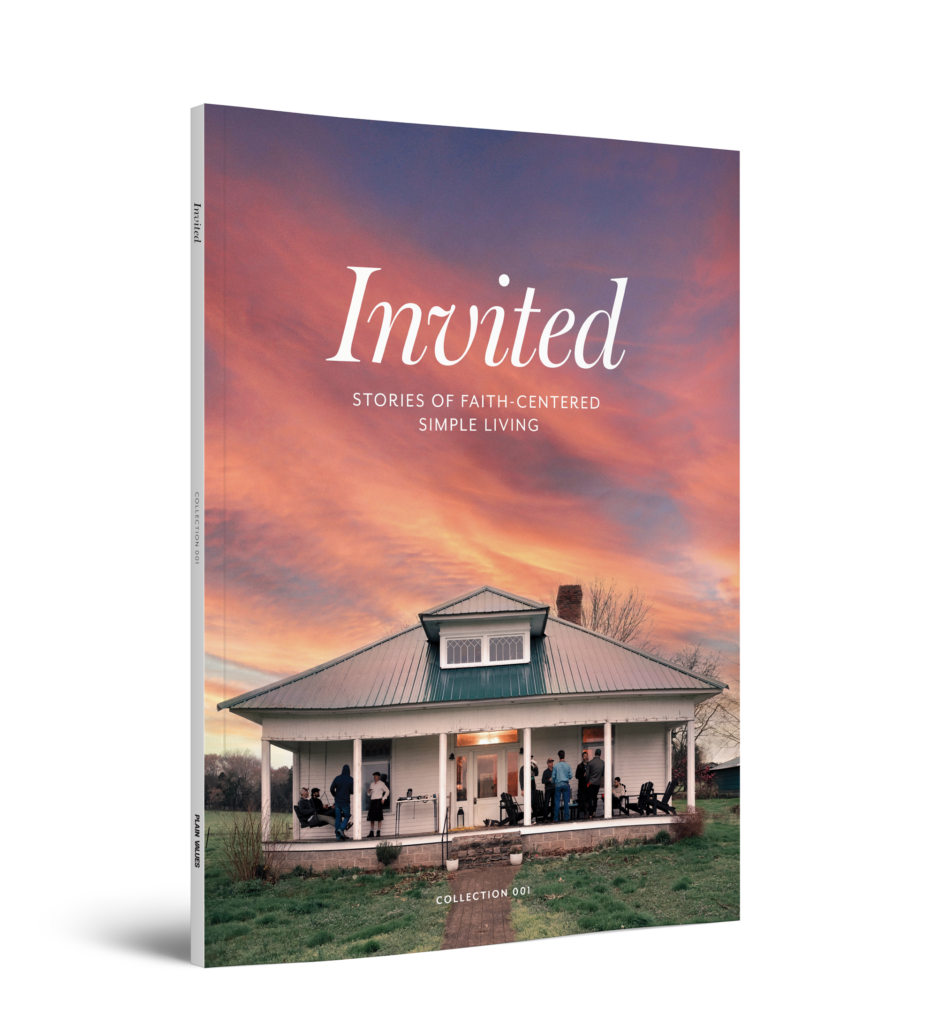
🤝THIS EPISODE’S FEATURED SPONSOR: Invited: Collection 001
If you’re craving stories that restore faith in hard times, Invited: Collection 001 is a handpicked “best of” from Plain Values magazine… uplifting accounts of triumph, simple joys, adoption beauty, homesteading wisdom, and gospel-centered living.
Learn more: https://plainvalues.com/invited

Leave a Reply