

In this episode of the Plain Values Podcast, host Marlin Miller sits down with Conrad Fisher, musician, producer, and founder of Ragamuffin Hall studio, for a rich conversation about creativity, faith, family, and the tension between art and conservative culture.
Conrad shares his upbringing in a conservative Mennonite church where his parents, despite the setting, encouraged his musical gifts from a young age. His dad even bought him recording equipment when he was 14, allowing him space to develop his talent.
He moved to Tennessee on New Year’s Day 2018 to sharpen his songwriting and eventually built Ragamuffin Hall, a studio where he works with artists from many backgrounds. Conrad reflects on the challenges of balancing a growing career with being present for his wife and three young children, and the difficulty of saying “no” when opportunities arise.
He also opens up about a painful experience with church leadership over a song choice, and the healing moment years later when the bishop sought him out to apologize. The conversation touches on the church’s relationship with the arts, the value of authenticity, and the importance of creating space for people who feel on the fringes.
Whether you’re a musician, a creative, or simply someone who appreciates honest conversations about faith and culture, this episode offers encouragement to pursue your gifts while keeping family and integrity first.
Learn more about Conrad Fisher at https://conradfishermusic.com
Learn more about Plain Values at https://plainvalues.com
Transcripts
0:00 – Introduction
1:15 – Early Life & Musical Roots in Amish Country
9:35 – Moving to Nashville & Working in a Funeral Home
20:26 – The Harsh Reality of Songwriting Royalties
25:16 – Tennessee Flat Top Box
31:13 – Did the Church Walk Away from the Arts?
41:48 – The Joy and Hard Work of Songwriting
53:31 – Prioritizing Family Over Career Success
1:02:00 – The Meaning Behind “Ragamuffin Hall” & Outro
Conrad Fisher:
Songwriting these days is not a good way to make money. I mean, I get a million streams on Spotify as a songwriter and I get $30. My prayer is that people feel better leaving than they did coming in.
Marlin Miller:
Do you think the arts walked away from the church or do you think the church left the arts?
Conrad Fisher:
This is one of the biggest mistakes we make as Christian artists. This was not what I expected, frankly. What did you expect? I don’t know. I expected a little bit more on the rails.
Marlin Miller:
Conrad Fisher, thank you so much for being here. Thanks
Conrad Fisher:
For having me, man.
Marlin Miller:
This is a blast.
Conrad Fisher:
I like your magazine, so it’s good to be here.
Marlin Miller:
Well, thank you. It’s an honor to get to know you more. I have thought and prayed through many a question that I have because I think you and I see the arts and see the church and see life. That’s a pretty big, broad statement. I’m sorry.
Conrad Fisher:
We’ll find out in about 30 minutes, right?
Marlin Miller:
That’s exactly right. But I think we do see a lot of the things the same way or from the same worldview. Can you tell me a little bit about your early life, your childhood, your parents?
Conrad Fisher:
So my dad was born Amish. My mom was New Order. They both left and joined a conservative Mennonite church, beach church. So I grew up at Weavertown Amish, Mennonite Church. And I had a very good childhood and my parents are fantastic. They believed in me. And I have a lot, especially in conservative culture, I know a lot of musicians who are extremely talented, but weren’t given the opportunity. A lot of Amish folks that didn’t pick up a guitar till they were 16 or 17 and are great when they’re 19, but man, if they had one when they were five.
So my dad and mom did very well with giving me the creative space to be who I am and not hold me back because of the church setting that they were in. Because I found out later that they got a lot more heat than I knew about. Because my dad bought me my first recording equipment when I was 14, had a Windows 95 computer and a little interface in a little room in the tobacco barn. Well, most dads don’t do that. You know what I mean? I mean, he kept me straight, but he really believed in me and facilitated that.
Marlin Miller:
Were your parents creative? Were they musical?
Conrad Fisher:
My parents are very creative. My mom is a good singer, but not. She would’ve been one of those people had she had a guitar at five. I mean, she plays now. She learned in her later years. My uncle David is a beachy bishop in Belleville now. His church is in Belleville. He was in a band called The Green Peas, an Amish Rumspringer band. Not
Marlin Miller:
The Black Eyed Peas. Not
Conrad Fisher:
The Black Eyed
Marlin Miller:
The Green Peas.
Conrad Fisher:
Yeah, he played telecaster and sang. My uncle Henry Fisher was in a bluegrass outfit and he builds fiddles now. He’s an award-winning luthier. So I have it in my uncles. Those two guys were my first. Yeah, I got to see Uncle Davey and Uncle Henry, man. It was just like, “Oh man, these guys are awesome.” So yeah, it’s in my family.
Marlin Miller:
How did the whole creativity come to you to where you’re like, “Wait a second, this is something I want to do.” How does that process happen at 13, 14 years old?
Conrad Fisher:
I was just obsessed with it, man. I was just like, I don’t know. I guess same way it comes to anybody. God gives you that fire kind of thing. The urge. Yeah. I feel like I never had to practice guitar because I just wanted to play guitar all the time, man. It’s not like I just wanted to. Yeah.
Marlin Miller:
Yeah. The only experience I have with guitars is when I was helping with young life, I would break many a string. And I mean, there’s not much rhythm in me. Let me be clear. I’m not that gifted. But man, I love the creative process and I love talking to other guys who know that they are there and enjoy it. And
Conrad Fisher:
It’s weirdly similar across mediums. In other words, if you’re an author or a writer or a painter, it’s still the same mechanisms going on inside your brain. Yeah.
Marlin Miller:
Film,
Conrad Fisher:
All
Marlin Miller:
Of it. Yeah. Was your dad, was he playing when he was Amish?
Conrad Fisher:
No. Okay.
Marlin Miller:
No,
Conrad Fisher:
My dad never did. Okay.
Marlin Miller:
No,
Conrad Fisher:
He loves music. And in fact, because when I was a kid, oh Mercy, we’d be at the supper table and he’d be like, “Goodbye, Joe. We got to go.” He’d be singing his stuff. I’d come by and say a line from when I was listening to ACDC or something, and he’d go like this at me. And I was like, it wasn’t even a bad line of the song, but I knew he knew the song. And so he knew all this stuff, man. And I was like, “What in the world?” I said, “How do you know this music?” He told me when he was 16, there was a barbershop on 30. Are you familiar with Lancaster County?
Marlin Miller:
Yeah.
Conrad Fisher:
Right beside Paradise Energy. Building’s still standing and the barber’s still there. But there was a guy, he’s got 50,000 records in his barbershop. It’s a house and there’s a barbershop in there. And the rest of the house is just records floor to ceiling. Oh my goodness. To where you go into the room off the barbershop and the commode is like, just look down a row of vinyl and there’s a toilet. I’m serious. Anyways, so all the Amish guys, the Rome Springer Amish guys used to go down there to get their haircut and they would want him to do these bootleg playlists because this is the days where playlists isn’t a thing, it’s vinyl and cassette. So this barber would get a track list and then set out the vinyl for my dad. Then my dad would play the vinyl and record it to tape. Get
Marlin Miller:
Out of here.
Conrad Fisher:
After hours.
Marlin Miller:
And he would build his own cassette tape.
Conrad Fisher:
Yeah, with a playlist. I want this Johnny Cash song, this Charlie Pride song, this whatever, and make a bootleg cassette tape. And so he’s up from seven to midnight, three nights a week, just listening to the best music. I actually went down, he took me down to see him. The guy’s still there. He’s like 82. The day I was there, he said I did my last bootleg mix tape. He said, “I’m done.” But my dad said, “When you come in the door, there was a Beatles album on the floor and a Chet Atkins album on the floor.” And he said, “Those same albums were there.” And it would have been the late ’70s, early ’80s. I mean, it was like he’s so organized like that. And it was exactly the same down to the. This was just a half year ago I went, my dad took me to see this guy.
Marlin Miller:
Get out.
Conrad Fisher:
Yeah, yeah. My dad was born in 60 something. So anyways, so it’s been years since he’s been down there. The same turntable and the same cassette recorder was sitting in the same corner. It was all exactly as it was when my dad was
Marlin Miller:
Doing
Conrad Fisher:
That anyways.
Marlin Miller:
Wow. All the technology that we have that our kids are growing up with, I think we’re losing a lot. Back when I was a kid, I think I’m a chunk older than you are. How
Conrad Fisher:
Old are you?
Marlin Miller:
I’m 49. I’m almost 50. You’re what, like 32 or something?
Conrad Fisher:
30 hit me like a ton. I was mad for a week when I turned 30. I
Marlin Miller:
Mean, we’ll talk about Dan later. Anyway, but I do think there’s something that is lost. When you can just hit any track, you can listen to that for five seconds and you get bored. When I was a kid, it was the cassette tape and then the tape would break and you’d have to tape them back together and you’d use your pinky, get it just right. Same here. But vinyl, I’m getting back into vinyl much more. Yeah,
Conrad Fisher:
A lot of people are.
Marlin Miller:
And there’s something beautiful. You put the record on and you don’t touch it. And you
Conrad Fisher:
Listen to it.
Marlin Miller:
And you listen to the whole thing.
Conrad Fisher:
Yeah. And you listen on a console. I mean, I have a big old MagnaVox in my living room.
Marlin Miller:
And
Conrad Fisher:
You make it an experience. You sit down and you listen to a record.
Marlin Miller:
It’s like a home. It’s like a house show. Yeah.
Conrad Fisher:
It’s
Marlin Miller:
Like a house show. Oh man, I love it. So why did you go to Tennessee?
Conrad Fisher:
Well, I really wanted to learn how to write good songs. And I live. Well, I was born in Lancaster County, but moved to Juniata County. And you just can’t get good if you’re not around good writers. And so I wanted to move to Tennessee to learn how to be a better, just a better musician, a better writer. Because man, you can be the best guitar player in Juniata County. I was like, okay. It’s
Marlin Miller:
Still the minor leagues.
Conrad Fisher:
Yeah. Yeah. And then you go to Nashville and I mean, every day. So a faster picker, better looking, sweeter singing, better writer. I mean, 10 of them moved to town that are better than you every day. And so I wanted to push myself and I wanted to meet some of my heroes, people that are still alive. So yeah, I moved to Tennessee in New Year’s Day of 2018. And I had a job lined up at the Grand Ole Opry because I wanted to do something. I promised myself I wasn’t going to be a carpenter because I can do that in Pennsylvania. And I wasn’t going to wait tables because that’s the cliche. It’s like, well, I’m a musician, but I’m waiting tables. I promised myself I wouldn’t do those two things. I was like, I’ll be a garbage man at the Opry. Cause I was like, well, at least I can be around it.
So I called the hiring manager in I think September and he said, “Yeah, I got a position for you. Call me when you get in.” So January the 2nd, I called him and I said, “Hey, I’m in town. I moved in. When can I start working?” He said, “Who are you?” I said, “My name’s Connor Fisher. We talked a couple months ago. I said, I don’t remember. You click.” So I was really disappointed. But I had gotten to know. Do you remember Buck and Dottie Rambo?
Marlin Miller:
Yeah.
Conrad Fisher:
Yeah. I got to know Buck and after Dottie died, he married actually a lady from Pennsylvania. So I had gotten to know both of them. And she was working at a funeral home. And so she got me a job. Well, I interviewed with a funeral home and started doing janitorial work and picking up bodies and stuff instead of working for the Opry, which kind of – That’s
Marlin Miller:
A different kind of janitorial work.
Conrad Fisher:
Yeah, it was.
Marlin Miller:
Were you married at the time?
Conrad Fisher:
Yeah. My wife worked at First Williamson County Hospital and then Vanderbilt. She’s BSN. My wife believed and believes in me more than I do. And so she was able to earn. I mean, that funeral home job, I hope they hear this because they were some of the worst people I’ve ever had the displeasure of working for. Richest county in the world. Not kidding. Franklin. I mean, just south of Nashville is Franklin. I mean, it’s where the star. I mean, shoot, man. They all live there. They paid me $11 an hour. 11. In Franklin where coffee costs you six bucks a cup. You know what I’m saying? And to pick up a body was. Well, guess. Guess what I got paid to pick up a body? A dead person. Oh,
Marlin Miller:
Good land. 120 bucks.
Conrad Fisher:
75.
Marlin Miller:
Sorry to laugh. Wow. Okay.
Conrad Fisher:
Yeah. How
Marlin Miller:
Long did you do that?
Conrad Fisher:
I did it for about a year. And then I had a really traumatic. Well, it was traumatic for me because I would go in, I would clean at night because I wanted to be free during the day because I had some songwriter friends and they’d be like, “Hey, Dickie Lee and Roger Cook are going to go golf and you want to drive the golf cart kind of thing. Or you had to be free to jump or take a right or whatever.” So I would do janitorial work at night. And then if I was on call, I’d go in and a jeans and t-shirt and hang a tux in the closet. Then if I got a death call, because they don’t schedule those kinds of things, then I would just put my tux on and go get it. So I was cleaning and we got a death call.
Marlin Miller:
Hold on.
Conrad Fisher:
Yeah.
Marlin Miller:
You wore a tux? To
Conrad Fisher:
Go pick people up. To
Marlin Miller:
Go pick up a body? Yeah, because
Conrad Fisher:
It’s Franklin. I mean, it’s like you would get into all kinds of situations. You wore a tux? Like a suit, a black suit and white shirt. Yeah. Yeah, because you would charge you $50,000 to die down there, man. Anyway – Of which
Marlin Miller:
They’re paying $11. An
Conrad Fisher:
Hour. For
Marlin Miller:
You. Yeah. Right.
Conrad Fisher:
Pam, if you see this. Moving on. Anyways. So the night I quit, I’d go in at nine o’clock to clean. And I got a death call around 10. And it was a four-year-old child that I had to take from his mom’s arms. And he was too small to fit on the. We didn’t have a kid gurney. And I was just losing it. Like sobbing under my breath, trying to keep together. I’d go out with an older undertaker and he would be the. I didn’t have to talk. And he was like, “Yeah, well, yay though. I walked through valley of the shadow.” And just his kind of scripted thing.
I was devastated, man. So I was bawling my eyes out and we loaded the child up and took him back to the morgue. And then I sat on the couch and cried for an hour and then I started cleaning again. Then I got another call and this guy had passed away and hadn’t been found for about three or four days. And so it was another very traumatic scene. And we went and picked him up and. Well, you can edit this out. But it was the smell. I still can’t get out of my head and the sight of it. And I was beside myself. And I went back and I cried on the couch for another two hours and I still had to clean the rest of the funeral home before. It’s two o’clock in the morning. I’m sitting there bawling on the couch. And what got me was the guy that, the senior undertaker, it was like another day at the office for him.
And I understand it has to be because you can’t. But it’s like, man, I want to feel my feelings. If you can take a four year old child from the arms of his mother and not shed a tear, man, that’s not for me. So I told him I’m done. And then I had to eat my words. I worked for.
There’s a singer. Used to be Amish too. His name was Will Stoltz. Wilmer Stoltzfus anyways. He did a lot of stuff. 15 years ago, 10 years ago, he was really kicking. But anyways, his younger brother Maylon had a carpentry business. And so I had to go be a carpenter. It was so hard on me because I was like, I’m in Nashville and me and another Mennonite guy are going out doing carpentry work. But I had to do something. He allowed me to be a little flexible. And in the meantime, I was taking meetings and meeting publishers, doing co-writes, just meeting people, going to shows and those kinds of things. Yeah. So that’s the deal.
Marlin Miller:
Wow. Wow. Yeah. I have never. I’ll put it this way. I am always very thankful when I think about undertakers and
Conrad Fisher:
All that stuff. My mom’s cousin was a funeral director, and I always admired that thing of being present in someone’s grief.
Marlin Miller:
And the way that a society takes care of its dead goes a lot deeper, I think, than what we typically think on. I mean, it’s a big deal.
Conrad Fisher:
I’m glad I had the experience, but man, it was difficult.
Marlin Miller:
Do you and your wife have kids?
Conrad Fisher:
Yeah, man. We’ve got three kids. Jack will be five. He’s four going on 15. He’ll be five in September. And then I have two little girls. I got Elsa. She’ll turn three end of this month. And I got Eve and she turned one in February. Man, little girl, my son, when he was born a year after he was born, it was during COVID. And so my wife was like, “She’s going to get a contract nursing job because you’re getting 60, 70 bucks an hour.” And I wasn’t busy in the studio, so I was Mr. Mom for three months. And we bonded like crazy over that time. But my little girls can manipulate the fire out of me,
Marlin Miller:
Out of dad.
Conrad Fisher:
And I know it’s happening and I like it. And I’m like, “What?” I was not ready for a little girl, man. Just the other night because we try to get them to go to sleep by themselves because I love my kids, but I love my wife first. I want to spend time with her in the evenings. And so I put, this just happened last week, man. I told Elsa, I said, look, me and mama want to talk tonight and we’re going to put you into bed and you got to fall asleep by yourself. And 10 minutes later, she can trip, trip, trip, trap. I come to the bottom of the stairs. She sticks her head out like this and her little pigtails. “Would you snuggle with me a little bit? What are you going to say? No.
Marlin Miller:
Any good dad knows the right answer.
Conrad Fisher:
Snuggle with me a little bit.
Marlin Miller:
Kills me. I love it. Anyways. I love it. That’s so good. So which happened first? Ragamuffin Hall or you starting to produce other acts?
Conrad Fisher:
Well, I really backed into the production thing because I really wanted to make a living in music somehow. When I was 18, my 10 year goal was I want to have a family. I want to have my own place. And I want to be home for breakfast, lunch and supper, making a living in music. And that was any way to get there was like, that was my thing. And so songwriting these days is not a good way to make money. I mean, I get a million streams on Spotify as a songwriter and I get $30.
Marlin Miller:
For a million streams?
Conrad Fisher:
Yeah.
Marlin Miller:
Okay. We knew that it was bad. Little, but I don’t think I knew that it was that. So
Conrad Fisher:
Like 30 a month or just for that many streams? For that many streams. Now, if you own the master, if you’re the artist, it’s considerably better. But as a writer.
Marlin Miller:
You’re splitting the revenue.
Conrad Fisher:
They just don’t pay well. Now mechanical road, like if you sell a physical copy, vinyl or CD or cassette, used to be nine four. I think it’s 12.3 cents per copy. But people aren’t selling physical media much anymore. I mean, I had a number one on the bluegrass charts for four weeks. I don’t think it made me $1,000. And you need one of those every week to be a writer. So anyway, so –
Marlin Miller:
Wow.
Conrad Fisher:
So then it was like I’ve been recording for a long time
And I could functionally play. I’m not the best bass player. I’m not the best drummer. I’m not the best keys player, but I’m really good in the studio. And so I could do tracks. And so guys started being like, “Hey, I wrote this song for my girlfriend. Can you do a track?” Or my buddy would be like, “Hey, I want to record this song.” So I started doing stuff. So I was doing tracks out of my house in Nashville. And then when I moved back, I moved back to. And I had never sold my place in Pennsylvania. I had always intended to come back at some point. And so I had a room in my house. But then when we had kids, having clients over at the house, it just didn’t work. And just as Jack was maybe. See, Jack was almost a year old.
No, he would have just been one. He just turned one when I settled on Ragamuffin Hall. So it was a perfect transition as God will do for you if you wait for him. So that’s how that happened.
Marlin Miller:
What has been your favorite response from somebody walking into Ragamuffin Hall that is Amish, that is Mennonite, that has surprised you? I
Conrad Fisher:
Really don’t look at. I’m a little bit resistant on the. Okay, music is music. And I don’t care if you’re black, white, yellow, orange, pink or purple, Catholic, Mennonite, whatever. My prayer is over my studio and over my home. And even when we played Bluegate Performing Arts Center, my prayer is that people feel better leaving than they did coming in. And that’s my goal every time. If that happens, then I’m like, then I did my thing. I really try to. Because I work with varying talent levels, but I don’t want people leaving feeling small. I always try to, when I meet someone, try to find the value in them and pull that out of them. So that’s the gig, man. I work with, especially recently, more and more diverse. I had a self-proclaimed atheist in the studio. You’ll watch this. I give him all kinds of rats.
Lightning’s going to strike you in a church, man. So I work with a varied client base, but that’s always my prayer. When I buy a property, I’ll walk the line and just pray God’s blessing. And that’s my goal for my life, is people feel better after being with me than before.
Marlin Miller:
Can you tell the story of Tennessee Flat Top Box and the Preacher Man?
Conrad Fisher:
Oh man. Yeah, I can tell that. This is actually a good story because it has just recently got a much better ending.
Marlin Miller:
Well, guys, I am super excited to tell you about a brand new sponsor of the podcast. Rustic Strength makes clean, organic, chemical-free cleaning products. My wife ordered product before we had a relationship with Rustic Strength, and then they generously shipped us a few more items to test. This very morning when we’re shooting this, she told me, she said, “Marlon, I just cleaned the basement windows with the glass cleaner, the window cleaner, and she loves it. A couple swipes, super sparkly clean. She adores it. Go to rusticstrength.com and use PV15 for a nice 15% discount off your first order. Thanks, guys.”
Conrad Fisher:
I started playing in bands when I was maybe 17 or 18. Playing in bands in conservative culture is very different than anywhere else. Even in Christian culture outside of conservative culture, because we’ll have bands at a fundraiser and a thousand people will show up just because there’s something going on. And you might not be that good. You might actually be awful. And anyway, so I was playing in those kinds of bands. And there was a fundraiser for a guy, a family at church. His son had cancer. And so he got a group of entertainers together to do a fundraiser concert to raise money to help with the medical bills because it was pretty bad. And at that time I was doing probably 80% gospel music. And then I would throw in a couple Don Williams tunes or Johnny Cash or Chuck Berry or whatever. And so we did.
But this is 15 years ago in Beachy Culture in Lancaster County. It’s a very different game even now than it was then. And I was always on the fringe kind of anyway. So I did Tennessee Flat Top Box at this event and a couple Don Williams songs. And after the show, I get a call from my bishop and he says, “Man,” he said, “It was a good thing what you did for Sam Fisher’s family.” But he said, “Some of the ex-Amish that were there,” he said, “That Tennessee Flat Top Box, it just brought some immoral thoughts back to him and just reminded him of their partying days and you got to cut this out.” And me not trying to be snide. I said, “Well, if Tennessee Flat Top Box brought up feelings of guilt and shame and if that made you think immoral thoughts, then you don’t have a Conrad Fisher problem.
You have some unprocessed regret and things going on.” And it made him mad. “That’s a pretty shabby thing to say. “He didn’t go over too well. And so I left. I moved from Lancaster County to Juniata County, not soon after that, but soon enough. And just the situation kind of dissolved because I didn’t get kicked out of the beachy church, but I moved to another church that is unaffiliated but presents very beachy. We look pretty like that.
And that hurt me because in my mind, I was giving my time and talent to help a kid out. And what I got for it was a slap on the hand. But the good ending to the story is that I did a video on YouTube called Why I Hate Christian Art. And I told that story without naming names. And the bishop saw it and he texted me and he said, “Hey, can I come see you at Ragamuffin Hall?” And I was like, And so I said, “All right, yeah, you can come see me.” Because that’s all he said. He didn’t say nothing. So I put a hot mic up because I was like, “I’m not going to be abused. And if he says something and wants to deny it later on, I’m going to have proof.” So I just had my screen dark, but put a hot mic up so it was recorded.
And he came in and he looks around and he says, “Man, I like this place.” I said, “I know that you did this song in this corner and this song in this corner.” He said, “I want to apologize to you for that.” He said, “Honestly, I don’t even remember the interaction.” And he said, “It was obviously a big deal to you and it hurt you in a big way.” He said, “For me, it was just a blip in I’m just trying to run a church and I had to straighten the guy out.” And he said, “Even the fact that I don’t remember it is indicative that I didn’t care for you like I should have.” And that was really healing for me. Yeah. So he deserves a lot of credit for that. You don’t see that happen much.
Marlin Miller:
Yeah. Do you think the arts walked away from the church or do you think the church left the arts?
Conrad Fisher:
No, dude. The church used to be the bastion of the arts. Ludwig, van Bad Hoven, Bach and Mozart, these were all church musicians. They used to be –
Marlin Miller:
And the painters too.
Conrad Fisher:
The painters too. Now it was commissioned by a lot of those things by the Catholic church. And I don’t know that. Yeah. Those guys were all dubious characters probably. But no, the church, I don’t know how it happened. I mean, I just know 16, 1700, I obviously can’t speak on that, but what I see in our culture specifically is that we’re scared of the mess that comes with creative personalities. It’s like I do dumb stuff. I’ve said dumb things already in the last 20 minutes. And the church is afraid of the vulnerability that it takes to create good art. And instead of walking beside artists and helping them get better, they just freak out and tell you to quit singing Tennessee Flat Top Box. And then what happens is the great artists leave and the ones that can be tamed stay and try to mash their.
And then you get publications like Story Mates and where it’s just not good art. You can cut that too if you want to. But it’s like we sacrifice the art for the sake of the message, which is not art. It’s propaganda.
Madeline Langel has a really good book. My sister, when I was struggling a little bit with church and art and all that, she gave me a book. My sister Rosina gave me a book called Walking on Water by Madeline Langel. And she’s got a quote in there and she says, “Bad art is bad religion no matter how pious the subject.” And I’ve thought about that a million times because I grew up with his story mates and it’s like, “Well, daddy told Timmy or mommy told Timmy not to eat cookies off the tray because they’re for company. And Timmy ate cookies off the tray and he got a bellyache. And see what happens when you disobey mommy. That’s a bad story, man. Sucks. You ever heard Tom Sawyer Huckleberry Finn? You know what I mean?
But we’ll start out with a lesson we want to teach and then try to craft a story around it instead of. Sometimes you stole a cookie and man, that was a good cookie. You know what I mean? He didn’t even get a bellyache and mom didn’t even notice. But the church won’t let you tell a story like that because it’s just, you can’t teach a lesson from that. So yeah, so that’s what I see. And I know there’s a great painter that grew up at Weavertown by the name of Freeman Stolsfuss. Incredible painter. Guy’s got a gallery in Lancaster City and he came along. He’s 40, I think. He’s a bit older than me. And couldn’t hack it at Weavertown for whatever reason. And he left and he’s way out there. And the church lost an artist. He could be drawing the pictures for the story mates and instead he’s doing whatever he’s doing and the conservative world lost a wonderful soul that could have impacted our culture because we didn’t have the grace to walk with him.
And I know I could tell you five stories like that, but that’s just the one that came to mind. That’s what happens a lot because artists are temperamental. We’re jerks. We say dumb stuff. We’re egotistical. We’re just a pain in the butt, right Dan? Yeah.
And we’re a pain. We can be. And so it’s like a mess and we’d just rather not have that mess.
Marlin Miller:
I too have wrestled with that whole thing for years. And it blows my mind why.
And I’m trying hard to not get cynical toward the bride of Christ. Same. That is the last thing I will ever want to do. Same. However, what I’m afraid of at times is that we don’t have grace and we don’t give anybody any room to learn how to be an artist. Yeah, and walk beside him. And walk beside him. Yeah. And give him the space to do it. And then you end up with artists who are angry and hurt and everything else. And then you. Do you remember when, and I forget how many years ago this came out, but there was a huge stink about it where some artist put a statue of Jesus and I think covered him in urine or
Conrad Fisher:
Something. Oh yeah, I remember that.
Marlin Miller:
And called it art.
Conrad Fisher:
Yeah, I remember
Marlin Miller:
That. Right?
Conrad Fisher:
Yeah. Shoot. What was that guy’s name? I know
Marlin Miller:
Exactly
Conrad Fisher:
What you’re talking
Marlin Miller:
About. I don’t remember the guy’s name, but I remember everybody was up in arms over
Conrad Fisher:
Him.
Marlin Miller:
And I remember thinking, okay, what is the story? You don’t do that out of nothing.
Conrad Fisher:
Yeah, yeah, out of a vacuum.
Marlin Miller:
That does not happen. Oh, just out of chance. There’s a deep story behind that kind of pain.
Conrad Fisher:
Yeah. And it’s the same thing because I’m a pacifist. I don’t believe in taking someone else’s life to protect mine. And someone said, this was an online conversation and they were like, “Well, what about Hitler?” And then another pastor commented and he says, “Okay, instead of worrying about the church stopping Hitler, we should worry about the church. Why did the church produce a Hitler?” I mean, because he was a man of faith. And I was like, “Oh.”
Marlin Miller:
He was also an artist. Was he? He was a painter. Was he? I believe.
Conrad Fisher:
And so
Marlin Miller:
That’s
Conrad Fisher:
The same mechanism or whatever. That hit me broad because I didn’t have a comeback for that. Anyways.
Marlin Miller:
Yeah. This episode is brought to you by our friends at Azure Standard. Lisa and I just recently signed up, finally. And we are loving it. Non – GMO, organic. It is all that you can ask for. Go to azurestandard.com and tell them plain values sent you. You can use the code HL15 for a healthy little discount. Thanks guys. It is so fascinating what. And by the way, lest we forget the fact that the Lord above still has grace for all of us goofballs. I know.
Conrad Fisher:
Yeah. Well, because I 100% – It
Marlin Miller:
Blows my mind.
Conrad Fisher:
Yeah, same because I 100%, I’ve been guilty of pushing people’s buttons on purpose.
Marlin Miller:
I’ve never done anything like that. I’ve never done
Conrad Fisher:
It. So we do screw up. It’s like I’m not innocent.
Marlin Miller:
Oh, I know. Yeah. And it is too much fun at times. I’m sorry. Anyway. Okay. Why did you record 99 Balloons?
Conrad Fisher:
Why did I record 99 Loaf Balloons? I recorded 99 Loaf Balloons because we’re at such a weird spot in human history. And I see the church, even the Anabaptist world aligning with the conservative right. Because I feel like the political right has weaponized the church in unbelievable ways in the last 70, 60, 70 years. And the story of that song is two children who go to a toy shop and they buy some 99 red air balloons and they’re playing and they let them fly. A couple of them go flying. So it’s a true story. It’s not a true story. But it came out, first of all, came out in the ’80s in the Cold War. So these kids let these balloons fly and the military base think it’s some kind of nuclear threat. And so they start bombing. They start fighting each other over these.
It’s a World War III over the fact that these two little kids left these red balloons go, and they’re coming to get us. They’re going to kill us. And then the last verse is what came out in German, first of all, by Nina.
Marlin Miller:
Nina.
Conrad Fisher:
Nina. Yeah. And then they also did an English version. But I did the first and last verse in German because the translation lost some of the beauty of the text. Anyways, the last verse in German says 99 years of war and nobody won. And there’s no jet fighters anymore. The military commanders are all dead and the world’s in ruins. And then the last line says, “Today I went around and made my rounds to look at the world. It was on rebel and I found a red balloon and left it go and I thought of you.” Anyways, I just thought that’s so relevant for what we’re going through. I mean, it’s shockingly just as relevant today with Iran and Ukraine and Russia and Israel as it was in the Cold War. But the crazy thing is, I love that song. To me, that’s one of the best pieces of art I’ve made in a long time.
Stuff like that doesn’t get views. I mean, I think that video has maybe 3,000 views. Ben and Rose can sing Mary Had a Little Lamb and it’ll get 50,000 views in half a day. So I’m grateful that you saw that.
Marlin Miller:
Okay. That’s pretty fun. Okay. Thinking about the whole creative process, what brings you the most joy?
Conrad Fisher:
Making something up.
Marlin Miller:
Out of nothing. X Milo.
Conrad Fisher:
Yeah, man. I mean, it’s so fun, man, to have an idea and it turns into a song. And then two nights ago at the Blue Gate is 1500 people and there’s people singing it back to you. It’s like, man, I though of this in my room staring at a wall and people singing it back to me. They remember it. And that’s crazy.
Marlin Miller:
Do your songs come to you like that?
Conrad Fisher:
No.
Marlin Miller:
Or do you have to sit and labor and toil on this one line? Are you the kind of artist that says, “Okay, what I made, I made, it’s done.” Or are you the constant tinkerer? The guys that, from a painting standpoint –
Conrad Fisher:
Just never get done.
Marlin Miller:
They never get done. And they’re tweaking this and they’re. Which are you?
Conrad Fisher:
Do you know what most amazing guy means? It’s like there’s a –
Marlin Miller:
Most amazing guy. I don’t think I do.
Conrad Fisher:
There’s like a happy medium for me. Sometimes it does come in a woof. And I used to think, before I moved to Tennessee, I thought that it wasn’t a good song unless it just fell out. But real songwriters, the ones that are the Hall of Famers, the guys that really do great art, work like crazy. And that was one of the first things I learned. When I moved to town, I met a guy named Bob McDill, which is a funny story in itself, but we ended up having breakfast. He wrote, do you know the song Amanda? Amanda, Light of My Life. They should have made you a gentleman’s wife. He wrote Gone Country, look at them boots. He wrote Song, Song of the South, Sweet Potato Pattern. So he has about 30 number one songs. And he’s in my top three songwriters of all time.
And first thing he asked me at breakfast, “What you reading, man?”
I said, “Nothing.” Because I had had to read for high school. I had to read 20 books a year and I was burnt out. And he’s like, “Well, you can’t write well if you don’t read well.” And so he gave me a list of pen books by Faulkner, who I hate. Mark Twain, Thomas Frazier, William Gay, a bunch of Southern Gothic writers. And he said, “Read these books.” And he said, “You get better just osmosis.” It’s like, “You can be around Faulkner, read his books. You can be around these guys still.” And so I learned that just because I used to think that if you work out a song do hard, you’ll take the magic out of it. That’s not the case. Because we’re in the conservative world or in Christian circles, I see this as one of the biggest mistakes we make as Christian artists.
People come into the studio all the time and say, “God gave me this song.” And instantly I know I’m about to hear the biggest, the worst song ever.
Marlin Miller:
You need to give it back.
Conrad Fisher:
Yeah. Yeah. God gives me. What do you mean? Of course he gave you the song. Yeah, he did. But we’ll say that to prop up our art or whatever. I get that. God 100% inspires you. He gives you the breath you breathe, man. But I guess we’ll say that to excuse our lack of ability. And my goal is to keep my pen sharp so that when God does hit me over the head with an idea, I can get out of the way quick enough to get it on paper so that I don’t screw it up. You know what I mean? And that takes work, man. It’s like you can write a thousand bad songs before you write one worth here. And yeah, it’s hard work being a writer.
Marlin Miller:
There are not many things that I enjoy more than a really well written song. Same. Do you know who Over the Rhine is?
Conrad Fisher:
No.
Marlin Miller:
Okay. Linford and Karen Detwiler are outside of Cincinnati. And they’ve been making music for 35 years. It’s a husband and wife duo. Are they
Conrad Fisher:
Conservative folks?
Marlin Miller:
Detwiler. Linford came out of –
Conrad Fisher:
I feel like I’ve maybe seen a YouTube video of them. Does he do a lot of stuff in the woods? Anyway, it doesn’t matter. I’ll look it up later. I don’t think so.
Marlin Miller:
Okay. Some of the most beautiful lyrics I think ever have come out of his mind, their minds. So I love science. I love astronomy. I just love creation. The birds and everything. And one thing that always knocks my socks off when I think about it, if you take an evolutionary standpoint, explain to me where music came from. Explain how did that happen? That does not need to be here for life. And it’s just, oh man, I love it. The fact that God is creative and then he gives us the chance to go play in a sandbox
Conrad Fisher:
And
Marlin Miller:
Creative. Oh, it just drives me crazy.
Conrad Fisher:
And that’s the other thing too. Christian art, at least in the last 50 years especially, has always followed the trends of secular art. I even resist those terms because I think when people give me rats about not singing enough –
Marlin Miller:
It’s the same.
Conrad Fisher:
Yeah. It’s like, okay, if you’re. Anyways, if you’re a shed builder, can you just build sheds for schools and churches? Anyways, the arts are different. But in general, in the last 60 years, Christian art has followed the trends of secular art in measurable ways. I mean, it’s like you get a Christian artist on the pop charts like Adele, and then two years later we have our Lauren Daigle. And then it’s Mumford and Sons. And then all of a sudden, a couple years later, we have all these campy, folky Christian bands. And I’m like, yo, we are supposed to be in touch with the creator. We are supposed to be the best. If we are, shouldn’t we be? We’d be that much closer to the pipeline. It’s like, we should be doing the best. And two of the people that I really admire, C.S. Lewis and J.R.
Tolkin, who have works. Okay. You know what I’m saying? Believers and have art that has way transcended our world. Good art is good art.
Marlin Miller:
Hundreds of millions of books and everything. Yeah. Good art is good art.
Conrad Fisher:
Yeah.
Marlin Miller:
Yeah. Straight up. I literally have on my list of questions, what are you reading right now?
Conrad Fisher:
You know what? Well, right now I’m reading Babbit by Louis Sinclair. Do you know Louis Sinclair?
Marlin Miller:
I do. I have it.
Conrad Fisher:
It’s great. I’ve read it before and I just read, because for about a year I didn’t read a single book except for Tom Sawyer. I read the Bible. I’ll just crack it open and read a chapter and laugh. Oh man. My mom-in-law got me a $200 copy of its leather bound. Norman Rockwell Illustrated Tom Sawyer. Yeah. It’s great. It’s a gorgeous copy. I didn’t know this about good books, but an expensive book will lay right. It feels good in your hands. The print is right. It’s late. Anyways. Yeah, I’m reading Sinclair Lewis. I like his stuff. He’s got my favorite Sinclair Lewis book I just read. Elmer Gantry is about a Baptist preacher and the hypocrisy of the corporate church world. And it cracks me up because I mean, this book’s set in like the 20s and it’s the same old game. It’s the same old game in the 20s.
It’s like what we’re hearing right now with.
Yeah. Yeah. I’m not going to name no names because I ain’t going to do that. But in other words, because there’s a little bit of good old days in me. It’s like, oh, the ’50s must have been nice. Well, for who? And then you read some of those books like, oh man, these guys were. This was horrible. It’s just the same old garbage in a different rapper. And so anyways, Sinclair Lewis, he’s got a good one called Main Street. Aerosmith and King’s Blood Royal. They’re all. I went down a Lewis Sinclair hole last little bit. That’s
Marlin Miller:
Cool. All right. Lightning round.
Conrad Fisher:
Okay.
Marlin Miller:
Oh, wait. The best one. Or one of my favorite questions. Sorry. If you could chat with a biblical character other than Christ, who would you grab a cup of coffee with and why?
Conrad Fisher:
Paul, probably. I got some questions for him. Yeah. He said some things I’m concerned about. Or not concerned about. Yeah, I’d just like to.
Marlin Miller:
I was going to pull on the thread right there.
Conrad Fisher:
Yeah. Okay.
Marlin Miller:
I was going to pull.
Conrad Fisher:
Okay. Just because there’s a couple of places that I can’t bring it up right now, but we went through the New Testament and there’s a couple places where it’s Paul writing letters to different churches and he recounts the same story with a bit of a different timeline. There’s just some things I’d like to talk to Paul about. But I also like Paul because one of the things I think we do well in our community, and one of the reasons I’m not burned out on church is the way we structure the administrative part of it. I go to a church, we have usually 150 people there on a Sunday morning, but we have four pastors and five elders and we take a love offering, but there’s not this thing of like. When I go into a lot of evangelical churches outside of our culture, there’s emphasis.
Okay. It’s like, well, our budget this year is two million and we only got 1.2 in the offering plate. It’s already November. So what are y’all going to do about it?That kind of thing. Paul was good about. Well, he was a tent maker, wasn’t he? He worked and he was insistent on supporting. I admire that about Paul.
But I heard he was a boring preacher. I’d like to talk about that.
Marlin Miller:
All right.
Conrad Fisher:
He killed someone with his preaching. He was so boring. He brought him back. I mean, he felt out of it. Been better if he just. It’s impressive that he raised him to life, but it’d been more impressive if he had just not been born.
Marlin Miller:
Okay. Moving on. Okay. What advice would you give your 16 year old self?
Conrad Fisher:
Pick your priorities and stick to them. I’ve discovered. And my dad gave me that advice as a 16 year old self and I’m forever grateful for it because I’ve recognized that those goals that I set at 18, I accomplished it. And my life is so much better for being intentional about living. Because especially with my personality, I can get bent on like, “I want a hit song, man.” Or, “I want a number one record,” or, “I want a million views on YouTube.” And if that’s your priority, you’ll squeeze everything else out. If you’re not exactly intentional about what you want out of life, you’ll get somewhere and there’s no there there. You know what I mean? I think one of the best things that I’ve done for. Yeah, I’ll say it for myself, but for my family is making sure that it’s my family first, and then it’s my career, and then it’s my church, which some people don’t like that one.
But that’s how I. I mean, obviously, first, my relationship with my creator over. But I’m saying as far as everything else, I’ve made decisions. One of the things. Because when you work for somebody, it’s like, well, you get home at six o’clock and you just get home at six o’clock when you know this. When you work for yourself, there’s always something else to do. Always. Always, always, always. And if your priorities are screwed up, it’d be like, “Hey, honey, I’m going to be home. It’s going to be eight o’clock tonight. Can you put the kids to bed? Just eat without me. I love you. Bye.” And when I bought Ragmuffin Hall, I decided that I’m going to have breakfast with the kids. I’m going to stop at lunch because it’s about 10 minutes from my house, and I’m going to come home for lunch. And then at 5:15, the lights go off and I go home.
And that’s hard because man, it’s not a lot of. In my culture, even in my mind, I feel guilty because I only worked eight hours. So now if I have to go in, I’ll go in. If I have to do something. If I have a deadline or a priority that has a deadline that has to be met, I’ll do that and then put the kids to bed. And then at 9:30 or 10 o’clock, I’ll go in and work till one o’clock in the morning or something. Which isn’t ideal either, but it’s better than
Missing my kids.
Marlin Miller:
Because
Conrad Fisher:
That’s what my dad did that for us as children and my dad. That had a huge impact on my life. Because that’s the other thing conservative culture’s dealing with right now that I don’t think we talk about very much. At our church, we ask guys, “Raise your hands if you grew up on a farm with your dad around most of the time.” It was like 75% of the guys went like this. And then they said, “How many of y’all are at home working on the farm?” And it was, I think, one guy. We apply the farming work ethic of up at four and work all day to our construction businesses and don’t think nothing of it. Meanwhile, neglecting our family and yeah, we’re providing for them. But man, it’s way easier to go to work than it is to raise three. It’s way easier to go to work than to raise kids and be at home.
I just know it is. And men in our culture do that. I feel like. I mean, I struggle with it. Because you can justify, you can absolve yourself by saying, “Well, bill’s got to be paid. I got to get this done.” And actually it’s crazy because my wife’s grandmother, she’s 92, conservative Amish woman. And she was like, “The problem these days is that men, they’re not at home with their families. And she’s the hardest workingest.” You know what I’m saying? I did not expect to hear that from her. I’d be like, “Yeah, get the men out in the field and build that house and stack them bricks.” Because I think it happened kind of without us knowing it. You know what I
Marlin Miller:
Mean? Yeah. There is a massive link between the family and an agricultural lifestyle.
Conrad Fisher:
Yeah, 100%.
Marlin Miller:
And as we have lost that, as we’ve sold the farms, we go into construction and we go into everything else. Working with dad on the farm, my dad farmed with his dad, with my daughter as a kid. Life changes when you disconnect yourself from the soil.
Conrad Fisher:
100%.
Marlin Miller:
Oh, man. Do you ever listen to Mike Rowe?
Conrad Fisher:
No, I
Marlin Miller:
Know who you’re talking
Conrad Fisher:
About. I know you’re talking
Marlin Miller:
About. Dirty job guy.
Conrad Fisher:
Yeah.
Marlin Miller:
Mike and his guy, Chuck, are probably one of my favorite podcasters out there because they know real talent when they see it. They know art. And one of the things that they say a lot is they can feel when the guy that they’re watching, the whatever, whatever they’re talking about, they know when they’re doing it because they love it. They’re not doing it to make a buck. They’re not doing it to impress somebody. They do it because they’re loving it. And that’s when the best stuff comes out.
Conrad Fisher:
Yeah. And dude, in music, if you don’t do it because you love it, I’ve said this a million times, but I started recording a lot intentionally and working hard at it and writing songs and playing music when I was 15. Well, it’s only three and a half years ago that I’m a full-time musician. And it’s like, if you were a roofer and you’d be working at it for 12 years, you still ain’t quite making money. Man, you know what? You got to start making pretzels or do something else. If you wouldn’t in music, especially if you don’t love it, there’s just flat no other motivation unless you. It’s Succeed. Because man, I’m going to say this story because it’s a funny one, but every time I have this massive career moment for me and I have an ego boost or whatever, there’s always something else that knocks me down.
My first commercial success was a song called Live and Left to Do by Joe Mullins and the Radio Ambers. And it was a big song in bluegrass, which doesn’t mean much. But in my world, that was like, okay, I’m not crazy anymore. It was number one for four weeks. They played it on the Grand Ole Opry and I felt like a million bucks. And so Joe Mullins has this great festival in Wilmington, Ohio. And he invited me out and his big headliners, Doe Lawson, Ricky Sky, all these big artists that I love. And he’s like, “You can go backstage, man.” And so he gave me a front row seat and VIP pass, and he started introducing his set. And he said, it was number one at time. He said, “We’re so happy and proud to have Connor Fisher here tonight. Isn’t it wonderful?” And I just wanted to go like this.
I’m here all week, man. And they’re just about ready to start the song. And behind me, this four-year-old girl’s with her grandma. And this girl says, “Grandma, is this song any good?” And she says, “No, honey, but sit tight. It’ll soon be
Marlin Miller:
Over.” Ego shattered. It’s over.
Conrad Fisher:
Yeah. And I was like, “All right God, I hear you. I get it.
Marlin Miller:
This too
Conrad Fisher:
Shall pass.” Good and bad. My point is that you can get your ego stomped on so much as a. Because when you pitch songs too, you get a hundred pitches for five songs cut maybe. So you hear no most of the time. I was like, man, if you don’t love it, you’re going to burn out.
Marlin Miller:
Wow.
Conrad Fisher:
Last question.
Marlin Miller:
Oh, wait, wait. Can I throw in a lightning round question?
Conrad Fisher:
Yes.
Marlin Miller:
Where did the name Ragamuffin Hall
Conrad Fisher:
Come from? I just like that. I read it in a book somewhere. A lot of people think it comes from Brennan Manning and I was aware of Rich Mullins in the Ragamuffin Band, but I had not read Ragamuffin Gospel. I’ve read it since. The name Ragamuffin came because I have always felt like I’m on the fringes of my culture. Felt like a black sheep a little bit. And I’ve also had friends that I’ve seen not deal with the rejection as well and spin out and have had friends die and those kinds of things. Yeah. So I’ve seen the church alienate some people that I wish they wouldn’t have alienated. And I wanted Ragamuffin Hall to be a place where those people are celebrated, where there’s a place for them. And it’s like, yeah, you’re weird, but it can be a gift and here’s how you use it.
And come to Ragamuffin Hall, man. And you can even say something stupid here and we’ll try to help you out or whatever. That’s the heart behind the name. And besides that, it’s a great word, man.
Marlin Miller:
It’s a great word.
Conrad Fisher:
It was funny though, because when I bought the place and named it Ragamuffin Hall, I had two different people. One guy said, McCoysville, that’s the doghouse of Juniata County. And he said, Ragamuffin Hall, my cousin said, he says, ain’t nobody going to come to a venue with a dastardly name like that. That was verbatim quote.
Marlin Miller:
That’s the word he used, dastardly?
Conrad Fisher:
Dastardly.
Marlin Miller:
Again,
Conrad Fisher:
Stomping on the ego for you. Yeah. Anyways, so the guy that said that, I just had two sold out shows. We sold out two shows with Ben and Rose in like hours. I mean, it was like, I think the first show went in eight hours and the next one went in about. It was just a pow pow. And he was, he bought a ticket. He was sitting right there about four rows back. And I didn’t look at him, but I said, when I bought this place, someone told me that this was the doghouse in McCoysville and would nobody come.
Marlin Miller:
You should have called him out, buddy.
Conrad Fisher:
I didn’t call him. He knew who I was talking to. And we have people from Canada from. I mean, we have people from all over. And I just said, thank you for helping me prove this man. I brought that house down. Did you tell him he was in the house?
Marlin Miller:
No,
Conrad Fisher:
I didn’t. I’m mean. I’m not
Marlin Miller:
That mean. That’s hilarious. Okay. Now, my last question, by the way, Seth, thank you. That’s killer. How can we pray for you? We’ve been publishing Plain Values for almost 13 years now. And about a year ago, the team and I decided to put together a compendium, a best of, if you will, of our favorite stories, the most impactful stories of all those years. And Invited is what we built out of those conversations. It is 194 and four pages, and it is absolutely a thing of beauty. We do a monthly gathering here where we just simply open our doors. It’s called Porch Time. And the story of how PorchTime came to be and how our family was invited into that, and how we are inviting you and every Tom, Dick, and Harry, anybody who wants to come, can come and hang out at PorchTime here at the office in Weinsburg.
So it was such a natural fit to use the home of the founder of PorchTime and to call it Invited. You can find it on plainvalues.com on the shop page, and you can now consider yourself invited.
Conrad Fisher:
Boy, that’s a good one. Right now, immediately, I have been in this thing of. I’m trying to manage my time. I got super busy and I haven’t sat down to write a song since February because I don’t have space in my brain. Mrs. Davis is helping me with it. I can’t say no. Ms. Davis don’t have no trouble saying no. And she’s a lot nicer about it than I am. But that’s the thing that I’m struggling with the most is keeping my priorities straight, because I’ve had some great career opportunities recently and keeping my faith and my family in focus and still utilizing my time in the way that’s the best way to use my time. That’s hard, dude. Because I used to have to take every piece of work that came in the door because I was –
Marlin Miller:
You’re hungry.
Conrad Fisher:
Hungry and people didn’t know me. And Connor Fisher, okay, whatever. And I can’t anymore. And it’s hard for me to make that shift. Dude, I love working with first time people that are recording. I love that. But I can’t work with everybody anymore because I physically can’t and mentally can’t. I mean, I just can’t. I’m in the middle of that right now. We just made the decision a month ago to not book anybody new. I’m booked till October in the studio and I just about hyperventilate when I look at my calendar. I was like, “I know what I’m going to do to October.” And it’s like, “Uh-uh.” Which is great. Which is amazing. Yeah. And then I feel guilty for feeling like that because I’m like, “Man, the stress in my life is directly related to God’s blessing in my life.” It’s all positive, but it’s still difficult.
Marlin Miller:
Yeah. To do your best at managing takes something. It’s a big deal.
Conrad Fisher:
And I’ve learned that if you squeeze somebody in or whatever, somebody pays for it. And it’s either you or your family, and most often you and your family. And all we have is time. That’s all anybody has. That’s why people ask if you get nervous when you play big shows and stuff. It’s like, yeah, you get nervous. Look, man, 1500 people gave you three hours of their time and their
Marlin Miller:
Money. And their money.
Conrad Fisher:
And their money. And you’re going to go up there. You better do something that’s worthwhile. You know what I mean? So anyways.
Marlin Miller:
Yeah. Conrad, thank you. Thank you,
Conrad Fisher:
Man. This was not what I expected, frankly. What did you expect? I don’t know. I expected a little bit more on the rails. I expected a little more. Yeah, you ask good questions. Yeah. Awesome. Thank you.
Brought to you by …

🤝THIS EPISODE’S PREMIER SPONSOR: Rustic Strength
Our friends at Rustic Strength are the real deal.
This hardworking, family-owned company in Missouri makes high-quality, non-toxic laundry, home, and body care products in small batches—completely free from harsh chemicals, dyes, and synthetic junk you don’t want around your family.
From their powerful laundry detergent and dish soap to gentle hand soap, cleaners, and more, everything is thoughtfully formulated to actually work while being safe for your kids, your home, and the planet.
If you’re looking to simplify your cleaning routine with products you can truly trust, Rustic Strength is the place to go. We love supporting a family business that puts real care and integrity into every formula.
Learn more: https://rusticstrength.com/

🤝THIS EPISODE’S FEATURED SPONSOR: Azure Standard
Talk about a mission-oriented company; our friends at Azure Standard set the standard of excellence when it comes to sourcing nutritious food for your family.
They have a new program called “Around the Table” that nourishes by walking shoulder-to-shoulder with churches and church communities. It’s wonderful!
Learn more: https://www.azurearoundthetable.com/ from Plain Values’ mission to share the gospel amid infertility, adoption journeys, and special needs advocacy, this 194-page volume renews hope and affirms the beauty of simple, purposeful lives.
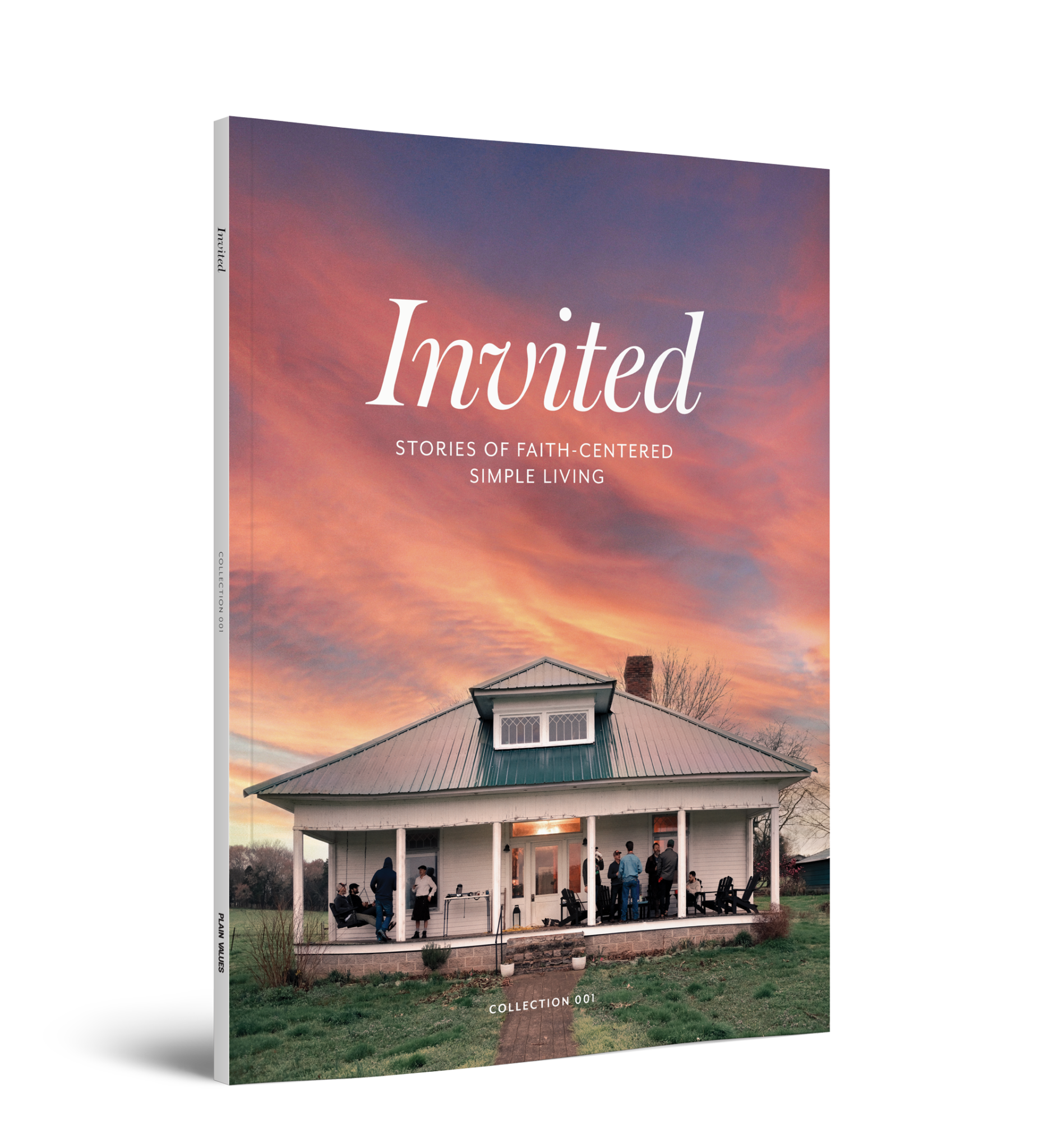
🤝THIS EPISODE’S FEATURED SPONSOR: Invited: Collection 001
If you’re craving stories that restore faith in hard times, Invited: Collection 001 is a handpicked “best of” from Plain Values magazine… uplifting accounts of triumph, simple joys, adoption beauty, homesteading wisdom, and gospel-centered living.
Learn more: https://homesteadliving.com/invited-collection-001/










Leave a Reply