
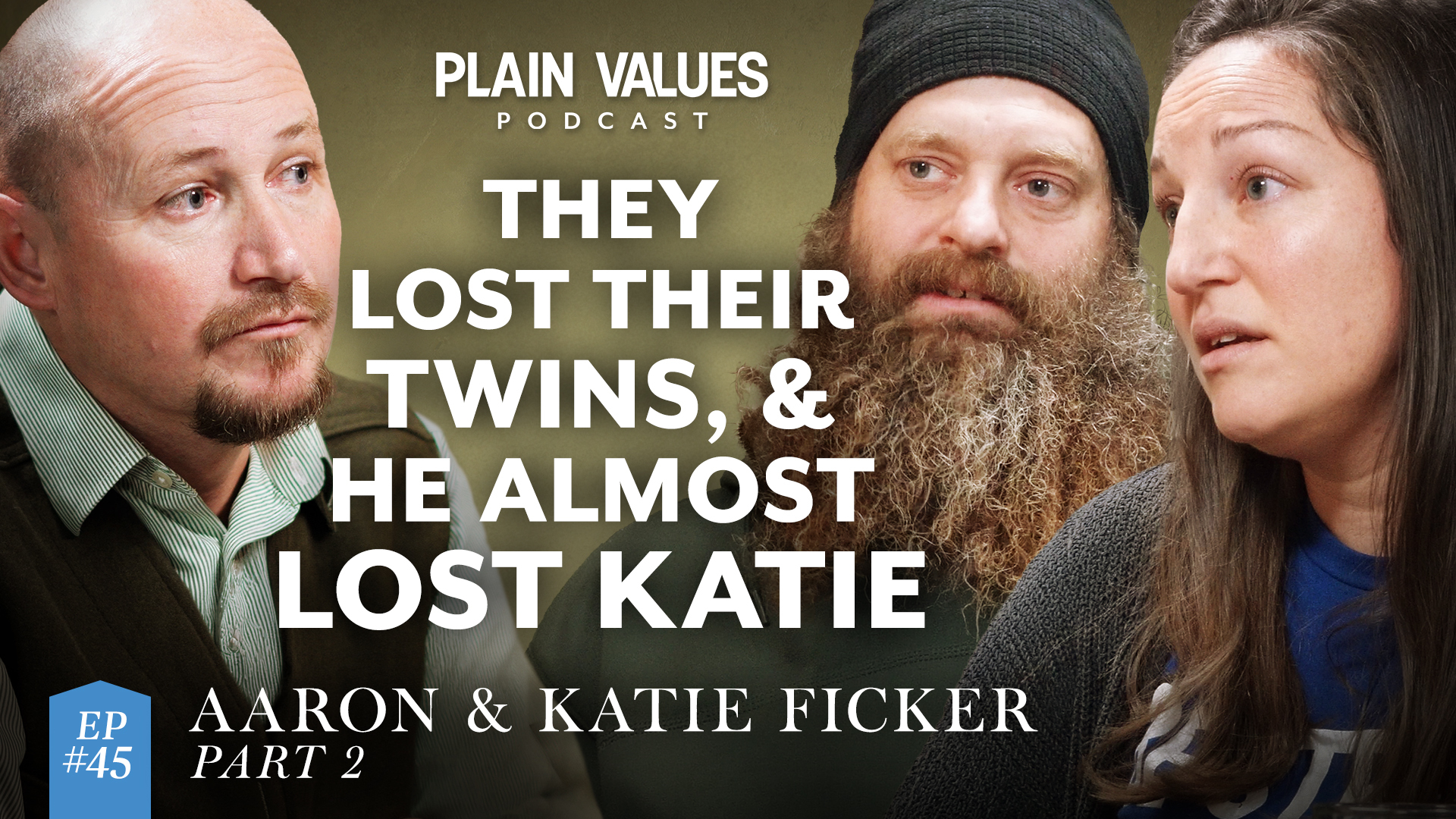
In this deeply moving episode of the Plain Values Podcast, Marlin Miller sits down for the second time with Aaron and Katie Ficker, who share their powerful journey of missionary life in Guatemala, profound loss, adoption, and God’s unwavering faithfulness through it all.
Aaron and Katie moved to Guatemala as newlyweds, where Aaron helped build an aviation program and Katie worked as a nurse. They built a life serving others through medical clinics, a nursing school, and community outreach. But their path included immense hardship: a high-risk twin pregnancy that ended in the loss of their children Gabriel and Ella, a terrifying medical emergency that nearly took Katie’s life, and the emotional toll of raising children amid uncertainty.
Despite the pain, they leaned into faith, adopting Genesis and later Moses, and experienced the Lord’s presence in miraculous ways, from answered prayers during crisis to community support that carried them through. They speak honestly about the complexities of immigration, family separation, human trafficking at the borders, and the spiritual battle involved in stewarding broken situations with hope.
Now back in the U.S., they continue serving through aviation maintenance, fostering connections, and encouraging others in adoption and missions. Their story is a powerful reminder that God meets us in desperation, redeems loss, and uses ordinary families for eternal impact.
This episode is raw, honest, and filled with encouragement for anyone walking through grief, called to adoption, or stepping into hard places with faith. You’ll be challenged, comforted, and inspired by their dependence on the Lord.
Learn more about Aaron and Katie at http://aaronandkatie.com
Learn more about Plain Values at https://plainvalues.com
Transcripts
0:00 – Intro
0:40 – Immigration
08:49 – A High-Risk Twin Pregnancy
18:00 – Sanctity of Life
25:27 – A Supportive Community
31:06 – The C-Section
39:32 – Fighting for Katie’s Life
58:47 – A Mysterious Visitor
1:05:11 – A Miracle
1:14:34 – The Retreat Property
1:25:52 – Adopting Genesis & Moses
1:30:57 – Journey to Ohio
1:52:09 – Finding Local Support
1:57:19 – Stepping Up for Foster Care
2:08:05 – How to Pray for Aaron & Katie
Katie Ficker:
The doctor said things were worse than we thought they were.
Marlin Miller:
With you?
Katie Ficker:
With me.
Marlin Miller:
With you.
Katie Ficker:
Yeah.
Marlin Miller:
When the angel put his hand out, did you take his hand?
Katie Ficker:
I didn’t actually. I think it was just a place for me to say, “Okay, you’re here. I can rest in that. ” This doctor was an atheist comes running into my room and he says, “Have you seen your x-rays from this morning?” We talk about human trafficking and how horrible it is and then we don’t have any- Any
Marlin Miller:
Idea.
Katie Ficker:
Idea that the open borders is like a fountain of it in the most horrific ways.
Marlin Miller:
Lisa and I attended an event for a local organization doing work in the trafficking and the abuse.
Katie Ficker:
Okay.
Marlin Miller:
And the thing that we drove home talking about was it’s an incredibly thin line, unbelievably thin line for a child to be born or grow raised into a safe environment and an unsafe environment. That line is unbelievably thin, tiny. And I struggle to know or to understand, not to know, that’s the wrong word. I struggle to understand how the Lord allows those things to happen to little Johnny or little Jane or little Jane.
Katie Ficker:
Amen. And
Marlin Miller:
Then over
Katie Ficker:
Here
Marlin Miller:
That Bobby and –
Katie Ficker:
Sally are just –
Marlin Miller:
They’re born into this safe, beautiful, loving family. And on the other side of this little tightrope
Katie Ficker:
Is
Marlin Miller:
This unbelievably imagined. I don’t get it. I don’t get it.
Katie Ficker:
I think that, man, have we been there, first of all. I mean, daily. I feel like in Guatemala there was a verse that sat on the wall of the bedroom that I stayed in when I first moved there for like a year and it said, “To whom much has been given, much is required.” And I think that was the verse I needed shoved into because when I first got there, I was like, “Absolutely. So I got to do the best I can. I’ve been given so much and I got to do, do, do, do, do. ” And it was striving and it was whatever. And then you walk through hard, hard things and you start to realize that if the hope is my striving and my ability, we’re all and we’re all done. So you walk through that and you get some humility, but yet I can still go back to that verse now and hopefully if I’m doing life well with true humility say, “Yeah, it’s not my striving.
It’s not me that’s going to do this. But I have been given so much if I can just put myself in a place of openness before the Lord of actual practically putting myself in that place. For us, a huge part of that was licensing to adopt. If I can put myself in that place where the Lord can connect those who’ve been given much to those on the other side of that extremely thin tightrope, then is that where he can start to work his story as a redemption?
Marlin Miller:
Is that why he allows it perhaps?
Katie Ficker:
I do wonder. I do wonder because when it’s in our own striving to give out of the much we’ve been given, then it’s guilt, it’s shame. It’s all those things. But gosh, if we as much who’ve been given much can move into humility and those who have not been given, I mean really who have been given horrific starts and brokenness on levels that we have not, if the Lord can use both of those places of humility, then right. His redemption and it’s for his glory then, not for ours.
Marlin Miller:
And he allows those situations. It’s much like… I mean, the thing that comes to mind is the guy born blind. Hey, did he sin or did his folks sin? No, no. We did this so that God would be glorified.
Katie Ficker:
That’s right.
Marlin Miller:
And he allows those things to bring people that are not in those situations and are his children to do something which is… I could jump on a soapbox in two seconds because how many of us out of our own selfishness and pride and ego will not engage and will not step into the fray when… I think it’s why we’re here.
Katie Ficker:
Absolutely.
Marlin Miller:
I think it’s
Katie Ficker:
Why
Marlin Miller:
We’re here.
Katie Ficker:
And with the ego and the selfishness and the pride, I think there’s a lot of things that can be said within it that we say within that, that looks like humility. Well, what about my other children? That’s really scary. I just don’t know that that’s what the Lord is calling us to right now. I don’t know what I would do if I got attached to this child and they left.That’s what we hear in foster care. These are all really, really, really good things. These are not things that should be ignored. You should be asking if you’re going to step into adoption or foster care. What about the other children in my home already? Whether they are bio kids or they’ve come through adoption already. It’s good
Marlin Miller:
To have
Katie Ficker:
Wisdom. It’s good to ask those questions. It’s Good to have
Wisdom. But if we just leave it at that and say, well, I don’t really know the answer to that. Is that where our pride and our ego and our selfishness has had the last say?
Marlin Miller:
And then you send a check and you feel like you
Katie Ficker:
Did
Marlin Miller:
Something.
Katie Ficker:
That’s
Marlin Miller:
Right. Man, Katie, that’s really good. Let’s go back to Guatemala. You moved down, you’re now nursing there. You’re building the flight program for your dad, for the whole ministry. When did you guys get married again?
Katie Ficker:
Go ahead, sweetie. When did we get married?
Aaron Ficker:
October 3rd.
Katie Ficker:
Very good. What year? That’s a good question.
Yeah. 2007. I went down there in 2006. So June a year later we were married.
Marlin Miller:
So you started a family in Guatemala?
Katie Ficker:
Correct.
Marlin Miller:
How many
Katie Ficker:
Children
Marlin Miller:
Did you have down there?
Katie Ficker:
We had three biological children. We had a fourth pregnancy that was twins that went to be with Jesus and then adopted our youngest two from Guatemala also.
Marlin Miller:
So you can’t crack open the door of your twins and not tell that story. How did that go?
Katie Ficker:
Yeah. So we –
Marlin Miller:
This episode is brought to you by our friends at Azure Standard. Lisa and I just recently signed up finally and we are loving it. Non – GMO, organic. It is all that you can ask for. Go to azurestandard.com and tell them plain values sent you. You can use the code HL15 for a healthy little discount. Thanks guys.
Katie Ficker:
As you already said, Aaron was building the flight program about 2013 to 2015 where we all kind of knew the Lord was moving and growing the ministry. Aaron and I were moving towards running a nursing school, opening up one that would then support the work that was going on with the hospital. So those two years were kind of building years. 2015, we opened the school. We had several families come join the ministry to help run everything that was growing. And yeah, they were exciting times with the aviation program continuing to grow and everything. Then with excitement and a lot of growth can also come stress. And so we knew we wanted more kids, but we’re kind of saying when and all of this. And so the school went into it, I guess it started in 2014, sorry, in 2015. It was going into its second year.
And we said, “You know what? Let’s step into this. ” So anyway, that pregnancy was complicated from the beginning. We learned at about nine weeks that it was a twin pregnancy and the first twin passed away pretty quickly after that. It was kind of obvious there was something off, but the second twin really held on. And so with the complications, to kind of keep it a little more general, I ended up in the hospital at… I had gone back and forth a couple times, but ended up staying in the hospital for about eight weeks, starting at 18 weeks of pregnancy to 26 weeks. So during that time, we had taken a couple flights in before that to the city and –
Aaron Ficker:
They were emergency evac flights.
Katie Ficker:
Yeah.
Marlin Miller:
Really?
For you?
Katie Ficker:
For me.
Marlin Miller:
For you to save your life.
Katie Ficker:
Yeah. So I’ll go into a little bit without going into too many details. So in the end of the pregnancy, they figured out it really was just a slow placental abruption. So the life-threatening element of the pregnancy was they couldn’t manage the bleeding yet we wanted to keep our baby alive.
Marlin Miller:
So the placenta was –
Katie Ficker:
Tearing away from the wall.
Marlin Miller:
Slowly tearing
Katie Ficker:
Away
Marlin Miller:
From the uterus wall?
Katie Ficker:
Yes. Yeah. And so causing a lot of bleeding.
The real way to stop the bleeding is to end the pregnancy. And ironically, so I went to school for registered nursing. That was what I did in the early years in Guatemala. And in my nursing school years, I did a paper on situations just like this and said, “If the mother’s life is in danger too and the baby’s life is in danger, the baby’s going to die. If the mother dies, I really feel like that should be in the hands of the parents to decide and really dug in, in my idealistic 20 year old self.” And so it was not lost on me that 10 years later I was sitting in that exact same situation going, “There is no way on earth I, ” and Aaron too, I think I speak for him, “We could feel a piece of making any decision that could result in ending this child’s life.
If that is part of the Lord’s plan, then so be it. But we do not want to step into making that decision in any way.” And so the whole goal and kind of the game, there’s probably a better word than that, but of the pregnancy, the playing with it was how do we
Support Katie and therefore the baby? Which ended up being a lot of blood transfusions, IV fluids, nutrition, bedrest. You can imagine all the things. One of
Aaron Ficker:
The challenges was that Katie’s A negative blood type and there’s almost all Guatemala’s positive. There’s very little… So how do you – Mostly Europeans that have the negative.
Marlin Miller:
You
Aaron Ficker:
Have to cut
Marlin Miller:
Me off. How did they find the blood you needed?
Katie Ficker:
No, we had missionaries coming in to donate blood. Aaron was arranging a flight that never ended up having to happen, but to fly up to Texas is a pretty quick place for us to get to or Florida working with a Red Cross agency to say, “How would you get blood across the border?” I mean, it was a really…
Aaron Ficker:
We had radio announcements.
Katie Ficker:
Complicated, hard. Stuff
Aaron Ficker:
Like that.
Marlin Miller:
What was it like for you?
Aaron Ficker:
It was
Marlin Miller:
Tough.
Aaron Ficker:
It was tough, but we had other kids too. We had three kids at home. We were flying back and forth. My mom was a huge help. She would stay with Katie.
Katie Ficker:
Yeah. She was a nurse, so that was
Aaron Ficker:
Enormous. Yeah. I didn’t know none of this stuff. It’s all over my head. So I’m just trusting other people. It was tough.
Katie Ficker:
So we had… Oh, go ahead.
Aaron Ficker:
Yeah. I think it got progressively worse. And so it felt… I don’t know. We were getting cooked, but we didn’t know we were getting cooked, I think. I don’t know.
Katie Ficker:
We had, just to speak into what Erin was saying with your trusting people. I mean, first of all, we had two flights in where by the end of the second one it was pretty bad. I mean, I was almost unconscious. I was just pretty out of it for most of the flight. Not really aware of what was going on. I was not completely passed out, but I mean, there are chunks of that flight. We barely made it a few times. Yeah.
Aaron Ficker:
And there was a lot of trauma, traumatic, not just flights, but prior to flights.
Katie Ficker:
Yeah. Yeah.
Marlin Miller:
How old were your
Aaron Ficker:
Kids hemorrhaging?
Katie Ficker:
Good question. So that was 2015. Anna would have been five and yeah, she would have just turned five. Then Ethan would have been three and Levi would have been about one and a half. So yeah, one, one and a half. So they were little.
Marlin Miller:
Does Anna remember?
Katie Ficker:
She does.
Aaron Ficker:
It was tough.
Katie Ficker:
And it’s kind of a side note from the thing, but it’s always interesting to see how personality and age plays into how the kiddos handled things. Anna, classic oldest daughter, rose to the occasion kind of like, “Well, I can help cook food.” And honestly, she was extremely capable and we raised our kids in the middle of nowhere. Guatemala running around barefoot. I mean, she could practically make the meals at that point. We had house help also, which was enormous. They were people that were like family to us. And so she was not cooking the meals independently, but she stepped in. Ethan, our three year old, really, really, really, really struggled. I mean, very possibly a personality thing, but just age as we looked at that after coming out was a pretty traumatic experience for him at that age. Our one year old was oblivious, too little to probably realize what was going on.
Also, he just has this beautiful personality that he can just kind of bounce around with each other.
Aaron Ficker:
Well, it was tough. We couldn’t take the kids in the hospital too. So
Katie Ficker:
They didn’t know what was going on entirely, which was hard and good. They just knew that mom
Marlin Miller:
Was really sick.
Katie Ficker:
That’s right.
Marlin Miller:
Have you guys
Katie Ficker:
Talked
Marlin Miller:
With them as they’ve gotten older about
Katie Ficker:
That whole thing? And they talk about it in a really beautiful way. Even our youngest two who, like I said, came to us through adoption. Well, our youngest is still too young to grasp anything we’re talking about, but our daughter, Genesis, she’s very quick to say, “Well, there’s really seven of us kids, mom. I mean, don’t forget Gabriel is what we named our son.” And then Ella is what we named the little one. We don’t really know if it was a boy or girl, but that
Aaron Ficker:
Was
Katie Ficker:
Kind of what we came to as a family. And so she’ll say, “Don’t forget Gabriel and Ella in heaven.” And for her, there’s even a place to… And I think that’s huge. We have definitely not always done it well. We’ve definitely not always known when to talk about it and when not to talk about it. But honestly, I feel like our kids almost helped lead the way in that beautiful innocence that kiddos have. It’s their reality and they’re going to talk about it. You
Aaron Ficker:
Should finish out the story probably.
Katie Ficker:
Yeah. So by the end of that second flight especially, we got together with our medical team and it was I think during that second, maybe it was the first flight in, we had a doctor come to us. He actually was the on – call doctor that night. We obviously were just praying and praying, “Lord, show us what to do. ” And he came in and he was positive and energetic and I say young. I mean, he was probably in his forties. Obviously he had to get through med school and residency and a fellowship and specialty and all that. But he was young and he came in and he said, “All right.” I’ll never forget this line. He said a whole bunch of stuff, but he looked at us and he said, “Your baby is still fighting and we are going to fight with him.” And
Aaron Ficker:
That
Katie Ficker:
Became the theme of the whole entire pregnancy spoken to us from him, very devout Catholic, very, very, very much believed in the sanctity of life. And yeah, there are examples we could go into in that, but to just sum up, that was a huge theme. So in Guatemala, abortion is completely illegal in every sense. And we personally reaped the benefits of that through that
Aaron Ficker:
Pregnancy. We had the option of flying up to the US and knew that we would get better medical care probably, but we also knew that we would be tempted.
Marlin Miller:
And probably encouraged. Encouraged.
Katie Ficker:
Right. Early and not to negate. I mean, I want to say within that there was a couple things. Even while we were sitting in that question of, do we go to the states or do we stay in Guatemala? It really became obvious that I was too medically fragile to do that. We even have really good childhood friends. They reached out and said, “We’ll help get in an emergency evacuation flight. You don’t have to fly commercial, but whatever.”
Aaron Ficker:
But
Katie Ficker:
Even in that case, I was just too fragile. And if I started hemorrhaging again in the plane, there was nothing they could do. So there was that realness in there. But we did have a conversation with a doctor friend of ours here who had gone through Yale and was very aware of just the way things work. And he just said, “Do be aware that if you come to the States, all these things you’re already feeling, you’re going to have to be making decisions on a really detailed ethical medical level at early weeks.” So again, we can’t really speak a ton into that because we had to kind of think through the option to a degree and then it really wasn’t an option. But what we can speak to is the beauty of the staff that came around us in Guatemala and the situation. As Erin said, the medical care there, I should say the medical care here is overall probably on a level higher than Guatemala, but we were in a hospital that really took care of us.
It was a private hospital. It runs really well. And our staff stood for life, which was really important to us. We connected with the top neonatologist in the country. She had studied in Spain and she came to us. So we said, “Okay, we’re going to do this. We’re going to fight for this baby’s life. We’re going to move forward.” And so we met her and she said, “In Spain, in these kinds of situations, we look at the family as a whole. If we try to deliver this baby too early, as an example, if we take this baby at 22 weeks or 23 weeks and we actually were able to support his life, but he is blind for the rest of his life, or he has severe needs, we are going to look at that as a family decision because you know your resources. You have to have a voice in this.
This not just a medical situation only at the end of the day. This is a family decision in a community.”
Marlin Miller:
Are you implying that that’s not the way it’s done? I
Katie Ficker:
Don’t really know how it’s done here, honestly. That’s where we’re going to show our naivety a lot when we start talking about the states because we didn’t experience it here. Well,
Marlin Miller:
I’m there times 10, so you
Katie Ficker:
Guys know way more about this than I do. So I’m not sure. But I can say it was so reassuring and wonderful to have somebody say, “It’s okay to sit and weigh the risks and the benefits in all of this and think through it. ” And I mean, she didn’t say this part, but we could then go to the Lord and say, “We are fighting for this child’s life and we are not going to end this pregnancy, but please give us wisdom every step of the way, understanding that we could possibly…” I don’t know that it really was an option in Guatemala, but if there had been an option to deliver at 22 weeks, that is a big conversation or should be of the risks that come with that. And so it was horrific. I mean, it was really, really hard to weigh through those ethical things.
And we weren’t even doing it on a level that we would have been most likely had we been in the states. Because at the end of the day, Guatemala, pretty much our staff that was wonderful and again, so supportive, but came to us and said, “Really? You need to get to 26 weeks before we can even start really having a conversation here of what it could look like to support this child’s life.” And so that became the whole goal. I mean, obviously the goal was 38 weeks, 40 weeks. But then they said, “Okay, 32, we’ll have good development, but really you have to hit 26 to 28 weeks.” And I remember saying a few key things to my mother-in-law along the way. One was what if he goes in that 26 to 28 week period? How will we ever know how to make those decisions?
Another thing I told her early on was DIC, which I can’t remember exactly what it stands for, disseminated something, but is a condition you can develop during lots of things. But one of those situations is pregnancy, if I’m remembering everything correctly from nursing school. And so I remember somewhere along the clinical days with my mother-in-law saying, “I remember learning about this in school and that’d be the worst thing you could have. Your body’s just clotting and breaking those clots down all at the same time. And as doctors don’t have any idea whether to push clotting factors, whether to… ” It’s just a really complicated situation and very hard to manage medically or anything. So there were a few key things or a few things I had just thrown out to her. And so they said, “This is our goal. Hit 26, 28 weeks.” And so we continued to do supportive measures.
Again, fluids. She was getting
Aaron Ficker:
Transfusions all the time.
Katie Ficker:
Yeah, all of that. And I was on complete bedrest.
Marlin Miller:
When those conversations were happening, how far along were you?
Katie Ficker:
Really at 18 weeks we started to kind of have to form a plan.
Marlin Miller:
I mean, the doctors and the team knew this is going to get bumpy.
Katie Ficker:
Exactly.
Marlin Miller:
We got to get to 26 and then we can talk.
Katie Ficker:
That’s right. That’s right. So we’re going to do supportive measures to 26. So yeah, we did. And then at 26 weeks, there was one night –
Aaron Ficker:
She was in the hospital this whole time.
Katie Ficker:
Yeah. And so this is where when Erin talks about being separated, I was a good 30, 40 minute flight from them on the days and times you could fly. Or at that point where the roads were at, it was like a seven to nine hour drive.
Marlin Miller:
Okay. You’re not talking a half hour drive.
Katie Ficker:
Correct.
Marlin Miller:
You’re talking a half hour, 40 minute flight.
Katie Ficker:
And we at that point, to make a long story short, you can’t fly every moment of the entire day with our airplanes in Guatemala in the –
Marlin Miller:
I totally
Katie Ficker:
Get it. Yeah. So there would be a few times where I’d call and say, “Things are getting rocky. Do you think you could come in? What could that look like? Is somebody flying in tomorrow? Could you get on a flight?”
Marlin Miller:
You’re trying to keep everything afloat at home. You’ve got the three little kids. You’ve also got the work.
Aaron Ficker:
Yeah. Yeah. I mean, we still had life going on.
Marlin Miller:
Wow.
Aaron Ficker:
Yeah, that’s tough. I don’t
Katie Ficker:
Know. Well, and I don’t want to be remiss to say this. We had an incredible supportive medical staff. We had an incredibly supportive missionary community, definitely in our hometown
Family. I mean, Aaron’s family, most of them are there. So incredible support system there. Plus we did have people in the missionary community throughout Guatemala ask how they could step in and help. So yeah, again, the beauty of the body of Christ was so evident throughout the whole thing. I mean, we understood profoundly and experienced deeply the value of the body of Christ stepping in. But also within that, I’ll start with this and then go backwards. When I got out of the hospital after everything, which we’ll get to that part, I remember that first night I said to Aaron and we both kind of said to each other, “This was really hard and it didn’t go down the way we thought it would, hoped it would, but the Lord has been near in the most real way we’ve ever experienced. And we don’t ever want to lose that.
Whatever it takes to remain in communion with the Lord on this level, we’re here for it. ” And I wanted to start with that point only to say it did get really, really, really hard and really rocky and not just for me in it, for Aaron, for my in – laws, for our missionary community, obviously for our kiddos. I mean, it was really hard, but the presence of the Lord was so real and not just in a feeling way. I mean, that could be a whole nother conversation of the presence of the Lord, but in a very real tangible way of going, “We don’t ever want to lose this. We’ve gotten a glimpse of what it is to walk with the Lord on this level and it’s worth more than anything we could ever experience on this earth.” And so with that said, and I’ll back up and say I was raised in the church and I’m beyond grateful for that.
My dad was a pastor, so I have lots of stories of the fun of being a pastor’s kid and yet still love the church and think it is the vehicle that the Lord is using on this earth. And I think it’s so important and we love our church here. But the theology that I was raised in did not have a framework for some of the experiences I walked through. And so one being that night, the night that things got really bad, I remember praying. And again, I’m probably going a little bit in and out of consciousness at this point too. But I remember praying and I had an album that somebody had sent me that was just hymns. And it was done in more of a modern way, but it was just a lot of hymns. And I would just listen to that over and over.
And Psalm 91, obviously we stood on a lot. And so I was praying that verse and listening to these hymns and really felt like I… And again, this could have just been an image Lord gave me as I’m praying all this, but just felt like I was surrounded by these angels. There were angels at the fot of our bed. And one of them, foot of my bed, one of them stepped forward and just put his hand out and did not understand what all of that meant at that time, but I did just feel a peace and could go to sleep and go, “This is all in God’s hands. I’ve laid it before him. He’s reminded me there are angels surrounding us and this one has even stepped forward and put his hand out. ” And so I called my mother-in-law as soon as it was appropriate to call.
So she’s an early riser, thanks the Lord. It was about four o’clock. Called her and I said, “Leslie, things have gotten hard. They can’t find a heartbeat. The doctor’s coming in to se if they can, but they can’t get the bleeding to stop. Is there any way you guys can come in? ” And I’m sure I Did not say it quite that calmly, but really feeling it. And so she said, “Let me chat with… I’m going to get Dwayne up. I’ll call Erin,” whatever. I think I’d already talked to Erin.
She called me back and after waking up her husband… I mean, she is a prayer warrior like nobody else I know on this earth. And she called me back and she said, “I have to tell you real quick.” She said, “I was praying and it might have even been before I called, honestly.” And she said, “I was praying for you and Gabriel this morning. And all I got was this picture from the Lord of two hands being open.” Wherever that conversation fit in, neither of us had told each other at that point about what we’d seen. And so it’s such a small thing in so many ways, but it was such a huge thing for us to know the Lord was in the middle of it with us, that he was speaking to all of us, but giving her and I both the same sense of, “I’m here.
Come to me. It’s all going to be okay.” And throughout that day, to sum up, I mean, things did get worse. And as Aaron said, it was already such a fragile state of being that it was kind of hard to be like…
It was almost bad from the beginning. So you’re just measuring levels of badness. You don’t know how close to death you’re getting or whatever. But as the day went on, we had another doctor that was the internist, I think is what you would call him here. And so he started to say, “You have got to call your OB. This is bad. We’re going to lose both of you. ” And so that while trying to make those decisions, I was getting blood transfusions like crazy that day. I mean, again, it was just on that level. But I remember sitting with my mother-in-law at one point, nobody was in there except for her and I. And we could just say, “You know what? The Lord met us this morning separately, but in similar ways.” And we know – Had you
Marlin Miller:
Talked at that point?
Katie Ficker:
Yes. By then? At that point we knew. You told her
Marlin Miller:
About the
Katie Ficker:
Angels.
Marlin Miller:
She told you
Katie Ficker:
About the
Marlin Miller:
Hands.
Katie Ficker:
Yeah. And we felt like that was a place of the Lord just saying, “I’ve got this. I’ve got this in my hands and where this goes, it’s going to be okay.”
Marlin Miller:
When the angel put his hand out, did you take his hand?
Katie Ficker:
No, I didn’t actually. I think it was just a place for me to say, “Okay, you’re here. I can rest in that. ” We went on to the C-section and at that point, by the time Gabriel was born, he had already passed away probably on the way to the OR. And so what those pictures really became for me, and I don’t want to read into them too much, but for me, they became a place of the Lord just saying, “I was already reaching out to him. I already had my hands wide open and ready for him and I can rest in that. ” And within that, so I go back to the OR and our wonderful doctor, OB, he’s positive, but I can see him starting to sweat a little bit. So I’m on the table getting ready for the C-section to be done. The whole goal was to do an epidural.
At this point, we’re believing Gabriel’s going to be born alive and we’re going to have some decisions to make, but I wanted to see him obviously. And so – How
Marlin Miller:
Far along was he in this?
Katie Ficker:
He was 26 weeks. He was 26
Marlin Miller:
Weeks. So it
Katie Ficker:
Was right at 26 weeks. He
Marlin Miller:
Got to 26 weeks.
Katie Ficker:
He got to 26 and yeah, because he wasn’t above 28, we were right in that window where we knew we’d have to make some decisions. And really our prayer and this is not even out of deep humility or these beautiful hearts, just pure desperation. We were going, “Lord, you have to lead us in this. You have to show us. I don’t know how we’re going to make these decisions.” And so I go back for the C-section and they do the epidural. It does not take. I can feel it. And so I don’t know all the parameters. Obviously I’m laying there, but they’re monitoring everything an anesthesiologist monitor, but blood pressure, all these things. All I remember is our surgeon, our OB looks at the anesthesiologist behind me and is like, “We’re done. You got to put her under.” So I mean, they waited, I don’t know, it was probably like 10 seconds, but he tried twice to cut and I was like, “I can feel it.
I can feel it. ” And so he looks at her. So the anesthesiologist, the last thing I remember on that was she just put her hands on and said, “It’s going to be okay. You just look at me, you just breathe in, you just breathe in, breathe deep, breathe deep.” And then I went under. They were shoving blood in and all this stuff and did the C-section. And so learned afterwards that I think it was… I wish I could remember all these details. It’s been almost 10 years, 10 years in December, December 10th. This December 10th, in just a few weeks, it’ll be 10 years. But I think it was seven full… They figure by the end of it, I think it was seven liters of blood, because it was almost like my entire level of blood in me would have been replaced by the end.
But like Aaron said, my blood type was rare there. So they were calling people during the surgery. I know the anesthesiologist’s son came in and gave blood.
Marlin Miller:
Get out of here.
Katie Ficker:
No.
Marlin Miller:
In the middle of C-section –
Katie Ficker:
I mean, they’re doing it through the blood thing, but yes, in the middle of the C-section, they’re calling people. They’re calling for negatives. All their emergency contacts for blood.
Marlin Miller:
To save you.
Katie Ficker:
Yeah. Marlon, I mean, humbling on a level that is unbelievable still even to talk about it. And so we go through this and they – But then
Aaron Ficker:
They just started giving you liquids. They didn’t
Katie Ficker:
Have,
Aaron Ficker:
They ran out of blood.
Katie Ficker:
Yeah. And they did have, again, it was a hospital that would have had access to some of those. They would have had packed red blood cells and different things that I’m sure were in there too to help.
Marlin Miller:
Did you make it in for this whole –
Aaron Ficker:
In the waiting room. My mom and I were waiting in the waiting room. It was a long time. We just remember seeing people going back and forth with bags of blood. Wow.
Katie Ficker:
And praying. They sent out prayer chains and prayer requests and people were praying that whole time. I mean, it really, truly, we have experienced the power of the Lord and the power of the body of Christ on levels that are incredible to us still to think of. And so then they wake me up and again, Gabriel had already passed away by then. And I remember holding him in my arms and thinking, wow, he’s heavier than I thought. And then again, I was pretty out of it. They I think had to do a lot to get me to even be able to understand that. I mean, to me as a mom, I remember he filled… I mean, to me, it felt like he filled my arms. We had pictures and it looked like he… I mean, he was obviously swaddled and bundled up. Do you remember what he looked like on –
Aaron Ficker:
I think that’s far size wise.
Katie Ficker:
Yeah.
Aaron Ficker:
Yeah.
Katie Ficker:
And I love that you’re asking Erin too, because it’s so easy to go to the mom in this. But I remember even in it, it was massively difficult for Erin in a completely different way. I got to at least do something. Even if my doing something is sitting on bedrest and accepting the medications or the blood transfusion, all that Erin is holding it all together and not sure what’s going on the whole time. I mean, it was…
Aaron Ficker:
Well, there’s nothing you can do.
Katie Ficker:
Yeah.
Marlin Miller:
One of the things that I have learned that I’ve seen, and I think if I’m honest, we’ve lived a bit of this, not this dramatic and up close. But one thing when people have a miscarriage or a
Katie Ficker:
Stillbirth,
Marlin Miller:
I grieve for everybody, but I especially grieve for the dads because they’re trying to hold it together for their wife while still grieving for their own loss. And then you have children in there. It’s
Aaron Ficker:
An
Marlin Miller:
Incredibly hard thing because it’s just incredibly hard. How long did it take you to get out of the hospital then?
Katie Ficker:
So then from there, I went back into my anesthetic, whatever. I was back asleep and they said to Erin and Lesli, my mother-in-law, the doctor said things were worse than we thought they were.
Marlin Miller:
With you?
Katie Ficker:
With me.
Marlin Miller:
With you.
Katie Ficker:
Yeah. And she’s at a really high risk for DIC. That’s our biggest concern. She’s going into the ICU. If she makes it through the night, I think things will be okay. So Aaron has just lost his child and been told that about his wife.
Marlin Miller:
What did you do when you were told that?
Aaron Ficker:
I don’t know. I don’t know. I just prayed, I guess. I don’t know. The doctors weren’t confident either. That was tough.
Marlin Miller:
And so then you’re trying to hang on to hope and
Aaron Ficker:
Wow. I mean, there wasn’t anything we could do.
Katie Ficker:
Right. Right. And honestly, I was asleep for all of it. It wasn’t me that was walking through that part. I was completely oblivious, obviously.
Marlin Miller:
And they were praying you through it.
Katie Ficker:
And they were. Wow. Erin and Leslie both. And calling people. And even at that point, we had doctors, friends of ours that are doctors in the states saying, “We’ll come down. We’ll get a medevac.” I mean, people wanted to help in any way they could. And I do want to highlight, again, maybe as a side note, but I think it does speak to who we are as Americans too. We are not quick to give up and that’s not every culture. People really, really, really wanted to know how to help and they were willing to do anything. I had a friend who was ready to be on a plane to come down. She’s a universal blood donor. She told me, I mean, if it hadn’t been such an emergency at the end, there was a game plan in place for her to come. She’s an OBGYN.
Sit outside the OR as a universal donor, but also there is a second… I mean, we were talking to her
Weekly, if not daily through especially the last part of the pregnancy. And we just had people who were willing to do whatever to step in. And we had a South African couple that worked with us too in our town there in Guatemala Cania. I mean, they also were willing to step in and do anything. They’re calling people for blood. They’re helping with the kids. I think where it struck me so deeply was the mission field attracts a lot of type A go – getter. We’re here to help. And that can lead to friction. It can lead to some savior complexes. It can lead to contention, conflict. And I mean, honestly, it can lead to destructions of ministries if we’re honest. Yet in those times, those people did not even miss a beat. They were ready and they put their money where their mouth was. They stepped in, they did it.
I mean, over the next couple years, I remember I met a missionary couple. We introduced our names and suddenly the wife goes, “I know your name. I went in and gave blood for you two years ago. I’m like bawling and she’s…” I mean, it was incredible the way people… So
We do a lot on the mission field of talking about our cultural tendencies and where pride can get in and laying that down. But I don’t ever want to negate to the way the Lord moves through some of those things. I think it is good to always be aware. Of course, we need to see where we’re living out a culture or personality and not humility and not where the Lord’s leading is. But also the Lord knows all of that and he uses it too for his good even if it’s… Yeah. So that night I go to the ICU and again, I in many ways had the blessing of being completely out of it. I remember waking up like five times and all I wanted was water. And I had no idea. Again, blissfully unaware of what was going on, just please give me some water and ice.
And he would only let me have ice I’m sure because they were… I should say I would imagine because they were wanting me in a state where if they needed to go back for another surgery, I was able.
I get to the next day, my mother-in-law is there. Aaron is there obviously. I mean, I clearly made it through the night. And that morning was beautiful and rough all at the same time. Our doctor came in and I mean, honestly, he was just distraught, defeated, really confused. He stayed up actually through the night, my mother-in-law told me, just pouring over my charts. Where did we miss this? Where did this happen? Where did he came in and apologize with tears in his own eyes? I mean, it was hard on everyone. I think Aaron said our doctors weren’t super confident, but I will say they also were very humble and real.
Aaron Ficker:
No, I just meant when they came out of the OR, you could tell it was traumatic and they were shocked.
Katie Ficker:
Yes.
Marlin Miller:
It actually shook them. Yes. Yes. When your doctor came in the next morning and was defeated and distraught, like you said, they miss something? No.
Katie Ficker:
And that’s what I don’t think they did. I mean, if you put… I’m going to say this as a nurse. If you put five medical people or more in a circle right now to go over all my charts and talk about what was missed, I’m sure this one’s going to say you have five people that are all going to tell you what was missed and what could have been done different. I mean, one of the factors that went into it, I went on complete bedrest for those two months of sitting in the hospital. Research, especially research out of the state shows bedrest doesn’t do much. I mean, our baby went to be with Jesus anyway. Was it a waste to have gone on bedrest? I don’t know. So what I loved again, just to speak to…
Yes, it was really hard to have this go down in Guatemala. There would have been a cultural familiarity aspect if it had been in the States. There would have been… I mean, everybody spoke English, praise the Lord. And we do speak Spanish, but you’re in those kind of situations. It’s nice if somebody speaking your first language. So in the States, we would have had that. Everybody would have been speaking literally as their first language, the exact same language. Just some of those things that are obvious that it would have been easier in some ways to go through here. But they did it so well in Guatemala. I think one of those things is they wrestled through it. They really were in it. He left his father’s 80th birthday party to come to stay. I mean, he did the C-section, went and said happy birthday to his dad and came back and sat there all night long outside of my room in the ICU.
I mean, that’s incredible. Honestly, he was on call when we first met him doing his rounds. He’s really a fertility specialist. This isn’t even his day job is these kind of complicated pregnancies. Now, because he’s a fertility specialist, he would know more about twin pregnancies.
There was a real heart there. We actually named our son after… The middle name was after him. We just wanted to really honor his heart and the way he put himself into it. And he actually… We even were able to refer some patients to him for other complications from our clinics. I mean, we kept a good relationship for many years and still would. I mean, now we’re in the States and he’s there and communication is hard back and forth.
Marlin Miller:
So how did you get better?
Katie Ficker:
So that morning was hard. I was on oxygen. I was on antibiotics for a probably – She couldn’t really talk. Probably infection. Yeah. I couldn’t talk at all, which obviously is very hard for me. So actually probably plays into the next experience I had that did not… Another one of a few that did not meet my theological framework at that time. I mean, my mother-in-law, Erin, they had all been there for a couple days at this point. So they said… I mean, somebody stayed. I think it was your mom that stayed that afternoon, but she also went and slept for a little bit and all of that. It was
Aaron Ficker:
Hard. When she was in the ICU, they wouldn’t allow you back there as much.
Katie Ficker:
You had
Aaron Ficker:
To get just short windows of time.
Katie Ficker:
And no kiddos, but they did… I think this was the second… I’ll share the afternoon and then that second day. So I remember that afternoon just… Again, I couldn’t talk, which probably was something the Lord allowed because it did force me to just sit before him. There was no talking it out with people. And so that afternoon I remember just saying, “What happened?” Earlier, you had said, “Why does the Lord allow some things to happen?” I mean, I sat there going, “I’m alive. We didn’t even realize how close to that not being a possibility we were. But our child who we did stand in faith and prayed and fought and all of this is no longer here on this earth with us. Why? Why did we just walk through this? Why is he not here? I mean, just where are you in this? ” I remember just thinking, obviously there was postpartum stuff going on, hormones and all of these things, but I remember just thinking, “My arms are so empty.
What do I do with my arms? There should be a baby in them.” And that wasn’t even necessarily a conscious though. I think it is just the beauty of how the Lord made us as mothers.You go through an experience like that and you should have a child in your arms in the end. I just remember saying, “I don’t know what to do with my arms. I don’t even know where to put them.” And so just out of these depths that I didn’t have words for and couldn’t verbalize them if I did, where are you?
I would say this was a vision, which again, is not something I was raised in, visions and dreams and all those things. But out of these prayers and I would imagine my eyes were closed, but just in this place in front of me, it was like I was brought into heaven and right there in front of me was this whole choir of angels just rejoicing. And it was just praising the Lord, of course, and hallelujah and joy and dancing and just this just utter joy. I remember equating it in my mind with the joy of when a sinner comes home, that scripture in the Bible that just talks about… And so it was like I turned my head and there was the Lord’s arm and I never saw a face or anything. And there was our Gabriel laying in it. Even though I couldn’t see the Lord’s face, I had never experienced or really understood at this level.
It was like utmost joy, yes, but just pleasure and delight and everything you hope for in a father being poured down on our baby. I was really the first time I think I had seen God’s father heart for all of us, of course, but having it poured out on my child that we had fought for and we had stood with was… It was incredible. And then it was like his arms turned and there was our other twin sitting there.
I mean, that’s when it was like, “I can rest. He’s been holding the other one the whole entire time.” He did not have to do that for me. I didn’t have a theological framework for it. It wasn’t something I even knew to ask for. And that healed my heart. I mean, I still grieved massively and the next few years were really walking through that was hard. The next few years were harder than even walking through that whole situation. It was so hard. The grieving process, the grappling with the almost dying. I mean, it was horrific. But it was like my soul and my heart. I could grieve knowing that he had them in his hands, that they were being rejoiced and loved over honestly better than I could even as a parent. I mean, they had the perfect father and it was a comfort for me as a mother.
It was what I spent the next five to 10 years wrestling through as a daughter, as his daughter going, “Well, this changes everything if you delight in us, if you love us, if you rejoice over us, if this is your father’s heart, then I want to know that more.” So yeah, that was an incredible, incredible gift from the Lord. And then we continued on. Obviously I was not well physically. She wasn’t
Aaron Ficker:
Getting better.
Katie Ficker:
And I wasn’t getting better. Very wisely, nobody told me that. I mean, I could start to talk, so that was helpful. So in my mind I was getting better. But they allowed Levi, our littlest, to come in. And I remember, I think my mother-in-law said she just needs to hold her child. And that was so healing to just hold him for a little bit. And obviously Aaron and Leslie were there as much as they could be. My parents came down. So again, we just had such support, but really we needed the Lord in a deep way. And again, I want to highlight the necessity of community, but even an incredible community is not what’s ultimately going to walk you through those deep questions and those deep experiences. And so one night, so they had me on pediatric settings for all my alarms because my heart rate was so high, my blood pressure’s up.
Again, I just wasn’t doing well physically. I was still on oxygen, all the things. They couldn’t get the fluid off my lungs.
And the thought was that can be very normal after an emergency C-section and pushing a lot of fluids and blood transfusions. But as it was getting worse instead of clearing, then the question is, what do you do with that? And so one night my alarms are going off like crazy and I was starting to become aware enough to be like, “Is this it? I’ve been in this hospital for two months. Is this where I’m going to die, just in this ICU room?” And so this one resident came in, an atheist. And I say that only because later on in the conversation that came to light as we talked about some other things. But he came in, he was incredible. I mean, he was just really, really young, but knew exactly how to walk me through it. And I said, “These alarms are going off. I’m freaking out.
What’s going on? I need you to lay it to me straight. Am I going to die in this bed?” And he was calm, he was steady. And he said, “You know I can’t tell you that. You’re a nurse. You know I can’t tell you if you’re going to die in this bed or not. ” He said, “But here’s what I can tell you. ” He said, “If I was to walk out this door right now and I was to get hit by a truck and I was to end up in this ICU, my very own ICU here in a full body cast and I wake up,” he said, “The first thing I would do is say, how am I getting out of here?” And completely apart from any element of faith, he helped redirect to where’s the hope in this? Where am I putting my mind to?
Where are my thoughts? Which are so biblical. I mean, he didn’t have a biblical framework for it, but even as we walked through the next several years, without hope, without a place to put our mind on and our thoughts and we’re done before we’ve started. And so he talked through it and asked me good questions and we came to the point of, okay, my goal was to… There was a lot of factors that I would have to meet before I could leave the ICU. I mean, I was nowhere near that. So that was not a good goal. But if I could at least get to a point where I could sit in a wheelchair and make it out with portable oxygen, I think I could still have the mask. Then they would let me meet my kiddos in the garden. And I was like, “There it is.
That’s all I want is to be back with my family and my kiddo.” They had a little central garden. And so that became the goal. And then we did go into conversations about different things. I mean, really, he just stayed with me because I was so worried. I mean, I was just alone and scared. And so we’d then chatted through other things and I had this hope, but he just sat with me. And so we had this whole conversation and all these things. And so then that kind of became the new goal. A few days later, it was a week totals that I was in there. So I get the days a litle mixed up. I think that was on day three. So day five, it was a rough day. This was unbeknownst to be, but my mother-in-law came to visit and the doctors met her at the door and said, “Look, Katie’s not getting better.
This is day five. Her lungs are filling more and more. We’re going to meet this afternoon as staff and create a plan, but just so you know, we’re talking about intubating her and putting her out for the next two weeks, giving her lungs some rest and seeing if we can get the fluids off medically.” Pretty much just medically manage her and put her in a unconscious state to do that. So she came in and did not say any of this to me and just sat down. And about an hour later, this lady comes in and says, “Hey, I know so – and-so.” But
Aaron Ficker:
This lady came in. It’s not an easy thing.
Katie Ficker:
Yeah, go ahead.
Aaron Ficker:
You couldn’t get in. This hospital had real high security. You couldn’t get into the main doors of the hospital without going through security. And then they had security and magnetic badges and everything to get in the ICU. I couldn’t get in. I mean, we couldn’t get into the ICU.
Katie Ficker:
Yeah.
Marlin Miller:
So how did
Katie Ficker:
She get in? Yeah, I’ll tell you that part because she told us later, but she said… It was so crazy. She said, “I walked in and she had been to this ICU before to visit.” You knew this person? No, we had never met her before in our life. Never met her. She says, “I’m sister – Came off the street. So and so. ” And I said, “Oh, that’s interesting. I never even knew that person had a sister. These are friends of ours that live in Guatemala City.” Well, later I learned she’s sisters in Christ. They went to church together. And so as Erin said with the security, it might be helpful to put in here too. I mean, this is a hospital that diplomats might end up at. I mean, this is a well known, well-standing hospital that’s done things at an excellent… There’s a couple now in Guatemala, but that one was a real…
It had been there a long time. And so there’s wealthier people coming. Security is high. If you have enough money to be in the ICU, I mean, for us as Americans, the amount of money it takes to sit in those places is ridiculously cheap compared to what you would pay stateside. But for a Guatemalan, I mean
Marlin Miller:
It’s-
Katie Ficker:
It’s
Marlin Miller:
A whole other
Katie Ficker:
Ballroom. Absolutely. Nobody can afford that. So you’re wealthy if you’re in there. And so it is high security. So she says, I came in and I was standing outside the door and she said, I went to knock on it, push the alarm, whatever. She said the door opened and I knew the person walking out. And so we chatted for a little bit and then I just walked right in after him. She said, I walked around. It was a circle and all the rooms were off of the circle. The
ICU. The ICU. And the way she went, she took the long way around. Mine would have been one of the last rooms that she would have encountered. She said, “I walked around that circle and she’s like, it’s almost like I was invisible. Nobody said anything to me. Nobody talked to me. ” I mean, we’re white and so it’s pretty obvious which one I was. So she just poked her head in different rooms until she saw some white people and walked in and said, “Are you Air Mona Katie?” And so she sits down and says, introduced herself and then said, “I’ve been praying for you. Our church has been praying for you. I’m also in the middle of a 40 day fast where I’ve been taking communion every morning.” And she said, “This morning, I felt like the Lord gave me a word for you. Would you mind if I share it with you?
And then we pray and take communion.” And we were like, “Sure.”
Marlin Miller:
She doesn’t know how sick you are.
Katie Ficker:
No, I don’t. She doesn’t really know how bad it is. Exactly, because I think we didn’t really know how bad it was. So I mean, she should have been getting some reports through her church or her friends, but yeah, I mean, everybody’s pretty aware. And I will say, I remember sitting in a chair that day. So it was a pretty big deal that I’d been able to sit up. Obviously they had walked me to the chair, but I sat down, I was going to eat lunch, sitting in a chair, see how long I could make it with the oxygen on, but breathing and all that.
So my mother-in-law and I are sitting next to each other. She’s across from us and she says, “Well, let’s just open with prayer.” And again, please hear no theological framework for any of this in my experience. So she prays and she said, it just starts as obviously a prayer for healing and anything that you would obviously start with while somebody is sitting across from you sick. And it goes into this prayer time for revival in our area, for the area that we live in in Guatemala, for blindness. Well, I’ll speak into this a little bit. So there is witchcraft in our area and so mostly within the indigenous population, but there’s such a mixing of indigenous and Latin in our area that it’s just there’s a lot of witchcraft. It’s really seeped into, if not completely linked 100% in the Catholic church too. So it just is really seeped into everything in our area, the switchcraft.
And so she started praying for blinders to come off for people to see Christ. She said, “I see people just almost like they’ve been wrapped in all these bandages and it’s like the Lord is just going to remove those and they are going to see him clearly and they’re going to fall on their faces before him.” And just a few other things. And I mean, then I was praying and my mother-in-law was praying and we got done and I was like, “Wow, I don’t think any of us were expecting that. ” And then we took communion and then she said, “Can I give you the word?” And we said, “Yes.” And she said, “The word that I feel like the Lord gave me is it is finished.” And I remember my mother-in-law, who’s again, a very, very faith-filled woman, I mean just incredibly so said, “Well, that would be wonderful.
If that could be the word, we would really like to be done with this whole situation and move on. ” And so we laugh, but then I think we prayed again. And so then she left and my mother-in-law said, “Okay, I need to go too.” I mean, my father-in-law was flying her home that day and all of this. And so I go back to bed, sleep, all the things and the next morning I wake up, they come in, they do all the exams they’re doing every morning, arterial blood draws and all these things and they were doing x-rays every other or every few days. I think it was every other day at that point. And so all normal stuff and about an hour after that, this doctor was an atheist, comes running into my room and he says, “Have you seen your x-rays from this morning?” And I was like, “No.” And he’s like, “I’ll be right back.” He runs to the other part of the building.
I mean, this is a very small ICU, so I say runs, but there was an energy behind this. He comes back with both of my x-rays, one from two days earlier, one from that morning and he said, “This is your x-ray from two days ago. It is literally completely white, Marlon.” I wish so badly we had taken a picture of those two x-rays because it really is incredible. When they say they were talking about intubating because they cannot get the fluid off of my lungs, I mean, that is what this showed. Fluid in every area of the lungs that there could be fluid. I mean, so black would signify air and then white would signify fluid or mass and so completely white and he said, “This is your x-ray from this morning.” And it was completely black. There was not one sign of liquid anywhere in my lungs.
And again, no framework for this theologically, but I was like, “You’ve got to be kidding.” And he said, he’s like, “There’s no medical explanation for this. ” And I mean, I had the opportunity to say it’s the Lord, but…
Marlin Miller:
I don’t exactly know what to say.
Katie Ficker:
I did not either. I called my Erin and my mother-in-law and I’m like, “You are not going to believe this. ” So the doctors, people had stayed away because I was sick and nobody knows what to say when we’re all hoping for this baby, we’re all hoping for me, we’re all pulling for this and now I’m in the ICU about to be intubated. And that morning, I mean, nurses came by, other doctors came by. It was like everybody not only could breathe a little easier, but everybody has watched this for two straight months
And everybody is going… And there are a lot of believers in Guatemala. And so I mean, some came right in and just said, “This is the Lord right along with me. ” But immediately the plan changed. This is a Wednesday. The plan changed from, okay, intubation two weeks under, we got to get the fluid off this lungs too, all right, where do we go from here? How do we get her out of here? And some of this was, I had held Gabriel for a little bit, but they had been able to preserve him, for lack of better words. And he was in a casket at home and if they could get me out, then I could get home for the memorial service. And so that Wednesday, they looked at all the parameters. You had to be able to walk the entire ICU without oxygen to get out.
And I’m sure they fudged a little bit. I think this would have been a litle bit more of a drawn out process had there not been a push to get home and I hadn’t been like… I mean, everybody knew I’d been in there for two months. I just wanted to be with my family, obviously. And so I think it was even Wednesday afternoon they had me walk. I mean, I’m walking the ICU and I was like, “I’ll walk this 20 times if I’m sure there was adrenaline on board too and hope and all this. ” But you could do it. But I did it. You did it. Walked it, no oxygen. So they had me stay the night and I wish, again, I could remember all these details, but –
Aaron Ficker:
They were going to do like three days in the hospital room after they got out of ICU and then they’re like, “You don’t need to be here.”
Katie Ficker:
It was pretty awesome. You have to technically, you can’t be discharged from the ICU. They had to discharge me from a different unit. So they were like, “All right, you walk the ICU on Wednesday, you spend the night Thursday, we’ll get you out of the next unit.” And then Friday I was going home and I did and I went home in a wheelchair and again, they pushed. It was helpful that I was going back to people that were at our clinic that were medical people, doctors and nurses and all that. Yeah, they’re not
Marlin Miller:
Discharging you to
Katie Ficker:
Someone who doesn’t
Marlin Miller:
Know what they’re doing,
Katie Ficker:
Right? That’s right. But they did, they pushed it. And I’ll say in here too, we had a, I mean, I’ll just say the name flat out because I would really love to honor them. So Christian Care Ministry, we had MediShare insurance ever since we had been on the field and started having kiddos. And so Aaron had called them about a week and a half. I mean, it was ended up being just a few days before the C-section and he said, “Hey, we know you guys don’t cover maternity, but the doctors are having conversations that if our son is born alive, they would airlift him to a NICU in Miami because they don’t have the support. We didn’t have the NICU services in Guatemala and he could be life flighted. They could get him to where he could be stable enough and intubated and all of that to get to NICU in the States if needed.” And so Aaron said, “I’m really just calling because their plan does cover Life Flights from…” The child is covered from the moment they take their breath on earth.
And so the guy said, “Well,” he said, “Absolutely we can talk about that. ” He said, “But also this is not maternity. This is a life threatening condition.” He said, “So you gather all your paperwork, you get this together and you send this… ” He said, “You don’t have to do it right now, but please be aware to collect things and that this should be covered if we can. ” It’s a sharing program, my two month hospital stay.
Marlin Miller:
Wow.
Katie Ficker:
So Aaron has been selling things right and left.
Aaron Ficker:
Yeah, we used all of our savings pretty quick and then it was like anything that could be sold was getting sold. Animals.
Katie Ficker:
Vehicles. I mean, he was just selling everything we could to cover them and we get to that Friday the very last, this is the last stop on the way out is you have to pay your bill and Aaron comes in and he’s like, “We’re 10,000 short. I can’t-” $10,000.
Aaron Ficker:
Yeah,
Katie Ficker:
$10,000 short. “I don’t have anything left to sell. I don’t have any way to do this. ” And I mean, I will be honest, money’s kind of side note at this point, like I’m alive, we’re pretty happy, but I was like, “You have
Aaron Ficker:
Got to be kidding me. I’m this close to going home and which $10,000 that’s going to keep me in this hospital now.”
Marlin Miller:
We’ve been publishing plain values for almost 13 years now and about a year ago the team and I decided to put together a compendium, a best of, if you will, of our favorite stories, the most impactful stories of all those years and invited is what we built out of those conversations. It is 194 and four pages and it is absolutely a thing of beauty. We do a monthly gathering here where we just simply open our doors. It’s called Porch Time and the story of how Porchtime came to be and how our family was invited into that and how we are inviting you and every Tom, Dick and Harry, anybody who wants to come can come and hang out at Porch Time here at the office in Weinsburg. So it was such a natural fit to use the home of the founder of Porch Time and to call it invited.
You can find it on plainvalues.com on the shop page and you can now consider yourself invited.
Katie Ficker:
So we borrowed to get out and my sister-in-law started a GoFundMe and again, I don’t want to exaggerate, but it was within days if not hours. We had 20,000 in there. I mean, it was incredible, Marlin. And again, not to overblow finances because we had bigger things. We were worried about than finances, but the Lord provided in… I mean, he just always does and he did again. And so he borrowed the money to get out and then within days we’re able to replace it and it was incredible. And then I’m going to stay on this for a second just because we’re on this and it isn’t the biggest thing in the story, but we do believe the Lord is going to use it. So a month out of the hospital, we’ve gotten all our paperwork together, we’ve gotten it translated, we’re going to send it in.
I mean, again, we do not have a dime to our name. Even the extra money that came in through the GoFundMe, obviously they take a percentage. So we had a few thousand left by the end of everything and we were able to use that to pay for these flights that I had taken in. Nobody was sitting there the day after an emergency flight being like, “I’m sorry, can you cover that cost?” So we were able to pay for that. We were able to pay for hotel stays that Aaron had done, that his parent had… I mean, there was a ton of costs that was outside of the hospital bills, obviously. So we were able to pay all that back, felt so good about that and then we’re literally sitting with nothing again. Aaron had been renting a property for animals and it was kind of
For cows, like a retreat property if you want to call it. Our town is pretty small, but this was kind of out the backside and out a little ways and we would go there just play baseball, the whatever You can edit this out if you want, but the kids would actually take sticks.This is why I love how our kids got to grow up in Guatemala. They would pick up the dried hard cow patties, pick up sticks and that was what they would use for their base. Not that we didn’t have baseballs and bats, but like why wouldn’t you? They saw an opportunity and they went for it. I mean, they were just unfazed by anything. They lived outside and grew up that way. And
So we would go there for these just kind of a little getaway. And so the owner of the property had said several years before that it was for sale and Aaron had talked to another person about it. That’s actually how he ended up getting to rent it, but the price was like astronomical. And so he came to Aaron between six and eight weeks of being out of the hospital and he says, “Hey, I’ve talked to all my sons. No one wants this property. I’m willing to sell it. ” And Aaron was like, “First of all, we could never pay the price you’re asking.” He’s like, “And second of all, this literally could not be the worst time in our entire life for you to come to us.
We don’t have any money to our name.” And he looks at Aaron over the course of a few conversations, but he says, “Well, I’ve prayed about it. ” I mean, this is a pillar of faith in our community. One of those older gentlemen and his wife that you just want to be like, “I’m coming with recording equipment and I want to hear every story, everything you’ve ever walked through.” Just incredible. And he says, “Well, I’ve prayed about it and I believe that this is the land that the Lord has for you guys. You guys are the ones who are to buy this. ” He said, “So you go home and you pray about it. You tell your wife to pray about it. ” He actually told me that person, he said, “You pray about this. ” He said, “When we bought this land, we didn’t have a dime to our name.” He said, “My wife and I walked this and she went home and she prayed faithfully that the Lord would give us this land and he did.” And Aaron goes, “Well, that’s what you say, Katie, when you don’t want to negotiate your price down.” I was
Aaron Ficker:
Like, “I’m bawling. That’s so beautiful. I will go home and faithfully pray over it. ” And then we’re pulling away and Aaron’s like this. Exactly.
Katie Ficker:
Exactly.
Aaron Ficker:
Oh my
Katie Ficker:
Goodness. But he did come way down on his price. But again, I mean we couldn’t even touch it.
So we say, “Well, we’re praying about it. ” So my dad had had some health problems and they had always talked about going in on some land with us so that my mom would have a place near us if needed and all of this. He had had some significant health problems. I said, “Let me just call my parents and see where they’re at in that whole conversation.” So I called them and they said, “Well, we could be interested.” They said, “So let us talk a litle bit, see what we can come up with. ” And so within one week he comes to us, we pray about it. I call my parents the next day or two days after we receive a check in the mail from our insurance, our non-insurance insurance MediShare. My parents call back and literally what they could provide and what the check was was each half
And we were able to go in. Now Aaron is still trying to negotiate with this man, Marlin, that speaks to my husband’s negotiating skills. I’m like, “Just give him the money and buy the land.” So Aaron’s like, “Well, I think we could do this, but would you be willing to come down?” I think we were 10,000 short or something. So he’s like, “Could you just throw in the extra 10 for it to be exactly half?” And he’s like, “Oh, I don’t know, this older man.” And so he came to Aaron either later that day or the next day and he said, “Look, I have a guy who’s come in and he’s offering me way above what I’m asking.” And it was, there was a man kind of buying a property in our area. He said, “He’s offering me way above what I’m asking.” He said, “I don’t want to sell to him.
I want to sell to you. ” He goes, “But you’re going to have to stop negotiating with me. You’re just going to have to pay the price I’ve asked for. ” And so we did. We covered the extra 10 and then went and bought the property. But during that time where we were praying over it and walking this land, I just remember telling… I mean, it’s a good siz piece of land and it has the opportunity not only to build. I mean, we were like, that will probably never happen in our lifetime. We’ve just taken everything just to buy this, but to build and we’ve always wanted to be able to provide kind of a retreat place for other missionaries or people in ministry that just need a spot. And so it did. It had lots of opportunity, but I just remember telling Aaron as we were praying over it, I really feel like the Lord wants to use this for kiddos too and just as a blessing to kiddos in need.
And we had already been on, sitting on a couple of orphanage boards so we were not on our children’s homes. We were unaware of the situation of all of that in Guatemala too. And so we still don’t have all the details for sure on that property and there’s other things we could say that just probably aren’t necessary right now, but the Lord has really already started to use that piece, but we do really continue to pray into it and want to be faithful to whatever he wants to do with it. It was clearly from him. And we’ve said we’re such savers and thrifters and frugal people. If it had not gone down in that order, if that insurance check had come in, we would already had it wrapped up in savings and something else. And it was like the Lord knew because literally, I mean, we were back to zero within one week of that insurance check coming through, we put it right back out and it was like, and here we are again, right where we were three weeks ago.
So yeah, we really believe that’s what the Lord was the Lord’s plan and he’s going to do something with it. What has been interesting is the Lord has used our story in powerful, powerful ways. So you step in, never would I have ever thought I would be somebody who could say, “I literally have a miraculous healing as part of my
Story.” But what was, I will say for myself, what was more powerful is not even the miraculous healing or the powerful stories that we’ve shared. It is the way the Lord met me in the grief, in the extreme desperation, in the depression, in the anxiety, in the panic, in all those things afterwards that I’ve now learned are very normal to walk through after not only loss, but a near death experience, even with a miraculous healing attached. I started saying that night out of the hospital we said, “I don’t ever want to step away from the Lord. I want to know what it is to continue to know him in these deep ways,” but that had to be worked out. There were sin attitudes, there were lies, there were false beliefs, there were so many things that he had to walk me through, I will speak for myself in this, to where I could then abide in him and definitely I will never do it perfectly, but even just from that humble, desperate cry of Lord, don’t ever leave us to the next five years of healing that happened or eight years, that all had to be worked out on the daily.
And so we have seen where we very naively, honestly, this doesn’t speak to us at all as people. We did it with pride intact. We did it with naivety. We did it with idealism. We said, “Okay, Lord, use us.” And he did through a lot of suffering and pain coupled with that and loss and surrender and our own yuckiness being massively visible to us if not lots of people, but he did. He met us and he did powerful, powerful things, but just as powerful were those small things, just as powerful were the days where I’m not sure how we’re going to make it through another day. And he met us that day too and the stepping into adoption, stepping into some of these other things that can sound lesser because they’re not attached to miraculous healings and all that. It’s just as powerful and he uses it just as much as those big blown out experiences.
Marlin Miller:
Wow. I think something that I’m learning as I get older is he is not often and obviously I don’t want to paint with this massive five foot brush because he does things however he wants.
Katie Ficker:
That’s right. That’s right. He loves this one and
Marlin Miller:
He loves this one.
Katie Ficker:
That’s right.
Marlin Miller:
And they’re different, but they’re the same and the reality that he seldom uses someone in a huge way without taking him through some hard things and kind of stripping them down because all of a sudden when he throws you into that roadburn into that painful situation, you realize and you see – That’s right.
Katie Ficker:
That’s right.
Marlin Miller:
“I can’t do Jack squat on my own.”
Katie Ficker:
That’s right That’s right.
Marlin Miller:
Oh my goodness.
Katie Ficker:
And then I think he can use you in the daily, which is sometimes harder going into coming to the States, I think here we’ve struggled with mundane like, man, how do you follow the Lord when it isn’t trauma and it isn’t intense adrenaline rushes and it isn’t death in your face like, okay, we can breathe and we can calm. And there was a season of necessary healing when we first arrived here, especially for me, I mean deep a need to be out for a bit and really see him, but also then a place to be like, “And now what? Now we’re not. ”
Marlin Miller:
It’s a whole different game.
Katie Ficker:
Whole different game. What are the temptations here?
Marlin Miller:
How did you guys make the decision to move to the States?
Aaron Ficker:
Well, just to give a little bit of backstory, but we had bought a new plane. We had two twin engine planes that weren’t real well fit for what we were doing and we were able to sell those and buy another plane and we were in the process of training in it and it had an accident in Alabama. That was in August of 2020, but prior to that we had adopted Genesis after Katie’s pregnancy we were essentially told we couldn’t have kids anymore and so we started pursuing the idea of adoption.
Katie Ficker:
Which we had already talked about before we even got married. We knew we wanted to and it had actually already been in conversation before our fourth pregnancy, but we –
Aaron Ficker:
Obviously we’d been involved in children’s homes and stuff like that prior so we had a heart for that, but we thought we were going to be able to adopt… Katie was a nurse and us being in medical world there, we thought we’d adopt a special needs kid and actually applied for that, but the agency came out and did our home visits and stuff and at the time we lived, well all our time in Guatemala as a married couple, we lived at the hangar at the airport.
Katie Ficker:
It’s almost like an apartment. We
Aaron Ficker:
Had an apartment attached
Katie Ficker:
To
Aaron Ficker:
One of the hangers and so yeah, we had flights going on and –
Katie Ficker:
Propellers moving.
Aaron Ficker:
Yeah.
Katie Ficker:
Tools.
Aaron Ficker:
Lots going on and stuff. Social
Katie Ficker:
Workers
Marlin Miller:
Are probably not very long. I don’t
Aaron Ficker:
Think
They were really excited.
So they went back and they said… They went back and they said, “We’re going to approve you for adoption, but a special needs kid might not work for you guys.”
Katie Ficker:
The other thing that was in there was we already had three biological children and they said you should not… I mean, we were naive and idealistic and we wanted their input and they were very appropriate and they said to me, “This takes a lot of time. I mean, you’ve checked the boxes for every need that’s out like these are not… You have three other children and so that – Well, and we have
Aaron Ficker:
The school and…
Katie Ficker:
No, I think at that point I had stepped back from work, but yes, we had other responsibilities and the other thing is we are rural. So yes, we had a medical facility but not at all at the level of caring for those needs. I would like to say our hearts were open and in the right place and excited, but they did help really bring some reality. I think that we were disappointed.
Marlin Miller:
I can add two, I mean two bits
Katie Ficker:
Where
Marlin Miller:
I’m assuming you probably know that if you check the box for spina bifida or cerebral palsy or fetal alcohol, that doesn’t get checked very often and so the chances go sky high.
Katie Ficker:
That’s right.
Marlin Miller:
That’s what’s
Katie Ficker:
Right
Marlin Miller:
Going to come.
Katie Ficker:
That’s right. That’s right. I think they had a lot of wisdom. They would have
Aaron Ficker:
Known.
Katie Ficker:
That’s
Aaron Ficker:
Right.
Katie Ficker:
They knew a lot. We did not. And I think they were very… Again, we’re eager and excited and I remember they said, now, do you want a sibling group or just one? And we were like, “Oh, that’s such a big question.” So we said, “Well, we’re definitely open to a sibling group.” We said, but we said, “If we do only get one this time, does that mean we can’t adopt again?” And they were kind of like, “Just take it a
Aaron Ficker:
Step at a time.” They were very good at helping let our passion stay there, but keeping us reality. And so I think there was a part of them like, “You know what? Let’s move into the first one,
Katie Ficker:
See how they do and then we can keep this conversation open and so
Aaron Ficker:
Go ahead.” They called us and said basically we have a perfect little baby if you’re interested. And that kind of caught us off guard because we were
Katie Ficker:
Expecting – We were expecting an older child with some needs and
Aaron Ficker:
So it was an easy decision. We said yes and went and picked her up and then just to accelerate the story a little bit, we After her being with us for two years, we were able to apply for US citizenship.
Katie Ficker:
Yeah, we should say Guatemala is not open to international adoption. We were able to adopt her through our Guatemalan. We have permanent residency, but our kids are citizens. We’ve been there for 10 to 15 years ago.
Aaron Ficker:
So we did a national adoption.
Katie Ficker:
As Guatemalans – As
Aaron Ficker:
Guatemalan.
Marlin Miller:
And your children would not have been US citizens, they would have been Guatemalan citizens.
Katie Ficker:
They’re both. We were able to get our bio kids. Because you are. Because we are. I’m sorry.
Aaron Ficker:
Our bio kids are, but our adopted, that didn’t apply to.
Katie Ficker:
Yeah. You have to have had them in your home for two full years before you’re allowed to apply for citizens.
Aaron Ficker:
So we got Genesis and after she was with us for two years, we applied for citizenship and then those applications take a long time to get to the right desk and essentially if you get your appointment for citizenship, you don’t pass it up. The trouble was we were in the middle of the COVID craziness when we got the call and Guatemala was not allowing people to travel back and forth very easily. And so we got the call and we knew we couldn’t say no. We knew we needed to go. So that’s what got us out of. We flew out of Guatemala, went to Arizona and did her citizenship appointment.
Katie Ficker:
And I’m just going to side note this because we were able to go into Gabriel. So we applied in August. In November we received the email, the call that said, “We understand travel is difficult. Tell us what works for you. ” So we wrote back and said, “We can go anytime after Thanksgiving.” I mean, we gave it a few weeks and they wrote back and said, “How would December 10th work?” And that was five years to the day from losing Gabriel. Because we were praying really hard about even that. We knew saying no would massively delay if not deny her process, but also it was COVID. I mean, travel was not easy. We did not know where we were going to… My parents had just downsized. So it was not like, “Oh, there it is. Such an easy decision.” And so that, coming back and saying December 10th, I called Erin.
I’m like, “You’re not going to believe the day they threw out to us. I think we need to go do this. ” And so it was a nod from the Lord.
Aaron Ficker:
So we came up and got her citizenship appointment. She was approved. It was an easy interview, but they took her Guatemalan passport away. Well, they didn’t really take it away, but they took the US visa away, which meant she couldn’t travel across borders. To
Marlin Miller:
Go back. And
Aaron Ficker:
We had to get – She could go
Katie Ficker:
Back to Guatemala, but would not be able to reenter the states on her Guateate. Because
Aaron Ficker:
She didn’t have a US social security number or a US passport anymore. Now she was a US citizen without a US passport. And if you remember the COVID times, all that stuff was way backed up. You couldn’t go into offices and stuff like that.
Marlin Miller:
And you were just totally stuck.
Aaron Ficker:
So we were kind of stuck here in the US.
Katie Ficker:
So we did not want to leave. We could have left and all gone back to Guatemala on a Guatemala passport, but we didn’t want to do that without a US passport in hand because we have family and people in both countries. Everything was so backed up. We had no idea when we would get a US passport. And so we just didn’t feel at peace about leaving without all of us having a way to get back into the states together.
Marlin Miller:
Yeah. And you had brought your entire family up to Arizona.
Katie Ficker:
Correct.
Marlin Miller:
And so you were all together.
Katie Ficker:
Yep. We stayed in a trailer. We bought a litle camper and stayed outside my parents in a camper with a little heater inside. That
Aaron Ficker:
Wasn’t a great idea. I don’t recommend that.
Marlin Miller:
So you’re in
Katie Ficker:
Arizona. Sometimes those are bonding experiences and sometimes they aren’t.
Marlin Miller:
Sometimes they’re not.
Katie Ficker:
You just need to get out of that situation.
Aaron Ficker:
So yes.
Marlin Miller:
So you were in Arizona.
Aaron Ficker:
But we didn’t have anywhere. We bounced around from Airbnb to Airbnb and cell friends and didn’t really have a place to go. Yeah.
Katie Ficker:
We were kind of like killing time. So the ministry said, “We have something in Illinois. Would you be willing to go there and do it? ” And we were like, “Great.” I mean, we loved being with my parents, but it had been a few months. We’re wondering what we’re doing.
Marlin Miller:
When did the plane have the accident?
Aaron Ficker:
The accident was in August and – Of the same
Marlin Miller:
Year.
Katie Ficker:
Yeah, of the same
Aaron Ficker:
Year. Prior to us going up. Yeah.
Marlin Miller:
So you’re working on getting this thing fixed.
Aaron Ficker:
Well, I hadn’t yet. We had had it trucked up to Ohio to here at the Coshocton County Airport.
Marlin Miller:
To MMS.
Aaron Ficker:
To MMS. We really didn’t have much of a relationship there. I called up and asked if they’d allow us to store it there. We didn’t really know what we were going to do.
Katie Ficker:
They had worked on one of our other planes just a little bit and had done excellent work. So we wanted the plane to be able to be there, but we weren’t sure if they had the availability. Right.
Marlin Miller:
I know a few of the people at MMS. It’s missionary maintenance services, right? Correct. Am I right? Okay. Right.
Aaron Ficker:
And so the plane was there kind of sitting in storage essentially. And then the truth is that plane was a project that I had purchased and spent really years getting it up and flying and in good condition and getting the operation down in Guatemala.
And then when it was wrecked, it was like, “Oh, you’re going to have to do that again.” It became a project again. Actually an even bigger project. I really did not want to come to Ohio to get involved in that because I knew it was going to be a big deal, but we were stuck in the US and we were at an Airbnb and kind of the middle of winter, didn’t have anywhere to go really and we prayed a lot and I really felt like we needed to come up here to Ohio. So we came, started working on the plane.
Katie Ficker:
Well, and I’ll back up a little bit. Aaron was going to work on his pilot’s license. We had a couple of things that we thougt while we’re here, we’ll do it. Every door shut and then we end up in quarantine in the middle of nowhere, Kansas for a week hold up in an Airbnb. I mean, the beauty of Kansas is we could walk around anywhere there was like nobody and we’re going, “What are you doing, Lord?” And I remember saying to Aaron like, “This is not the first time we’ve been confused. This is not the first time we’ve been in these situations. He is clearly shutting all these doors. Where are the open ones? Where are the ones we’re missing?” And so after a week we just spent a lot of time in prayer and he said, “I think we need to go to Ohio.” And to sum up it was like now the doors just all started
Aaron Ficker:
Opening. We didn’t know anybody. We had spent very little time east of the Mississippi River really,
Katie Ficker:
Or
Aaron Ficker:
Easter Illinois, but anyway,
Initially I was like, “Where are we going to stay and stuff?” And so I called, I went on a website and found a realtor, found a house that was like a cheap house that was here and I was like, “Hey, maybe we could just buy that cheap house and stay there or something while we’re there because I don’t like paying rent.” And anyway, talked to the realtor and it ended up being a disaster of a house and not a good idea, but she was like, “Hey, we got a place for you to stay.” And basically gave us a place to stay and that was just a kind of a series of things that started falling, things that started falling together.
Katie Ficker:
And it was – It was a perfect place. I mean, it was exactly what our family needed.
Aaron Ficker:
So we came in the middle of the winter, it was cold so I started going to the airport there and met the guys at MMS or the people there, started working on the plane a little bit and pretty soon they got to know me and basically said, “Hey, you’re well qualified to do this type of work. Here’s the keys to everything. This place is your place and have at it. Here you go. ” And that was just another one of those things where it was just like, “Okay, God, this is obviously you’re doing this. ” So yeah, that’s become –
Katie Ficker:
We kept
Aaron Ficker:
Playing and – That brought us here and –
Katie Ficker:
Kept
Aaron Ficker:
Us
Katie Ficker:
Here.
Aaron Ficker:
Has kept us here, yeah.
Marlin Miller:
Are you guys at home? Do you feel like you’re –
Aaron Ficker:
We do now. I mean, we’re still torn. We go back and forth and we are torn, but we feel like this is where we’re supposed to be right now and it’s one of those things where you don’t know what you don’t know, but it’s been really good for our kids. The Lord’s really opened up. Absolutely. There’s a number of things that happened. We were able to find a house that was a unique situation that people don’t in a really nice neighborhood that people are trying to get into that’s hard to get into and that was a cool connection that I feel like was the Lord.
Katie Ficker:
It was an old house and the guy had thought about fixing it up and reselling it or just selling it as is. He kind of inherited
Aaron Ficker:
It. Yeah.
Katie Ficker:
Handy and… He’s beyond handy. He’s very capable, grew up in a construction family, has built houses and stuff.
Aaron Ficker:
Was kind of looking for a project house anyway, and so it was one of those that wasn’t so far gone that we couldn’t live there, so we could –
Marlin Miller:
While you’re doing the work.
Katie Ficker:
Exactly. And we knew anything we did at that point we were thinking we were going back to Guatemala, but it was in an area where putting in the work and doing it well and doing it right would increase the resale value. It was a sought after area. So we felt like this is ideal. We can live in it while we fix it up, we can fix it up in a way where we can sell it. But one
Aaron Ficker:
Of the neat things that… In Guatemala for years we had connected with the Mennonite community. They have an aviation program there and I’ve done some work on their planes and we’ve just been connected and worked together. We actually operate out of two Mennonite air fields there and just we’ve had a good relationship for many years and they’re kind of our people. We’ve connected.
Katie Ficker:
Exactly.
Aaron Ficker:
Growing up in Guatemala, we’ve homesteaded out of necessity and then lived simple and had to – We lived off great. Yeah, we had a lot of those things. And so we kind of connected. We’re very related and so that was in Guatemala before we came and then when we came here we were like, “Oh, we didn’t no idea.” We were like, “Oh look, this is Mennonite community or this is Anima Baptist world.”
Katie Ficker:
And it was huge for us.
Aaron Ficker:
But we’ve just moved into this house there and right across the street was a Mennonite school and church and so they invited us, our kids to go to school there. We connected with them and they invited our kids to go to school there and that was another like I feel like that doesn’t happen to most people. A really
Marlin Miller:
Cool –
Aaron Ficker:
Yeah, really neat thing. And so there was just a number of things that fell into place and we were like, “Okay Lord, you’re obviously you’re with us and you’re guiding us.” And so yeah, it’s been neat.
Marlin Miller:
So you adopted Genesis, she’s now how old?
Katie Ficker:
Genesis just turned eight in August. Just turned eight. We matched her on our first birthday and yes, then we had been here two years continuing to go back and forth. We were doing a mix of homeschooling and schooling through this Mennonite school across the street from us. They use a curriculum that can be used for homeschooling so it’s pretty ideal and we were back in Guatemala on one of our trips and received a phone call from the government. It’s the only way you can legally adopt in Guatemala. So the government agency said Genesis has a little half brother if you guys are interested, our licensing to adopted lapsed because we were too scattered. We were back and forth. We couldn’t do it here, we couldn’t do it there. And so
They said, “If you would like to move forward, we’ll push your paperwork through. We’ll get you relicensed and we’ll do it all. ” And so we took a full week on that one to pray. We said, “Give us a few days.” I think at a few days we were even more unsure than we were on the first day. We were like, “Yes, we’ll do this. ” And then we were like, “How and what does that look like and what about our other kids?” And we knew it would require us moving back to Guatemala for a season. Our kids had just finally settled in, had found their people, had found their place. And so it was really hard. It’s a decision that of course we would always seek the Lord, but usually we would pull counsel in pretty quickly on a decision like that. And this one we said there’s really nobody we could seek counsel from that wouldn’t be directly affected by this situation.
Our parents, Aaron’s parents the…
And so we really felt like we needed to do it ourselves. And then we did actually reach out to a couple near the end of the week and just talk through things a little bit. And it was not for lack of desire. We wanted to step into it, but it came with a lot more this time around. But we did. We really felt like the Lord just laid on our hearts Aaron especially that this was a gift from him and it really forced us to, even in our conversations, remember what really matters and that it’s… Of course our other kids do matter and so that was our angst, but aside from it being a gift, the other thing that we felt really strongly was it was an opportunity to change somebody’s eternity. And at the same time as being very aware that little one and a half year old boys are very sought after in Guatemala and it is a very Christian country and I especially felt very…
I really needed to hear from the Lord that this was… We were the best thing for this child too, that I’m not an energetic 20 year old. I’m not even an energetic 30 year old anymore. And so being in my 40s, I was very aware of that and we wanted to know that we were the best thing for him too. And so yeah, it was not a decision we took lightly, but we did feel confirmed from the Lord and really another obvious part of our heart was to keep our kiddos together as siblings and just the prayer that that will be and I do believe it will be a very sweet gift to them. It already is. And so we said yes and signed some papers before we left, pushed hard, I think within six or eight weeks and a lot of money. We had all of our paperwork translated and setback and mailed between the two countries and all that kind of stuff and headed back to Guatemala.
We matched with Moses. Well, the match date was kind of done virtually, but we met him on the 24th, then were able to kind of be with him on the 26th and then took him home a few days after that. So stayed in Guatemala for six-ish months in there and did our – Took a
Aaron Ficker:
Long time to get a visa for him too. I’m glad to be able to come up.
Katie Ficker:
And really that’s another story that could be long, but we’ll just sum up with the way the Lord did it. We were really wrestling at that point. Our kids did have a hard time, our older two especially and down there in Guatemala those months and their requests were not like, “I miss Walmart being around the corner.” They’re saying, “I miss my friends. I miss a Bible study in person. I miss just being in… ” And we have a wonderful missionary community in Guatemala, but it’s very small and there’s not a lot of the kids, it’s like a stair stepping, it’s not a group of kids all at the same age. And so we heard their hearts being in a good place and so we were really torn. We were ready to stay. But anyway, the way the Lord provided the visa we felt like was a very clear, “I have you in the States now.” And so we knew we would continue to go back and forth, but that was a good confirmation for us to feel some peace that we need to be here in Ohio in this time and then got back here two and a half years ago, January of 24 and I started to connect with the adoption fostering world.
I will say in there too, when we went through the adoption process for our daughter Genesis, we had our eyes open to the massive needs in the fostering community. And so in Guatemala as citizens or doing it through Guatemala, you can only adopt or foster. And so by the end of that time of adopting Genesis, we really said we’d like to explore what it would be to foster. And so that was already in our minds and we had actually been kind of putting some of that into place before we ended up up here and then obviously would not have been able to foster at all.
Marlin Miller:
Is that why you connected with Encourage?
Katie Ficker:
Well, so we got up here and I started looking really, I was pretty overwhelmed. It was a few months in and bonding had been really hard. I’m sure there were lots of factors in that, but I remember saying to Erin, “Okay, I need this to be the bottom.” We had put all of our kiddos in school now except for our oldest who’s fairly independent homeschooling. Really my life had changed completely. I obviously still had friendships and I have wonderful, wonderful dear friends that pray for us and reach out to us, but my life looked nothing. I was not the same person anymore and so I knew that I needed to start to find some tools and some resources. So I actually, one of the ladies at our kiddos school gave me a book, though the foundations be destroyed, what shall the righteous do? And that really helped paint a picture and put some feet to the tools I had learned previously, but I needed now on a much deeper level with our son and trying to figure out how to maneuver all that.
And so that really helped give me some hope. Another key thing in there being that hope is a part of this.
And so I ended up connecting with actually a lady approached me in Kime parking lot and said, “Oh, tell me about your son. Is he adopted? Is he fostered?” And they had also fostered and so she helped connect me to pure gift to God, which I had been desiring to connect with, landed at Larry Yoder’s office. Poor guy got like five hours as you can imagine, like
Aaron Ficker:
A year and a half of end of, “I don’t know what to do with this and this and what about this and what do you think of this and what do you whatever?” And so Larry was wonderful. He’s very calm and steady
Katie Ficker:
And
Marlin Miller:
He is awesome.
Katie Ficker:
Oh, he’s so great. And so he said, “Here’s this, here’s this, here’s this. ” And he said to me, “I really think you would enjoy Heather at Encourage.” He said, “I’d encourage you to connect with them too.” So I did connect with the mom’s group at Peer Gift of God. I mean, they do such incredible, incredible things. And then I did connect with Heather at Encourage and so I was driving about 40, 45 minutes to their site for their mom’s groups at Peer Gift of God and it was wonderful. But I remember leaving one of the times where I’d connected with these other moms across the table and I said, “They drove 40 minutes south to get there. I drove 40 minutes north to get there. We’re not going to meet each other at a park. By the time we even get there, our kids are not already been in the car for 40, 45 minutes.” So I was talking with another friend, David Schwartz at CCHO, which encourages umbrella organization.
And so I said, “What would you think of helping me organize?” And he’s incredible at this stuff. So I would love to just have an event here and start to bring some of these resources here. We need people in our area and we have wonderful other families that we know that have fostered and adopted through the years and all of that. But yeah, there’s just not gospel centered things happening here often in Kashockton County because not here, but down by us. So we started working towards this event and Larry was right. I mean, Heather and I hit it off. We’re good friends. We work well together now and all of that. And so as we started brainstorming things and she gave me good feedback and I said, “How do we get this down to us?” It ended up leading to me working for them. But what was really neat in there was, as you said, is that what led to encourage while there is things that are specific to foster care, things that are specific to adoption and I don’t want to negate the challenges you go through in foster care, like you are aware that reunification could happen.
I also don’t want to negate the challenges that come with a private adoption, which is, and ours was a little different, but you have to find all those resources on your own and it’s kind of like you took a deep dive in. And so being able to really just even chat with Heather and who’s now my other director, Jesse, we met a couple times and just maneuvering those and hearing that same heart of going, it is hard and we would be naive and remiss and I mean obvious liars if we said it wasn’t. There’s no way to pretend fostering adoption, fostering to adopt, that this is not a hard thing. These are broken situations to start with. And so of course it’s going to be hard. You’re stepping into brokenness and you’re opening your home to that brokenness to come in too. So it is hard, but there is hope, there is support, our story is wrought with the power of community stepping in in hard times and supporting.
There is also the redemptive work of the Lord. Our story is wrought with experiencing the Lord in powerful ways and saying, “Don’t ever leave us. We’ll give up anything to keep following you. ” And adoption and foster care has been a key piece of following in that faith and watching him bring redemption, watching him bring hope, watching him bring resources.
It is so hard. It’s been the most humbling thing we’ve done yet it has been, for me, the greatest thing we’ve done in allowing the Lord to move. And I mean, these are children that weren’t given a chance.
Marlin Miller:
There is no better picture of his adoption of us than adoption on a horizontal level. There is no better picture.
Katie Ficker:
Amen.
Marlin Miller:
And just because it’s hard doesn’t make it bad.
Katie Ficker:
That’s right. It’s exactly right.
Marlin Miller:
It’s hard, but it’s good. And it’s holy work and there’s just so many… I think as obviously I’m an American that has not left America very often I’ve been one other place one other time, but I think we as our culture have basically equated hard equals bad.
Katie Ficker:
Amen.
Marlin Miller:
And so
Katie Ficker:
If it’s
Marlin Miller:
Hard, I don’t want to do
Katie Ficker:
It. That’s right.
Marlin Miller:
And I think that’s so damaging and it’s so wrong in so many ways. We could
Katie Ficker:
Not agree more.
Marlin Miller:
But I will say, I used to say to everybody I met, “Hey, you’re a great family. You should.”
Katie Ficker:
Yes.
Marlin Miller:
I used to say that.
Katie Ficker:
Yes. I
Marlin Miller:
Don’t say that
Katie Ficker:
Anymore. Amen to that too. I don’t. That’s right. That’s right. I don’t say that
Marlin Miller:
Anymore. And now if somebody comes and says, “Hey Marlon, I think we’re being called to do… I will give you the shirt off my back to help in every way I can. ”
Katie Ficker:
That’s right.
Marlin Miller:
But not until he calls them, I’m not going to be responsible
Katie Ficker:
For
Marlin Miller:
Because it
Katie Ficker:
Is
Marlin Miller:
Not easy.
Katie Ficker:
That’s
Marlin Miller:
Right. It is not easy. And so I just love everything about everything you’re saying because it’s exactly where I wish more people would take those blinders off and see the situations that these kids are in.
Katie Ficker:
That’s right.
Marlin Miller:
We as adults can step into that and say, “Hey, you should not be carrying this by yourself. We
Katie Ficker:
Can carry
Marlin Miller:
A load for you as a child and
Katie Ficker:
The adults can
Marlin Miller:
Step in. So I’m going to step off my soapbox now, but –
Katie Ficker:
No, Marlon, that’s exactly it.
Marlin Miller:
It is. And in a way, I think the churches have dropped the ball
Katie Ficker:
For a long
Marlin Miller:
Time, precisely because it’s hard.
Katie Ficker:
That’s right.
Marlin Miller:
And yet we are missing opportunities to make a difference on an eternal scale for the most innocent.
Katie Ficker:
Well, it’s really interesting because we get here and we had already had in our hearts in Guatemala and so naturally I pursued it here of stepping into caring for, I’ll just say burned out missionaries. But we had talked about a place for them to come have a retreat. Could we get a house that we could do something like that? We talked about missionary coaching. So the last half of, well, really all of 2024, I’m knocking on every one of these doors, missionary coaching, all of these things, how do we get… And again, all the doors are shutting and I’m like, this makes zero sense. It’s such an obvious area for us to be able to pour out into. And we have such a heart for this and we’ve walked – To just
Marlin Miller:
Simply
Katie Ficker:
Walk- Walk through hard things. That’s right.
Marlin Miller:
To walk with
Katie Ficker:
These guys. Right. To walk with them and
All these things. And then Heather calls and says, Hey, would you consider joining our team to expand? And I’m literally a few weeks in, if even that, and it smacks me in the face, duh, these are the missionaries. These are the ones I’m walking alongside of because again, there are specific challenges to being a missionary in a foreign country, in a country that you did not grow up in, 100%. There are very specific challenges to being a missionary on the own soil. And we can say that as now missionaries living in the United States, that’s hard. But I tell you what, the mission field that is foster care and adoption and foster to adoption, there are specific challenges that are way more daily and way harder than packing everything up and moving to another country. And I really do believe, and you kind of touched on this, Marlin, it is the massively unseen mission field literally right outside our door, if not sometimes inside our house, we’re not meeting these people.
It’s not uncommon for our kiddos to invite a child over that is in foster care. And so it’s not even that far outside of our door often and yet it is so easy because we grew up here to have all the reasons why it isn’t to mission field or why we shouldn’t step into it or the complexities of it. When you go to another country, it takes several years before you start to be like, “Oh look, this culture’s wrought with all the same types of stuff my culture is wrought with. ” It takes a bit. You’re excited. These people look different than what you grew up with. They are different than…
Marlin Miller:
And you just don’t know.
Katie Ficker:
That’s right. That’s right. At the end of the day,
The foster care situation in Guatemala is extremely similar if not almost exact. Now prostitution is legal in Guatemala. So there’s another factor that goes into the foster care system, but outside of that, addiction, drug addiction, alcoholism, the poverty, the lack of resources, a lack of understanding of the true power of the gospel, we loved on these people in our clinics as they came in and sought wholeness and healing for their families and when they couldn’t quite get there enough to be… Where their kiddos needed some extra care for a bit, there is the foster care world that we were ready to step into and are pursuing that. So at the end of the day, it’s a very, very, very similar situation as here, if not almost exact. And so yeah, it is, I think as you said the church really has dropped the ball and I’ve been able to have some really awesome conversations with a couple pastors that have just said we have dropped the ball, but how in the world do we step into this?
What does that look like? It’s so complex. It’ll affect everything if…
Marlin Miller:
Can it be as simple as just simply having the heart and the willingness to say that we care enough to go and
Katie Ficker:
Do something? Amen. And I think really, I do want to reiterate what you said. I do not believe everybody is called to foster and I do not believe everybody’s called to adopt or foster to adopt or any of that. And I do mean that very strongly. Exactly. Yeah. But I do believe everybody can do something and I also really believe – It’s a
Marlin Miller:
Command.
Katie Ficker:
It’s a command. It’s a
Marlin Miller:
Command.
Katie Ficker:
It is a command. It’s
Marlin Miller:
An optional thing. Hey, I think you
Katie Ficker:
Should
Marlin Miller:
Consider.
Katie Ficker:
That’s right.
Marlin Miller:
Sorry.
Katie Ficker:
No, absolutely. And when we are struggling with a biblical command for at least I will speak for myself, usually my inability to step into it is directly related to my amount of faith and faith is hard because we don’t have all the answers. There’s a ton of unknowns. There’s a ton of questions in our mind. We’re not sure we really can trust God on that level if we’re honest. We’re definitely not sure we can trust our family or our partners or our friends or our church to step in.
Marlin Miller:
And it’s a scary thing.
Katie Ficker:
It is very scary. It’s a
Marlin Miller:
Scary thing.
Katie Ficker:
But when we can put it down to a step of faith, it was a step of faith for us to… I mean, for me to go to Guatemala, for Erin to go to Guatemala and the first place for us to stay there. I mean, faith was a daily part of our conversations at least weekly, monthly. Same thing. It’s hard. It’s scary, but can it be as simple as you take that step of faith and maybe it starts with volunteering at a respite night and going in and just playing games with these kiddos and loving on them. Maybe it’s making a meal for a foster family and just taking the extra hour and sitting there and asking that foster mom how you really can pray for her and love her well. And maybe then you babysit the kids. Maybe it’s licensing to foster, but you’re just going to do respite and you’re going to provide that respite for a full-time family.
And then maybe the Lord does… It’s not that it has to be a step of faith as in you sold everything, you went, you gave, you jumped all in. There’s an incredible beauty in this that you can do it in a stair stepping way. And there are people, agencies, churches, families to connect with and walk it. Not that they’re going to be able to alleviate all the hard or make it go away,
But my word, they’ll walk with you through it.
Marlin Miller:
I just met Julie Kirby from Hope’s House Foster.
Katie Ficker:
Yes. Okay. Yes. Do you know
Marlin Miller:
Julie?
Katie Ficker:
I have only chatted with her on the phone. Oh,
Marlin Miller:
Man.
Katie Ficker:
Yeah. Actually, I don’t even know if I made it to the phone. I think we just texted, but I did have to write her about something.
Marlin Miller:
I love that lady.
Katie Ficker:
Yes. She’s
Marlin Miller:
Wonderful.
Katie Ficker:
Yeah.
Marlin Miller:
And she needs certain things
Katie Ficker:
Like
Marlin Miller:
Diapers
Katie Ficker:
And
Marlin Miller:
Wipes.
Katie Ficker:
And
Marlin Miller:
Obviously, there’s going to be folks that are listening to this that are on the other side of the planet, which is wonderful, but there are often places like that in other corners of the world.
Katie Ficker:
Absolutely.
Marlin Miller:
And I think it’s important for folks to consciously think about the fact that foster parents need a break.
Katie Ficker:
That’s right.
Marlin Miller:
Something
Katie Ficker:
Awful. That’s right.
Marlin Miller:
They need someone to step in and say, “You know what? I can give you some respite.”
Katie Ficker:
That’s right.
Marlin Miller:
And someone like Julie, who’s providing so much for when that call comes at midnight, one o’clock and you go and you can get all the clothes you need, she wants to give you a week’s worth of meals so that you can focus on the child.
Katie Ficker:
That’s right.
Marlin Miller:
And it’s so beautiful.
Katie Ficker:
That’s right. That’s right.
Marlin Miller:
Yeah. I could talk about that for a long time and I don’t… Yeah.
Katie Ficker:
No, but it is. It’s so…
Marlin Miller:
There’s always something you can do.
Katie Ficker:
Absolutely. And I think we as a church are so quick to step up for not every church, but it’s so much easier to step up for foreign missions. It is so much harder to know what that looks like in the foster care world.
Aaron Ficker:
Yeah. Because you can send money and it’s far away and you don’t have to do that.
Marlin Miller:
And it’s kind of
Katie Ficker:
Romanticized. Absolutely.
Marlin Miller:
Absolutely. Oh, that’s wonderful. Let’s help them.
Katie Ficker:
Absolutely. Absolutely.
Marlin Miller:
And in the backyard and in the government building at the
Katie Ficker:
County courthouse, kids
Marlin Miller:
Sleeping on benches and it’s –
Katie Ficker:
That’s right.
Marlin Miller:
Yeah.
Katie Ficker:
Kids going through the exact same thing that missionaries left their hometown to go take care of in another country. And it’s right here. It’s the exact same situation in this country. We were helping… The tool that the Lord provided in Guatemala was through aviation and medicine, but the ultimate, what we were talking about earlier, the ultimate place that the gospel comes in is through the family, is through relationships. So when you get down to that level, it’s the exact same thing in both countries and the enemy has plenty of ways to mask it here and to keep us from engaging in it here. And I love that you – We get
Marlin Miller:
Distracted.
Katie Ficker:
That’s right. And we have plenty of things that help us not think about it, quick answers. And I love that you touched on respite because I think it is a really beautiful place for people to get involved. If they feel like they’re at a spot where they would be interested in opening their home to kids, but they aren’t quite sure what it looks like. You still go through the licensing process, you still learn a ton about the need, a ton about the resources, the hope. I mean, you get to hear this anyway, but you really hear them, at least at our trainings for the hopeful stories.This is the redemptive process. You get to walk these kids through. This is the way the Lord gets to use you to step in and tell stories. I know every agency is a litle different, so I don’t want to overgeneralize, but at least with ours, with encourage, our respite families are primarily used for our full-time foster families.
So they get to be Aunt Susie and Uncle Joe or Grandma Sally and Grandpa Bob. And so there is a real place to even get to continue to make those impacts in those kiddos’ lives, even if you’re not full-time stepping into it. And then of course, let the Lord go where he’s going to go with it. But I think that is one of the ways that the enemy keeps the wool over our eyes is letting us believe that if we can’t full-time step into it, then there’s just nothing we can do.
Marlin Miller:
Last question. This episode is being brought to you by my friends at Kentucky Lumber. Recently, I had a chance to sit down with Derek and his wife, Lisa and their whole family. And let me tell you, they are wonderful. They have stepped into some of the hardest situations with fostering and adoption. If you care about the least of these and the kids that are coming out of really hard places and you want to buy from a family who gets it and cares about those kids, they are living on the front lines of some of the most unimaginable situations that I’ve come across in years from siding to trim to flooring. They have it all. You can find them at drywallhaters.com. How do we pray for you guys now?
Katie Ficker:
What do you think? No, go ahead.
Aaron Ficker:
Yeah, I don’t know. I mean, I just pray that we continue to hear his voice and that he would continue to lead us.
Marlin Miller:
Are you still working on the plane?
Aaron Ficker:
Yeah, no, we still have work to do there. The aviation side of thing continues to grow. It’s been neat. We’ve got some people interested in joining the team, which is exciting and that’s been a big prayer is –
Marlin Miller:
Down at MMS.
Aaron Ficker:
Yeah, from there, but we need help. We need more staf.
Marlin Miller:
And you’re fixing planes for people all over the world.
Aaron Ficker:
At MMS, yeah. They’re going all over the place and it’s a great organization really. They do excellent work. It’s a bunch of just great guys. I mean, they’re like family to us and the way they’ve come around and supported us. Yeah, it’s just neat because they do everything with excellence and integrity and it’s been good. So they train young guys and do a good job at that. And their
Katie Ficker:
Hearts are to serve ultimately.
Aaron Ficker:
We’ve continued to grow and serve other ministries in Guatemala and that could even expand. Got some avenues that we’re pursuing there and that’s exciting. And so we pray that the Lord would lead us in that area, send the right people and right connections. And what else?
Katie Ficker:
Yeah. I think that’s practically speaking, the airplane getting done would be a really good thing. Take a load off of Aaron.
I think you get this Marlin, you walk through having a family with kiddos that have come through adoption and fostering. There are big questions and there’s a lot there grappling. And I think we’re just always praying for wisdom in how to lead our family in that and lead it well. Yeah, when to ask things, when to lead things, looking for resources, looking for that added support. I mean, we have been really blessed to find a lot of it, but yeah, it’s a never ending thing and it will affect their lives forever. And so it does obviously affect our lives. And as you said, we want to be the adults to help or carry that in certain seasons for them. And so I think that is a daily prayer of just give us wisdom, Lord, in all of our children. Our bio kids are in there too, of course.
But again, just also want to just speak out the faithfulness of the Lord in bringing things our way such a beautiful way.
Marlin Miller:
Well, guys, thank you. Thanks for coming back. Thanks
Katie Ficker:
For doing this. Thank you.
Marlin Miller:
Thanks for having us. This is
Katie Ficker:
Wonderful. No, this has been wonderful. Absolutely. I
Brought to you by …

🤝THIS EPISODE’S FEATURED SPONSOR: Azure Standard
Talk about a mission-oriented company; our friends at Azure Standard set the standard of excellence when it comes to sourcing nutritious food for your family.
They have a new program called “Around the Table” that nourishes by walking shoulder-to-shoulder with churches and church communities. It’s wonderful!
Learn more: https://www.azurearoundthetable.com/ from Plain Values’ mission to share the gospel amid infertility, adoption journeys, and special needs advocacy, this 194-page volume renews hope and affirms the beauty of simple, purposeful lives.
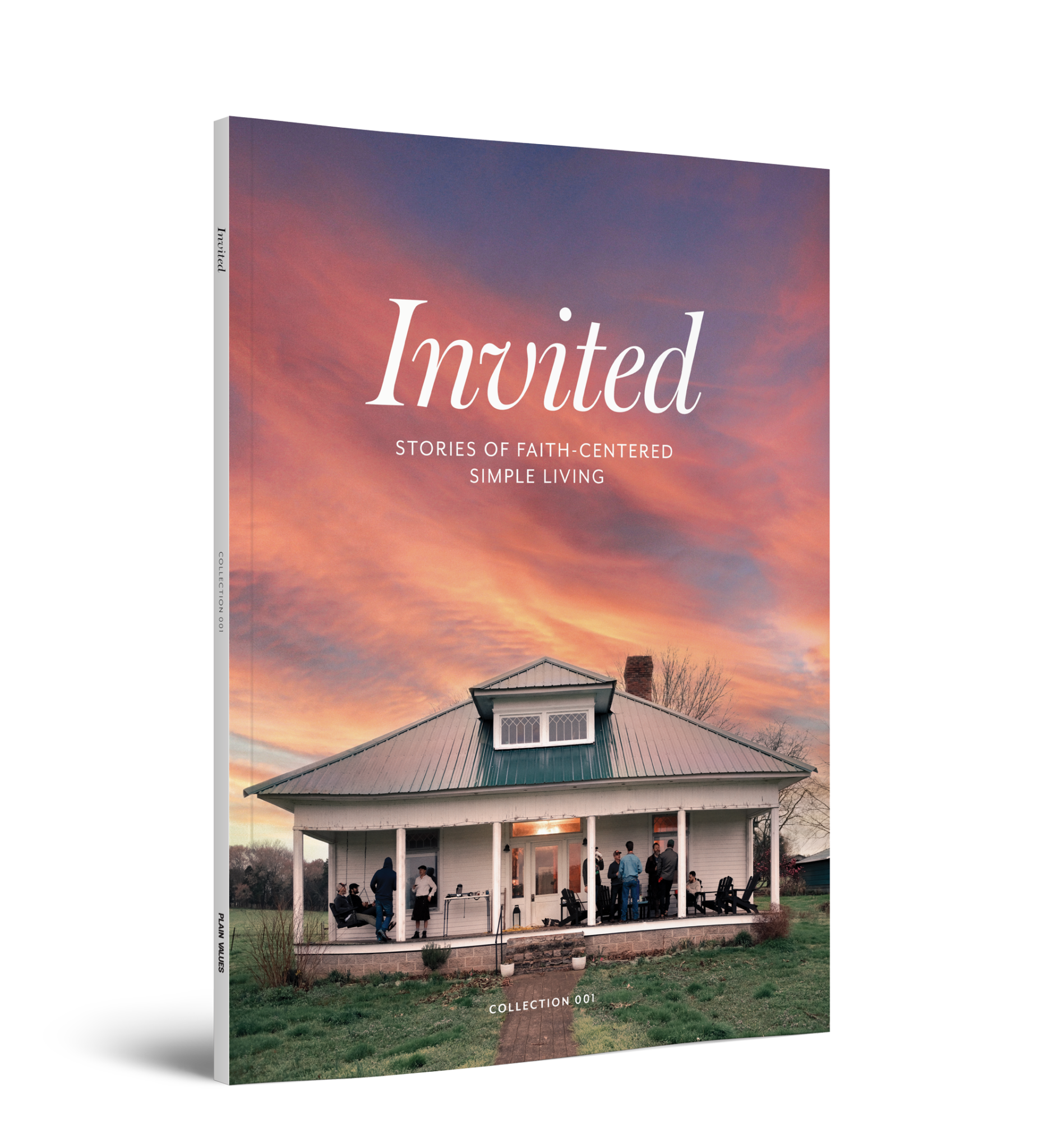
🤝THIS EPISODE’S FEATURED SPONSOR: Invited: Collection 001
If you’re craving stories that restore faith in hard times, Invited: Collection 001 is a handpicked “best of” from Plain Values magazine… uplifting accounts of triumph, simple joys, adoption beauty, homesteading wisdom, and gospel-centered living.
Learn more: https://homesteadliving.com/invited-collection-001/

🤝THIS EPISODE’S FEATURED SPONSOR: Kentucky Lumber
Our friend Derek Guyer at Kentucky Lumber is the type of guy that you want to support. He is a highly-skilled tradesman who exemplifies excellence in everything he does. Kentucky Lumber is an independent lumber yard that truly does world class work!
We would humbly ask you to support them with your lumber needs: http://www.drywallhaters.com



Leave a Reply