
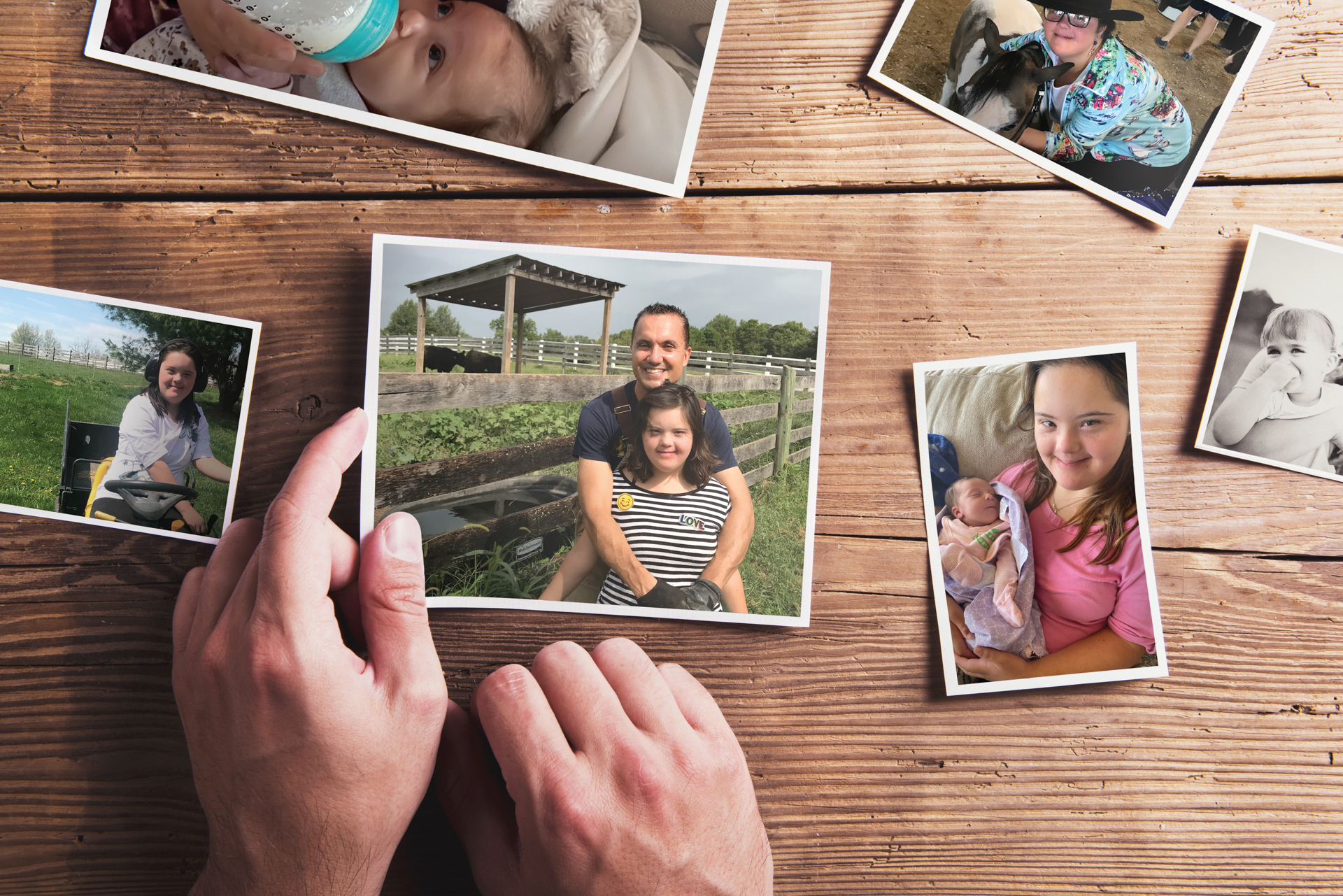

Love calls us to many unexpected places. For world-class pianist and composer Eric Genuis and his wife Leslie, love called them to become pig farmers.
Part-time pig farmers, that is! These Canadian transplants now raise pigs, steers, and poultry and travel worldwide with Eric’s music ministry. But with their city background, any farming at all was a completely new adventure.
Actually, Eric and Leslie had always been interested in providing only the very best food for their children. This went beyond just buying organic food: twenty years ago, when our rural neighborhood formed a pig club to raise and butcher hogs for a few local families, the Genuises were the first to sign up.
Handsome and well-dressed, Eric and Leslie looked like the most unlikely candidates for mucking out the pig pen or hauling hay and feed, but they dove right in. At butchering time, they helped with every step of the operation. Although we were all nervous about Eric’s hands—those talented fingers!—so near the sharp knives, saws, and grinders, he was determined to learn. As a result, each year that passed, the Genuises got a little bit better at pig raising and butchering and a little more convinced that our farm-raised pork was way better than the store-bought stuff.
Then, when their fourth child was born with Down syndrome, the couple’s commitment to home-grown food became a passion.
Only the Best
Baby Anastasia, like so many people with Down syndrome, had many health issues. She had heart problems, and her immune system was not strong. Whatever virus was going around, Anastasia got it. Minor colds became hospitalization events. Even when she wasn’t really “sick,” she often suffered from a constant small cough, runny nose, and bleary eyes. Her muscles and joints were chronically achy, and doctor visits were frequent. Eric and Leslie determined that she should have only the best food—locally grown and chemical-free—and a safe place to get outside and exercise.
If they could find it.
As Eric’s music career had expanded to include a ministry to the imprisoned, the Genuises had moved to a new state. Now even their access to organic, home-raised pork was lost. In their new housing development, they weren’t allowed to keep farm animals—not even chickens. Store-bought organic food didn’t seem to make any difference. And in the urban environment, their little girl couldn’t get outside and run. Anastasia’s health began to deteriorate.
An Old ‘New Normal’
The Genuises decided something had to change. “City life just isn’t humane,” Eric says. “It isn’t normal.” The couple began to ask themselves what a ‘normal’ life should be like. Time out of doors, meaningful chores, and simple privacy seemed like good places to start.
So, with no training for the job, they bought a house on 19 acres in southern Kentucky—”Nineteen Acres of Nutrition,” Eric calls them—and the family set out to grow as much of their food as they could. Pigs were a natural first animal since they had already helped to raise and butcher so many. Chickens and turkeys soon followed. The family developed extensive raised-bed gardens for growing vegetables year-round. Despite a lack of experience with construction, they built sheds, barns, and fences. They established two pastures. Soon, a couple of steers joined the pigs.
As an artist, Eric is sure that good work requires close personal attention, and food provision is no exception. “The second food production becomes primarily a money-maker, people prioritize efficiency over nutrition. But animals that fatten fast aren’t normal, and if growing conditions aren’t normal, the food will be abnormal.” They use no chemicals in their garden. Eric’s careful animal care routines and on-farm slaughter are designed to minimize stress for his livestock because only the best food is good enough for his family. The results are beyond all their expectations.
Natural Healing
Today, Anastasia is a beautiful, thriving young woman of twenty. “Her health is phenomenal,” says Leslie. No longer is she prone to catch every bug that goes around. “We never have to go to the doctor,” Leslie says. “No more constant problems.”
Instead, Anastasia works with her parents on their little farm: tending livestock, picking vegetables, and playing with her beloved dogs and cats. She even drives the tractor when Eric is hauling firewood, a job she loves. “It’s an unusual level of independence for a person with Down syndrome,” says Leslie—and a gift that’s only possible because of their rural setting.
Cooking is a favorite occupation. Anastasia loves combing through cookbooks for recipes to try out with her mother. “She’s not always good on follow-through,” laughs Leslie, “but she loves good food.” She helps in preparing pickles, salads, and stuffed bell peppers, “…with our own beef and peppers!” adds Leslie. And Anastasia loves making bread, her mom helping her to measure out the right amount of flour and other ingredients.
Giving It Back
Undoubtedly, Anastasia is a fortunate girl, especially blessed in her family’s affection and commitment. Their example of selfless love has not been lost on her; service is in this family’s genes.
When Leslie began leading a catechism program for the community, The Catechesis of the Good Shepherd, Anastasia was right there with her. Also known as ‘Atrium,’ this program uses Montessori methods— hands-on, learner-led, skills-based—to share Bible and saint stories. Lessons reinforce the virtues of patience, humility, and faithfulness while teaching basic skills like floor-sweeping, dishwashing, and table wiping. The program was made to order for Anastasia. Once she mastered the skills, Anastasia began helping teach very small children, with whom she has a special rapport.
Eric’s ministry to prisoners has not been without help from Anastasia. She loves to sing and has traveled with her parents to some of the highest security prisons in the U.S. “There is no judgment with Anastasia,” says Eric. “She just wants to sing for them.” The hymn Ave Verum Corpus (Hail, True Body of Christ), set to a melody composed by her father, is a favorite. Prisoners who will receive no other visitors in a year’s time are moved by the girl’s gentle goodwill.
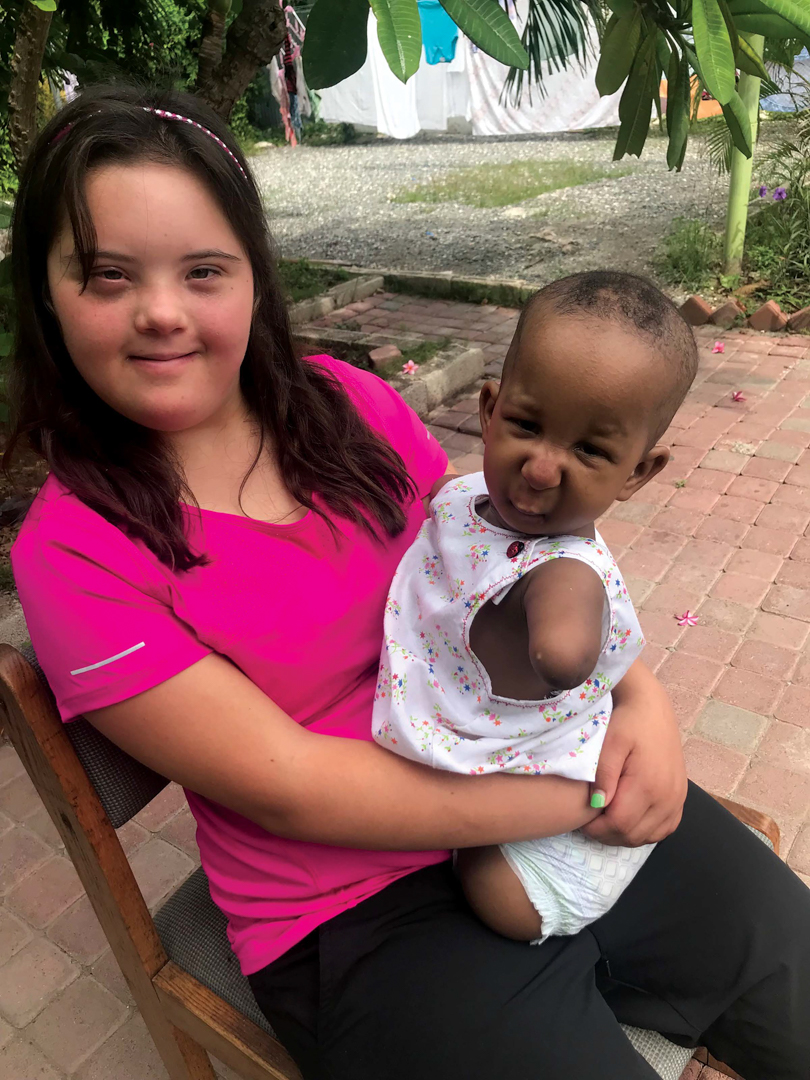
But her real passion was revealed on a mission trip to Haiti and Jamaica when Anastasia had the opportunity to minister to disabled children. “It was beautiful,” says Leslie. “There were all these orphan children with missing limbs, deformities… Anastasia just loved them all. She held them, talked to them— she can’t wait to go back.” Blessed with a loving family herself, she is happiest with her arms around disabled children, motherless babies, the sick, and the injured.
“For Anastasia, who has received so much love, it is only natural to give back.”
Special Gifts
A heart for service doesn’t just happen. Small things lead to greater: from the little girl feeding poultry and collecting eggs, to the child teaching toddlers to sweep floors, to the young woman of today, making bread and holding babies, there is consistent self-giving and service. For Anastasia, who has received so much love, it is only natural to give back.
“We are very blessed,” says Leslie. “God has given us so much.”
Shawn and Beth Dougherty live in eastern Ohio, where their home farm is 17 acres designated by the state as ‘not suitable for agriculture’. Using grass as the primary source of energy, they raise dairy and beef cows, sheep, farm-fed hogs, and a variety of poultry, producing most of their food, and feed, on the farm. Concerned that farming is too often dependent upon multiple off-farm resources, from feed, fuel, and fertilizer to water and electricity, their ongoing project is to discover and test the time-honored means by which farming may be done with a minimum of off-farm inputs. Their research has led them to identify the daily conversion of grass into milk by dairy ruminants as a key to whole-farm sustainability. They are the authors of The Independent Farmstead, Chelsea Green Press 2016.





Leave a Reply