

When I wax eloquent about farming as a good and necessary vocation, even suggesting that we should have many more farmers (and fewer factory farmers), people often squirm and respond, “But all of us can’t be farmers.”
It’s the same kind of response we often feel when sitting in a missions emphasis service and find our inner heart saying, “But we all can’t be missionaries.” Or a sermon about helping the needy, and we respond, “But we all can’t run a soup kitchen.” You know the drill. If there’s one thing worse than not being convicted when we’re wrong, it’s being incorrectly convicted when we’re not wrong. Remember, Satan is the great Accuser. But in all these ministries, we can be vicarious participants, either directly or indirectly, through prayer, offerings, and an attitude of helpfulness.
We need plumbers, electricians, welders, sawmill operators—you know the list. Farming tends to be vocationally higher on my list because it’s the front line of creation stewardship. Farming shapes God’s landscape—air, soil, water, trees—more dramatically and directly than any other human activity. Indeed, Rev. 11:18 says God will “destroy those who destroy the earth.” Stewardship is near and dear to God’s heart.
Just like all of us should have a heart that leans into missions or helping the needy, we should have a heart that inclines toward farming because creation care is something God mentions specifically. So how do those of us who aren’t farmers participate, or at least incline responsibility, just like we do with missions or philanthropy?
The first attitude is to care. That’s not as trite as it sounds. Interest precedes activity. Intention precedes movement. As we cultivate care toward farming, the obvious first question is what kind of farming God wants. Does God care about farming modality? Are all farmers doing good, or are some doing bad? Just like we would vet a missions program, adoption program, or any other philanthropic endeavor, we must vet farming.
An exercise I like to encourage folks to cultivate is when you sit down to eat, look through your plate to the other side, and envision the kind of farming that puts those morsels on the plate. If you need to squint your eyes, that’s fine. Ha! Look at the food and imagine everything behind it.
Provenance includes numerous threads. The farmer as producer is one, but it also includes the processor, the distribution network, marketing, and point of sale. As you squint through your plate to the other side, ask some salient questions:
- Does this food build soil or destroy it?
- Does this food honor the workers who brought it to my table?
- Does this food maximize nutrition or minimize nutrition?
- Does this food respect and honor the beings—both plant and animal—that sacrificed for my sustenance?
- Does this food encourage understanding or ignorance about how it was grown, handled, and brought to my plate?
- Does this food make neighbors happy or unhappy—smells and appearances?
- Does this food help my community emotionally, economically, and environmentally or jeopardize those elements?
- Does this food engender transparency or opaqueness?
- Does this food honor biology or mechanics?
- Does this food bring rural and urban populations closer as friends or does it alienate and segregate?
As we take each item on our plate and run it through this battery of questions, we can see where it falls on a continuum of sacredness. Perhaps the most important question to any of these queries is: “Does God care?” Does God care if farming techniques erode the soil? Does God care if we create a dead zone the size of Rhode Island in the Gulf of Mexico? Does God care if we stink up the neighborhood?
We could ask the same questions about any of our more ministry-oriented activities. Does God care how missions are done? How the gospel is preached? What organizations receive our offerings? I’ve found that the faith community loves discussing these issues, but suddenly when it comes to food and whether Chick-fil-A is what should be on our plate, we clam up and look the other way.
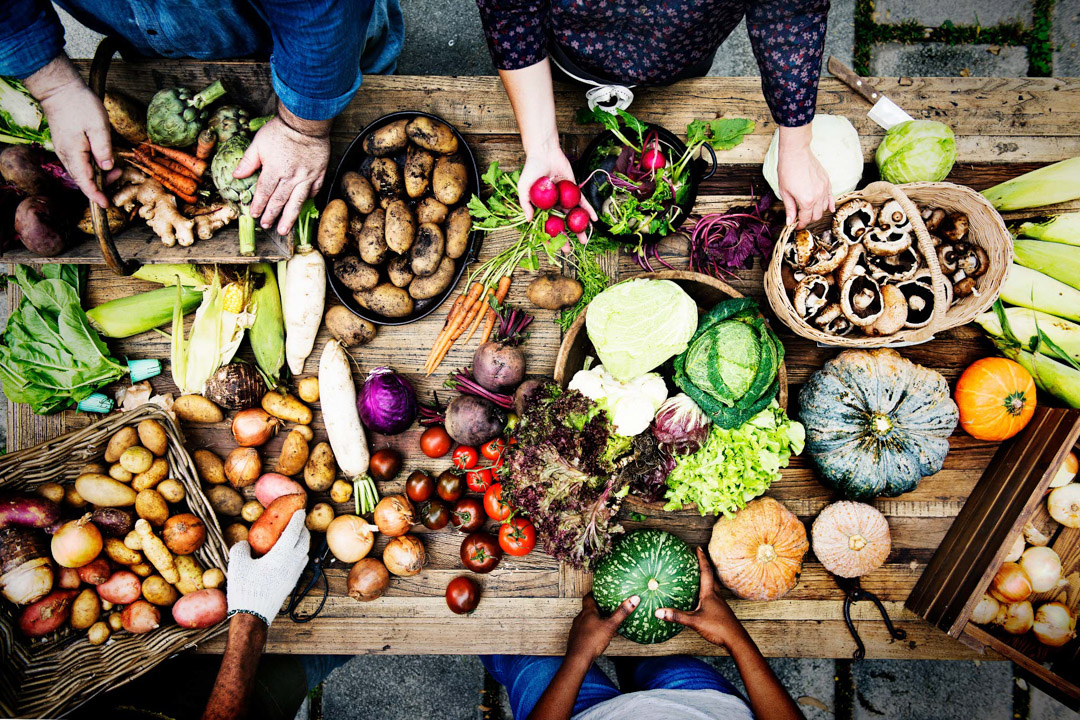
Just like we are admonished to take on the sufferings of Christ, the sufferings of persecuted Christians, and the needs of widows and orphans as a means of identification and interest, we can take on farming by identifying as fellow participants with the food we choose to put on our plates. Is the landscape created by our food dollars the kind of landscape we want for our children? Is it one that honors God’s creation?
These simple questions are profound because they force us to wrestle with difficult issues. But beyond that, they bring us to a place of interest, as partners, in farming as a land healing ministry or a land debilitating exploitation. The earth is certainly a jewel of God’s creative power; if we eat, we impact how it’s handled. Whether we farm for a vocation or farm vicariously, through our food choices, we are all farmers. Identifying intentionally with our food origins, processing, and distribution is the first element in vicarious farming.
A second element is developing a relationship with farmers. Just this morning, my wife Teresa and I spent about an hour-and-a-half at a nearby U-pick fruit farm picking a couple gallons of unbelievably succulent non-chemical blueberries. Although we farm full time, we don’t grow everything we eat. We could probably survive on only what we grow, but life is much richer when we develop mutually interdependent relationships. Few are as enjoyable as food relationships.
We helped this young farm couple stay in business, spoke encouraging words to them, and learned a little more about blueberries. In like manner, for years, we’ve gone to a nearby apple orchard and purchased a dozen bushels of apples to make our own applesauce. It’s the best applesauce in the world, and this farmer knows we happily take seconds. We get a price break, and he has somewhere to go with his off-perfect product. We always ask how we can help with a problem item. That’s the way to help a farmer’s infirmities, so to speak.
Be the patron looking to solve the farmers’ problems. Cracked eggs? Apples with some rust? Crooked green beans? Chicken necks and backs? Every farmer has slow movers; by shouldering that burden, you endear yourself to the farmer and step into his shoes of need. While certainly farming has its romantic and joyful moments, it’s more often a bit lonely and definitely a slog. By appreciating imperfections and difficulties, you come alongside the farmer as a best friend; you may never know how you ministered to the farmer with that kind of strategic patronage or the encouraging word.
The closer you can get physically and emotionally with your farmer, the more you can be a vicarious farm participant. When your tomatoes come from a thousand miles away through a nameless, faceless chain of industrial processors, warehouses, and cash registers, you can hardly vet the God-honoring provenance of the tomato. Shorter chains of custody encourage authenticity in your food choices.
Over the years, we’ve had customers stuff money in our pocket after a particularly trying drought. One sold us a car for $1. Another offered us interest-free money in order to expand our cow herd at a strategic juncture. You might be amazed at the number of ways you can come alongside a farmer if you know the needs. You don’t get that opportunity at Wal-Mart. Vicarious farming and relationships go together like a hand in a glove.
Finally, vicarious farming includes growing something yourself. It may be as simple as a quart jar of mung bean sprouts on the windowsill. It could be a vermicomposting kit under the kitchen sink. Lots of urban-gardening infrastructure is available, like hanging PVC pipes with pockets on the side to grow your own fresh herbs on the porch. These take up no more room than a big set of wind chimes, but they put your hands and head directly into the majesty and mystery of growing something.
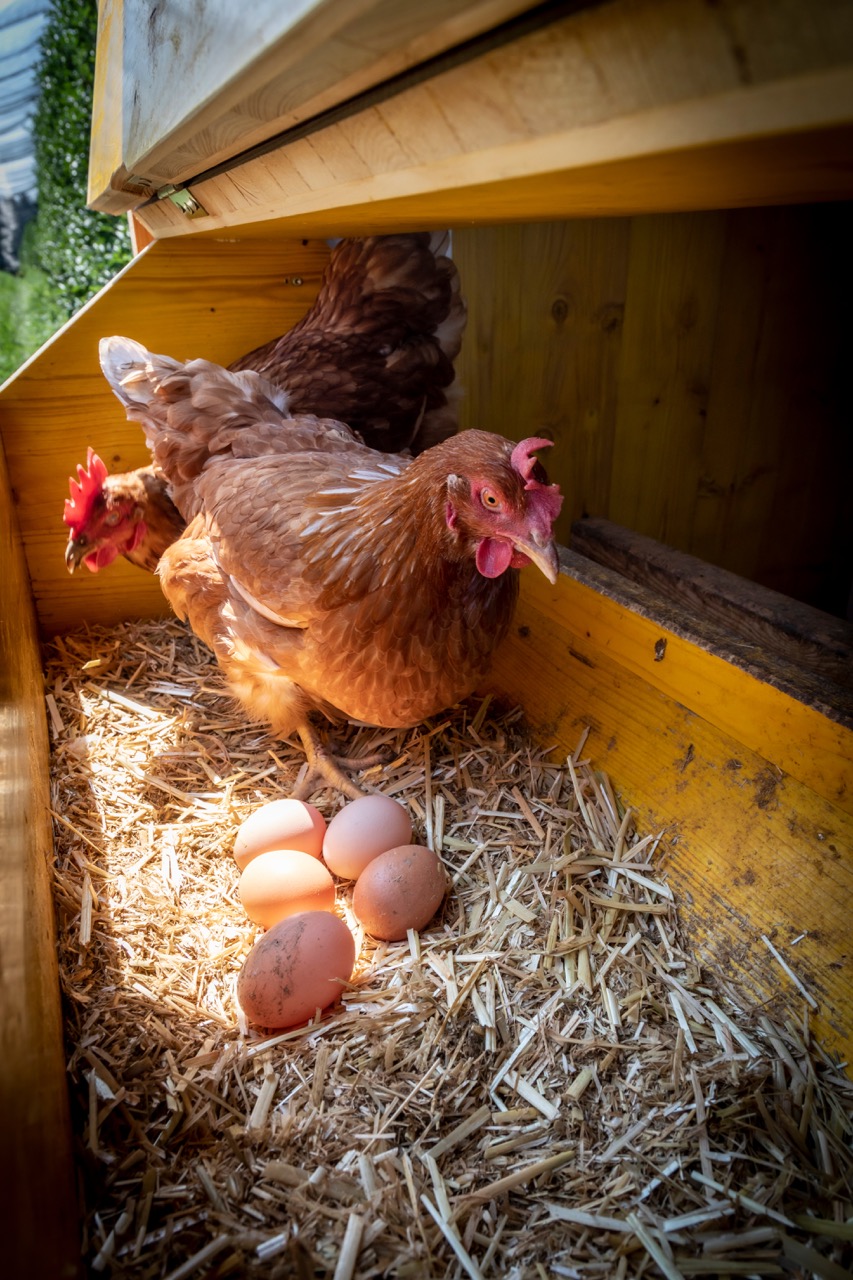
In my book Polyface Micro, I detail how to have chickens and rabbits in an urban apartment— without noxious odors. Of all the farm animals, laying chickens are probably the most valuable and certainly the most doable on a tiny scale. Incorporating growing something into your life will put you in touch with living but also dying. As a highly developed culture, Americans today live in a highly sanitized, segregated context. For many, the only non-human life interaction is with a pet cat or dog. While that is nice, it can often create a jaundiced view about the role of animals in the world.
Last year I debated animal welfare guru Peter Singer on the topic: “Animals should not be on our plate.” These kinds of discussions are not indicative of a newly-evolved spiritual consciousness, but are rather indicative of a profound devolution resulting from disconnection to farming and food production. A sanitized and sterilized existence leads to all sorts of folly, and the “my cat is my aunt is my dog is my child is my chicken” mentality is only one of many.
Participating in the life and death cycle, viscerally and practically, add reason and humility to the human experience. While growing some herbs or a couple of chickens may not qualify you as a bonafide farmer, it does bring you into a farmer’s frame of reference. When your oregano plant dies, you step into the farmer’s life. When the seed sprouts, you soar to the farmer’s joy. These extremes help you appreciate the highs and lows of farming.
I’m certainly glad not everyone is a farmer. Who would buy my stuff? But I do love our patrons who make themselves one with us, identifying with both needs and opportunities. Anyone can join the farm team. When you eat, what kind of farm team are you building? We can all be vicarious farmers. //
Joel Salatin co-owns, with his family, Polyface Farm in Swoope, Virginia. Four generations of his family currently live and work on the farm, and his farm services more than 5,000 families, 50 restaurants, 10 retail outlets, and a farmers’ market with salad bar beef, pigaerator pork, pastured poultry, and forestry products. When he’s not on the road speaking, he’s at home on the farm, keeping the callouses on his hands and dirt under his fingernails, mentoring young people, inspiring visitors, and promoting local, regenerative food and farming systems. Salatin has published 15 books, and he is the editor of The Stockman Grass Farmer, granddaddy catalyst for the grass farming movement. He passionately defends small farms, local food systems, and the right to opt out of the conventional food paradigm.



Leave a Reply