
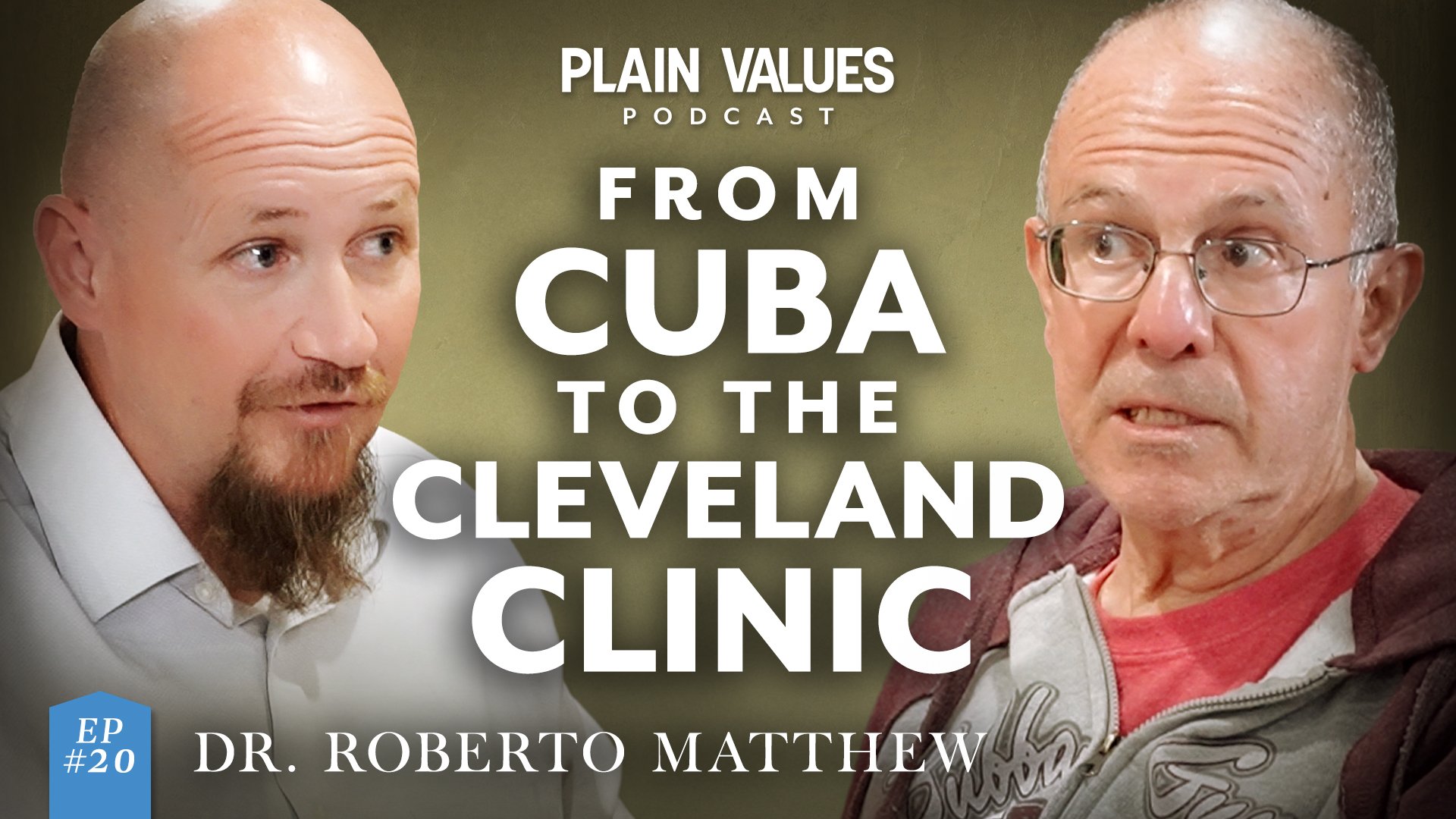
In this remarkable conversation, we sit down with Dr. Roberto Matthew — born in Cuba, shaped by revolution, exile, poverty, and perseverance to trace a life marked by danger, resilience, and deep conviction.
As a child, he fled Castro’s regime with his mother, sister, grandmother, and aunt, while his father stayed behind to support counter-revolution efforts. What followed was a journey through Colombia, Puerto Rico, and finally the United States … years marked by scarcity, trauma, relentless work, and the kindness of unlikely mentors.
Dr. Matthew describes memories of dictatorship, refugee life, the Bay of Pigs, cultural upheaval, and the fragile line between truth and propaganda. He later builds a distinguished medical career, survives profound personal loss, and witnesses both the failures and triumphs of modern medicine from the inside.
This episode is sweeping, vulnerable, and historically rich. A rare look at how one man’s lived experience reveals the cost of political extremism, the power of courage, and the quiet grace of simply telling the truth.
Learn more about Plain Values at https://plainvalues.com.
Transcripts
0:00 – Intro
2:24 – Escaping to Colombia by Boat
14:56 – The CIA, Sugar Cane & Exports
20:42 – JFK & The Bay of Pigs Fallout
27:45 – Mom’s Rebellion: “My Kids Are Not State Property”
37:35 – Surviving Colombia: Selling Empanadas
42:37 – Puerto Rico: Strict Nuns & Schooling
59:09 – The Cost of Medical School
1:09:39 – Meeting His Wife
1:15:22 – Pregnancy & a Nightmare Procedure
1:28:07 – Family Loss & The Blessing of Three Kids
1:31:59 – Becoming a Heart Surgeon in Ohio
1:35:58 – Room 20
1:43:47 – Final Thoughts & Future Conversations
Dr. Roberto Matthew:
We have to rush it, to rush her to the university hospital and she goes into septic shock. Oh my. We need to be frank with each other and tell the truth. And if we cannot tell the truth because it hurts so much, we need to be able to convey the message in a caring way.
Marlin Miller:
I so appreciate this because everything that you just said, Doc, everything you just said about being frank and being real is what we want to be about.
And it’s what I want this to be about. Two days ago, a friend walked in the door and introduced me to one of his friends. And we got to talking and he has an incredible past. He has an incredible story. Roberto was born in Cuba and he retired as a heart surgeon from Cleveland Clinic. And the story of how he got there and how the Lord moved in his family’s lives is absolutely incredible. We had a chance to make a quick two hour podcast happen yesterday, the very day after we first met. And it was just a real blessing. We are so glad to be able to share his story. Guys, thank you very much for watching, for just sharing this time with us. My wife loves Jill Winger’s old-fashioned on- purpose planner, and this year’s is better than ever. It has all sorts of tabs from your gardens to your animals, to your meals, anything and everything that you can imagine that needs planning.
Jill has built a spot for it in here. You can find this at homesteadliving.com, order yours today for 2026. So let’s go back all the way. Tell us how your family came to be in this country.
Dr. Roberto Matthew:
Okay. So maybe I’ll take you back to my grandparents. As I told you yesterday, my maternal grandfather was born in Canada, but he came from Irish and Scottish background. And when he died, he was still a citizen of great Britain. And that’s how we were able to leave Cuba with a British passport.
Marlin Miller:
Many, many years later- Many, many- That came in to be a huge part.
Dr. Roberto Matthew:
Yes. So roots are important. Yeah.
Both my grandmothers were born in Cuba of Spanish background, but a cousin of mine is doing the whole genealogy of the family. And one side, the paternal one was fully Spanish. And even though she was born in Cuba, she always leaned towards the Spanish side. And on the other side, on the maternal side, they fought for the Cuban independence. So there are a whole bunch of stories in that, which are very interesting. And then back in … I was born in 52, and in 59, Castro came into power. My father and my maternal uncle actually were helping them out because he was out in the Escanbridge mountains, which is sort of close to us in that same province. And so we were helping out the rebels, the Al Salos, the Castro invasion, the revolution. And in 61, my mother, my sister, my grandmother, and I were already in a boat heading towards Colombia.
Marlin Miller:
In 61, you would have been nine. Nine. Exactly. When did Shea Guevara come into play here?
Dr. Roberto Matthew:
Well, Shevara came into play in the late 50s. I don’t know if it was 57 or 58. The invasion of Cuba or Castro’s invasion, the rebel invasion came from Mexico, and it landed in the Escambride mountains, I think. It’s an area that is close to Cienfuegos, which is the closest city to our town. And from there, they … No, they went to the Sierra Maestra and they had their … It was a gorilla fight. But the reason why it happened was because there was a big difference in classes. There was an upper elite, the oligarchy, which controlled the sugar cane industry. There was a growing middle class, which was really up and coming, and which was very progressive, and just did not want to have a dictator because Batista was a dictator.
Marlin Miller:
Is he who Castro basically rebelled against?
Dr. Roberto Matthew:
Yes.
Marlin Miller:
Baptist?
Dr. Roberto Matthew:
Yeah. Okay. Batista.
Marlin Miller:
Okay.
Dr. Roberto Matthew:
Yeah. But when he got into power, he became a dictator himself. He became an oligarchy himself because he run Cuba basically as his own little private farm. His father, who was Spanish from Galicia, from the same area as my grandfather, also had a farm. And the story has it, and I have heard it from many sides, so it’s not only my version of it, is that he was a ruthless guy. He run his farm like a slave factory. He did not have slave as such, but he had indentured servants. And so he sold them the goods at the farm store. And when they say is that some neighboring farms were taken over by his, by whatever, by his father, by Castro’s father, and that the farm kept growing and growing and growing.
Marlin Miller:
Interesting.
Dr. Roberto Matthew:
Isn’t that interesting?
Marlin Miller:
Interesting. Yeah.
Dr. Roberto Matthew:
So it kind of goes with what we were talking about yesterday about the family and how important what you learn growing up in your family is in the way that you develop and in your values.
Marlin Miller:
So let’s go back to, you’re nine years old, you’re in a boat to Columbia. Why Columbia? Because
Dr. Roberto Matthew:
My paternal grandmother had a sister who had married a Catalonian guy in Cuba, and then they left to Barranquilla to Colombia, and he went on to have a business and a farm there. And so my grandmother got in contact with her sister and through, I guess, business contacts or through the government, they got us tourist visas to leave Cuba. And essentially we were refugees.
Marlin Miller:
Did your dad and your mom see the Castro invasion or a takeover? Did they know what was coming? No. Did they sense it? No. Why did they want to
Dr. Roberto Matthew:
Leave? Well, listen, they were pro- Castro. They wanted change. They wanted change in the Batista government because they were not satisfied. They wanted to do things right. And my father was essentially running the farms that my grandfather started. My grandfather was a carpenter and he worked on boats that did the … How do you call that? When you go from port to port, the small ships that went from port to port carrying merchandise. It’s just- With the merchant
Marlin Miller:
Marines?
Dr. Roberto Matthew:
Well, yeah, smaller boats that went around the island,
Marlin Miller:
Because
Dr. Roberto Matthew:
That was the easiest way to communicate, to just bring goods in and out of certain areas, because the roads in Cuba at the time weren’t that as good.
Marlin Miller:
So you jump on the boat and you can buzz around and get there quickly. And this would have been in the 50s and 60s, hence no internet, hence some telephone
Dr. Roberto Matthew:
Or their phones? This was actually at the beginning of last century.
Marlin Miller:
Okay.
Dr. Roberto Matthew:
Even before the Cuban independence.
Marlin Miller:
I’m sorry. You did say your grandpa. My
Dr. Roberto Matthew:
Grandfather.
Marlin Miller:
That’s right. Your grandfather.
Dr. Roberto Matthew:
That’s right.
Marlin Miller:
Okay. So you get to Columbia with your mom and dad.
Dr. Roberto Matthew:
No, without my dad. He stayed behind because by that time, the Bay of Pigs had already occurred and he was now fighting Castro and aiding the rebels that were in the Escambride mountains and in the area around our town.
Marlin Miller:
So, okay. I’m sorry. I know very little about the Bay of Pigs. Was the Bay of Pigs something that we as the United States brought on?
Dr. Roberto Matthew:
Well, who knows what happened? Okay. The truth of the matter is that there were a lot of Cuban ex- refugees or exile ex … Yeah, refugees. They were in Miami. They were all over the United States. They were in Central America. They were in South America and they just wanted to go back there and kick Castro out.
Marlin Miller:
Okay. Because they saw that it was going sideways.
Dr. Roberto Matthew:
It was a popular revolution that was mainly … The whole purpose of this revolution was to bring democracy back to Cuba.
Marlin Miller:
And then it didn’t really happen
Dr. Roberto Matthew:
At all. It was just a change from one dictator for another dictator.
Marlin Miller:
Yeah. How long did it take when Castro got into power until the people started to say, “Wait a second, this is not what we
Dr. Roberto Matthew:
Wanted.” I think it did not take long, but it always … It doesn’t change like that, doesn’t happen from one minute to the next. It’s a slow boil. And so you turn the heat up and frogs start jumping out of the boiling pot.
Marlin Miller:
So your dad is now left in Cuba fighting against Castro. Yep. Did you tell me yesterday that he was working possibly with the CIA?
Dr. Roberto Matthew:
I have no way of proving it. I don’t believe that he actually was fighting with a gun, but he was running all the logistics or he did a fair amount of background work that make the fighting possible.
Marlin Miller:
Informational, reconnaissance, things like that.
Dr. Roberto Matthew:
An actual aid. There was aid going there because I remember going in the Jeep. We had an old Willis Jeep from the Second World War that was used for transportation, but was also used to plow the fields. You put a plow behind an old Willie’s Jeep. Yeah. That was the way it was done. And sometimes they would put seats, like bumper seats in the rear bumper and you would have … I don’t remember if it was three or four people just throwing sugar cane sticks. When you plow the field, it would make a trough.
Marlin Miller:
They were planting.
Dr. Roberto Matthew:
They were planting. As you
Marlin Miller:
Went.
Dr. Roberto Matthew:
As you went, and then they had a pair of oxen or a tractor. There were not very many tractors then. They would have the sugar cane seed covered by the earth. I guess you do the same thing, but now you just use a drill and just plant the seeds with the drill.
Marlin Miller:
Yeah.
Dr. Roberto Matthew:
But there you just use the piece of sugar cane and the sugar cane would just come up from that.
Marlin Miller:
Did they bury the whole piece? Or did they stick it into the ground and leave some of it up?
Dr. Roberto Matthew:
I cannot tell you for sure. I think it was you just bury it. And that thing just springs up and you have several shoots come up from one piece. And that’s why you just don’t have one sugar cane, but you have a bunch of sugar canes come up together.
Marlin Miller:
So is … Okay, forgive me. I’m not a huge tequila, all those different kinds of drinks guy, doesn’t sugar cane get used in making … Rum? Rum. That’s what I thought. So was Castro and Cuba, were they making and exporting a lot of rum?
Dr. Roberto Matthew:
Well, rum was being made in Cuba back in the 1700s and 1800s.
Marlin Miller:
Oh my.
Dr. Roberto Matthew:
Yeah. And then there was a family, the Bacardi family. I’ve heard of them before. Yeah, you heard of them before, right? Yeah. You also heard Cuba Libre, but there is no such thing as Cuba Libre. Cuba is enslaved.
Marlin Miller:
Wow. So, okay, let’s go back to your father. He’s in Cuba. He’s unable to get out for a while, right?
Dr. Roberto Matthew:
He chose to stay.
Marlin Miller:
He chose. He chose to stay and fight.
Dr. Roberto Matthew:
Because he said that if people like me are not ready to stay behind, then there is no hope.
Marlin Miller:
Wow.
Dr. Roberto Matthew:
So he stayed behind. And you can imagine for my mother who must have been in her early 40s to go alone to a foreign country with two young children and her mother. And we left in October. We left, I think, in September. I’ll get you the dates because I’m not good with that, but my sister knows. And then in November, my aunt, my uncle’s wife came out of Cuba with her two children.
Marlin Miller:
Okay. Did they head to Columbia to be with you guys?
Dr. Roberto Matthew:
Yeah. They did. So we were three adults and four children. It was five women and two boys. So did they bring news
Marlin Miller:
Of your dad?
Dr. Roberto Matthew:
Yeah. And there was still hope that things would get better and that the counter revolutionaries would be able to run Castro out.
Marlin Miller:
Wow.
Dr. Roberto Matthew:
And this is where the beloved American hero, President Kennedy screwed it up with a capital F.
Marlin Miller:
Okay. Okay.
Dr. Roberto Matthew:
Because when he sent the fighters or the rebels or the counter revolutionaries to invade Cuba again through the Bay of Pigs, they completely changed the landing zone. The landing zone should have been through the Escambride Mountains because it was easy for the rebels to escape to the mountains if there was no … If the invasion or the landing failed, whereas where they landed was in the Bay of Pigs, which only had a dirt road coming out of that area and it was swamped all around there. In fact, our family owned the farm right at the entrance of that area, and it was called Gurugu. And it was close to my hometown because when the invasion happened, we could hear the bombings going off and we were happy to say, “Oh, the Americans are coming. The Americans are coming.”
Marlin Miller:
And you thought it was a good thing?
Dr. Roberto Matthew:
It was a good thing. Yeah. Everybody was elated or not everybody, but the vast majority of people who wanted democracy and who wanted a government that you could trust,
Marlin Miller:
The
Dr. Roberto Matthew:
Government that we could trust.
Marlin Miller:
So go back to how did JFK’s sending the troops in to the Bay of Pigs mess things up? Did that mean that your rebels, the good guys, were now effectively trapped when they would try to escape? They didn’t have an easy way out? They didn’t have an easy way out.
Dr. Roberto Matthew:
And I wonder if we could have the freedom of information, if we could really dig in as to why the plans were changed because my father all along was part of the planning from the inside. He would have known. Of course he did. Yeah. And everybody was prepared to assist them in the other places near the Escambrate, near Trinidad, and it didn’t happen there. And then all of a sudden they say, “No, it’s happening in the Bay of Pigs.” And my father said, “Oh my, what is going on here?” You see? Wow. Yeah. Wow. And then Kennedy said that they were going in and they were not going in. They were going to give them air support and he withdrew. And who the heck knows what were all the power plays
Going on in there because we’re not privy to those conversations, but all I can tell is what I know from my father. And my father was a man, he was a man. He did not talk much. He did a lot. And so this business of whether he worked for the CIA or not, the CIA probably knows for sure they haven’t contacted me and my father never said anything. So it may just be speculation and assumptions on my part. So in life, there is truth, there is good, there is bad, and there is something in between, and we can be absolutely sure that you and I are talking and we’re recording this thing, but we do not know what spin people may put on things, right?
Marlin Miller:
Yeah.
Dr. Roberto Matthew:
And that fuzziness is the thing that divides
Marlin Miller:
Us. So boy, this is so fascinating. So how long were you in Columbia?
Dr. Roberto Matthew:
Well, we were in Colombia, I’ll get you the right timeline. So I don’t want to give you some number, but we were in Columbia a few years, which were particularly, they were not easy. They were not easy on the emotional side. They were not easy on the economic side and they were tough, but we had help and people there really, they
Marlin Miller:
Embraced us. They knew that you were leaving and fleeing.
Dr. Roberto Matthew:
Yeah. So they embraced us and they were very good with us. And most of that generation is gone, but we still have family there. I went to Colombia, my sister and I went to Colombia maybe last year, and we were able to be together with our cousin
Marlin Miller:
There. How did your mom and your aunt provide for you four or five kids while they were there on their own, right? Okay. So my mother
Dr. Roberto Matthew:
Was a teacher and she decided to leave. She did not want to leave, but the minute that Castro said the children belong to the state, there is no such thing as parents being in control of their children. The children are property of the state. My mother said, “Not my children. Take them out. ” Yep.
Marlin Miller:
Wow.
Dr. Roberto Matthew:
Yeah. And she could not teach and she needed to keep her mouth shut. And she said, “No, I am going to teach and I am going to say what I believe in. ” And the school principal said, “Marilysa, you cannot say this thing here. It’s best if you go out of the back door.” There is a little side story of that, which some other time I’ll tell you, but there was a … Actually, I might as well just say it right now. So the thing that the straw that broke the camel’s back was a … It was a civic act, civic acts when school children would get together in the school yard and they would sing a song or recite a poem or something like that. And that day, they One of the teachers was asking for some person to be shot, to be shot, literally shot.
A rebel that was caught, a counter revolutionary that was caught in the neighborhood. The children would say which means Fidel champion for so- and-so, we demand firing. It’s just kind of what they did to Christ, right? I mean, when he would say, “Crucify him, crucify him.” So the children were taught to ask for someone to be shot. And that completely revolted my mom and she said, “No, hell, I’m going
Marlin Miller:
To
Dr. Roberto Matthew:
Leave my children here.” And my dad said, “You should go, but I’m going to stay
Marlin Miller:
Behind.” I can’t imagine the strain and the stress of being a young mom and dad with your two young children living in that clear and present danger to your family and having to make those hard decisions.
Dr. Roberto Matthew:
I think throughout history, it’s something that has happened time and time again. It happened to the Jews in Germany. It’s happening now to the Palestinians in Gaza. It’s happening to the Ukrainians in Ukraine. It has happened to the Cambodians with a Kremer Rouge. It has happened to the Chinese in Tiananmen Square. It rappened in the October revolution in Russia.
Marlin Miller:
Yeah. And in Africa.
Dr. Roberto Matthew:
And in Africa, it’s happening all the time. Yeah,
Marlin Miller:
Multiple times.
Dr. Roberto Matthew:
It’s happening in Sudan. And we seem to be only focused on one thing or another. And I mean, I think humanity deserves better and humanity deserves the truth to be told transparently, bare, raw. And nobody wants to hear that.
Marlin Miller:
Yeah.
Dr. Roberto Matthew:
But we should talk about it and we should clarify those things.
Marlin Miller:
So let’s keep going. This is absolutely so good. So your mom and dad make these decisions. Your mom sees the civic act, that’s it. She makes the final call along with your dad to leave. Right. So you’re in Columbia for a few years. Your aunt and uncle come with their three children or just your aunt?
Dr. Roberto Matthew:
No, my uncle. No, just
Marlin Miller:
My aunt. Where was your uncle at that time?
Dr. Roberto Matthew:
He was still
Marlin Miller:
In Cuba. So he stayed with your dad? Yeah. Were they working together? Well,
Dr. Roberto Matthew:
I don’t know, but I think they probably were because they were very good friends.
Marlin Miller:
They were brother-in-laws. They were brother-in-laws. So they would have been family. So then how did your dad and your uncle get out of Cuba?
Dr. Roberto Matthew:
Okay. Let me go back to how my mother, my aunt and my grandmother were able to make it. So my mother had two jobs. She taught actually three jobs. During the morning, she taught in one school. During the afternoon, she taught in Colegio Americano, the American school. And in the evening she did private lessons. My grandmother would cook and take care of the kids. And my aunt had also cooked. She was a seamstress. So she wasn’t a seamstress, but she learned how to sew and she was doing shirts and pants and dresses for women, anything, any type of work. And on top of that, the Colombian government at that time had a program which I can’t remember how it was called, but essentially they sold rice and beans and staples at a reduced cost to small, to households that then they could sell those to other people and have a small … Make a little bit of money there.
So imagine like little stores. Imagine out here in the Heartland that instead of having one store, you had little … Well, like you have, you do have some of that.
Marlin Miller:
Yeah.
Dr. Roberto Matthew:
You know, you have little shops that you can either ride the horse or the buggy or walk or a bicycle.
Marlin Miller:
Yeah. Yeah. The Amish have many, many
Dr. Roberto Matthew:
Little shops. Yeah, many little shops. So the government in Colombia kind of promoted that. And it was not only out in the country, but also in the cities.
Marlin Miller:
Okay. So that gave them a chance to make a little bit of extra money. And
Dr. Roberto Matthew:
We bought rice and beans cheaper than if you bought it at the store, which
Marlin Miller:
Was wonderful for your own-
Dr. Roberto Matthew:
Absolutely. … feeding. So we ate a lot of rice and beans and lentils and corn. Wow.
Marlin Miller:
So they’re doing all these little things, all these odd jobs. Your mom has three jobs, teaching, doing all these different things. How was life for you and your sister? It was wonderful. When we look
Dr. Roberto Matthew:
Back, it was a good time because we were busy, we did not have these things, and we were always looking for stuff to do. So part of the thing we did was that on the weekends, my mom, my aunt, and my grandmother would make empanadas, which are turnovers, but the Cuban empanadas are very savory and the Colombians loved them. Really? So they would make the empanadas from scratch and they would fry them and we would take the hot empanadas around the neighborhood. You and your sister. I was the older one, so I was the one who got stuck with it. And I hated that thing. Really? That was something I didn’t like, but I did it. Yeah. I think I was not a very good salesperson, but there was not any other way around it,
Marlin Miller:
You say? So the neighbors would love them, they bought them, and again, they helped us. Yep. It made a little bit of extra money for your family. Yeah. Yeah, they helped us. Wow. Wow. So what happened next? So your uncle and your dad come back. Does your entire family stay in Columbia or do you move?
Dr. Roberto Matthew:
Well, when … We stayed three years in Colombia. In the meantime, my aunt and my two cousins, it was really rough on them. And so my aunt had a brother in New Jersey who was managing a big restaurant in Hoboken. And he said,” Listen, come over here. I think your children are going to have a better life and you certainly are not going to have all the harassment that you’re having in Colombia. “Because I mean, things were rough in Colombia. I mean, there was the beginning of a wave of revolution, the beginnings of the fark and all those things. And it was kind of violent and we were scared.
My mom was scared. My aunt was scared. My grandmother was scared and they would take turns at night just watching that somebody wouldn’t break into the house. Really? Yeah. Wow. I mean, we had good neighbors and everything, but burglars would sometimes break into the house, into houses. And we had nothing. I mean, there was nothing of value, but three women alone without a man there. Can you imagine that? Yeah. So they left for New Jersey, and my mother, my sister, and I, and my grandmother remained in Colombia until some cousins of ours left Cuba and went to Puerto Rico. And then my mother said,” Well, why don’t we just … “And by that time, my uncle also had left Cuba and was with my aunt in New Jersey, and then we all got together in Puerto Rico, all three families.
Marlin Miller:
So your aunt and uncle came from- New Jersey. Down to Puerto Rico. Puerto Rico. Was Puerto Rico an American state
Dr. Roberto Matthew:
Yet? It has been a possession from the Spanish American war, from the late 1800s.
Marlin Miller:
Okay. So you meet in Puerto Rico, your dad is still in Cuba? Yeah. He’s still in Cuba. Yeah. Do you remember what year you went to Puerto Rico?
Dr. Roberto Matthew:
I went to Puerto Rico, I don’t remember what year. It must have been maybe 66, 65 or in the mid sixties. So you’re
Marlin Miller:
A teenager?
Dr. Roberto Matthew:
No, no, no. I wasn’t a teenager yet, or just early teenage. It may have been 13, 14. I don’t know. But I do know that when I was in fifth grade, I did fourth grade in Puerto Rico, and it was one of the worst school years that I ever had. I was in a Catholic school with some American nuns that were kind of clueless as to what- About what? About what teaching is all about.
Marlin Miller:
Really?
Dr. Roberto Matthew:
Yeah. They were totally clueless. They were so rigid and so they were not empathetic at all.
Marlin Miller:
What were you like as a little kid? Were you … Well, I’ll just ask, what were you like as a little kid? I
Dr. Roberto Matthew:
Have always been very shy and I have been an introvert. I have become more of an extrovert after I mature at 70 something years of age. So it’s never too late to change.
Marlin Miller:
So if these nuns were overly harsh,
If
They were really strict, it really crushed your spirit.
Dr. Roberto Matthew:
Well, I think they were just stupid or dumb or didn’t know any better. So I’d rather give them the benefit of the doubt.
Marlin Miller:
They weren’t doing it on purpose. They didn’t know any better.
Dr. Roberto Matthew:
How do you think you can be good when your face is covered like this? And this thing is cutting right through your forehead and you have a veil that goes like that and you have, in 90 degrees weather, you’re wearing a black robe, so you must be cooking inside. I mean, I can empathize with that.
Marlin Miller:
Never thought about that.
Dr. Roberto Matthew:
Yeah.
Marlin Miller:
So that was the worst year of your schooling.
Dr. Roberto Matthew:
Yeah. And so I went back. My mom spoke with my language teacher who later on I found … I knew he was Turkish, but I didn’t know that he was a Sephardic Jew.
Marlin Miller:
Interesting. Interesting, right? So you go back to Columbia, you meet this teacher.
Dr. Roberto Matthew:
I already met him because he had been teaching me German and French in his private … In his home. He rented a building that had four condos or four apartments. He lived in the upper left hand side and the three other apartments were for classes.
Marlin Miller:
Wow.
Dr. Roberto Matthew:
So he took me,
Marlin Miller:
He opened his home to me. He must have seen something special in you.
Dr. Roberto Matthew:
I think, no, I think he was the one who was a special guy. He is what I call a human. Wow. For me, I mean, he was like the father that was not present.
Marlin Miller:
Wow. So how long were you with him there in Columbia? I think two or three years. Okay.
Dr. Roberto Matthew:
And then, I mean, my mom needed help and she wanted me back and I think I needed to be with my mother and my sister and my cousins and all that. So I was sent on an exchange program between the Carlson Parish School, which was an American school. In Puerto Rico? No, in Colombia. In Columbia. Okay. I was sent over to Alabama, to Huntsville, Alabama because there was an exchange program between Carlsy Parish and Huntsville, Alabama, so they would exchange students. So some students from Huntsville would go to Barranquilla and students from Barranquilla would go to Huntsville. And I lived there with an American family, and the father in that house was a Baptist minister.
Marlin Miller:
Interesting.
Dr. Roberto Matthew:
Yeah.
Marlin Miller:
So that was probably seventh and eighth grade. Am I close in there? That was
Dr. Roberto Matthew:
In eighth grade.
Marlin Miller:
In eighth grade.
Dr. Roberto Matthew:
You’re right. I mean, you keep track of time very
Marlin Miller:
Well. So what did you do after … You went back to Columbia after Huntsville?
Dr. Roberto Matthew:
No, I went back to Puerto Rico. Back to Puerto Rico. And then I just stayed. And we had … Our immigration status was, we had a tourist visa, which was changed for some other type of visa that allowed us to stay longer because of the political situation.
Marlin Miller:
I
Dr. Roberto Matthew:
Guess it’s what they have now, I don’t know, with the Venezuelans. We were essentially asylum seekers. We were lucky that there was … We were lucky because there was the Cold War, so the American government would not ship us out, which is what is happening right now. So I have a lot of empathy for what they’re going through. And I think … No, let me just say this. And I think we need to be cognizant of the situation that is happening in other countries. And let’s just reflect on that for a few minutes. Let’s think about the people in Afghanistan that we’re collaborating with our troops and now we’re sending them back. I don’t think that’s right.
Marlin Miller:
You’re making the point that we are sending them back to the Taliban to all of those not great situations instead of taking a breath and thinking about it and saying, let’s … Yeah,
Let’s pause
And think.
Dr. Roberto Matthew:
Let’s pause. Let’s do due diligence in whom we’re sending
Marlin Miller:
Back. It seems like there is a tendency to look at everybody that is in the country that in a way shouldn’t be there and just kick them out, right? Yeah. I can appreciate that.
Dr. Roberto Matthew:
Yeah.
Marlin Miller:
Absolutely.
Dr. Roberto Matthew:
Because I mean, the system has been broken for decades. For decades. It’s not from one day to the next.
Marlin Miller:
Well, that leads me right back to a question that I wanted to ask where you were talking about your aunt and her children, your cousins, getting up to Hoboken. Yeah. Did they go through New York through the- Through the Ellison.
Dr. Roberto Matthew:
Yeah, through Ellis Island. No, because I think they may have landed in JFK or Newark. Remember that at that time, leaving Colombia was through DC6, those airplanes, propeller airplanes, because jets were not landing in Barankea yet. So it took several hours. And then I don’t know if they took a jet or a train or whatever from Miami to Hoboken. Okay. Yeah.
Marlin Miller:
That’s interesting.
Dr. Roberto Matthew:
Yeah.
Marlin Miller:
So now let’s go back to … You’re back in Puerto Rico. How do you end up in the United States?
Dr. Roberto Matthew:
I went from Barankea to Puerto Rico. I mean, I went from Huntsville, Alabama to Puerto Rico.
Marlin Miller:
So now … Oh, right. I’m sorry. Puerto Rico is an American property
Or
Whatever you want to call it. I’m sorry. So you’re technically on American soil inside Puerto Rico. Did you receive citizenship in Puerto Rico?
Dr. Roberto Matthew:
I received citizenship in Puerto Rico. You did?
Marlin Miller:
Yeah.
Dr. Roberto Matthew:
Your whole family? Eventually. Were you first? No, because I guess I have always been a rebel. I have no idea why. I have been quiet.
Marlin Miller:
Yeah.
Dr. Roberto Matthew:
I am introvert, but deep inside, I am a rebel. In fact, one of my mentors at the Cleveland Clinic used to call me Chico, you’re a rebel.
Marlin Miller:
Well, I’ve got a lot of questions about how you ended up- At the Cleveland Clinic? At the Cleveland Clinic.
Dr. Roberto Matthew:
Oh, it’s a whole
Marlin Miller:
Story. I can’t wait to hear it. So you become a citizen. How long do you stay in Puerto Rico?
Dr. Roberto Matthew:
I stayed there throughout … I finished high school in Puerto Rico. There was a … I started in ninth grade and I finished in 11th grade because I took a couple of summer classes between nine and 10, and 10 and 11. And so by the end of 11th grade, I was out of school and I went to the University of Puerto Rico.
Marlin Miller:
So you start there. Did you always know that you wanted to be in medicine?
Dr. Roberto Matthew:
No. I wanted to be an engineer. Okay.
Marlin Miller:
How did that shift?
Dr. Roberto Matthew:
Because I couldn’t afford to go to engineering school.
Marlin Miller:
Why? But you could afford to go to medical
Dr. Roberto Matthew:
School? Well, this is how … This is so interesting because you know what people don’t know is that education in Puerto Rico, college education was accessible to just about anyone. Really? Yeah. A semester of college education for me back in 1970 when I started was something, I don’t know if it was 15 or $50 a semester for a full load of credit, which was 18 credits. I think it was 50 bucks because it was, I think, $100 a year for a full BA education. No kidding. Okay. Now, that was if you worked hard and studied hard and had a certain point average. If you partied and just did not keep up with the grades, then you paid somewhat more. Maybe I think it was 300.
Marlin Miller:
Was that provided by the government?
Dr. Roberto Matthew:
Yeah.
Marlin Miller:
They actually funded, subsidized the education of the Puerto Ricans.
Dr. Roberto Matthew:
Yes. And it was very good.
Marlin Miller:
That’s amazing.
Dr. Roberto Matthew:
That’s amazing. And that is what we need to have here in the United States. I think it is the duty of the government to give education that is accessible to everyone.
Marlin Miller:
We’ve been publishing Plain Values for almost 13 years now. And about a year ago, the team and I decided to put together a compendium, a best of, if you will, of our favorite stories, the most impactful stories of all those years. And invited is what we built out of those conversations. It is 194 and four pages, and it is absolutely a thing of beauty. We do a monthly gathering here where we just simply open our doors. It’s called Porch Time. And the story of how Porchtime came to be and how our family was invited into that and how we are inviting you and every Tom, Dick, and Harry, anybody who wants to come can come and hang out at Porch Time here at the office in Weinsburg. So it was such a natural fit to use the home of the founder of Porch Time and to call it invited.
You can find it on plainvalues.com on the shop page, and you can now consider yourself invited. Did you leave Puerto Rico with a college degree, a Bachelor of Arts?
Dr. Roberto Matthew:
I left Puerto Rico with a BS and it’s not a BSBS. Bachelor of Science. It’s a Bachelor of Science. And then I did it in three years because there was a program where you could get into medical school in three years if you took all the credits. It’s the same thing that is happening here at Neo Newcomb or NeoMed. You do three years of a bachelor’s degree or an accelerated program, and then you enter into medical school, but I finished medical school four years This later with an MD. So it was a BS MD together.
Marlin Miller:
Did you go to Stanford?
Dr. Roberto Matthew:
No. Did you go to Harvard? No.
Marlin Miller:
When I looked you up, when I was doing research, I saw those two schools somewhere.
Dr. Roberto Matthew:
That’s my son.
Marlin Miller:
That’s
Dr. Roberto Matthew:
Your son. So I couldn’t get to Harvard. It’s so funny. I’ll tell you the whole thing. So yeah, I did well during my bachelor’s degree. And when I applied to medical school, the guy who interviewed me for Harvard was a nasty SOB.
Marlin Miller:
So apparently you didn’t get in.
Dr. Roberto Matthew:
Well- He didn’t like you very much. No, he didn’t like me because he was a Puerto Rican who did not like Cubans. There were some Puerto Ricans that resented the Cubans there, just like there are some Gentiles that resent the Jews or there are some white people that resent the color people or there are some color people that resent the white people. It’s just, that’s human nature.
So anyway, he didn’t give me a very good recommendation. And Colombia told me that they would love to have me, but they couldn’t give me financial help. Really? And Yale told me that they were interested in me, but they were going to put me in an experimental group and they would keep track of me to see what was happening, what would happen to me throughout my career. I never heard of them. Really? But they also left me in limbo saying, “Well, you know what? You’re still not an American citizen, so we cannot give you financial help.” I had a green card at that time, but I could not apply. I mean, I couldn’t get any loans or anything like that, which thank God I remain in Puerto Rico because my whole career from bachelor’s degree through medical school turned out to be $3,500.
Marlin Miller:
The whole thing?
Dr. Roberto Matthew:
The whole thing. And I am fully boarded in general surgery and fully boarded in thoracic and cardiovascular surgery. Well, with $3,500. Now, why can we not do that in Ohio?
Marlin Miller:
Right? What is the average education for a doctor cost today? $500,000? Yeah. Sure. It has to push a half a million bucks. So can you
Dr. Roberto Matthew:
Imagine who can afford that? We cannot afford that. I think that some schools are finally opening their eyes and becoming aware of the problem. Yeah. And all these crazies that have a lot of billions of dollars, they want to do something good. Fund education. That’s what we need.
Marlin Miller:
Yeah.
Dr. Roberto Matthew:
We need vocational schools because that is what the world needs. We need to create schools that are not run by nuns or Talibans or anything like that. We need schools that have an open mind.
Marlin Miller:
Well, if you follow anything from Micro, from Nicholas, what is his name? Oh my. He’s written a bunch of books on the vocational gaps. There’s effectively between … It’s either four million or seven million working aged men that are just not in the workforce. They’ve taken themselves out of the workforce. And you have between four and seven million open jobs in the trades, the plumbers and the electricians. And
Yes,
Dr. Roberto Matthew:
Those
Marlin Miller:
Guys are sitting- They are in here. They’re on their phones and they’re playing games. And they are angry.
Dr. Roberto Matthew:
Yeah.
Marlin Miller:
And they are crazy.
Dr. Roberto Matthew:
It’s why? Because they’re just eating their stuff. They’re eating out of this thing. Oh, it’s amazing. Instead of
Marlin Miller:
Working. Everybody is so … Okay. I’ll say it like this. We are the most connected people in the history of the entire world, and yet we are the loneliest people in the history of the entire world.
Dr. Roberto Matthew:
Absolutely.
Marlin Miller:
It’s this incredible …
Dr. Roberto Matthew:
It’s disconnection world. We are disconnected. It is very seldom that we can have a dialogue because we are enclosed in our own little shell. And you know what happens to an egg when you drop it? Yeah.
Marlin Miller:
Boom. It breaks. It breaks. So I’ve got a whole bunch of questions here about the things that you see culturally that’s happening around, but let’s go back to your career for a second. Yeah, sure, sure, sure. If I can do that. So you’re 18, you’re applying to Yale and Harvard and Columbia, and they say, no thank you. You go back to Puerto Rico to do your medical school?
Dr. Roberto Matthew:
I stay in Puerto Rico because I got accepted to medical school, but I was having … I did my BA in chemistry and I loved it. I loved physical chemistry, which had to do with all the … Well, the physics of it. Yeah, the minerals and- Well, the actual, the atoms and how the atoms work and the quantum theories and all those things. And I love that. I had a great professor, a PhD in chemistry, Stevenson, and that guy was great. Yeah.
Marlin Miller:
So what did you do first when you got
Dr. Roberto Matthew:
Out of medical school? So I thought I was going to do … I said, “Yeah, I’m going to go and do medical school.” But then when I got to medical school, there was a change in the curriculum and they had totally changed the whole way. It was the first year of an experimental program that was adapted from Case Western. And the old system had worked very well. The new system, we didn’t know whether it was going to work or not. And I said, “Oh crap, another experiment here.” I don’t know. I don’t want to be another experimental guinea pig again.
Marlin Miller:
But you didn’t have a choice.
Dr. Roberto Matthew:
Right? Yeah. But then I said, “You know what? I don’t know. I don’t know if I’m going to keep on going with this thing. I may just go back and do a PhD in chemistry or something like
Marlin Miller:
That.
Dr. Roberto Matthew:
” But then I think I had a conversation with my dad and all that and I said, “Well, I got accepted to medical school. If I do a PhD, I’m going to be a teacher. I’m going to work for a university or for some company. If I become a doctor, I’m going to be my own boss.” And guess what? The rebel in me triumphed and I say, “Okay, here we go, medicine.” And I stay in medicine.
Marlin Miller:
Okay. That makes total sense. So by the way, where and when did you meet your wife and all this? Oh, I met my
Dr. Roberto Matthew:
Wife in my second year in college. In Puerto Rico? Yeah. She had long, beautiful, blondish, reddish hair, and she would sit in front of me and she always did this sort of thing. I remember in the physics class and her friends saw that I was looking at her. I say, “Hey, Marisa, this guy is looking at you. “
Marlin Miller:
Did you guys get married before you were out?
Dr. Roberto Matthew:
We got married after we finished our internship
Marlin Miller:
Here,
Dr. Roberto Matthew:
So we waited.
Marlin Miller:
Was she in medical school as well? Yeah, she went to medical school. That’s what I thought you were saying. I just wanted to make sure. Yeah. So you both finished medical school. Did you move up to the States right away?
Dr. Roberto Matthew:
Well, I was doing my first year in Mount Sinai. Okay. Now, these Jews were totally different than my Jewish father. Really? Yeah. Than Alberto. Wow. And not all of them, because the director of the program, the surgery program was Dr. Ofs and he was very good with me.
He was very good. And he didn’t want me to go back to Puerto Rico after my first year, but I got fed up because there was a guy there, a big burly guy with a thick New York accent that just looked like a … He went into orthopedics and he was like the high priest that condemned Christ to the cross. This guy put me on call during Christmas. Oh, man. And also called during his holidays and I can see that, but you know what? There is no need for them to be nasty like that. So I say, like, hell, I’m going to stay in this place. And I wasn’t doing surgery. Really? I wasn’t doing surgery. I was just holding retractors. In Puerto Rico, I did my first appendectomy when I was in fourth year of medical school. I did my whole appendectomy skin to skin, and I did a whole bunch of other surgery, and I did a lot of surgery and experimental labs.
And so by the time I was an intern, I was running circles around my fellow residents. Even I was technically better than second and third year residents.
Marlin Miller:
Just by default, having the experience of doing things that they had never touched. Absolutely. Wow. So you’re at Mount Sininai. Did you leave and go back to Puerto Rico? Yeah. You did? Okay. Yeah. So where did you go from there?
Dr. Roberto Matthew:
Then one thing is to look at things from the outside. Another thing is to look at stuff when you’re really inside the system. And it’s happening to you. And it’s happening to you. And there is no perfect place. It’s what you make of it.
And I was contemplating doing then a PhD in biomedical engineering and I was going to go to John Hopkins and when I got in touch with them, it would have set me back several years because I would have had to take a whole bunch of dry mathematics and physics and all that thing. And I just wanted to dig in into the biomedical engineering part. And I mean, it’s a highly structured way of educating people, and it wasn’t as flexible then as it is now, which is a heck of a lot more flexible. So then I spoke with offices again and he said, “Well, you want to come back? I’ll have a spot for you to finish.”
Marlin Miller:
Back to Mount Sinai.
Dr. Roberto Matthew:
Back to Mount Sinai and I’ll find … And my wife also had a spot at a premier radiology program because she wanted to be a radiologist and she got pregnant. The Holy Spirit came.
Marlin Miller:
So she’s pregnant. So she’s pregnant and she starts
Dr. Roberto Matthew:
Having problems and she starts having
Marlin Miller:
Bleeding problems. How far into the pregnancy does this happen?
Dr. Roberto Matthew:
Well, that happened … We’ll talk with her, but I think it’s around the second trimester And so she’s having spotting and spotting and spotting. And I’m going to tell this very … It’s a very personal part and I want to be able to just cut a whole bunch of this out, but I want to share it with her
Because it’s something that I think it’s very pertinent for a lot of people that may be experiencing this. So it was then, “Okay, so you’re pregnant and who are you going to see?” And there was a relatively … There was a younger surgeon, a younger obstetrician gynecologist who had taught us when we were medical students, they said, “You know, this guy seems to be a decent guy.” And when he saw her, he said, “Okay, you’re spotting, but you know that’s really nothing much.” And then the spotting got larger and larger and said, “Oh, I think you’re going to lose the pregnancy.” And it got a little bit more and he essentially tried to do an abortion with his finger. Really? Yeah. And I think what happened is he lacerated, looking at retrospect, he lacerated the cervix and still the pregnancy continued, but we got the heck out of his care.
Marlin Miller:
So you’re a doctor and you see this-
Dr. Roberto Matthew:
But we were young. We didn’t know any better.
Marlin Miller:
And you had trusted him.
Dr. Roberto Matthew:
And we had trusted him.
Marlin Miller:
Wow.
Dr. Roberto Matthew:
Later on, we found out that he was known for doing abortions. Really? Yeah. Wow. So I guess that he may have thought, “This is going to be a headache for me. Let’s just terminate this pregnancy now and that way she’s not going to keep coming back here to my office complaining of spotting and bleeding.” I’m sorry. So anyway, it’s what happens, but it’s the truth. So we went back to the school of medicine to the university hospital
And then we’re under the care of, I don’t remember who, but my wife does, but they told us, “Okay, what you need to do is you are having a premature contractions and you need to be on bedrest and you need to start taking, which is a medicine that decreases the uterine contractions.” Still, there was no diagnosis of incompetent cervix, which is the real reason why this thing was happening. So she stays … We move with my father and my mother and we stay in their house and she’s in total bedrest and one day she starts bleeding out towards the, I believe it is like the 27th week of gestation or something like that.
Marlin Miller:
Really early?
Dr. Roberto Matthew:
Relatively early.
Marlin Miller:
Yeah, this is
Dr. Roberto Matthew:
Early.This is early. This is relatively early and she starts leaking amniotic fluid and what happens next is that she becomes septic, which means she develops an infection and we have to rush her and she starts bleeding more heavily and we have to rush her, to rush her to the university hospital and she goes into septic shock.
Marlin Miller:
Oh my.
Dr. Roberto Matthew:
And we are surrounded by our own friends. We are surrounded by fellow residents- That you’d been working with. … that we had gone to school with and that we had trained with and everybody was frozen and my wife was dying there. Oh my. And we put her down and they were not able to get any intravenous into her. And I took a big needle and tried to get this central line in, and she was totally out of it and I couldn’t get that vein in, but she somehow just woke up from the pain because I used no anesthesia or anything. I just stuck that like if I was in trauma and my tears were flowing, but somehow I was lucky enough that after I tried here, I tried the femoral vein and I got into the femoral vein and stuck a catheter in there and gave her a lot of fluid and got her resuscitated and we did an arterial blood gas and her pH was 6.9 and her bicarbonate was way, way low and her base excess was extremely high and she’s alive by the grace of God.
Marlin Miller:
I don’t know what any of that means only to assume that she was really close.
Dr. Roberto Matthew:
She was
Marlin Miller:
Very, very- She was very
Dr. Roberto Matthew:
Close. Very close. And so eventually she delivered a baby girl and some friend of ours wanted to do everything and we said, “No, we shouldn’t do everything just because something can be done doesn’t mean that something should be done.” And thank God that we had the knowledge and more than the knowledge, the wisdom and the humility to recognize that there are moments in time that we simply have to lower our head and just accept whatever
Marlin Miller:
Comes. When you say that your friend wanted to do everything, what do you mean?
Dr. Roberto Matthew:
Well, resuscitate them and treat them very aggressively and put them on a ventilator and doing all these things that at that point in time, it’s totally … Why do it? I mean, we don’t have … The fact that we can do things doesn’t give us permission to become gods. Are you referring to your wife and daughter? To my daughter. To your daughter. My wife, by that time, I mean, she was responding to the treatment. She was responding to the antibiotics. She was getting better. So that was … She turned around
Marlin Miller:
Fairly quickly. Okay. So how long before … Or I’m sorry, how long after you were able to get the femoral artery? The femoral vein. The femoral vein, you got that. How long until your daughter was born? Just a few minutes. A few minutes. Yeah. Yeah. It was- Just like that. It was like that. So then your friend tries to jump into action and say, “Let’s do all these things.”
Dr. Roberto Matthew:
No, it was right … These things happened- So fast. So fast that it’s- Yep. Sorry to jump in. And that’s where you need several points of view. My wife was out. She probably doesn’t remember any of these things, but you know what? We have some friends that were there. There is one obstetrician who probably is retired now, who my wife said, she later told me that she was okay if she went, because if she died, then I could marry this friend of ours. All right. All right. And her name is Maria. That’s funny. That’s funny. So your daughter? So our daughter just … She may have lived the day.
Marlin Miller:
Really?
Dr. Roberto Matthew:
Okay. And so by that time, we had said, “We’re not coming back to the States.” I mean, we were already in third year, in our third year of residency, her and her third year, I was on my third year, and so we told Dr. Officers, “You know what? We just cannot go. ” Wow. And then, so we both retain our spot in the residency program, her in pediatrics and I in surgery, and then the Holy Spirit came in again. She got pregnant and we were going to do a trip to Europe and we said, “Yeah, we’ll go. It’ll be fine.” In Paris, she loses her second pregnancy at the American hospital there, which was a wonderful experience the way we were treated in France. The American hospital was an old place, but it was so clean and so beautiful and the stairs, well, the old stairs, just like the ones the Amish make here where everything is so polished, the wood is rich and beautiful and all that.
And the doctor was extremely, extremely good. And he told us, “Listen, what you have is an incompetent cervix. If you ever get pregnant again, you need a
Marlin Miller:
Circlash.” I don’t know what that is.
Dr. Roberto Matthew:
They put a ribbon Then around the cervix, so the cervix is like this, right? The uterus is here. The cervix is the entrance to the uterus. So this thing, the muscle fibers become relaxed. The sphincter is relaxed. And so what you do is you put a cerclage, you tighten, you put a wire around it. It’s not a wire, but kind of the same. And so the pregnancy, the child stays inside. And so that way she had three others and she wanted more. And I said, “Not with me. May find another donor, but I’m not donating to the cause.” So we had three children, one boy and two girls. Wow.
Marlin Miller:
So you ended up not going back to Puerto Rico? Yeah. Or you did? Yeah,
Dr. Roberto Matthew:
From France. Oh. After she lost the pregnancy, we continued on the trip, bus trip. Oh my goodness. I don’t know how she did it, but she’s a strong woman.
Marlin Miller:
Wow. She’s very strong. Wow.
Yeah. So did you practice in Puerto Rico for a long time?
Dr. Roberto Matthew:
No. So then we went back to Puerto Rico and I finished my residency and she finished her residency in pediatrics. She practiced there for a few years at the pediatric hospital while I was finishing my general surgery. When did
Marlin Miller:
You move back to Ohio?
Dr. Roberto Matthew:
Okay. So I finished my residency and I applied. I did an extra year because I did not know what type of surgeon I wanted to become. And I finally chose to become a heart surgeon because I said, “Well, I want to be a surgeon of the skin and it’s contents, which is the most challenging organ.” I said, “It’s the heart.” Well, it’s not the heart, it’s the brain, but I didn’t want to become a brain surgeon. So I decided to become a heart surgeon. And I had an excellent relation with the chairman of the department, Donguercindo, who was a cardiac surgeon himself. So he took me through my first open heart surgery when I was only in my third year of residency. Oh my. I did my first open heart surgery with him during my third year of residency.
Marlin Miller:
Wow.
Dr. Roberto Matthew:
So by the time, and I said, “Oh man, this is so wonderful.” By the time I came to the Cleveland Clinic, I was pretty well on my way to being trained.
Marlin Miller:
So let’s jump ahead a bit here for the sake of time. Can you share the most profound thing that happened during any surgery that you think back on and are just totally amazed?
Dr. Roberto Matthew:
I think every surgery is amazing. And each case is individual. It’s one person. There is no such a thing as the most this or the most that. Everyone is one individual, one person. And that’s what everybody forgets. I mean, these hospitals today are factories.
Marlin Miller:
I mean, they are factories. And just cranking them out in a way. Yeah. They’re cranking them out.
Wow.
Dr. Roberto Matthew:
And that was one of the things that I really did not like about the Cleveland Clinic. I was there. I loved it, but I guess I just did not like the Kool-Aid that was being served.
Marlin Miller:
Interesting. How long were you there?
Dr. Roberto Matthew:
Well, I returned … After I finished my residency here, I returned to the Cleveland Clinic about a year and a half later. And this is going to be a very interesting … This is one of the points in my life when I started to become that where I really matured and that defined my career. I was the youngest of three surgeons, the older two surgeons … Well, actually, I was the youngest of four thoracic and cardiovascular surgeons, two which were at the university hospital and two which were at VA hospital. And I went from one place to the other. And at the university hospital, which is where I did most of my cardiac surgery, because there was a greater volume of open hearts, I worked primarily in the adult service because I was more trained to be an adult cardiac surgeon than a pediatric surgeon.
And there was a pediatric surgeon there who was my former teacher and who actually had operated on me. And that’s another podcast that we should make. And there was a rash of a whole bunch of infections, sternal infections, mediastinitis, and this is unheard of. A whole bunch of people getting infected, some of them dying, some of them winding up with the whole sternum taking out, being taken out. The children died because the children did not have their resistance.
They were a lot more fragile than adults. What did you call it? Mediastinitis. It’s an infection.
Marlin Miller:
Okay. Does it have any similarities to MRSA?
Dr. Roberto Matthew:
Well, at that time, MRSA can cause mediastinitis, but I mean, mediastinitis just means an infection in the mediastinum, which is all the area that surrounds the heart.
Marlin Miller:
Okay.
Dr. Roberto Matthew:
But infections don’t occur spontaneously. You have to make an incision. You have to cut through the skin, you have to cut through the muscles, you have to cut through the bones. So we are the cause of the infection. Somehow. Somehow. The people that are doing the surgery are the cause of infection, and the patient brings the bugs from the skin, but the infection also can come from the air around the room and the instruments if they’re not clean or the hands if they’re not clean, right? Or the nose of the people who wear the masks because the masks are not 100%. They don’t filter the bugs 100%, but it so happened that where these infections were occurring were in room 20, which was next to the bacteriology lab, which was next door and which most likely had the air conditioned ducts communicating somehow.
And I said, “Guys, there is a problem here. We need to stop doing surgery and we need to put an end to this. We need to stop. Pause. Hit the button. Don’t keep going. ” Boy, was that the wrong thing to say? I was enemy number one. Primarily, I mean, the two surgeons that were there were them and anesthesiologist, an older anesthesiologist, who was kind of clueless. She was supposed to be a pediatric anesthesiologist that knew a lot. Well, she didn’t know much. And turn out later on to be the dean of the School of Medicine right around that time. And I got into it with her. And the rest is history because I saw the writing on the wall and I called the Cleveland Clinic and the chairman there said, “Chico, don’t worry, come back here. I got a spot for you. I’m going to become the CEO.
You can take the spot that I’m leaving behind.” And then I just came in.
Marlin Miller:
Wow. So did anything ever come of room 22? 20. Room 20.
Dr. Roberto Matthew:
I am sure that everything continued to be the same and a lot of people died that probably should not have
Marlin Miller:
Died. So they didn’t really address the issue. No. How hard would it have been to move the operating room?
Dr. Roberto Matthew:
Oh, it would have been a major problem.
Marlin Miller:
Yeah.
Dr. Roberto Matthew:
But even if it’s a major problem, I mean, are you going to put somebody an extra risk knowing that there is a problem there? I mean, it’s like driving at night through the wrong neighborhood with your windows down. You wouldn’t do that, right?
Marlin Miller:
Yeah. Wow.
Oh, this is so fascinating.
Dr. Roberto Matthew:
These are the things that happen in all hospitals today and has happened in all places all the time, and happens in governments, and it happens in industries, and it happens in families. And this is why I think these frank conversations are so important. I mean, we need, if we want to really improve the lives of everyone, we need to be frank with each other and tell the truth. And if we cannot tell the truth because it hurts so much, we need to be able to convey the message in a caring way so that we don’t hurt
Marlin Miller:
People. A friend and a mentor of mine always talked about being truthful and kind.
Yeah.
And he’s a wonderfully wise guy. He’s pushing 80 now, and I love every chance I get to spend time with him.
Dr. Roberto Matthew:
I love to spend some time with him because he’s a few years ahead of me, so I still probably have a lot to learn from him. Yeah.
Marlin Miller:
You should have him some time. He’s a great guy, and they have walked some hard roads, and it is a joy to be able to share life with someone who you don’t have to wonder if they know hardship or what it’s like to be in a spot with your back up against the wall and really genuinely not knowing where to go and what to do with your child or with your … Whatever the situation is. But I so appreciate this because everything that you just said, Doc, everything you just said about being frank and being real is what we want to be about, and it’s what I want this to be about. And I just so appreciate it. I really look forward to doing this again and picking up a lot of the stories. I mean, I’ve got a ton more questions in the back of my mind and on the paper that I think we could dive into.
And if you could bring your wife or your friend along- All right. I think- I think
Dr. Roberto Matthew:
That would be wonderful. I think what I’m going to do … I think no, what we’re going to do from Canton, we’re going to go through Minnesota and talk with Karen and Hawkin.
Marlin Miller:
Okay.
Dr. Roberto Matthew:
Okay? And then maybe on our way back in September or October, when the leaves are turning, we’ll bring them over. That would be wonderful. And they would love it. And I think you’re going to love their story because if you think this is interesting, their life story is just … It is fantastic. You better book for a whole week of
Marlin Miller:
Testimonials. What’s the name of the ministry that they work with?
Dr. Roberto Matthew:
Health from Tears. Health from Tears. Health. Health? From Tears. This is what real Christianity is about. Wow. I
Marlin Miller:
Can’t wait to meet them.
Dr. Roberto Matthew:
Oh yeah. I mean, these guys are just unbelievable human beings.
Marlin Miller:
I can’t wait. Thank you. Thank you so much. We just met yesterday. Wonderful. We just met just yesterday through a mutual friend.
Dr. Roberto Matthew:
This has been an excellent dialogue. I so enjoy it. I think you know how to interview
Marlin Miller:
Me. Well, this is just great. I so appreciate it. I can’t wait for the next time. We’ll
Dr. Roberto Matthew:
Get Eli.
Marlin Miller:
Thank you. This podcast is sponsored by my friends at Azure Standard. A while back, I had a chance to sit down with the founder, David Stelzer, right here at the table, and we had a great conversation. I love the Azure story. They started out as farmers back in the ’70s, and I think in 1987, they began a nationwide food distribution company. And guys, they are non- GMO, organic. They do it right. They do it so well. And you can get a truck to drop food right in your town. Check them out at azurestandard.com and tell them Marlin and Plain Values sent you.
In his book, Rembrandt is in the wind, Russ Ramsey says that the Bible is the story of the God of the universe telling his people to care for the sojourner, the poor, the orphan, and the widow. And it’s the story of his people struggling to find the humility to carry out that holy calling. Guys, that is what Plain Values is all about. If you got anything out of this podcast, you will probably love Plain Values in print. You can go to plainvalues.com to learn more and check it out. Please like, subscribe and leave us a review. Guys, love you all. Thanks so much.
Brought to you by …
🤝THIS EPISODE’S FEATURED SPONSOR: Azure Standard
Talk about a mission-oriented company, our friends at Azure Standard set the standard of excellence when it comes to sourcing nutritious food for your family.
They have a new program called “Around the Table” that nourishes by walking shoulder-to-shoulder with churches and church communities. It’s wonderful!
Learn more: https://www.azurearoundthetable.com/

🤝THIS EPISODE’S FEATURED SPONSOR: Kentucky Lumber
Our friend Derek Guyer at Kentucky Lumber is the type of guy that you want to support. He is a highly-skilled tradesman who exemplifies excellence in everything he does. Kentucky Lumber is an independent lumber yard that truly does world class work!
We would humbly ask you to support them with your lumber needs: http://www.drywallhaters.com
“WELCOME TO THE HOME OF WOOD, PEOPLE, AND SERVICE WITH CHARACTER.”



Leave a Reply