

With the average age of American farmers now at 60 years old, an unprecedented amount of farmland is becoming available, either for lease or purchase. Land grant universities that study the data universally agree that within the next 15 years, roughly half of all American farmland, buildings, and equipment will change hands.
Some will be sold in estate auctions. Much will be inherited by children who aren’t farmers. These children, many of them in their 50s, don’t want to sell but also don’t have a desire or skill level to keep it as a farm. Interestingly, this successional upheaval in agriculture appears to be intersecting with a period of extremely high interest rates and supply chain disruptions.
What all this volatility will do to land prices is anybody’s guess. The homestead tsunami is in full swing, with a lot of interest in rural properties as urban folks flee the city for the hills. This creates a heavy demand for rural property. Will interest rates outcompete the buyer’s pool, or will the difficulty of procuring loans make rural land prices drop? Who knows?
Meanwhile, people ask me, “How do I get started?” I can’t change the interest rates. Nothing is going to change the aging-out of these elderly farmers. Their children aren’t going to all of a sudden decide they want the farm. Energy costs and supply chain disruptions are an unknown. For people who want to get started farming now in this complex tangle of issues, here are things to think about.
Don’t Buy Land
If you’re going to buy, buy only the most minimal you think you need to grow your own food and establish a hub of operations. In most places, five acres is plenty. That’s enough for a corral, a training shed to get cows and pigs acclimated to electric fencing, a paddock or two for animals requiring extra care (sick or calving problems) and a place to have a retail store. That requires some parking, but not a lot.
Land ownership and land management are two completely different businesses. By deferring ownership, you hold onto your capital. The ideal is to buy your hub with cash so you can get into things debt-free. That may mean you need to live in an RV for a couple of years. You may need to keep working your off-farm job to accumulate some cash. A grub stake to establish the farm business without debt means you don’t have to earn as much income from the farm.
Jumping on the income earning treadmill causes you to make terrible decisions. Living on the edge of economic calamity puts undue pressure and stress on your thinking. A little wiggle room gives you time to contemplate; you can give your ideas incubation time. But when creditors hound you and bankruptcy stares you in the face, your decision-making capacity plummets.
An extremely small acreage enables you to develop mastery with small trials. A larger acreage tempts you to scale up faster than your skill level. The world is full of outfits that expanded beyond their mastery and collapsed as a result. My dad used to call this “overrunning your headlights.” A well-run micro-farm is the launch pad for something bigger. Having the capital to install water lines, build fencing and equipment sheds to create a smooth-running hub is far more essential than having a big acreage spread.
Once you’re comfortable at a small scale, then you can look around for additional acreage. Many people acquire land at no cost. Landowners often want someone to farm it simply to keep it in agricultural land use taxation. Leases reflect real time agricultural value rather than speculative market price value. If you double the income per acre, you can certainly beat other conventional farmers when you bid for land.
“With farmland in such a limbo context right now, don’t become land rich and cash poor. Cash enables you to develop the farm quickly in strategic areas.”
Your hub micro-farm offers any would-be landlord access to see what you have in mind. Some landlords pay good farmers to manage their property. With farmland in such a limbo context right now, don’t become land rich and cash poor. Cash enables you to develop the farm quickly in strategic areas. If your cash is all tied up in the land, when you decide to do something, you might be stymied due to lack of cash.
Produce Something With a Quick Turnaround
One of the reasons farmers (and bankers) love annual crops is they have a half-year turnaround cycle. From planting to harvest is only a few months. Trees are at the other end of the scale. The important thing to remember is that you may do things initially that you discontinue later on when your farm business is better established.
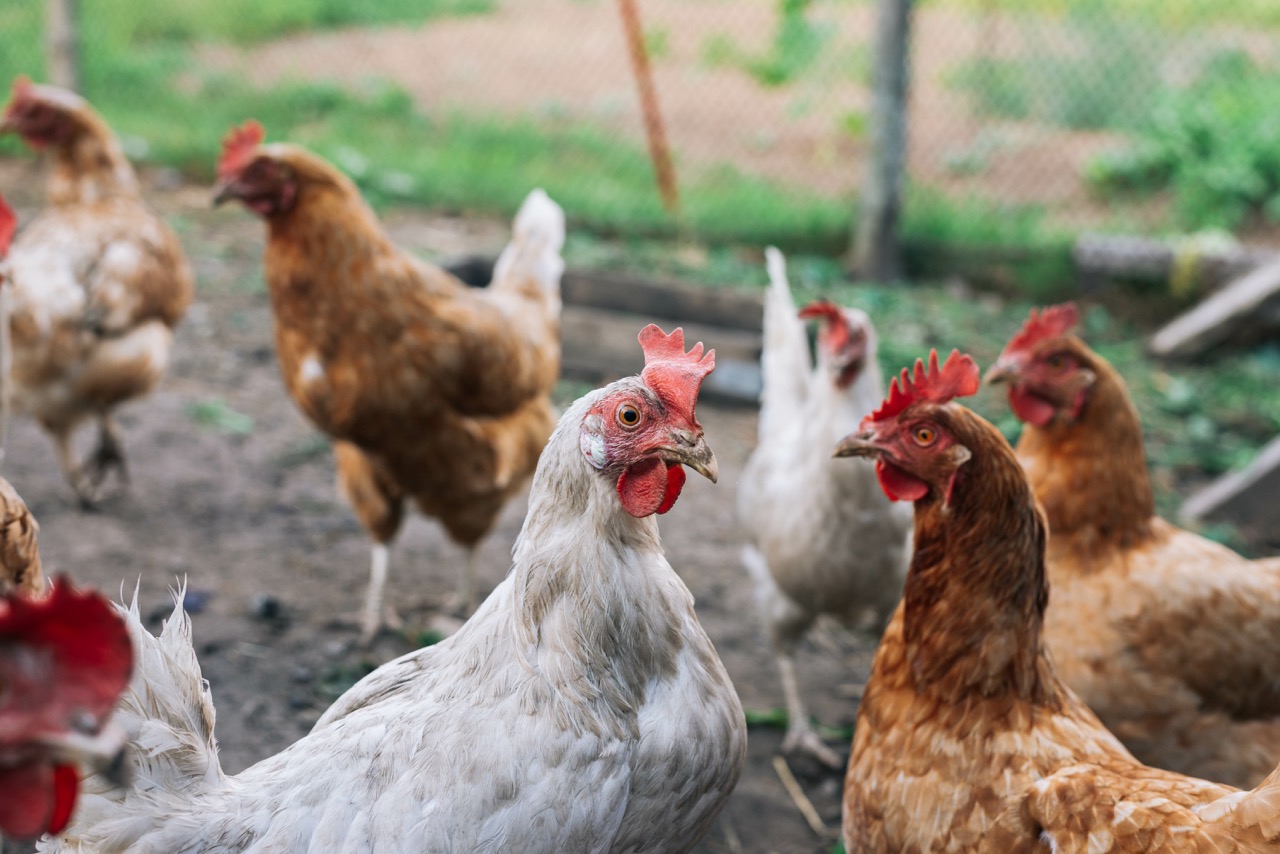
For example, cows have a slow turnaround. You may want to start with pastured broilers, which have an 8-week turnaround. Since the chickens like short grass, you may find it better to mow in front of them rather than invest in cattle. You can probably borrow a mower easier than you can borrow a cow. To be sure, I love cows and think every farm should have some, but when you’re starting out, you need your investment turnaround as rapidly as possible.
Ideally, part of this turnaround is value adding and retail pricing. For sure, you don’t want to do commodity anything because a non-artisanal product has such a low margin you’ll never compete at small scale. If you want to grow a commodity crop, think about how you can get a guaranteed retail value. Don’t sell corn. Sell cornbread. With some capital, perhaps an inspected kitchen is the best way to create specialty artisanal products with high margins.
A small farmer can never compete in the commodity game because the margins only work at scale. You have to wear the marketing, distribution, and processing hats in addition to the production hat. While you’re working on the fast turnaround and value-added components, you can do the longer-term investments like fruit trees, bramble fruits, or cows, as cash is available.
Part of this is cash flow. That’s why milk and eggs offer great possibilities. But milk only if you can sell it raw. Direct to the consumer. Legally. Some opportunities come clothed in massive logistical hurdles. And no, you can’t always do what you want to do. Lots of times our wants need to be tweaked into what’s most possible. At least in the beginning.
Create Collaborations
Few things leverage whatever we’re doing like partnering with symbiotic folks. Can you sell through an existing outfit, like a CSA (Community Supported Agriculture)? They already have a customer base; can you add something to their product mix that taps into their clientele? If it’s a produce CSA, how about adding eggs, chicken, or any meat component? If it’s a livestock farm, how about offering honey, egg noodles, or produce?
Some of the most successful farm start-ups partnered with a compatible operation nearby to leverage the market base. The hardest element in small-scale profitable farming is often not the production end, but the marketing end. Getting customers takes time, perseverance, excellent messaging, and a tough skin.
A geographically proximate cluster of farms can approximate the diversity found in any supermarket, which is the key to developing a loyal clientele. The one-stop shop answers the need for multi-tasking in today’s fast-paced society. To be sure, your farm group may not offer oil changes and diapers, but you can certainly offer a wide array of unprocessed and processed foods. Whether you cultivate a regional brick and mortar façade, a delivery service, or ship through a national service, the customer interface is far more attractive if more items can be put in a shopping cart.
If you know a direct-sale orchard, see if you can offer chickens on-site through a freezer. Or if you know a pastured poultry farm, offer them a produce component for their portfolio. The point is to collaborate and piggy-back on existing branded markets to keep from re-inventing the marketing wheel for your own products.
“Think of collaboration as simply the business word for community. As new farmers, we need to get over the independence cult and embrace the collaboration option.”
Many times, the real opportunity is adding value to something that already exists in a raw state. Making pickles out of cucumbers and apple pies out of apples can complement a neighbor’s struggling enterprise and give you a branded item at the same time. Sometimes the best path to your farm is through a processed product first.
For some reason, farmers tend to eschew collaborations as competitive or too relationally difficult. Think of collaboration as simply the business word for community. As new farmers, we need to get over the independence cult and embrace the collaboration option. Teams accomplish far more than individuals working in isolation. Your team is not just the people on your payroll; they include your feed mill, the UPS driver who picks up your packages, and the neighbor with the skid steer for hire. Cultivating a collaborative mentality is probably the best crop you can plant.
Things have changed a lot in the last century. Stories like Little House on the Prairie are wonderful, nostalgic, and obsolete. Written before America had an Internal Revenue Service, Tyson chickens, and two world wars, yearning for those days will not bring them back. We must adapt to our new context, but fortunately, new opportunities ensure that today the path to enter farming is as available as it was a century ago. Let’s turn our yearning for a bygone era into creativity as we steward the millions of acres of rural America becoming available in the next few years. //
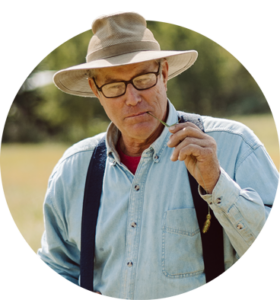
Joel Salatin co-owns, with his family, Polyface Farm in Swoope, Virginia. Four generations of his family currently live and work on the farm, and his farm services more than 5,000 families, 50 restaurants, 10 retail outlets, and a farmers’ market with salad bar beef, pigaerator pork, pastured poultry, and forestry products. When he’s not on the road speaking, he’s at home on the farm, keeping the callouses on his hands and dirt under his fingernails, mentoring young people, inspiring visitors, and promoting local, regenerative food and farming systems. Salatin has published 15 books, and he is the editor of The Stockman Grass Farmer, granddaddy catalyst for the grass farming movement. He passionately defends small farms, local food systems, and the right to opt out of the conventional food paradigm.



Leave a Reply