
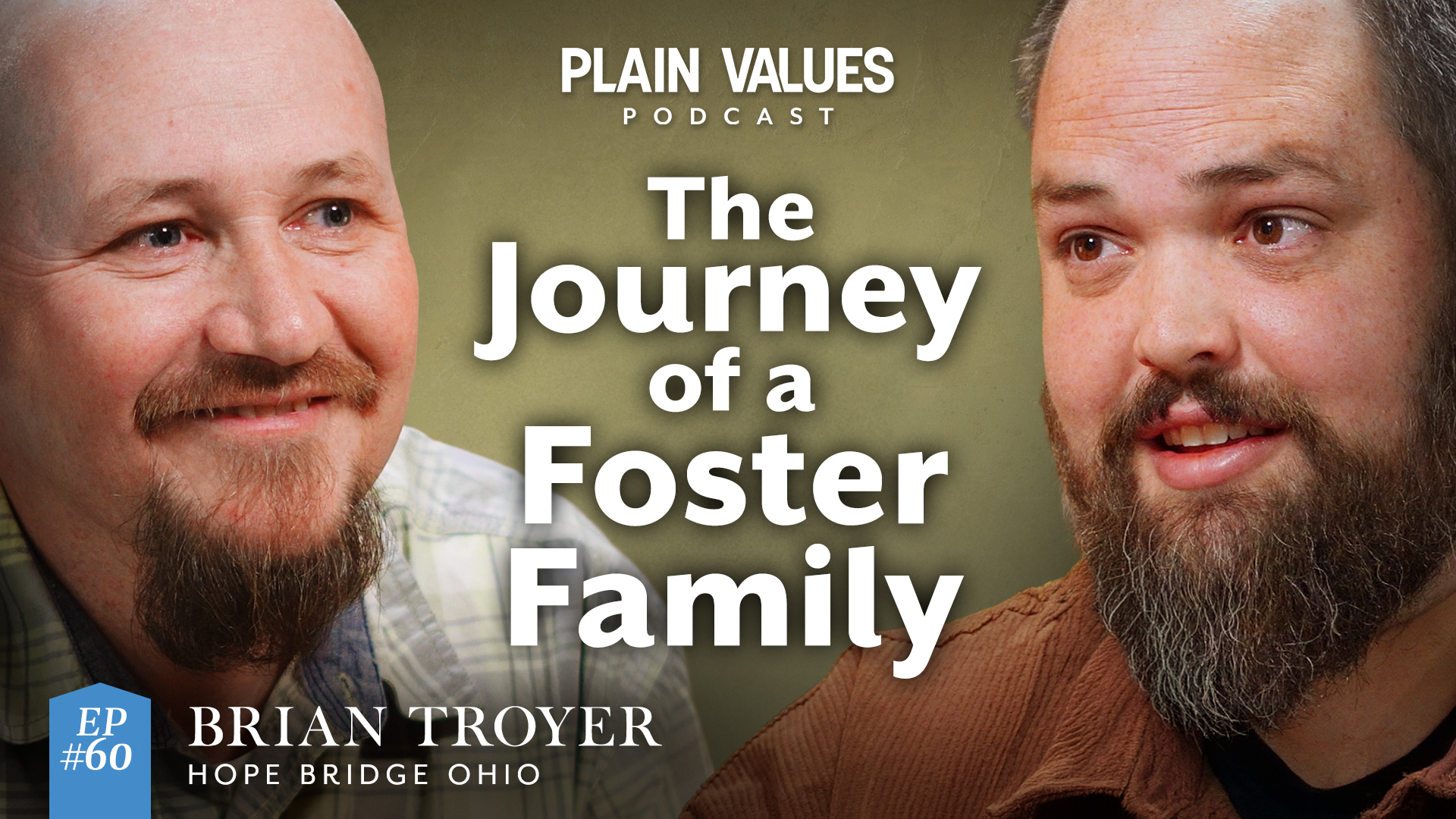
In this episode of the Plain Values Podcast, Marlin sits down with Brian Troyer of Hope Bridge for a conversation about fostering communities and how Brian’s life led him into foster care ministry.
They begin the conversation talking about Brian’s upbringing in a Hartville Mennonite family. At the age of 21, Brian lost a friend in a tragic softball accident. This experience woke him up to the life he was living, and he soon found himself breaking up with his girlfriend and requesting time off from his place of work to join Reach, a mid-term missions program.
Brian’s time with Reach was formative to say the least. It was there that he met his wife, Brittany, and later where they together saw the huge need for foster care in the world. When they moved back to Hartville after five years with Reach, they immediately began their journey with fostering. They fostered for seven years and are now working with Hope Bridge who builds up fostering communities in Ohio.
One common rejection of foster care is how it may negatively affect a family’s other children. For Brian, he has seen the opposite effect in their son, Malachi. He loves to tell people he has 14 siblings and that his favorite day ever is the day they adopted his younger brother.
Not everyone should foster, but everyone should do something. Everyone can be involved in some way. Fifty percent of foster families drop out after the first year, and 80 percent after the second year, with the number one reason being lack of support. When a foster family has a supportive community around them, the chances of the family lasting over two years rises to over 95 percent. This is why Hope Bridge exists. This is the call to the church.
What can you do to support a foster family in your community today?
🔵 Guest Bio and Links …
Timestamps & Transcript
00:00 – Intro
03:04 – Brian Was “The Good Kid”
07:58 – When God Turned Brian Around
10:42 – First Encounter with God’s Love
12:37 – Spain Adjusted His Mennonite Worldview
18:50 – Brian & Brittany’s Love Story
23:02 – Convicted to Foster Care
27:41 – Tangent About “Shoulding” and Science Wonders
31:03 – Continuing the Foster Care Journey
33:31 – The Christ Foundation & Hope Bridge
43:12 – Aging Out of the Foster Care System
46:56 – How to Pray for Hope Bridge
49:59 – Following God Lead Them to Foster
56:07 – Come on, Church!
59:26 – Support Your Local Foster Family
1:03:49 – Lightning Round!
1:10:02 – If Your Home Could Tell A Story…
1:16:21 – How Can We Pray for You?
1:18:29 – A Final Word on Their Single Moms Program
A kid that went to our church was playing softball, dove for a ball, and hit his head against another guy’s knee. Pretty much died instantly. So it was this wake-up call. Man, what am I doing with my life? You grew up in, in the Mennonite Church. Yeah. When you, you know, headed over across the pond- Yeah … you find yourself in Spain. What happened to your worldview? And a guy came in that he did foster care as well. He just could tell something was off, and so he asked, he’s like, “What’s going on?” And I said, “Oh, man, this little baby we had, like, he just left.” And he said… He gave me a big hug and said, “Man, it’s like a death in the family.” And I recognized that someone got it. All along the foster care system, it’s broken, and there’s a huge need. There’s a tons of fa- like, kids that need homes, and there’s a lack of families doing it. Well, Brian, thank you very much for coming down. Yeah. We totally appreciate it. This is great. I’ve been looking forward to this for a while. Same. Um, so number one. Mm-hmm. Your nickname- Oh, boy … is Bam. Yes. Right? Yes. Where did Bam come from? Oh, Bam. So that came from… Well, actually, I could say two parts of this. There’s the early part when I was playing Little League baseball. My team started calling me Bam Bam, ’cause I, I guess I was okay back then. Uh, that trailed off. They didn’t call me Bam Bam anymore, so I must have lost some of those skills. But then, um, when I was at Rosedale Bible College, I had a sweatshirt that said Bam on it, so people started calling me Bam Bam, shortened it to Bam. That just became my nickname for a while. So is that where you and Isaac met? Uh, no. Actually, we met, um, we’d have met first in Columbus when I was, uh, at Reach- Okay … I think. And so I w- or I was an intern there, and that’s where we had, like, youth groups come through and stuff. And then, uh, I started dating his cousin, and that’s when we really got to know each other then. Nice. So yeah. Isaac is or was the first or second employee here- Wow … many, many years ago. Yeah. I mean, we started, you know, we started this magazine 13 years ago. Yeah. Um, and he was with us for 10 or 11 years. Yeah. And, um- And he’s always talked really fondly of it- Yeah … and enjoyed this and enjoyed you and, uh, just being a part of this. Nice. So I, I, I know that it’s, uh- Yeah … something we’ve talked since we connected- Yeah … about, um, just connecting with you. That’s right. And so he was pretty excited about that. I thought you were born in Hartville, went to the same school. No. Am I totally off track there? No, so I w- was born in Hartville but went to different school, different church. Never… Like, this is the same for my wife. Like, I never knew her and them, that family, until I was in Columbus. No kidding. So yeah, just a wild thing. Okay. Like, like we literally lived less than a mile apart, me and my wife- … and didn’t know each other, but took us going, you know, 100 miles and, uh, meeting- That’s wild … that way. So yeah. Wow. Um, so tell us about your childhood. Yeah. Um, well, grew up in Hartville and, uh, always grew up at Bethany Mennonite Church as well, and that’s where we still go to this day. Um, but I have an older brother, younger sister. Um, grew up in a hardworking family. My dad owned his own construction business, and so we’d be out there in the summers, uh, carrying studs inside to the house for a penny a stud and, uh- … things like that, you know, and cleaning up around the job site. So it, it was, it was good for us and good teaching us, um, work ethic. He paid you a penny a stud. A penny a stud. So I’d go home making a dollar a day sometimes and be like, “All right, I carried 100 of those,” you know? But I was, I was a little guy, so it was just- Yeah … you know, in the summer, needed to get out of my mom’s hair probably and, uh, doing that. And so, uh, really a pr- a pretty good life. Um, things were good. We definitely had our hard points, and, uh, when you hit tough times financially with, like, recession and things like that, there was some s- added stress in our family, but, uh- Mm-hmm … but seeing how God provided and it worked, and that was something to see my mom and dad work through some of those things was really, like, impactful for me, um, and seeing just, like, how they continued to be, like, throughout all that. They instilled in me, like, a heart of generosity, of still being, like, willing to, like, give to the church, still being willing to help others out. And so I, I don’t know. It was just, like, a cool thing to see that. Um, yeah, I… There’s a lot of hard things, too. I don’t know. You can, you can dig deeper if you want. But, but growing up in the church, um, doing all that, I’d say that one of the biggest things I found is that, um… I just heard a guy talk about this the other day, uh, John Ortberg, and he talked about shadow missions, and it’s basically that temptation of what’s your, what’s your temptation that you kinda fall to more often, and mine is, is pleasing people or appearing good before people kinda thing. And, and so finding my shadow mission all the way back as a little kid was always, like, people liking me and affirming me and, and people pleasing kinda thing. And so whether it was at Christian school that I went to, was, like, being the teacher’s favorite kinda thing. I remember the one teacher said that she was pregnant right then. She said she’s gonna… If she has a son, she’s gonna name it Brian. So, you know- … I feel pretty good about that. God humbled me, and she had a daughter, so, um… A- and so it just was, that’s been a constant thing throughout my life of, like, recognizing those things that are the fear of man or, or appearing good before others and constantly always, like, having to resist that temptation, but most of the time giving into that and letting that be what guides me rather than letting God guide me. Mm-hmm. Um- Mm-hmm … as… Yeah. Which is interesting because we were just talking about Abraham- Yeah … and Abimelech. That’s effectively the exact same issue. Yeah, yeah. It’s the same issue. Um, was there, was there a, a moment in time that you think back to where you Maybe first realized that, hey, this is something that I’m doing- Yeah … and I’m not realizing it or I’m not seeing it. Mm. Um, I think I recognized it, like, as, you know, growing up in the church and all that, you start to join youth group and stuff like that. Um, I think there is when I realized I started to want to make friends with the cool kids or these others and, and other kids from around the, that I knew from around the area. And so I’d say I started to recognize and see this in me, but not fight against it, but, like, do stuff to appear good or fit into that group. And so that involved, like, at one point, you know, starting to go to parties and drinking and things like that at, when I was way too young to know what I was doing, but it was to fit in with that group. But then at the same time I was going to church, and I usually was one that was considered a pretty good kid at church, had the right answers, knew what to say, and was somewhat of a leader within the youth group as well, you know? Mm. And so it was kinda living these different lives based on who I was around to be a friend to everyone, to be accepted and, and yeah. And so that was, that was something that I remember seeing and recognizing that in me. Um, probably couldn’t put words to it at that time of what it was exactly, but recognizing that that was something that I did, that I was like, “Man, this isn’t consistent,” but I just kept on going that way. And, and in my mind at that time, it worked well, ’cause I had lots of friends. I was accepted. I was looked up to. I, you know, ended up, you know, having a really good job managing a trust plant and stuff like that, and had a girlfriend, had a nice truck, had all these things, you know. That’s what you were, that’s what I was going for, right? Um, but I’d say it all kinda came to a head. I was, I was with our youth group actually in Columbus at, uh, City Challenge it’s called, and we got a phone call saying that m- uh, a friend of mine, a kid that went to our church, was playing softball, dove for a ball, and hit his head against another guy’s knee in the outfield and pretty much died instantly. And so it was this wake-up call. And- Wow … just saying like, “Man, what am I doing with my life? Like, what am I, what am I living for? Where would I go if, if that happened to me?” Like, it wa- it was just, uh, one of those moments that, like, recognized living for other people was not, was not, you know, doing it for me, and not what really gave purpose and meaning. And so that was, like, a turning point of like, “Okay, what does this mean to really follow God and to live this out?” ‘Cause that’s where, the only thing I knew was, like, that’s where purpose and real, like, meaning and hope was gonna come from, and, and faith in that time of going through that tragedy, so, um. Wow. Boy, that’s, that’s, that’s quite a story. That’s quite a tragedy. It, it was terrible. I mean- He, he was a little older than me. Um, at that time I was, I think, 21, and he’d have been 24, 25, somewhere in there, I think. Um, and I wasn’t like close, close friends, but close enough that, and played softball with him enough and things like that, that it just was like, whoa, this is… Yeah, it’s real. This is real, yeah. So you would say that that’s the, that’s kind of the turning point where you started to take God seriously? Yeah, definitely. Definitely. And so that was, so I had all these things, you know, truck, girlfriend, job, um, making good money there, also a leader in the youth group still. And, um, and God was just saying, “Man, what are you, what are you doing with your life?” Like- Mm-hmm … and, and I felt Him saying I, we need to rebuild this. We need to, like, step away from all these things, and He wants to rebuild the foundation, um, uh, of what I was, like, basing my life on. And so I went home and, uh, what did I do? Well, I talked to my work and said, “If I leave, you know, can I have my job back when I come back?” And they said, “Yeah, yeah, you can leave for, you know, nine months, uh, and, and we’d hold your job for you.” Um, which was crazy to me. Um, I knew that I needed to break up with my girlfriend, so I did that. And I started to pursue going to Reach, which is a short-term missions program, um, three months in Columbus, six months overseas. And so I applied, got accepted, did fundraising, and went to that a few months later. And, um, man, that was just, uh, a, an incredible thing to see how God provided and made a way for that, but also, like, what He taught me in that. And one of the first- Mm-hmm … first, uh, Sundays I was there, like, we have a thing called Sunday night worship, and, and we were worshiping, and I just remember the first time, like, recognizing and truly feeling, like, the love of God for me. And like, man, Jesus died on the cross for me. And, like, that became real and just, like, I did not deserve that. I did not do anything to earn that, and He did that for me, and I just have to choose to accept that gift from Him. And, and that was the first time I feel like… I mean, I had said the things earlier, the prayer, whatever. I had gotten baptized. I had done all those things. But this is the first time that it became, like, a personal, like, for me, not just a big grand thing of, like, He did this for everyone. Right. But it’s like, wow, He sees me. He cares about me. He knows me, and He did this for me. And, and so that was, that was a huge turning point of starting to, like, rebuild that foundation, I think, that He’s built on from there. Did you have a couple solid friends all the way through there? Did you talk to your folks? Um, yeah, so during that time, yeah, I’d say I didn’t really talk to many friends back home. I kind of just, like, moved on. I mean, I did have, um, my youth pastor was one that I talked to some, and then my parents. Um, I had, I had a few friends, I guess, that were cousins of mine, a little bit older, that those are people that I went to. They had actually gone into this program before, too, so they- That’s who I talked to as well about it Yes Um, but it was mostly the people that were there in the program. Um, and so, like either other reachers, is what we called ourselves, or, uh, the staff. Like the staff were very instrumental, and just- Wow … kind of just modeling and showing what it was- Mm … to live that way. Where did you go after the three months? So I went to Spain, and it was funny, when, uh, I called you this morning, you said, “Hola,” you know- … “¿Cómo estás?” So we talked a little Spanish, but and my Spanish is not very good. So, um, but yeah, I went to Spain for six months in a town called Granada, and, uh, and it was good. I mean, it was a unique experience. Worked with a lot of, uh, university students, um, and some different, um, homeless and stuff there. We’d go into, like, a plaza where a lot of the homeless hung out, and we took stuff for a picnic, and we’d sit down and make sandwiches or bocadillos with them, and, um, and just sit and hang out, and just spend time with them, and that was really good. We were there supporting other long-term missionaries that were there as well, and so building a relationship with them, and that was… Actually, the two long-term missionaries were really, uh, important of just, like, walking with them, like the two, um, husbands or fathers there. Like, they- Mm-hmm … they were those figures for me there, and like, teach me what it was to, like, live this out, and a life committed to, to God- Yeah … in everything I do. You grew up in, in the Mennonite Church. Yeah, right. What happened to your worldview- Mm … when you, you know, headed over across the pond- Yeah … you find yourself in Spain in a city- Yeah … much larger than Hartville. Much larger. How did that impact you? Yeah, I mean, when even the time in Columbus, like, it was just very different. But, um, man, it just saw different ways of how people lived, and opened my eyes to that. And like, also, like, I mean, we were very blessed, but also very like, I don’t know what you’d call it, sheltered or whatever, or protected from a lot of things, too. And, and so it, it taught me a new way to, like, love or see people, and have compassion on them, and care for them, just because there’s so much going on around them. And, um, just recognizing to slow down to see people, like the, especially the homeless people in the plaza. Like, um, just, like, recognizing the importance of, of seeing people- Yeah … and spending time with them, and being willing to sit with them. And, and that was something, you know, as great as I, I appreciate my upbringing and, and stuff, um, I feel like it’s a fast-paced pace. It’s also, you know, people aren’t walking around the streets and seeing each other so much. It’s, you know, you go places and you might see each other. But just the value of, like, seeing people, and, like, stopping, talking to them, spending time with them. And- Mm-hmm … and I think that’s something I still value today, is, you know, I go to a local coffee shop, I see people, I, I just try to stop and talk to each person, and just say hello, and, and recognize them, see them, and, and just a little form of, of loving and appreciating them, I guess. You know, we, we’ve talked a lot about, um… I’ve, I’ve learned that if I don’t consciously and in- and intentionally focus on the person- Mm … I am so… My, my mind is, is so, it’s so quick to just make that, like, a snap judgment. Yeah. And, and I will walk right by someone- Yeah … and I’ll miss- Mm … you know, something special. And- Yeah … and the times, the few times that I’ve not done that- Yeah … and stopped and had those conversations, it’s always surprising. It’s always refreshing- Yeah … and you’re like, “Man, oh man, how often do I miss those?” Right. Um- It, it’s easy to think, especially, like, I mean, I found, I worked with homeless then in Columbus for a little while as well, and it’s really easy to, like, assume the worst, or to think like, “You could get out of this if you wanted to, or if you just worked hard. You’re lazy. You made bad choices. You’re buying things you shouldn’t buy and taking substances you shouldn’t take.” And- Right … and some of that’s very true, but, um, also learning that they have stories that got them there, that- Yeah … were full of, yeah, some bad choices, but also most of them, like, no community and people around them. Um, no real relationships or… And, and then just bad things happening that they couldn’t control, and, and as a result, I mean, we see this in the kids we care for as well, but, like, trauma and, and that just walks with you. And even- Yeah … as we were talking about Abraham and how Isaac did the same thing with his wife, um, what’s it say, “The sins of your father will find you out,” or, or I heard, um, someone else say, “Jesus lives in your heart, but Grandpa still lives in your bones.” And that there’s still family ties that, that play out in things. And like- Yeah … as much as we are a new creation in Jesus, like, there’s still things that from our family and the decisions that happened, and the things that happened to us that impact how we respond and react and, and live our lives in, in a lot of ways. And luckily, there’s redemption and, and God can heal- Yeah … and restore those things. Um, but it takes time and work. Yeah. So. You know, I’ve, I’ve often, I’ve often, I’ve often wondered why he does not just simply take all the old sinful nature away. Yeah. As soon as you say, “Yes- Right … I’m all in,” he just wipes it away. And I think, I think the older I get, the more I realize it’s- Yeah … it is, it is the journey. Mm. And it’s how He uses us, like He gives us a chance to play a role- Yeah … in His plan. Mm. And it’s an amazing thing. It is. It’s a mercy and it, yeah, it’s just an amazing thing. Yeah. And I, I love to dig in and, and try to figure those things out. For sure. Um- For sure. So you and Brittany met when? Uh, so actually, when I went down there and was at City Challenge with my youth group, she was an intern down there, and so she helped lead things. So met there and were like- Wow … “You’re from Hartville? What?” So, you know, never met before that. And then when I went back into Reach, uh, she was still an intern there, ’cause it was just a few months later. And, um, and so got to know her pretty well through those three months, and I started to, you know, notice her and be like, “I like this, this girl,” like she’s, she’s got her head on straight. It was also, I mean, I mean, in reality, when you go through a new, uh, experience, and especially even like spiritual-wise and stuff like that, I think, and other people are going through similar things, there’s a natural connection there. And so I think that can be a natural place where relationships grow in that way, too. So anyways, I was interested in her, um, and I, uh, after, before I went to Spain, I like, we hung out in Hartville and I was like, “What are the odds of this?” And she’s- Mm … like, “No,” like I don’t- Really? She didn’t like me in that way. And so I was shot down there. And so then, um, I left for Spain. We kept talking some, and I just was praying to God, like ’cause I felt something strongly here. I mean- Yeah … who knows what that was, if that was from God or not. But, um, but I felt God just confirming along the way like, “Okay, this is something,” and, and we started to build a more of a relationship and just through talking, getting to know each other in that way outside of the program, even though I was in Reach. Which if anyone’s listening from Reach, not supposed to be doing this, I guess. It was a little bit under the radar. You’re supposed to, you know, not have… I guess it wasn’t technically an exclusive relationship, but it was borderline. Yeah. Um, and so then, um, came home and started to hang out with her again, and I asked her… Actually, right before we came home, I felt something shift and just was like, “Mm, I don’t know about this,” like maybe this isn’t right. And here she had been asked to be a team leader to Thailand that next year, and so I think God had shifted her desire. ‘Cause at that point we were both pretty confident that we liked each other, that we knew that, I knew that she liked me, I was pretty sure, and she definitely knew that I liked her. Um, and yeah, and so she was going to Thailand, and so she shot me down when I asked her out then before. And, and I asked her before she left, actually, “Is there any chance?” And she said probably the wisest thing, and she said, “No, there’s no chance.” Um, because if, if she’d have said there’s a chance, then I, I would’ve held onto that. Um, and so I went back to be an intern. She went to Spain or whatever. Then after she had left is when I started my internship. And, um, I tell you what, that was, that was actually the year that formed me the most of, of what it is to like be living this out and to be leading and discipling others in- Mm … in the faith and in, and what God’s called us to and following Him and, and, and living that out in everyday life. And so I- it just was a year of, of leadership growth and, um, just really what it was to live it out. The, the Reach was my foundation in rebuilding things, and this was like applying it to everyday life and how it looks like to let Lord, like God be the Lord of your life in everything you do. And that probably wouldn’t have happened had she said- Probably not. Yes. I mean, potentially. I, I feel like, I feel like I would’ve been very distracted. Yeah. Yeah. And so this, uh, allowed me to be more focused in. And what’s funny is when she, right before she came back, she messaged me and was like, “We need to talk when we get back,” ’cause she felt while she was there in Thailand, like, “This Brian guy, I think, I think I’m supposed to pursue this,” you know? And so we talked and, uh, we started dating soon after she came back and, uh- Yeah … yeah. Uh, let’s see. Got married then, um, May 18th, 2013, and four months later we were asked to go back to Reach and be program facilitators or houseparents there. Um, and, uh, we said yeah, and so went- Wow … right into that right away after we were married and, uh, and that was also a really good choice for our marriage, I think. Was that full-time? Yeah. Yeah, that’s what I thought. Yeah, that was full-time. That’s, that’s a ministry thing. It’s a ministry thing. It was a, it’s a 24/7 thing. Like we lived on, like it was a old nursing home turned into, um, like dormitory style, hotel style rooms and then there’s a little apartment in the back. So we lived there. Um, there was six or seven interns. Man, I can’t remember anymore. It varied year to year, but that were our main focus, and so we helped develop and grow leadership in them and helped them lead our different programs, the City Challenge program and then Reach when that came around, so. Okay. So then you were down there for how long? We were down there for five years. For five years. Yeah. No kids in that time. During that time we had our son, Malachi, who’s now 10, almost 11. Uh, and so we had him and, and actually, that’s when we started to think about foster care was then. Mm. So, so we were pregnant with Malachi. My wife was pregnant. I wasn’t. Um, thankfully. Um, and, and she said- That she couldn’t help but just feel this, like, conviction in her heart of like, “Man, there’s so many kids out here that don’t have loving homes,” and, and she heard about the huge need in foster care. We also knew several families there that through the church that we were attending, and, uh, one of my cousins that did foster care really well, and seeing that. And so it just stirred her heart, heart to it. We worked with homeless. There was a family shelter right behind where we lived. Mm. And so we saw these families, and if they didn’t have, if the moms couldn’t get into this family shelter, their kids had to go into foster care, basically. Wait. Hold on. Or, or into the system in some way. If the mom couldn’t get into the shelter? Yeah. So it was mom with kids, and so they could stay there, but if they couldn’t get into that shelter, there was no other family shelters, and so anything else was just, like, an adult, like, adults only shelter. And so- Okay … basically kids would go into custody of some sort. I don’t know the ins and outs, but this is what they shared with us. Like, you know, this is import- like, this was the only family shelter, and so if they couldn’t get in there, they either had to fr- have a friend’s house or stay outside, or if they got into an adult shelter, like, the kids would have to go into CPS, so. What were the roadblocks that kept that mom from getting into the family shelter? Uh, hmm. It, mostly, like, space. They often ran out of room in there. Like, there’s cots set up in their kitchen and stuff like that in the- Wow … shelter sometimes. Uh, but then also, and I’m not sure the ins and outs of what … Like, we weren’t involved in that way to know, like, what qualified or disqualified someone from getting in there. Okay. Um, yeah. I, I don’t really know what, what that was. Um … But that was the first time that you saw the need- Yeah … up front. Saw the need. I mean, up close. And then saw families that were doing it well and, and seeing how that was a, a part of God’s heart for these kids and for these families in a, in a ministry in itself. And so my wife’s like, “What if we do foster care?” Like, there’s so many kids in need. She’s like, “Why, why are we bringing another kid into this world when there’s so many that need a loving home, and we could provide that?” And, and it was in no way like saying, “Man, we wish we weren’t pregnant,” but, like, she’s like, “After this- Right … what do you think about doing foster care?” And my result, my reaction was no, uh, because everyone that I had seen growing up with that was adopted or whatever, most of them, things weren’t going well. And so I had thought early on, like, “Why would anyone ever adopt?” Because look at how hard this is. Like, these kids are not, not the good kids that, you know, I thought everyone was supposed to be. And, and I think living a life in, in ministry and working with people from different backgrounds and stuff like that, like, opened my eyes to just see the huge need, and, like, that’s a mission right there and a ministry right there, and, and the, and the gospel of, of bringing that, that hope and, and the adoption story that we’ve been adopted into His family- Yeah … into these kids’ family. Not even, even if it wasn’t adoption for them, but, like, that family of bringing them in and loving them, um, so they can hopefully thrive and grow. What, what you said about a husband and wife talking about, “Do we bring another child into the family?” Hmm. I have, I’ve, I’ve been parts of … I’ve been parts. I’ve been part of conversations like that. Yeah. And at times, I think, I think people r- at times they can jump to a conclusion like, “Why would you say that?” Hmm. “Of, of course you should bring…” But there’s always the other side. Yeah. And, and it’s … You know, Brian, the, the older I get, the less sure I am- Hmm … of most things. Yeah. And Always learning and recognizing that what we thought we knew, we maybe don’t know so, or don’t, not so strongly when it comes to, like, some of these things, you know? Right. On these, th- these kinds of issues- Yeah … are not primary salvation- No, they’re not … pillar things, and there’s not necessarily a right way. Right. Right. But we’re so used to this standard that we’ve seen and grown up around. And then, then like you asked earlier about how did that change my worldview going to Spain, it’s the same of, like, different life experiences and different things. When you get out of it, you realize, like, “Oh, what I thought is normal,” and, and we see this in foster care, is these kids think that this family life is normal that’s full of pain and hurt and abuse and different things, and that’s not normal, you know? Or shouldn’t be considered normal, but to them, that’s, that’s what they grew up in. That’s- That’s what they knew. That’s all they know. A- and you see it in, um, in, in those that are incarcerated, in prison, and they get out, and some of them feel more comfortable going back into that ’cause that’s what they knew, or they go back into the life that they were before ’cause again, that’s what they knew. Yeah. And so we’re, we’re products of what we’ve grown up around and what we’ve seen and experienced, and so that’s most likely, like, unless we make conscious choices to change or to learn and to grow and see other things and get out of that, we’re gonna end up something close to that eventually. Yeah. You know, at most of the time. Yeah. The, I mean, goodness gracious. There’s, there’s a million correlations to, to, you know, a- all of life all around us all the time. Yeah. Yeah. There’s always another layer deeper. There’s- Hmm … a, and I, so I’m a science nut. Yeah. Like, I, I love, I love astronomy especially. Hmm. I love, you know, f- physics and chemistry. Yeah. I don’t know jack squat about it, but I love to learn about it. Yeah. And it’s interesting, you know, the whole, uh, collider thing over in Europe. Hmm. CERN. You know, they’re trying to find the God particle and the quarks- Yeah … and, and everywhere they go, the deeper they go, the smaller they go, He is there. Isn’t that incredible? And they’re seeing it, and it does, they … And from the smallest thing, and then also looking at the biggest things. Oh. He’s there in that, too. It’s amazing. It, it, it is incredible, the God we serve, and, and Yeah. In every way. Yeah. So how did you and Brittany … Is, oh, I’m sorry. I’ll back up. Yeah. So you had Malachi. Had Malachi, yep. How quickly after Malachi’s being born did you guys, you know, jump into the foster care system? Yeah. So he was born in, uh, 2015. We stayed in, uh, a couple more years, and then felt like now is the time to start pursuing foster care as our family. We also knew that in the job we were in 24/7, couple hundred people coming through each year- Right … like, just wasn’t ideal to do foster care. And we knew that we needed the support of, of family or church around us or both, you know? And so it felt like it was time to move from the mission we were currently on to the, to the next mission, and that was foster care for us. And so we moved back to Hartville. So we were there five years. Had Malachi. He was about three years old. We moved back to Hartville. Um, and started pursuing foster care pretty much as soon as we got back. Um, started doing the process of, of applying and, and going through the, all the paperwork and all that stuff. So, um, and then I, I don’t even know when officially we got licensed, but I guess now, let’s see, it was probably, it was probably 2019, ’cause I think we’ve been doing foster care for seven years now. Um, and so we got licensed and, uh, started doing foster care. Are you… Okay, forgive my- No, you’re fine … my ignorance here. Yeah. If you’re licensed in the state of Ohio- Mm … you can take a child in the system from a county or from any county? So generally you get licensed with an agency, a private agency or a county. And so we got licensed with Stark County, and so we got kids from Stark County. Okay. Um, now if you go with a private agency, a- and actually even Stark County, like other a- other counties come to you sometimes when they’re in need, they’ll find through that. But private agencies will generally be a wider swath of where kids come from. And so we have families that we support that are licensed with an agency and they’re getting kids from Cuyahoga County, um, stuff like that. So, and they’re in, in, living in Stark County though. Mm-hmm, okay. How did you and Brittany end up with, with Hope Bridge? Yeah, so, um, so kind of what we learned as we started getting into foster care was that we needed other people around us that got it. Um, so we, we went through our first year. We had a little boy with us, and he was with us for, he was a baby and was with us for 13, 14 months, something like that, and kind of abruptly left, like a family member came forward. It didn’t feel like it was gonna happen, and all of a sudden it was like, oh yeah, going with this aunt from a different state that came into the picture. And, and so it felt very like just, how could this happen? Is this person even safe? Like, we feel like we didn’t have much time to get to know them. Uh, we had kind of set our hearts on adoption, which is, um, probably a little bit of a flaw, but at the same time, I mean, we love deeply and so knowing that it’s worth the, the hurt if he left too. And so he left and I remember going, uh, that same day I went back into work, which I worked at a hardware store at the time, and a, and a guy came in that did- does construction and was a frequent guy that came in there, but he did foster care as well, and he just could tell something was off. And so he asked, he’s like: “What’s going on?” And I said, “Oh man, this little baby we had, like, he just left.” And he said, he gave me a big hug and said, “Man, it’s like a death in the family.” And I recognized that someone got it, because everyone else around us at that point hadn’t experienced this stuff, and so they didn’t, they didn’t get it in some ways and, and know how to support us. They didn’t recognize it as like grief and, and loss and, and no fault of theirs. It just wasn’t in their life experience up to that point, you know? Yeah. And, um, and so recognizing that he got it, we both realized that, man, we need people around us that, that have been in the foster care system and, and understand this some, um, ’cause there’s just a different level of support in walking with them. A- and the church and, and family was crucial as well, but we needed those that understood what we had, what we were going through. And so my wife started connecting to some of the foster moms in the area. Uh, the one foster mom started up like a group at her house just meeting for coffee and talking about where things were at, what’s going on in the cases they had. And, and so it was… That was really good for us. And so then, um, in that, they started, like she started, um, oh man, what’s it called now? ‘Cause it, we, we closed that door, um, foster our community. And so she was just serving out of her church and giving out like bags to families that got placements and then, um, doing a support group basically where moms would meet and just be able to talk about stuff. Mm-hmm. And so that kind of started those conversations and started that group and so we kind of joined that. We were part of kind of trying to make that more of a, a thing, you know, and, and help out in any way we could. Um, and then this organization called the Christ Foundation stepped in and said, “Hey, we…” Like they’re a foundation that gives out grants and money to different ministries, um, and they wanna support that. And their founder had just passed away, and so he left his whole estate, or most of it, to this foundation, and his dream was to do something with orphans and widows. You know, just hearing that clearly in the Bible, you know, like that’s a direct, uh, order there in some ways. And so pure religion is this, you know, care for the widow and orphan. So, hey, we wanna do something in that. And so that was kinda what the Christ Foundation wanted to pursue. So they met with Nicole, who started Foster Our Community, and said, “What can we do here?” Like, “How can we help?” And, and met with a few other, uh, women that were very involved in that. And, and in that, Hope Bridge started because they recognized that there was a huge need, like there was a crisis, like all along the foster care system, it’s, it’s broken and there’s a huge need. There’s, uh, tons of fa- like kids that need homes, and there’s a lack of families doing it. Mm-hmm. Um, but recognizing it’s not just foster care, it’s lack of support all the way around. And so Hope Bridge started out of seeing this river kind of in front of us. This is kinda how we, how we describe things. So you and two other friends come up to this river, and you see these kids floating down this river getting washed away somewhat, you know, and you’re like: Whoa, what’s going on? We need to do something. So you run in and you start pulling kids out of that river. And that’s, that’s intervention, that’s foster care. You’re pulling kids out of the, that river that’s washing them away, and you’re trying to care for them and help them. But then the other friend’s like, “Man, well, why are these kids coming into care? Why are they coming into this river already? Like, what’s, why are they… We need to stop them at the source.” So you run up ahead, and that’s preventative measures. Yeah. And so we started a single moms program to help wrap around single moms to support them and care for them so that they don’t lose their kids to the system. Because so many of these moms don’t have the community around them. You know, we, we fall or have hard things happen, we can get back up easily usually because we have family, church, other supports around us, community. A lot of these are on their own, or their communities are not healthy and not able to help them get up, and so they fall hard, fast, and stay down for a long time. That’s good. And so how can we help them from falling? Um, and then the other side, the other friend goes, “Well, you can’t grab all these kids. Where are they going? What’s happening down the river?” And so they run down there, and, and these, this is, uh, restoration, and, um, and that is our Aged Out Youth program. And so we’re stepping into… And, and that, we’re still figuring out the Aged Out Youth program a little bit, but how to care for these youth that are aging out of the foster care system that statistically, um, one, repeat the cycle. Most of the moms that we’ve had- Mm-hmm … of foster kids have been in the system themselves. They end up in jail, pregnant by 19, um, or, and homeless. And, and that’s majority of them. And, and so how can we do something to support and walk with them and care for them, um, instead of letting them just become another statistic and become part of the continuing the cycle, unfortunately. And, and so that’s kind of been our journey and our mission. And so trying to work that out and, and what does that look like to do that, and recognizing that the hope of Christ is the best answer we can give. And so how do we bring that into each of these areas and, and also bring that community and support that we’re called to as the- Mm-hmm … church to walk with each other and support each other, and support those in those hard situations even when we get nothing back and are probably gonna get burned. And then being willing to step into the hard, ’cause I mean, Jesus stepped into our hard, our mess, to make a way. So not that we’re Jesus in this, but we’re stepping in, willing to step into the hard things, um, because Jesus did that for us, and so let’s walk with these people in hard situations. That, that is a, that is an absolutely just a beautiful picture of the gospel- Yeah … in every way. Oh, man. I, I, you know, number one, I, I’m gonna say this before I forget. Yeah. Uh, Lewis needs to sit here from The Christ Foundation. You, you should definitely have him on sometime. He’s not a man of many words, but his heart is huge, and, and, and the heart that they have, uh, at The Christ Foundation and what they’re doing is, is incredible. It’s wonderful. It is incredible, so. It’s so good. Any, any nonprofits and ministries that you know or are connected with, or if people are listening, like, that is someone to look into, The Christ Foundation, or apply for a grant. Yeah. And, and the beautiful thing about The Christ Foundation is that they care about people. That’s their mission, is to care for people an- and to supply for people rather than buildings. Some of these foundations wanna put buildings up and put a plaque on it and say, “We did this.” And that’s great, and it can be good, but ultimately, The Christ Foundation would rather support organizations to, like, help them be able to hire people on, support, and give them a, um, real-life salary in some of these things to be able to do the work they’re doing, and then frees up other money to put towards buildings or programs or other things that you want. And so- All for the kingdom … all for the kingdom. Yeah. That’s exactly it. The other, the other mental picture that I was sitting here with the whole time as you were talking about the river- Yeah … was, you know, all of the babies that were thrown into the rivers back in the Roman days and- Yeah … and all the stories that you hear about folks walking down a road in India- Mm … and in China and everywhere, ar- all around the world. Mm. And they will hear or find little infants, newborns- Mm … that are either- Yeah, been abandoned in some way or, yeah … it’s- Yeah. Wow … it’s rough. Wow. And it’s, that, I… You know, this morning Elise and I were, were having coffee, and we were watching the birds out on the feeder. Mm. And we were talking about why are there so many little sparrows? Because they’re kind of a pain in the butt, and they eat everything- Yeah, right … and they’re just kind of in the way. But He still cares for the dumb little sparrow. Yeah. He does. He does. And it’s wild. Hmm. But I mean, my goodness. Hmm. You know, to, to be able to, to identify the need upstream and the need downstream, you, that, that is just, it’s so good. Yeah. Um, so, so talk about, talk about the aging out- Yeah … more. What- And, and so that is something that we’re just kind of trying to get our fingers in. So we don’t wanna go in acting like we have the answers or we know. Um, and so we’re trying to just build relationships with youth that are aging out. We also are trying to connect with other ministries and organizations that work with them- Mm-hmm … um, and learning from them. And so we haven’t started any official programs necessarily, um, but we’ve started relationships, and that’s where all this starts- Yeah … and, and, and walking with them, so. How many, how many times, and then just, just for the sake of, of folks who, who might not r- really know- Hmm … often in foster situations when a family is getting paid At 18- Mm … that payment is- Yeah … gonna end. Yeah. Right? On their 18th birthday. And oftentimes, if the family maybe doesn’t have the right motives- Yeah … they will say, “Well, see you later.” Yeah. And they just, they just bail, right? Yeah. Unfortunately, that does happen. That’s the reality of these, these kids. The other side is, is that the kids don’t wanna be adopted or stay in it either sometimes. Okay. They say, “I’ve been in this system for all my life, and so now- Ah … I’m done with this too.” So there’s that. I think the biggest thing we’re seeing right now is that, um, there’s, there’s a push in foster care to have family involved, and so kinship care is what they say. And, and that’s good. I mean, we want family to step in for their own and support ’em. Um, but unfortunately, with that, there is… Well, and they’ve changed some things to give some bigger funds to that to incentivize that. But like you said, at 18, that stops. And so some of these families, these kinship families, unfortunately, we’re seeing this, is they’re dropping those kids at 18 then. And- Okay. Okay … and it’s even- So- … though they’re family, they, they, they move on. And, and that’s tragic. And, and it’s, um, a thing we’re seeing, the, the negative results of that some. I mean, there’s some, there’s good stories, too, but they’re, a lot of- Mm-hmm … those families are coming from the same environments and, and, and situations. And- Yeah … yeah. Uh, it’s just- That’s tough … a tragic thing to see and, and hard for these kids as family abandons them once again, potentially. And they’re on their own. Yeah, and they’re on their own. And some of them, it’s their choice again, so. Right. That’s actually something, Brian, that I did not think of or- Yeah … or actually realized, where the child says, “I’m out.” Yeah. “I wanna get outta here. I wanna go do my own thing.” Yeah. And they don’t know what they’re walking into. Yeah, yeah. Um, boy, that’s, that’s tough. I mean, at that age, we all thought we- Oh … knew what we were doing, and, and we could do this on our own. We could be the best version of this. We know better than our parents. And so- Right … I, I get it. But- Yeah, I totally get it … man, but it’s, it’s, it’s really sad ’cause they’re going into the great, great wide world already at a, with trauma and hard things happening to them, and loss. And then going into like, “Oh, wait, we don’t have anyone. We don’t have any supports,” and so they find it in so many other things. And- Yeah … and unfortunately, we see it repeats the cycle, so. Wow. Yeah. Um, wow. How can, how can we pray for, for Hope Bridge? Yeah. Um, right now in the age doubt youth stuff, just wisdom and discernment of, like, what that looks to step into that. And we need, we need someone that says, like, “This is my mission and, and what I wanna do,” and to step in as a staff member in that, ’cause we don’t have a, an official staff person in that. And, and, and with that, we’re looking with someone with, like, you know, a background and, and education in, like, um, in case work management and stuff like that, but also just loving Jesus and, and caring for them, and, and willing- Yeah … to walk with them. And, and so that’s been hard. We’ve, we’ve, uh, had some people apply. We’ve reached out to people, but it’s a big ask, ’cause it’s a, it’s a heavy, heavy thing. ‘Cause we’ve also seen with that, um, as much as we have tried to walk with some of these youth, they, a few steps forward and then many steps back. And- Yeah … there’s so much hurt and back and forth and hard things and, and, and pushing away. And, and so, uh, yeah. So the big thing would be someone called to that position to, like, step into that for Hope Bridge, but then also, um, youth recognizing the need and the, the value of this, and, and to step in and embrace it, and for- Yeah … for change to happen, hopefully. You know, this … The person that you’re looking for is, I mean, from, from my- Yeah … you know, minuscule experience and my little chair here- Yeah … it seems like they have to be willing to be crushed- Oh, yeah … all the time. Yeah. Because that would, that would just be a hard, a hard road. Yeah. You know, a long, long time ago, I mean, goodness, I’m 48 now. Probably 20 years ago, I remember first learning about a ministry that was to porn stars. Mm. Yeah. All around. Yeah. And I remember thinking, “Oh, my word, that’s gotta be an unbelievable, you know, calling.” Yeah. Really hard calling- And, and I- … for sure … I mean, if I’m honest, I’m just really glad that He’s not calling me to do that. No, for sure. Same. But because I, because I know- Yeah … how fallen I am. Yeah, exactly. At the same time, to, to w- to walk into those hard situations- Mm … loaded with trauma- Yeah … and pain and anger and, and, and grief of all sorts- Yeah … every day, and then watch, have to watch those, those, th- those people make the choices- Yeah … and go back to those hard things. I- Yeah … I think it would rip my guts out. Oh, man. And- That’s so hard … you know, uh, so let’s just, okay, so many times when you talk about foster care, “So I could never do that. Oh, my goodness, I could- Right. Oh, yeah … never do that.” We hear that. So- All the time … we’re heartless people, huh? No. Yeah, we can do it. No. And I d- I mean, look, let’s talk about it. Yeah. Because I’ve got a couple thoughts. Yeah. But I wanna hear how you and Brittany- Mm … chose to do foster care- Yeah … with a, a one, two, three-year-old child- Yeah … having never gone through any rejection f- from a child. Mm. Any hard things. And that, that’s, that… I, and I’m sorry. No. I think I’m brushing- That’s fine … with a really broad brush. Yeah, right. Even- I get what you’re saying … even though I’m talking- Yeah, I get what you’re saying. What led you to say, “You know what? We, we wanna jump…” I, I know you’ve already talked about it a bit. Mm-hmm. But that’s pretty impressive. Nothing on us. And, and, like, it is not a… I think it’s just when you, when you’re f- like, Jesus is Lord of your life, and you’re following him and living for him in everything, you s- your heart starts to align to his heart, and you see those things that hurt his heart and, and that he has compassion for, and so it leads that. And then with that, like, Britt and I have always believed that we are… Like, there’s always mission that we’re in on, and so what is, what is the mission God has for us at this time? Yeah. And so feeling that call to that, and feeling that, like, willingness to say like, “It’s worth it to love these kids, to, to care for them,” because, like- Mm … even though they might reject us, even though they might leave, which is okay, we were doing foster care to foster. If it led to adoption, great, but that wasn’t what we were… We had to, like, continue to, to preach to ourselves that we’re in this to love them as Jesus loved them, and in that, it, we’re willing to suffer and have loss and rejection for the sake that these kids can hopefully, like, experience and feel love. And in that, like, it’s scientifically proven that it helps them to thrive and do better and be able to receive love in other relationships then. And so- Mm-hmm … we do our part to love, not for what we get out of it, but what, what he gets out of it and, and how it can help them, you know? Yeah. Love God and love people. And, uh, and so that was, that was our heart in it. I, I don’t know. We’re not anyone special in any means or, like, whatever, but we just, we just were trying to faithfully follow God and what he’d put on our hearts and to live that way. And- And you just said yes … and we said yes and walked it out, and I mean, it has been full of hard things, but it has been so worth it. And, and, and seeing what God has done in that, and, and our family’s been so blessed in that. And- Wow … and, uh, I’ll, I think of this often, but, uh, one of my son Malachi’s Sunday school teachers asked him what his favorite moment is in all of his life, and he said, “Oh, it’s the moment that we adopted Samuel,” our second son. Really? And, uh, and just recognizing that, but also people ask him like, “Well, how many siblings do you have?” And he’ll be like, “14,” you know? Like, all these kids that have come through our family over the years, like, they’re all his siblings, his brothers and sisters. Yeah. And how incredibly blessed he’s been. Like, seeing him catch that vision, and our kids catch that vision and, and love these kids well, and yeah, we, we have to walk with them and navigate that path of suffering and loss. And other kids that come into our home that are full of, uh, trauma and big emotions and things. But that, I mean, that’s discipleship as a family and, and living on mission, and seeing, like, being able to walk with them is such an honor and, and incredible to see how well they love in this. And, and, uh, uh, that’s been probably the coolest part for me is seeing God- Wow … move in this in my family and my kids. Um, that, and then also seeing the church and family that have been in our general facil- or general area and seen us and observed us, and them getting to rub shoulders with it and see like, oh, this is, this is a really cool thing. Like, this is what God’s doing here. Yeah. And, and we wanna be a part of that in some way. And so- That’s the gospel being lived out … it’s… Yeah, exactly, and when people see that, they, they don’t see us. They see God working there. And, and so, like, we’ve seen people in our church wanna step into foster care. We’ve seen them- Wow … wanna support and walk in different ways. And so just seeing how it’s changed from when we had our first placement, and I mean, to be honest, and no fault of our church, but, like, they didn’t recognize it as a loss when, when our first placement left. They just were kind of like, “Oh, sorry,” you know, and kind of moved on. This is what you signed up for, I guess, you know? And, and it is in some ways, but now seeing them, like, when someone gets a placement or our family’s going through something, they wrap around us, and they’re there supporting us and walking with us. And- Wow … and so it’s cool to see their hearts change in that way. Yeah. Um, do you know, uh, uh, Kevin Hewitt? Kevin Hewitt? Uh, yeah. Uh, is he with, um, CCHO? Yeah. Yeah, okay. Yeah. Yeah. Kevin and I have become good friends. Right on. And I think one of my favorite things that Kevin has, has shared more than a few times- Yeah … is that foster parents are the real heroes. Mm. They’re the ones that are doing truly heroic work. Mm. And I mean, to have the guts to step into that gap for the kid- Mm … and, and carry… I, man, I love it. I, I absolutely love it. It’s not our own ability, and, and unfortunately, though, I also see people stepping in to be the hero, um, for themselves to be the hero, not seeing God as the hero. Right. And, and knowing that one of the main, like, recruiting, uh, places for foster care right now is LGBTQ events. Really? Yeah. And so seeing the church, like this is our heart in all that we do at Hope Bridge is we’re a bridge organization taking the church to step into these, to step into foster care and this river, um, and trying to bridge that gap between the, the agencies and, and the county and the church. And, and so that’s our heart is the, the church to be the church and be community around them all. And it, it breaks my heart when I hear that the biggest recruiting events are those pride festivals and not the church and not- Right. A- and now I will be fair, the majority of foster parents are from the church, in at least our local counties and stuff like that. Um, so it’s, it is still that way, praise God, and that there are people doing it, and that is st- I think even, like, they’d say some of the ones that have been, like, in it the longest, you know, have been from the church. But- Mm-hmm. Well, the reality is- I wanna see more step in. Mm-hmm. Like, I, yeah. Sorry to jump in, but- No, you’re fine … but in my mind, the reality is, A, it’s hard. Yeah. It is not an… It, it is a calling. Yeah, it is. It is a direct and clear calling. Yeah. And to do it well, if you don’t have a, a solid spiritual backing- Yeah … and calling, you’re gonna, you’re gonna quit. Yeah. It’s- Yeah … it gets bumpy- Yeah, it does … fast. It does. And you’re gonna, you’re gonna bail. Um, the other thing that, that I cannot think about this topic and not go to there’s what? 350, 400 kids in Stark County? Yeah, 400-some kids. If you’d have one or two families from every church- Yeah … you would have a possum trot scenario- Oh, yeah … where the need is wiped out. Yeah, it’d be incredible- It’s gone … if that happened. Yeah. Even if there’d be, you know, like, let’s say you took even a smaller percentage of those churches and there was multiple families, ’cause that generally- Yeah … is how it goes, it could totally change the s- Yeah … the scenario. But instead, we’re at 400-some kids, and there’s about 100 families doing foster care in Stark County, and so that’s a big gap, ’cause they’re not having four kids at each home, you know? And, ah, man, it’s- Wow. Wow. Yeah. I, I, that- And there’s, I think there’s a close to 400 churches in Stark County too, so it’s… The, the math- I know … is there if they’d step in, you know? I know. That’s the thing I, I think… I have to be very careful. Yeah, right. And I, I’m, I’m, I’m being really transparent here, Brian. I, I could get really frustrated- Yeah … with the church. Mm-hmm. And I, and I fully realize it is Christ’s body. I, I don’t ever wanna dishonor that. Yeah. But come on. Yeah. Come on. Wake up, right? This is not that hard. While it is incredibly hard. Yeah. But why? Where are these families that are- Mm-hmm … Now, now I will- Yeah. Let me tack onto the end of that. Yeah. I used to be the guy that said, “Mike, you should adopt. You should foster.” Yeah, yeah. I don’t say it anymore. I, I used to be that as well. Everyone can do this. Everyone should do this. Exactly. And now I’m like, “Eh, not everyone should do this.” No. Everybody needs to be involved. Yeah. Everybody needs to pray. Everyone can do something, but- You can do something … yeah. Take a, take a meal in. Yeah, yeah. Take a, you know, a big box of diapers or something. Yeah. Everybody can do something. But it is, it is a big deal. Yeah. And, and I, that’s what God is all about. It doesn’t have to be the mission of our family, you know? Yeah. And recognizing that. My goodness. Yeah. Sorry to get on a, on a- No, you’re fine … rant there. And I think, I think you draw a good point though of, like, everyone doing something and, and seeing that. So, like, again, I’ll go back to statistics of, um, 50% of foster families drop out in the first year because most of them cite lack of support and having people around them- Wow … to walk with them. Half. 80% drop out by the second year, and, uh, most of them, again, the same reason. Now, some of it is adoption or, um, their family’s full- Right … or they experience really hard things and it’s just, uh, it’s not for them kind of thing. But they found that when families have supports around them, like they have family around them, or they have community around them, and they’re walking with them, like, it totally changes to, like, 95% or higher of staying in it two-plus years. Wow. And, like, the difference that can make- Oh, my goodness … you know? A- and so that’s the call to the church- Wow … I think, of saying, “What’s my something that I can do in this? How can I walk around and support?” And so, like, that’s part of what we do, is we’re going to churches and trying to help them form wraparound support ministries around, um, their foster adoptive families. But even, like, we’ve seen it, like, hey, what about families that are struggling in your church? What about families that have kids with special needs and need some extra support? Yeah. And it’s just a, it’s become a ministry within their church of just seeing the hard and, and those in unfortunate circumstances, whether that’s foster care, adoption, special needs, medical emergencies, things like that, like sickness, whatever, and saying, “We wanna wrap around and walk with you for at least a year or longer and bring a meal, do childcare, uh, help you with projects around there. Just stay in touch. Just be community.” And, and what should be a natural thing in the church, I think happening is, is real authentic relationships, um, isn’t happening too often in a lot of these, in a lot of our churches, that’s a little bit at a safe distance, you know? But in- instead saying, “I’m willing to step in and do my something and walk with you and care for you and, and, and join in of, of this,” ’cause they’re joining in that suffering in a way as well, walking with each other in, in, in the grief and the hard and the trauma, but willing to see that and walk with them and say, like, “We’re here for you. We’ll, we’ll walk with you and hold you up during this as well,” because we can’t do it alone. Like, it, it’s impossible, and our family’s experienced that firsthand, and, and we’ve seen other families. And, and to see the church step in and be the church is… We, we couldn’t do what we’re doing, or what, you know, now we’ve actually closed our home. Um, you know, we’re five kid- have five kids at home, adopted four out of our five, and we said, “Okay, I think, I think our, our quiver’s full, and our house is very full.” We’re called to, like, continue to walk this out and support and, and be the church, but, like, if we could never have done this and still be doing this without the community around us and, and our church and our families that have walked with us throughout this, ’cause they’re just as mar- much doing foster care as we are, you know? You know, uh, in a way, not in a way, in every way- Yeah … it comes down to, A, people taking God seriously- Mm-hmm … and, B, people taking loving people seriously. Yeah, yeah. I mean, it’s, it’s not that hard. No. It’s, uh, it is, and it isn’t. It’s- That’s- The gospel is very simple- Yeah … but very hard, you know- Yeah … to do it well, and simple to embrace and, and to, to recognize, I guess. Yeah. Okay, I’m gonna do something a little different. Oh, boy. Okay? Yeah. What’s that? I’ve got a handful of questions. I’m gonna call this the lightning round. Are you ready? Lightning round. Going for, uh, double, double points on this one? If you were a farm animal- Oh, boy … what would you be? What would I be? Well, I’d say a donkey, ’cause I usually make myself one, but … No. Uh, man, if I was a farm animal, that’s tough. I’m, I’m gonna say a goat. I think they’re just, like, really fun. They like to explore and just kinda be a little bit of a nuisance sometime. Um, they’ll also eat about anything, which I’m a big fan of- … food, and I will eat just about anything. I will try just about anything. That’s something that my worldview’s changed on food, and being able to enjoy and appreciate different foods. But, um, so yeah, I think a goat. I just think they’re fun, you know? And- That’s a great answer … and, uh, and I love coffee, and goats are who discovered coffee, so hey, there we go. I d- If you didn’t know that, so- I didn’t know that … uh, a shepherd was out with his goats, and they started eating these little cherries from this bush, and they got all, like, excited and hyper, and were bouncing around. And this guy’s like, “What is this?” And so he discovered coffee through that. All right. There we go. All right. By the way, my wife’s favorite animals on the planet are goats. Are goats. Yeah. No, how many goats do you guys have? Uh- Too many to count? No. I think 14. 14. Something like that. Ooh. 13 or 14, yeah. There we go. Um, what’s your favorite homemade meal? Ooh, homemade meal. Again, we have a bit of a different w- uh, experience with food, and so my wife makes a really good, uh, panang curry, uh, with rice. Ooh. And so it’s, it’s good. It’s from Thailand. And, uh, and so that I like, and then, um, uh, steak. You know, cooking some good steak at home is just a beautiful thing, so. That’s awesome. Yeah. Um, if you could chat with one biblical figure over, over the goats’ coffee- The goats’ coffee … who would it be and why? Oh, man. I, David has always just intrigued me and been someone that I just … I, I love the, the Psalms, and just his creativity and his honest heart, but I also love the journey that he was on, and also going back to, like, honoring God. Like, I just always think of, of him when he cut off the part of Saul’s, um, coat or whatever, and like, this is still God’s anointed king, and I’m gonna honor that. I don’t know, just those things stick to me and, and I just think about that, and man, I just feel like that’s someone that I would love to hear his heart and just hear him talk about God and, and his experience, and how he’s seen him be f- so faithful and forgiving, and redemptive and all that. That’s a great answer. Um, if you could pass one timeless family tradition down to the next generation, what might it be? Ooh. Something that my family’s done, or something that we’re doing now, like in our- You- … my family … you and Brit. So this is something that we don’t do perfectly, that’s for sure, but, um, we’ve been trying to instill Sabbath in our home. And, and generally we’re pretty busy people, and so we take Sundays and, and to remember, like, that this is a gift from God. This is, this is not just a gift and, and like what we … It’s the r- it’s the gift he gave to Adam and Eve before work, of just sitting in his presence and enjoying him, and just life and love and joy. But it’s also then if you, if you look in, uh, the Bible, it talks about Sabbath as being a resistance to the world and to the things around them. Like, so there’s like two instances of, of the 10 Commandments, one in Exodus and then there, it’s later. Um, I forget where it is now. D- Deuteronomy maybe. But it talks about it being resistance to the things of the world, and saying that, um, they … Like, as we, as the Israelites were no longer slaves, it’s saying that we wanna remember that God is who’s gonna provide for us, and that we are not to be slave drivers now that we have our freedom. We’re gonna rely on him and depend on him, and remember it’s all from him, and so we’re not, not to, to remind them of not being slave drivers to those that they’re around, you know, kind of thing. And so just like trying to live in that line there, but with it just like remembering, like, we’re not what we do. We’re not all these other things. We’re not, like, trying to achieve all this stuff. We’re able to just rest and be in his presence. And so with Sabbath, we, like, I always, we always make waffles in the morning and make ’em as sweet as you want, because hey- … this is a reminder of how sweet God’s love is for you- Nice … to our kids. And just laid back, relaxing day. Spend time with our church family. We usually spend time in the evening with my wife’s family, and it’s just a time of just- Yeah … richness and just goodness, and, and that’s something I want my kids to remember, to, to start and end their week with just a reminder of, like, it’s all from God, it’s all for God, it’s all to God, and, and that’s what we want, I want my kids to pass on as well, so. Do you ever wonder if his instituting the Sabbath isn’t this picture of what is to come? Hmm. Yeah, in a way. I, I really think it is. It’s, uh, just complete contentness in him, you know? And- Yeah … and yeah, I, I still love that quote of, “God is most glorified in us when we’re most satisfied in him,” and, and I think that’s something that Sabbath is practicing, and, and trying to live in that as, as well as we can, you know? Uh, last question. Yeah. Actually, second to last question. Oh, okay. All right. If your home could tell a story, the best one- Oh, boy … what would it be? Wow. I will … I mean, I’d maybe have two. Um, and, and this could open up a whole different bag of worms, but the first story is, it would just tell the most recent story we had, um, and it’ll tie into the second story I have. Like, so we just got an addition put on our house not too long ago, and there’s a cold air return in the floor. My three-year-old daughter was over playing by it. It’s, like, maybe six inches by eight inches or something, or maybe a foot. And, uh, somehow her foot… Or no, she pulled up the grate, like all kids do, and she’s messing around over there, and all of a sudden she falls through it, like, goes into it. And, and it’s… I mean, cold air returns now, they just do, like, basically, you know, cardboard with tinfoil on it, more or less. And so the, the ductwork just, like, just went, and all, like, our basement was right underneath it, cement basement. And my son, Malachi, again, is, like, freaking out. He’s like, “Ah,” you know, and we weren’t in there to see it. And so I step over there and I’m looking for Rhea, our three-year-old daughter, and, and I don’t see her, and I was like, “Where is she?” And he points. He’s like, “Down there.” And so I go over there. Like, I’m just like… I didn’t, I didn’t even think about, like, where that goes or whatever, and I look down there, and there she is looking up at me. And here there’s, where our addition, this new addition meets our existing house was a, was a crawl space right by that. And so there’s this cement ledge, and I had some- … like, ice chests and coolers on it. And so she landed on that, and I was right there, and I, like, reached down, grabbed her arm, and pulled her up through again. But coulda been a lot worse. Coulda gone, you know, what is it? Oh my goodness. 8 to 10 feet down to the cement floor, and that coulda been really bad. Or she coulda hit her head against something. But she just plopped right there, was just down below it just looking up, and she was scared. Scratched herself a little bit. Um- But now it’s just one of the funniest things now looking back of, like, she just disappeared and… Woo. Wow. Anyways, but with that, the other story I’d think and tell is the story of just, uh, the church and community because, um, you know, we were living in a 1,400 square foot ranch. And, um, in that time we had adopted Samuel, our second, and then we had a baby that we were fostering, and, um, I was diagnosed with cancer during that time. And, um, and getting ready to have treatment and stuff like that. And again, like I said, it could open up a whole nother bag of worms. They asked us to take in two girls that we had fostered before, and they were some of the hardest placements we’d ever had. And thinking like, “No, we can’t do this. I’m going through this. I gotta focus on my health.” Um, and God just gave me a, a, a dream. I never have dreams, but this was a picture of me out on a surfboard in the middle of the ocean, and this huge tidal wave coming at me, and that was it. But the next day as I was praying about that, I felt God say, “Brian, I’ve given you all that you need. Like, stand up, ride the wave.” And I said, “No, this is impossible. Can’t do that.” And so I was, I was upset, and so I went out to our church and I was waiting to meet with, uh, my pastor out there to talk to him ’cause I just, I, I needed guidance. And as I’m waiting there in the sanctuary praying, um, I opened up to Psalms 23, and in the CSB it says, “The Lord is my shepherd. I have all that I need.” And I just was like, “Okay, God, I see. I see what you’re doing here.” And so we said yes to those girls. Um, so our family was five, five kids. And w- I went through the process of cancer, had surgery, did chemo later on. Um, and everything’s good now. It’s been over a year, year and a half almost, um, praise God. But my church wrapped around me and supported me, and the community, and ended up putting an addition on our house. Like, they said- The church did? The church and the community, like, people that we were connected to. No kidding. They said, “We want to, we wanna walk beside you guys in this, wrap around you and support you, but we also wanna provide for you.” And, and so they put an addition on our house- Wow … that gave us an extra bedroom, and living room, and basement space. And we, we didn’t have to pay a dime out of that. Like, I… Unreal. It is… We have been a family that’s always cared for a lot of people, but to actually be cared for is an incredibly humbling thing. But an, what an honor it has been to be on that receiving end, to see how God works- Wow … through the church, and, and the power of the church. And that’s where I say we’ve experienced this wraparound support and the church being this, the church and, and, like, it’s nothing we asked for, but God- Wow … God provides when you walk faithfully. And, and not saying that that was how he needed to provide, but, but he showed, like, “I have given you all that you need, and, and even then some.” Like, his generosity is just, blows us away. And so we’ve been so blessed. And it’s been a space where we can now host others and, and- Wow … and, yeah. Sorry, can of worms, like I said. No. No, I love it. I, I ask, and that’s, that’s why I ask. Yeah. Because, you know, life is… I mean, it’s, it’s… Okay, I’ll say it like this. Yeah. I get, I get tired of, of the, of the very, very short and quick, “Life sucks and then you die,” and- Yeah … you know, uh, like, I get tired of that. Hmm. And yet there’s also, there’s truth to it. But- Yeah … he does not bail. No, he does not. He walks with us. He is so faithful. And it’s just, it’s just- That’s part of who he is … an incredible thing. And, and not only does he not bail, he brings joys- Mm … and he brings everything that you need, like- Yeah … like you saw. Yeah. Like you s- you know, said. Um, so here’s my last question. Yeah. How can we pray for you and your family? Ooh. Hmm. Well, as, as we’ve closed our home to foster care now, and, um, it’s kinda figuring out, like, what’s our next mission, and, and maybe it’s just Hope Bridge right now. Like, not just Hope Bridge- … I should say. We’re doing a lot there, and God has been so good in that. Yeah. Um, and so I think one thing would be discernment of just, like, what God has for our family and wanting to not just be complacent or just to be like, “Oh, well, we’re doing this stuff, so this is just where we’re at,” but always wanting to be, like, listening for what God has for us and how we live on mission with our family. And then the other thing would be, um … Man, so I talked about the f- the five kids. Like, three of those we were fostering during, um, when I was going through cancer and stuff like that. Uh, we adopted all three of those kids then. Um, so man, just full picture seeing how everything just, like- Wow … a- again, amazing. Um, but walking with those kids, there’s a lot of hard things that they’ve gone through and experienced, big emotions and, and, uh, trauma. And even as babies, when they’re removed, there’s still trauma there. And, and even in the womb, there’s trauma that they experience. And, and so just recognizing as our kids are getting older, some of, some of those things, of how do we walk with them well and love them well and, and care for them and what they need in that. And so that’d be my, my biggest prayer is, like, how, how can we do that well? And, and yeah, just continue to follow God faithfully in that, love people and love God and, and to follow and, and just to follow the ways that he leads us. So yeah, that’d be my- Wow. I love it … my biggest prayer. Yeah. Thank you for coming. Oh, thanks for having me. Thank you. This is an honor. I love this. Well, you, your family just about … Yeah, I love it. Blows me away. Um, did … Just final thought, did we miss anything big? If you wanna tag it on, some things like our Single Moms program. There is not many programs out there for single moms, so we’re seeing a huge, like, need for that and a huge- Mm … like, interest in that. We’re getting … Like, we’re one of the few Google searches that come up on single moms ministries. Really? And, um, and so we get calls from all over the state. We had an 11-year-old boy call from Columbus saying that his mom needs help, and- Wow … had to do something. And we’ve had calls- That’s incredible … we’ve had calls internationally, like people from other countries calling even saying that they’re, like, “What, what can we do,” you know? Um, and so just recognizing the huge need there and, and trying to do what we can obviously. Um, and so we, we have some moms that are in direct services. Like, we have four homes in Canton that we walk with them very closely. Um, but we also, um, recognize there’s a whole lot more than that. And so how do we- Mm … how do we support? And so we have some single mom support groups and, and ministries that we partner with and are trying to help people, single moms connect to, and just being that resource and of them having that community there. But the church wrapping around these single moms and taking them in when they’re not necessarily attending that church or have a … It’s amazing how many have church hurt because they’re single moms and not the, not what it’s supposed to look like, you know? And, um, so I don’t know. I, I guess that’s, that’s just a huge thing there, um, seeing that need. And, and, uh, actually a beautiful partnership is though we just started working with Habitat for Humanity some, and we just had our first, first mom graduate from our program. And she got, was placed in Habitat’s program. And so, like, a few months after she graduated from ours, she had her house dedication. Mm. Mm. And she’s into a new house. Um- Wow. That’s cool … so, and, and so that’s really cool. And actually, she now works for us, so she’s gonna head up some of our Single Mom stuff- Wow … coming from firsthand what she’s experienced. And just seeing, seeing that transition and how God has worked in her life. She, like, she wasn’t baptized before she got baptized, um, with us and, and just has continued to follow God faithfully and desire that and, and seeing her leadership and growth and her wanting to, like, step in and do that for others. And so, uh, it’s really cool. But seeing that, and then the other thing that we’re really working on right now is, um, we’re trying to, uh, expand, and so we’ve expanded. Um, I actually saw that you had Julie Kirby on here. She’s actually gonna be one of our county coordinators. Nice. Um, and so she just was in yesterday doing some training and stuff with us, and so we’re expanding to different counties for them to engage their churches to do the wraparound support- Yeah … raise up foster families and, and, um, do that. And so that’s just a big initiative of us now of what it looks like to get into other counties, not for our sake, but for those counties and those churches to start to step in and make a difference, so. Wow. Yeah. Brian, I love it. Yeah. Thank you. It’s an, it’s an honor. It, it’s an incredible privilege to work in that space, um, to be able to talk to people like you that, that, uh, value that, see the need, and wanna talk about it, you know, and share that with others. Yeah. And your family doing some of your own, right? Yeah. Um, and, uh, and just an honor to live where God has us and, and try to follow him as best we can, so. Wow. Yeah. I love it. Thank you. Thank you. This was great.

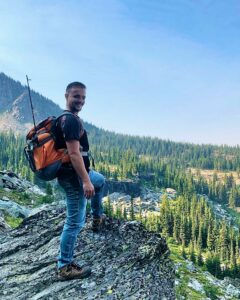
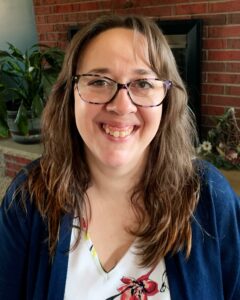
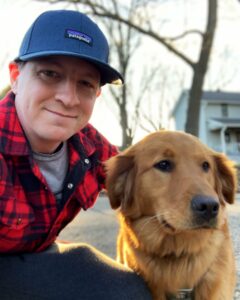
Leave a Reply