

Of all the ways to hunt, bowhunting embraces the true nature of the hunt. When you think about it, the hunter must get extremely close to the quarry to take a shot. The average bowhunter imposes a personal limit of 35 to 40 yards, though a few experts can shoot accurately twice that far. You can quickly see that in order to get that close, you must be able to sneak within range of an animal and have the skills to hit it with an arrow or have the patience to sit in a treestand or blind until an animal shows up. That says a lot.
Every bowhunter will tell you that practice means everything. That doesn’t suggest you shoot a few arrows in your yard or farm field every few days before the season opens. Instead, it means shooting as many arrows as you can every day. I know some archers who shoot at least 50 arrows daily after work, starting several weeks before the hunt.
The need for accuracy is obvious. Unlike a bullet, which can dispatch an animal when the projectile strikes within the vital area at long ranges, an arrow must be placed with much more precision. Most bowhunters aren’t satisfied until they can consistently hit a softball-sized target at 30 yards. The preferred target is always behind the front shoulder, allowing the arrow to pass through both lungs, which allows for a humane outcome.
Then you have the actual “animal” factor. The quarry must present itself in such a manner that the arrow can strike the intended target. That means the animal must offer a broadside target with absolutely no brush, twigs, or branches of any kind between the hunter and hunted. If the arrow strikes even the smallest obstacle, it will most likely be deflected and veer off course, either missing the animal or worse—wounding it. This requires a great deal of patience. Not only must you have patience, but you must remain absolutely still while waiting for the animal to take just one more step into a spot where it’s clear sailing for the arrow. That might mean holding your bowstring back at full draw with the arrow in its nocked position. Unless you’re using a compound or crossbow (more on that later), that might be a physical ordeal. Even if you have excellent upper body strength, holding that string back can be a mighty challenge. I’ve seen deer and elk stand quietly in a patch of brush for several minutes.
You also must have the self-control to pass on an iffy shot. A shot at an animal in a quartering position, looking straight at you head-on, standing straight away from you, running, or lying in its bed is never recommended. If you don’t have the self-discipline to ignore a “maybe” shot, you might be sorry afterward.
“Because of all the handicaps with bowhunting, especially in making that accurate shot, there’s been a great evolution in the world of archery.”
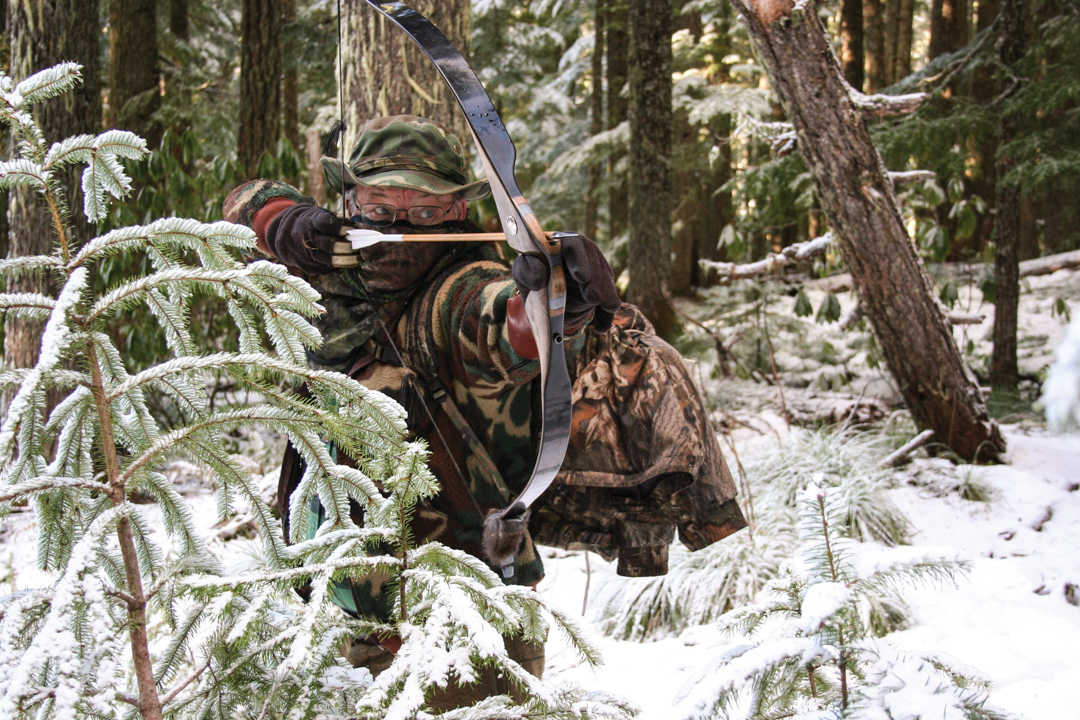
Because of all the handicaps with bowhunting, especially in making that accurate shot, there’s been a great evolution in the world of archery. At first, we had homemade bows and arrows. These were the first serious weapons ever. You can make the case that rock-throwing, spears, and slingshots came first, but the bow and arrow was the early answer for dispatching animals. Today, many hunters indeed make their own bows and arrows. Technically they’re called longbows.
Then came new technology, largely due to legendary Fred Bear, who is commonly called the Father of Bowhunting. He was responsible for the recurve bow, made from mostly synthetic materials, which offered a new hunting opportunity for those not skilled enough to make their own bow and arrows. To use these early bows, you had to shoot “instinctively,” which means you aimed by looking at the quarry and the arrow lying on your bow rest, determining yardage and arrow drop, and letting the arrow fly at a precise moment. This is where practice is so important.
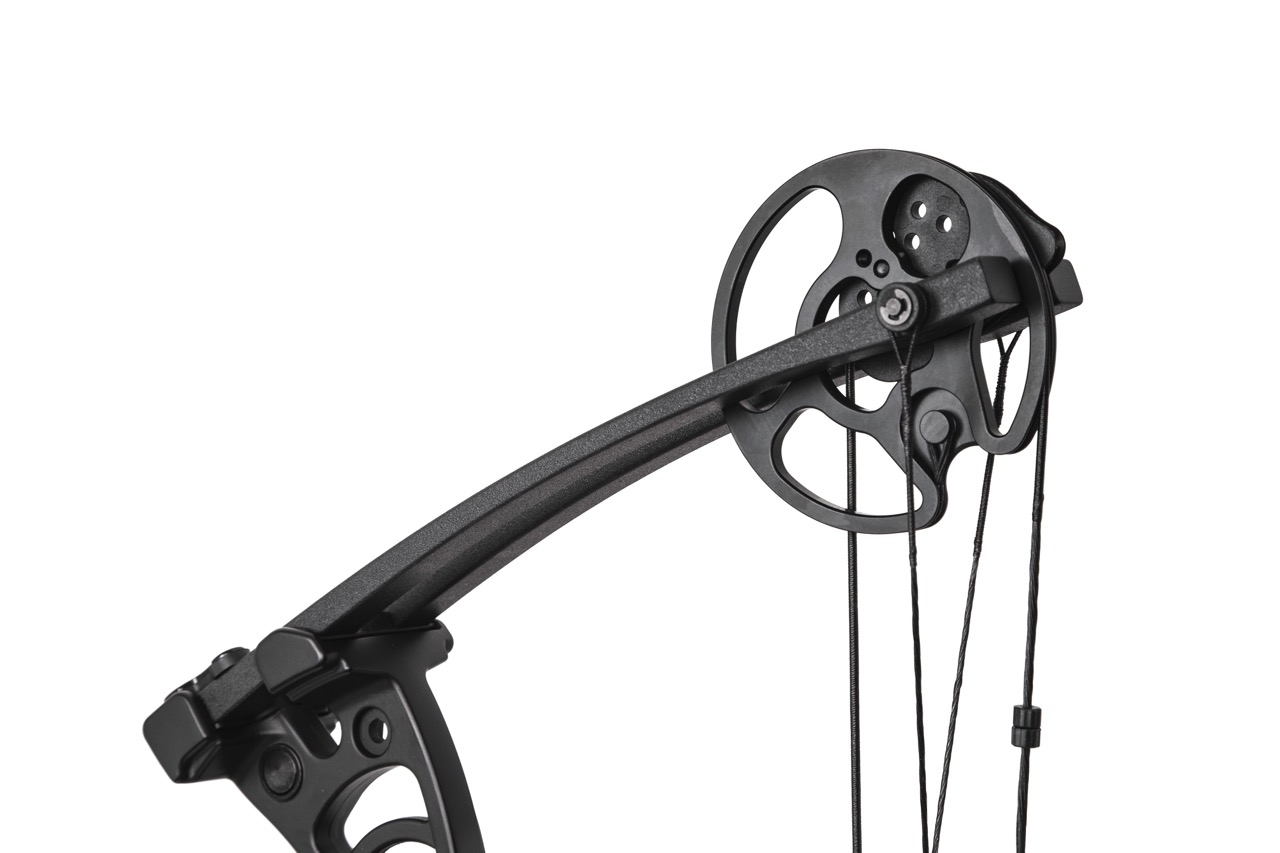
Not long after the recurve bow came on the scene, another bow hit the market. It’s the compound bow that totally changed the world of archery. The device has pulleys and strings, which offers several advantages over the old system. Very importantly, it has a “let-off” feature that allows you to draw the bowstring back, and once it reaches a certain point, almost all the pressure is off. Unlike the recurve, where you must grit your teeth and withstand aching muscles on a long wait for an animal to offer a shot, the compound can be held nicely at full draw for long periods of time. In addition, the compound bow has sights where you judge the yardage to the target, look through the appropriate pin on the sight, and let the arrow go. This is a huge advantage over instinctive shooting. Because an arrow offers a terrible trajectory in flight as compared to a bullet, you MUST know the range. If, for example, you judge the animal to be 24 yards away and it’s really 32 yards away, you might easily miss it. To solve that problem, new compound bows have rangefinders which eliminate the need to guess. Many other bells and whistles are invented every year in a highly competitive market. One feature I like is the lighted nock which allows you to see the arrow in flight as well as seeing the impact on the quarry. This allows you to determine that you indeed hit your target and to plan a recovery of the deceased animal according to the location of the hit. An arrow will often strike the animal, and you might not be positive of the hit. The lighted nock usually solves that problem.
Then there’s the crossbow which has been on the scene for a long time. It was used for centuries by warring countries just as the longbow was. The crossbow looks like a bow lying on a rifle stock. Like compound bows, the crossbow is also undergoing technological changes each year. They have an advantage over regular bows because they’re fired with the gun stock against your shoulder. As a result, accuracy is more easily achieved.
A big advantage to hunting with archery equipment is the ability to hunt when firearm seasons are not open. In other words, bowhunters have the woods to themselves. Less competition means quality hunting. But there are other advantages. Some bow seasons are held during periods when it’s easier to get close to animals. In the West, for example, archery elk seasons are typically held in September when elk are breeding and are vulnerable to calls, allowing you to draw one closer to your position. There are exceptions, but firearm seasons are rarely open during the elk rut. There are also special bowhunting seasons open for deer. Every state is different.
State laws vary on the use of different types of bows. In some states, crossbows are forbidden during archery season and must be used only during firearm seasons. This is because of a perceived unfairness since crossbows are far easier to master. Many hunters believe crossbows are not in the same league as other bows. Some states allow crossbow hunters to be afield only if they have a disability where they cannot draw back a regular bow. Be sure to check state regulations before you head afield with any bow.
If you aren’t familiar with archery equipment and want to learn, the best way is to be mentored by a family member or friend. You’ll learn much by just listening, watching, and practice shooting. If you have no one to teach you, many communities have archery clubs as well as indoor and outdoor ranges. In addition, sporting goods stores often have ranges inside the store.
There’s a problem in hunting with archery equipment. Once you’ve taken your first animal, you’ll never be the same. It’s an outstanding accomplish- ment to do so. Tying your tag to that animal means you’ve overcome many challenges. Technology has vastly improved the equipment, but you must still get close to the quarry. That’s the essence of bowhunting and why millions of Americans love pursuing animals with archery equipment. //
Jim has hunted all fifty states for deer, has fished in most states, has hunted elk in all the major western elk states, and has hunted on four continents. He worked for fifteen years as a forester, game warden, and wildlife biologist. Jim draws on these experiences for his monthly column “All Things Outdoors.” For more information, visit www.jimzumbo.com.







Leave a Reply