
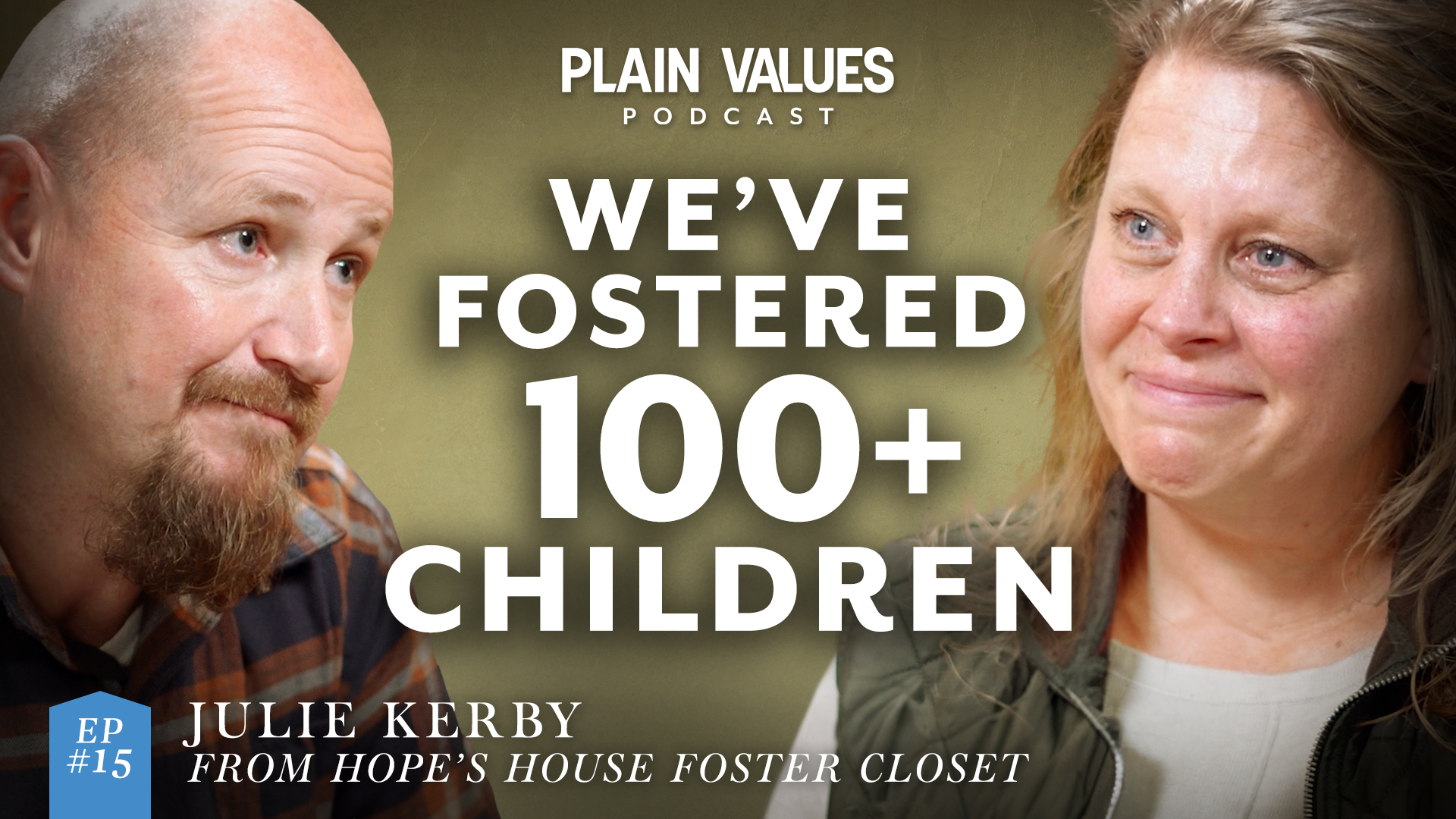
Julie Kerby, founder of Hope’s House Foster and a woman who has spent nearly two decades on the front lines of foster care. Julie and her husband fostered for over 18 years and opened their home to more than 100 children through emergency placements, respite care, and long-term fostering.
Along the way, they adopted a sibling group of five, each carrying their own complex story shaped by trauma, instability, and loss.
In this raw and moving conversation, Julie explains the reality few see. Children often arrive with only the clothes on their backs. Foster parents must immediately scramble to buy wardrobes, schedule medical exams, enroll kids in new schools, and manage nonstop agency calls… all while helping frightened children adjust to yet another unfamiliar home. And the financial support? Often less than a dollar an hour.
Hope’s House was born from this gap.
After stepping away from active fostering, Julie knew she couldn’t step away from the children. She transformed an empty house in Kidron’s historic village into a fully stocked support center for foster families. In just three years, Hope’s House now provides 90–100% of what foster families need in those first overwhelming days: beds, car seats, clothes, school supplies, diapers, hygiene items, toys, and emotional comfort.
Welcome to the Plain Values Podcast, please meet our friend Julie Kerby …
Transcripts
0:00 – Intro & Meeting Julie
2:24 – Julie’s Childhood, Marriage, and Biological Family
5:42 – The Path to Fostering
6:55 – How Are You Still Here?
19:08 – Fostering Over 100 Children
21:09 – Foster Parenting Realities
25:20 – Reunification
30:20 – Why Does God Let This Happen?
32:05 – Navigating Origin Stories
37:42 – The Birth of Hope’s House
44:50 – Late Night Supply Run
54:28 – How to Find Hope’s House
58:21 – Why Churches and Communities Must Get Involved
01:01:55 – How Can We Pray For You?
Julie Kerby:
We fostered over a hundred children in our home. So we’ve had so many different stories in our home.
Marlin Miller:
We learned about you when our Amish neighbors got their first or their second placement. They’re wonderful family that are fostering. And my wife gets a call from the neighbor. Neighbor and she said, Hey, we just have these kids. Will you take me to Kidron? And Lisa said, done. Let’s go. And they drive up there. I think it was at 11 or 12 o’clock at night. Yes. You met him there?
Julie Kerby:
I did.
Marlin Miller:
And Lisa looks around and she told me, she said, totally amazing. Thank you. My new friend Julie, is the founder of something called Hope’s Foster Closet in Kidron, Ohio. And we sat down to talk about foster care adoption, the state of the system here in Ohio, and it’s far reaching impacts to the foster system across the country. And it was a gut wrenching at times, really a heartfelt conversation. Please meet my friend Julie Kerby from now until Christmas. Homestead Living has a wonderful gift guide online. You can find **@*************ng.com. You’ll find the link in the notes below. We have a handful of great companies, great products. One of our partners is a company called Rustic Strength. They are focused on zero carcinogens in the laundry detergents and the cleaning supplies. My own wife was looking at them just recently because she learned that they are as pure as it gets right now. You can use the code Homestead 25 and they will knock a quarter off of your order. 25%. Tell us where you live. I’m sorry.
Julie Kerby:
I live in Kidron, Ohio.
Marlin Miller:
Okay. Were you raised there?
Julie Kerby:
I was actually raised in the house next door to me.
Marlin Miller:
No.
Julie Kerby:
Yes.
Marlin Miller:
The 1832 house.
Julie Kerby:
Well, no, the 1832 House Hope’s house is across the road in the historical village.
Marlin Miller:
Okay, but you live on, that’s on Hackett Road. That’s Hackett Road, yeah. Right by the school. Okay. So you grew up there. Did you go to Central
Julie Kerby:
Christian? I did.
Marlin Miller:
You did?
Julie Kerby:
I did.
Marlin Miller:
Tons of siblings. No siblings.
Julie Kerby:
Three
Marlin Miller:
Siblings.
Julie Kerby:
Yes.
Marlin Miller:
Are you the first born?
Julie Kerby:
No, I am the third. I have a brother and then a older sister. And a younger sister.
Marlin Miller:
Okay. So what was your childhood like in Kidron?
Julie Kerby:
Well, I mean, for me it was an average childhood. Growing up, we lived on a small hobby farm, so we had cats and dogs and cows and a pony and a goat at one point. And just playing outside the typical, I would say, around here growing up.
Marlin Miller:
So did you go to college after
Julie Kerby:
High school? I did not go to college after high school. Now,
Marlin Miller:
By the way, by the way, I’m sorry to cut you off. There’s no judgment in that question. I didn’t go either.
Julie Kerby:
Well, and I don’t think college is for everybody. And I even tell with fostering for so long and having so many foster children and stuff, that isn’t something I, that is for everyone. I believe in trade schools are good or follow what you’re doing and do it well.
Marlin Miller:
So before we get into the fostering, which we’re getting there, how long have you been married?
Julie Kerby:
20 some years. 20 some years.
Marlin Miller:
That’s a great answer.
Julie Kerby:
I would have to, I don’t know. It’ll be actually 30 years in 28. Okay. Yeah.
Marlin Miller:
And what’s your husband’s name?
Julie Kerby:
His name’s David. David. But he goes by
Marlin Miller:
Dave.
Julie Kerby:
He actually really goes by Kerby. It depends if he grew up in Navar. So in Navar, he’s known as Dave and Kidron. He’s known Kerby
Marlin Miller:
Because there’s 200 Daves in Kidron,
Julie Kerby:
Ohio
Marlin Miller:
With Yoder and Miller and
Julie Kerby:
Neba
Marlin Miller:
And everything else. So how did you and Dave meet?
Julie Kerby:
He worked at the time there, it used to be a gas station in Kidron and he worked at the gas station
Marlin Miller:
Right on the main square.
Julie Kerby:
Yeah.
Marlin Miller:
By Layman’s right there.
Julie Kerby:
Yeah. Yeah. And we met that way.
Marlin Miller:
How old were you when you met?
Julie Kerby:
16 or 17? I was a junior in high school and I actually asked him out on a date. I had gone to Central and we were having a junior senior banquet, and I just asked him to go. I said, I just need somebody to go. I’m not looking
Marlin Miller:
For just as friends.
Julie Kerby:
Yes. Yeah.
Marlin Miller:
And then it became more than friends.
Julie Kerby:
Yeah. Wow. Cool. 40 plus years later.
Marlin Miller:
So Dave grew up in Navar?
Julie Kerby:
Yes.
Marlin Miller:
How many bio kids do you guys have?
Julie Kerby:
We don’t have any bio children. You
Marlin Miller:
Don’t have any bio kids?
Julie Kerby:
No, no. I knew early on I may not be able to have kids.
Marlin Miller:
Really.
Julie Kerby:
And so a friend of mine, I babysat for her children that were foster children, and that really turned my eye towards fostering. And as I call him, Kerby sometimes too, when I refer to him to call him Dave, I think I’m talking about somebody else. But he was involved with the girls then too. And sometimes we’d take him to the zoo or do different things with him, but that really turned us onto fostering.
Marlin Miller:
Wait, I get confused. Easy.
Julie Kerby:
Okay.
Marlin Miller:
So your mom and dad were fostering?
Julie Kerby:
No,
Marlin Miller:
No.
Julie Kerby:
I was babysitting.
Marlin Miller:
I missed that part.
Julie Kerby:
That’s okay. My voice. It’s easy to misunderstand. I was babysitting for friends of ours that were fostering, and so that’s what turned us on to
Marlin Miller:
Foster. So Kerby got to see into the foster world through the family that you were babysitting for?
Julie Kerby:
Yes.
Marlin Miller:
Wow.
Julie Kerby:
Yeah, so that’s how we got involved, know how we could get involved.
Marlin Miller:
Sure. Is it okay to ask how you knew that you were potentially not going to have children?
Julie Kerby:
Oh, early on when I believe I was in seventh grade, my appendix had ruptured and they had ruptured a week before.
Marlin Miller:
Whoa.
Julie Kerby:
Yeah. I ran a very low grade fever and my mom had taken me into the hospital or to the doctor
Marlin Miller:
A week before,
Julie Kerby:
And they just said she just has maybe a stomach ache, so take her home, but if she runs any type of a fever, bring her into the er. And that was, I don’t remember, it was so long ago, but I had run a very low grade fever. So they took me in and they took x-rays and nothing showed up on the x-rays. And they thought, well, we’ll take a healthy appendix out. And as they went into it, they thought it would be a half hour procedure and it was like three and a half hours.
Marlin Miller:
Julie?
Julie Kerby:
Yeah.
Marlin Miller:
It had burst.
Julie Kerby:
Yeah, it had ruptured like a week before. How are you still here? By God, the Christ of God.
Marlin Miller:
Yeah. That is Did you, sorry. No, you’re fine. Lisa and I were just talking, our oldest son’s appendix almost burst when he was a little guy and he had incredible pain. I did
Julie Kerby:
Not. You did not? No. I have a very high pain tolerance. I found out You must. Yeah, you must. So I’ve had to learn to kind of pace myself sometimes that if I’m feeling pain, I must be in pain.
Marlin Miller:
Wow. Okay. Well, I don’t know if I should be impressed or sad for you or something. I dunno. I don’t
Julie Kerby:
Know. I don’t know either.
Marlin Miller:
So your appendix bursts.
Julie Kerby:
Yeah.
Marlin Miller:
You survive. I don’t know how,
Julie Kerby:
I did have two softball size abscesses, but they thought one was my uterus, which it ended up not being my uterus, but that was always a potential from then on
Marlin Miller:
That in that process it damaged a lot. Yeah.
Julie Kerby:
Yeah.
Marlin Miller:
Well, I am sorry. My goodness. Thanks for sharing. That brings some context. So you get married, we get married, and did you begin the fostering right away or did you wait a while?
Julie Kerby:
I would say as we were trying to see if a biological child would be possible, we also started the foster care process and I had gotten pregnant once and then had a miscarriage, and from then on the procedures to continue, we didn’t feel that God was leading us down that road and that adoption was the way to go and fostering. We looked into private adoption, but we did not feel led to adopt privately. And so we kind of just went to a couple different meetings about foster care and ended up going to Star County Foster Care, Dar Stark County, the agency, and we signed up with Stark County and fostered just over 18 years with them.
Marlin Miller:
18 years.
Julie Kerby:
Yeah.
Marlin Miller:
Well, let me jump up to 50, 70,000 feet. Okay.
Julie Kerby:
Yeah.
Marlin Miller:
Lisa and I have adopted all four of our kids. We had a miscarriage or two that we’re aware of so we can identify on a few things. This is the whole point. We have massive respect for foster families who do it out of a good and right motive, and that’s not to impugn all foster families, but that’s not what I mean at all. I love foster families
Julie Kerby:
More
Marlin Miller:
Than you can imagine.
Julie Kerby:
I do too,
Marlin Miller:
Because I know a little bit of how hard it is, a little of how hard it is, and I’d love to talk about that at some point down the road here. But it’s families like you that if I was wearing a hat, I would have it in my hand.
Julie Kerby:
Well, thank you.
Marlin Miller:
Because it is not easy.
Julie Kerby:
No, it is not a calling for everyone. When you first start out, you think, oh, anybody could do this. And the longer you’re in it, it is a calling from God. Not all of us can foster, but we can all support our foster parents.
Marlin Miller:
Amen. We can all do something I used to Should people you should consider adopting, you should consider fostering.
Julie Kerby:
Yeah.
Marlin Miller:
I don’t say that anymore.
Julie Kerby:
I
Marlin Miller:
Either. Okay. That is a perfect segue, Julie. I can’t wait to ask you and learn more about this.
Julie Kerby:
Okay. Okay.
Marlin Miller:
So you and Kerby have fostered for 18 years.
Julie Kerby:
Yes.
Marlin Miller:
How many kids have you adopted?
Julie Kerby:
A sibling group of five.
Marlin Miller:
A sibling group of five. Five, okay. We’re going to park there for a second if I may.
Julie Kerby:
Yes.
Marlin Miller:
How old were they when they came?
Julie Kerby:
So our oldest two were 15 months and four months, a girl and a boy.
Marlin Miller:
15 months and four months. Four months. So birth mom has the two kids, does something, has them taken away and start counting comes to you?
Julie Kerby:
Yes.
Marlin Miller:
Were these your first placements? No. No. Okay. Let’s talk about your first couple of placements. Okay. Yeah. Sorry. No, go ahead. Well, I am really interested to know what did you and Kerby walk into this thinking it was going to be like and then what did you find that it was actually like
Julie Kerby:
We thought we would walk into it. I grew up babysitting many cousins and other children. So you go into it thinking, okay, I’ve been around a lot of children and whatnot, and you take the training classes, which can horrify you, if I’m honest. They do teach you worst case scenario, and I believe what we were trained with 20 some years ago, it’s so much more difficult nowadays and
Marlin Miller:
Why
Julie Kerby:
Foster care was never meant to sustain what it’s sustaining today. It was meant to, if I have my story correct, it was meant more in the depression era when there was help needed with children. That’s when the foster care system born,
Marlin Miller:
Hold on. I have a friend who grew up as a poor Amish kid and he was actually put out out that the air quotes were for the put out where they would literally say, John and Mary, we cannot support John Jr. Would you take him for a while? Right. And he would go live with John and Mary.
Julie Kerby:
Right.
Marlin Miller:
Are you saying that’s effectively the roots?
Julie Kerby:
What I was told it was meant more in that era and it never left is what I was told. And it just is getting worse. It’s so generational now that even it’s hard to find. I believe our children are third generation foster children, so it’s hard to find if these children are being brought into care to find a grandparent, a great grandparent, an uncle, a cousin, someone who hasn’t been in the foster care system for generations.
Marlin Miller:
So the reality that the depression era started something, which I might add even a bad foster, I’m sorry, even a less than desirable foster care system is better than the alternative of an orphanage.
Julie Kerby:
Right?
Marlin Miller:
Right. An orphanage is never a great idea.
Julie Kerby:
No. An orphanage takes a lot of work. They’re actually coming out with studies now that babies are born with reattachment disorders. If you’re not bonding, there’s a reason you bond and you rub your stomach when you’re pregnant and people are excited and it’s all those great endorphins in the neurons, in the neuron receptors and whatnot. And if a child’s being neglected in the womb or being abused or there’s drugs or alcohol, that all affects the development obviously, of that child’s brain. But even that neglect, that disconnect with the mother so our children can be born already with
Marlin Miller:
Rads. What is going to happen when we have a wave of surrogacy babies that are not, it isn’t even that a birth mom and I feel completely unqualified even to talk about this because I don’t know anything about anything.
Julie Kerby:
Yeah. Well, and I don’t either. These are things I’ve learned.
Marlin Miller:
I cannot fathom what happens to a baby in utero. You’re saying a birth mom who is carrying his or her own child, sorry, his or her a baby who is a his or her, not the mom.
Julie Kerby:
Yeah.
Marlin Miller:
Carrying that baby. If the mom is, are you saying that a second or third generation foster child who becomes pregnant and are they mentally, are they in a place where they’re thinking, I’ll just give this kid up. I don’t, and so they don’t bond.
Julie Kerby:
I don’t think necessarily all parents are like that. Don’t misunderstand what I’m saying. There are some that don’t maybe know they’re even pregnant. They weren’t even looking to get pregnant. Maybe their pregnancy wasn’t a planned pregnancy. If they’re in a domestic violence situation and they don’t even know that they’re pregnant or maybe they are pregnant and they don’t want the child or they’re not loving on that child. One thing in the foster parent world too is that you have to understand is something I learned is that just because the child is in care doesn’t mean the parents didn’t want them. But if you’re going second and third generation, they may not know how to care for that child because they’ve never seen it or had been in that situation.
Marlin Miller:
There was no modeling of any sort,
Julie Kerby:
And
Marlin Miller:
They’re stuck.
Julie Kerby:
So each case in foster care is completely different. There can be similarities, but it’s completely different. So I don’t want people to hear this and think that all bio parents are bad parents or all bio parents didn’t want their children. That’s not what I’m saying. It’s just each case is different, but we fostered over a hundred children in our home, so we’ve had so many different stories in our home.
Marlin Miller:
Yeah. Well, please forgive me. I’m not very good at this.
Julie Kerby:
No, that’s okay. I just don’t want somebody to get
Marlin Miller:
No, I completely understand
Julie Kerby:
That. Take my statements the wrong way.
Marlin Miller:
I am really good at assuming far too many things and painting things with far too broad of a brush. And I’m sorry and I don’t,
Julie Kerby:
It’s okay. I just don’t want anybody listening, thinking all parents are like this. Or a bio parent who had their children taken away have that labeled on them when that may not have been their story.
Marlin Miller:
Right. With our oldest, we’ve dealt with a lot of attachment issues, and so I feel that pain because we have lived it and I know what that’s like. And so when you said the thing about the thing with a baby in utero will know, they know if mom is excited, they’re going to know. Yeah. They’re going to know. And so they come out swinging and they’re striking out already and it’s like doggone it.
Julie Kerby:
Yeah. It gives us all, it’s not meant to paint our bio parents in a bad light or our children with disabilities in a bad light. It’s to be made aware that our children just may have other struggles that we all need to just wrap around and support them a little bit more. Is it always easy? No, sir.
Marlin Miller:
No, it’s not. Not it’s so sibling group of five.
Julie Kerby:
Sibling group of five.
Marlin Miller:
So I don’t think you quite answered my question about what you I’m sorry. No, no, no. It was me that took you off. I’m sure you and Kerby go into this with some expectations.
Julie Kerby:
Yes.
Marlin Miller:
How did reality align with those expectations? How was
Julie Kerby:
That? It hit us hard in different places
Marlin Miller:
From now until Christmas. Homestead Living has a wonderful gift guide online. You can find **@*************ng.com. You’ll find the link in the notes below. We have a handful of great companies, great products. One of those is a company called Brunt Workwear. They make boots. They have great high quality stuff that are made by American hands. If you’re in the chicken coop, if you’re splitting firewood, if you are gardening and in the patch, you need stuff that is going to hold up, go to the gift guide and use the code Homestead 10 and it’ll save you 10 bucks.
Julie Kerby:
Different placements hit us hard in different placements. Our places, we had a toddler and we got along well, and then she went to live with his sister, and so it was hard to give up that child. We had her, I’m sorry, this is over 20 years ago, so I don’t remember all the details with so many children.
Marlin Miller:
That’s okay. I can’t quite imagine. But yes, it’s
Julie Kerby:
Fine. But it was hard. And our second placement were twins and they were with us for about three months, and that was really hard. When they left,
Marlin Miller:
Were they newborns or were they
Julie Kerby:
Two? They were, I believe, three months at the time. They were three months old. And the story was, all the stories are sad and it’s just how can we be there and help? And in the new days, you think you can work through all this and heal them and everything’s going to be okay. And that’s what we hope and we pray for you. Always think about all the different ones that have been in your home and different circumstances do to the respect of the children. We can’t say I what their stories are, but they, they’re sad, not easy. There’s been calls where I have cried on the phone as they’re telling me what’s happened to this child and can we take the child? So it’s hard.
Marlin Miller:
There are not many more direct and more beautiful ways in which I can imagine someone being the hands and feet. I don’t want to sound overly churchy and I don’t know how else to say it, but an infant or a newborn or six month old is just utterly innocent and they get into hard situations due to their no fault of their own by the decisions that we as adults make. Oh, we’re so sinful and so broken. My goodness. So you step into that. We did. How soon? How did your first son or daughter? 14 months and five months, four months,
Julie Kerby:
15 months and four
Marlin Miller:
Months. Okay, turn those around.
Julie Kerby:
No, that’s okay.
Marlin Miller:
So they came together.
Julie Kerby:
They did come together as a sibling
Marlin Miller:
Group.
Julie Kerby:
So when the agency will call you, they will tell you, we have a boy and a girl. She’s 15 months, he is four months, and they will tell you what they know, which is usually next to nothing. It can be nowadays, it depends because they go back and forth so much, which is a whole nother story, but they came together.
Marlin Miller:
Oh boy. I’ve got a lot of thoughts on reunification.
Julie Kerby:
I do too.
Marlin Miller:
I figured
Julie Kerby:
Reunification can be very beautiful, but it’s not always everybody’s story and sometimes it isn’t beautiful and it’s still reunified and you do a lot of praying.
Marlin Miller:
Yeah. I have heard some stories firsthand, secondhand, and you hear them and you want to, I don’t think I should say what I would want to do,
Julie Kerby:
Crawl out of your skin. You want to crawl out of
Marlin Miller:
Your
Julie Kerby:
Skin
Marlin Miller:
And go fix it, and at times you can’t. Boy, that got deep really quick. I’m sorry.
Julie Kerby:
No, that’s okay.
Marlin Miller:
So you have five kids. Can I ask one more hard question? Yes. About that. How did you and Kerby go about deciding A to adopt those and sometimes not adopting other kids?
Julie Kerby:
I think that’s really, it’s a prayerful thing you really need to consider. Some of the hardest things is receiving a placement and knowing they’re not going to stay, that they’re just not a fit.
Marlin Miller:
I can’t imagine
Julie Kerby:
It is some of the hardest things to do, but I believe I God will tell you and you’ll feel it in your heart. Some of the biggest things is when foster parents have their children and they know they’re going to come up for adoption and they love them, but they have to face it all the time. I have friends who even a friend now has a little one and he’s going to be coming up for adoption and due the circumstances. She’s single and she doesn’t believe she should maybe adopt, but she’s not sure. And that’s a God, that’s a thing. And you have to really prayerfully consider, they just felt like they were our children. And so we said yes. And
Marlin Miller:
I feel like I should apologize to you because you probably didn’t know that I was going to ask these kinds of questions.
Julie Kerby:
No, you are not the first person to ask. So it’s okay. Everybody asks these questions when they want to know about foster care. If we’re not truthful, I think you can blindly lead someone into foster care that maybe it was not, or adoption, that they’re not meant that wasn’t their path.
Marlin Miller:
I know that you’ve heard this a million times because we’ve heard this a million times, that when people talk about adopting, a lot of people are looking for, or they believe they are looking for that perfect little baby with no strings attached and just the perfect little baby. I’ve heard those words a hundred times. And the fact that that child is born, thankfully they’re born, they’re born, and then the lady who gave birth to them at some point disappears. That does not come without its own trauma. I had love to be able to encourage the people that are looking for that perfect little baby to be open to the understanding that it’s not there.
Julie Kerby:
No,
Marlin Miller:
It’s not there.
Julie Kerby:
I think each child struggles individually every story for every child. And all of our five children have different stories, and it’s their story, and we’re just here to try to support them the best we know how.
Marlin Miller:
If I can go back a little bit to the surrogacy thing. Yes. Something that I have been really concerned about as I am reading about IVF and surrogacy and the myriads of ethical issues and the unintended consequences that are going to come out, that are coming out of those situations. I remember our oldest son asking me, dad, why did God let these things happen? And I say, I don’t know, but let’s talk about it. I’m here, let’s talk about it. And I can tell you that I didn’t do that nearly often enough. But when I think about that child that’s out of surrogacy or out of a different situation and they’re not told that, they’re told something to the effect of, you know what? You should just be glad you’re here.
Julie Kerby:
Yeah.
Marlin Miller:
I don’t know what to make of the wave of mental illness of, I am not even sure if that’s the right description. It’s a trauma. The trauma and the struggles of who am I?
Julie Kerby:
And to know the history, our foster, our kiddos, just what they have to struggle with and their stories. And it’s always a hard struggle to let them know exactly their full story. You’re almost in a catch 22 as far as if you start explaining their story from the way you’ve been told, they can be very angry with you because you are not talking positively about their birth parents. But then you can’t, it’s tricky.
Marlin Miller:
You don’t want to sugarcoat it.
Julie Kerby:
You don’t want to sugarcoat it, but their stories aren’t glamorous. You don’t want to make them feel bad. And it’s not like you’re trying to make that birth parent feel bad because they may not have had that chance either.
Marlin Miller:
Wonderful couple sat here just a couple days ago and told me a story about one of the kids that they adopted, and later mom came to me and she said, Marlon, can you cut all that out? Because that’s not our story to tell and obviously we’re going to cut it out. But when you’re talking to the child about his or her own life story, how they got here, how do you guys determine that? How do you think through those, Julia? It feels like an impossible task.
Julie Kerby:
I believe it kind of is because you can’t really explain all of the bad without the parents looking bad, and that’s not your goal, but that’s not what they want to hear. It’s very touchy
Marlin Miller:
Because they really want to know what happened to ’em to try to make sense of life. Right,
Julie Kerby:
Right.
Marlin Miller:
Boy, that’s incredible.
Julie Kerby:
And maybe a little public service announcement as far as when you’re talking to foster parents, please don’t ask them what happened to the child because we can’t tell you that and it’s not our story to tell.
Marlin Miller:
Yeah, thank you for saying that. Yeah,
Julie Kerby:
And it’s harder because as an adoptive parent to an adoptive parent, we can swap stories and we know we don’t tell really anything else. So if you overhear adoptive or foster parents talking, it’s not meant for your years. Not to sound rude, but we know that HIPAA between foster parents, I mean, my first and foremost is if you’re becoming a foster parent, you need to connect with other or previous foster parents because there’s a lot of things that go on and a lot of talk that can’t happen in public.
Marlin Miller:
You said you had more than a hundred foster kids in your home?
Julie Kerby:
Yes. That’s emergency placement, respite care, and then placements. So respite care is when another foster parent is going on vacation or they just need a break for a little bit, they’ll call another foster home and see if you’ll take those kids for X amount of time. Emergency placement obviously is holidays, weekends, anything after, I think four 30, it’s supposed to be five, but I think by four 30 everybody’s kind of shutting their phones down and trying to finish out their day so they can leave by five. So it’s getting calls in the middle of the night. It’s getting calls on Easter or Sunday morning at six in the morning or Christmas Eve or New Year’s Eve or
Marlin Miller:
In those situations, usually something overly traumatic has happened.
Julie Kerby:
Yes.
Marlin Miller:
JFS gets involved, job and family services gets involved. I go back and forth. If I can be really honest. I go back and forth between loving and admiring social workers to getting rather frustrated with social workers. I
Julie Kerby:
Think that’s anybody, even foster parents,
Marlin Miller:
So I’m not nuts.
Julie Kerby:
Yeah. I mean I have a high respect. They put their lives in danger all the time.
Marlin Miller:
All the time. They never know what they’re walking into.
Julie Kerby:
No, they don’t.
Marlin Miller:
It’s like being a cop
Julie Kerby:
And then sometimes wanting to pull my hair out because I’m frustrated. I feel they just don’t hear what’s going on with this child.
Marlin Miller:
Wow. Okay. I think I have a bit of an idea on where you and Kerby’s heart has come from for fostering and for the kids. How did Hope’s House come into your world?
Julie Kerby:
We had a good support group. There were four of us foster moms that we still get together sometimes when we can. We would have up to 20 little toddlers and babies between the four of us running around and we would get together for sanity reasons. And that’s where it’s very important that you have a support group of foster parents built around you because once they’re in your home, they’re your children. And I did not want them going into respite care with someone I did not know. So having that bond of those four of us, we would swap our kids and just tell, Hey, they’re going to be here while we go. And it was okay because we were all foster parents.
Marlin Miller:
You were all licensed and background checked and everything.
Julie Kerby:
It was almost like for some of the kids, it was almost like cousins because we would get together once a month and they would all play. Sometimes we would be together more. We went to each other’s adoptions. We went, we had cookouts and stuff when the husbands and if there was husbands, one of our crew is a single lady, but we would do things as a family then too sometimes.
Marlin Miller:
So I just wrote three sets of numbers down a couple weeks ago, hope Bridge put on an event in Hartville,
Julie Kerby:
Which I missed and I so wanted to go. Nicole Bowman and I chat together.
Marlin Miller:
Lisa and I were there and Hope Bridge is wonderful. It’s amazing. Oh my goodness. I can’t wait to have somebody from them, from their team sit here. Yes, we all work together. So the numbers that they said, and I’m probably wrong, and they might have changed. Okay. My guess is they’ve changed. But Stark County as of a couple of weeks ago, if I remember right, had 487 kids in the foster care system. There are around 180 or so foster families, I believe. Okay. The last number that I wrote down is the number of churches in Stark County.
Julie Kerby:
Yes.
Marlin Miller:
It’s a little under 400, about 380 or something. And they had the exact number. I don’t remember the exact number. That’s fine. One of the things that drives me up a wall and then back down the other side is the seeming ignorance or lack of, I don’t want to put any motives there that are not there. Why do our churches not seem to engage this need?
Julie Kerby:
I think foster care is very messy.
Marlin Miller:
Are they scared of the mess?
Julie Kerby:
Yes, I think so. There’s so many stories and as foster parents, and it’s very hurtful when your heart is in it. And we could show up to church and we’re all a hot mess, but we’re there and we can’t punish our kids for acting out at this certain time. Maybe just we’re there where don’t judge a foster parent if the kid’s having a meltdown because you don’t know what they’ve come from. They don’t know anything. And to sit, our normal life is not their normal life. Their normal life is that dysfunction that they’ve come from that we see as dysfunction, but their normal is what they were living. And we’re putting them in homes where that’s not normal living for them, but we’re all expecting them to live normally. Air quotes, we do
Marlin Miller:
The fear that has to come out of those situations, and I’m not saying in their birth home or in the last placement or anything, but just simply the fear of I just got moved again. Who are these people? Am I safe here?
Julie Kerby:
Yes.
Marlin Miller:
They’re living in fight or flight mode mode most of the time until they get to know, they get to trust you.
Julie Kerby:
Well, they don’t want to trust because then they’re going to go back home and then they’ll be pulled again. I don’t want to say they will be pulled again. A lot of them though are sadly
Marlin Miller:
Right. I was talking to a friend of mine and Julie, forgive me here. I don’t even know exactly how much I should say and how much I shouldn’t, but there were two little siblings and they’re little and he told me that they just got moved again into their 11th home home. And I’m talking like a few years old and a few more years old. They’re little. And I just know what it did to our son with this many.
Julie Kerby:
Yeah, it’s really hard because each move can be traumatizing to these children. And there’s so few foster parents that just recently a foster family, and it’s not just this foster family, it’s so many foster homes. The children are moved back home, are moved with kinship, a relative, a friend, someone, and the home fills up right away again. And then these kids come back into care and they really would like these foster parents to take ’em back. So it’s not another move, but their home may be full or those foster parents take on the additional children. So hope’s house is really meant to wrap around our foster parents. We are here to supply whatever they need and by God’s grace we can supply 90 to a hundred percent of their needs. We have beds, we have the mattresses, the bedding, the school supplies, the shoes, the coats, the outerwear, the underwear, the bottles, the binky, the lotions, the haircare kits, you name it. We have 90 to a hundred percent of needs for a child.
Marlin Miller:
We learned about you when our Amish neighbors got their first or their second placement. They’re a wonderful family that are fostering. And my wife gets a call from the neighbor, the neighbor, and she said, Hey, we just have these kids. Will you take me to Kidron? And Lisa said, done, let’s go. And they drive up there. I think it was at 11 or 12 o’clock at night. Yes. You met ’em there.
Julie Kerby:
I did.
Marlin Miller:
And Lisa looks around and she told me, she said, totally amazing. Thank you. I’m sorry. It’s okay.
Julie Kerby:
Yeah, it was Hope’s house was born. We kind of got off subjective when the four of us, the foster moms would always get together when we would have extra place or extra placements, when we would get placements, we would ask each other, does anybody have, if we had twins and somebody didn’t have twins, Hey, does anybody have an extra high chair? Do you have an extra walker? Do you have an extra car seat? Do you have clothes? I thought I had six month baby boy clothes. But I do. They’re only summer. I don’t have winter. There’s a million
Marlin Miller:
Things that you need at the drop of a hat and boom, the baby shows up and now you realize that you don’t have what you thought you did. And so it’s a scramble.
Julie Kerby:
So once Kerby and I were done fostering, I wasn’t done being involved with foster care. And so I went over to the village, which I helped take care of when the caretakers are gone. And I asked Ray, Lizzie is the manager of the village, and I asked him if I could use this house. It was sitting empty for a few years, finished. And he said, yes I could. And he gave me little areas and told me not to ask for any more. But they kept giving me more and more to where I have all three floors and part of the welcome center as well. So it has just exploded. God runs it. I try to keep it organized.
Marlin Miller:
I learned something just the other night we were talking to the same neighbors. Okay, they’re wonderful, by the way. They’re just the best neighbors ever. They said that you have food. I do. And that you give meals, freezer
Julie Kerby:
Meals
Marlin Miller:
For a week. Whatever you need here, take it.
Julie Kerby:
So that first week when you get a placement, when you’re called by children’s services, you think you’re living your daily life with your children, whether they’re bio adopted, foster, you get a call and you are to take, a lot of times, more than one children a child, you’re asked to take a sibling group that first week, whether it’s one child or three children, you have to drop. Well, one, you can’t drop your normal living. So you’re calling and you’re asked to take these kids at whatever time of day. And when you take those kids, our kids usually come with the clothes on their back. And so you have to go out and you have to buy ’em a wardrobe. And oftentimes there’s an official or unofficial checklist of how many items of each you need X amount of socks, X amount of sleepers, X amount of pajamas, really a winter coat.
Even if the winter coats are all spring coats are out now you have to have a winter coat. So when these kiddos come in, first of all, you’re dealing with the agency and there’s usually anywhere from three or four people calling you nonstop with, okay, you’re taking this, oh, here we found this. We got this. One of our first placements, the twins one came from the hospital. So I didn’t have the offices call me. I had three surgeons call me and I had the twin at home, and you get thrown in quickly. I thought, what did I do? What did I say I would do? Am I really equipped to do this?
And so you’re dealing with your regular life now you’re dealing with the agency calls. You could be dealing with calls from the doctor’s offices, it could be from police, could be from attorneys wanting to know items. Then you get a guardian ad litem. But you also have to have these children seen within 24 to 48 hours by a doctor and then trying, if you have to go to the ER to do it, to explain to a doctor why you’re there. They’re like, well, what do you want from us? And I’m like, well, you need to check these children out and we need, they have to examine them for potential abuse. Then you’re also, if they’re school age and re-enrolling them in school. So not only do you have to get them the whole school, their whole wardrobe, not just a school wardrobe. You have to get them school supplies and a backpack.
Marlin Miller:
Okay, pause there. So I don’t think I ever really stopped to think about the fact that So traumatic event happens.
Julie Kerby:
Yes.
Marlin Miller:
Let’s say it’s in the middle of the school year, which it is most of the time, right? Yes. They get pulled out of let’s say Stark County, and they come down to Kidron, or in this situation, they come down to Tuss Cross County. I never saw that. They are by default changing school.
Julie Kerby:
Not only are they changing homes, they’re changing schools.
Marlin Miller:
They’re friends. The people that they knew, even if they didn’t have a deep relationship and even a deep friendship, a teacher, they trusted. Right? They’re all gone. They’re all gone. They’re all gone. The whole life is just dumped out in a shaker upside down.
Julie Kerby:
So at Hope’s House, we do try. We give all our children, we don’t try. We do give all our children a new blanket, a stuffed animal, some books and some toys. So if they’re going into a home, especially with other children, they have something that’s theirs right off the bat that they don’t have to share with anyone else. The freezer meals come in because that first week, the last thing you really want to do is cook or do laundry. So we launder all the clothes so when they take them home, they’re clean and they can just put them away. That’s why we need our volunteers. We need people that are willing to continually make us freezer meals so that we can keep our freezers stocked. Because the freezer meals are not only just going for one that first week to relieve that. It’s for if they’re struggling with that child or their’s surgeries. We had one foster mom break her wrist and she had a baby going through withdrawals and she had her own children on top of that too. Oh man. And she just called me and said, I’m waving the white flag. I need some food. And I’m like, you got it. And we will gather a week’s worth of food and take it down. And you call me if you need anything else.
Hope’s House is here to make sure that we’re supporting our foster families through everything. And if everybody could see that the way our foster parents feel loved when they get all their items, because we have set up people from beds down to the smallest thing as a binky, or it’s either something fun that kids enjoy, the kids coming in there and seeing these clothes. We take gently used to new items because I don’t want to hand anything out that has any sort of wear if I have to. We have grown so big in three years that we are able to give a lot of just new socks and underwear out.
Marlin Miller:
You’ve only been doing this for three years
Julie Kerby:
This month.
Marlin Miller:
Are you serious? I am serious. I thought this was going on for 10. No. Oh my goodness. I didn’t know that. Yes. So you and Kerby just stopped fostering a couple of years ago,
Julie Kerby:
Four years ago.
Marlin Miller:
Wow. How can people find Hope’s House?
Julie Kerby:
Well, I am not a very techie person, so I do not have a website at this point, but I do have a Facebook page, Hope’s House, foster Closet. If you Google, I guess Hope’s House, foster Closet like Kidder in Ohio, it should come up. We also, my friend has started at Instagram too. I again, am not techie, so Hope’s House, foster Closet, I guess Kidder Ohio would be how you find it. I haven’t spoken to her since it’s been up and running. So it is on there. We have you can come visit us at the Village. We do not have set hours, although we are usually there are every Tuesday and Thursday from 10 to two.
Marlin Miller:
Okay. Right now what do you guys need the most?
Julie Kerby:
Freezer meals and financial support. And that financial support, a hundred percent of that goes back into working in Hope’s House. As far as buying supplies, I just ordered a special needs car seat and a mattress this morning. So the funds, it goes for, someone donated us a twin bed or a bunk bed with a double on a twin, but we didn’t have a double mattress, so I ordered the double mattress. I don’t want to hand it out without it being fully functional for our foster parents.
Marlin Miller:
So you’re not taking a salary on any of this?
Julie Kerby:
No.
Marlin Miller:
My goodness.
Julie Kerby:
And we can go salary wise. One thing I would kind of like people to know, yes, foster parents get paid. It’s usually under a dollar an hour.
Marlin Miller:
That’s good.
Julie Kerby:
And if they do get a clothing stipend and maybe $150 per quarter.
Marlin Miller:
Per quarter
Julie Kerby:
Is what they like to try. Sometimes you can get more, like infants may need more, but sometimes you can’t. So most of this, and that only covers clothing and shoes. It does not cover diapers, cribs, strollers, car seats, bedding. It doesn’t include a pacifier. It is clothing. It doesn’t include blankets, it’s clothing, what we can put on that baby. So then that under a dollar an hour pays for the rest of it, which we all know doesn’t cover nearly what a foster parent needs. So this is why Hope’s House is, I believe, so important.
Marlin Miller:
So when I look at what a foster parent, a foster family takes on a hundred bucks an hour wouldn’t be worth it because, and don’t, that’s not the right way to say that. I’m sorry.
Julie Kerby:
What amount would you do this for?
Marlin Miller:
Exactly.
Julie Kerby:
Because I bet you a lot of people don’t want to do it for under a dollar an hour.
Marlin Miller:
Exactly.
Julie Kerby:
So it’s hard for foster parents to be out and to be told that we don’t need to babysit for your kids because you get paid. They have No, I’m sorry.
Marlin Miller:
I get
Julie Kerby:
It’s disheartening, but I guess just talking about it is raising awareness of maybe some dos and don’ts for foster parents.
Marlin Miller:
You are far too kind and far too gracious, far more than I can be at this point. And I got to shape up a little bit. I’m sorry. Can we go back to the churches for a second?
Julie Kerby:
Yes.
Marlin Miller:
I don’t understand how someone who says they believe in the Lord and Follow the Lord can hear that there are kids that are sleeping in government building benches and on the floor and just go back to normal living. Well, that’s
Julie Kerby:
Rough. Somebody else will do it.
Marlin Miller:
Somebody else will do it. And when I look at this, you have one or two families in the churches and they would effectively eradicate the problem and it doesn’t make any sense to me. I don’t get it.
Julie Kerby:
There’s a lot of talk, which we talk with Hope’s Bridge and another foster mom is starting, I hope I say this right, it’s Promise 10 18 and she’s partnering with Hope’s House and we’re here just to really wrap around and build our support for foster parents with monthly diaper drives and wipes, because along with the diapers, we want to do wipes.
Marlin Miller:
One is good. Having the other side of that really is much better.
Julie Kerby:
Yeah. So just supporting monthly, weekly, weekly freezer meals is a goal to get churches to wrap around foster parents for families, get involved with that foster family, provide a meal once a week, see what other needs are there, build that relation. Not only are we building that relation, we’re teaching our children how to care for the next generation
Marlin Miller:
And actually
Julie Kerby:
Caring. There’s a lot of ideas, a lot of things that we’re all coming up with. And what’s beautiful is how we all work together. We’re all doing similar but different things, but it all comes down to getting churches involved with helping. I have a local church that just recently started getting involved too, and they donated a truckload off my Amazon wishlist, which is amazing.
Marlin Miller:
Literally a truckload
Julie Kerby:
Literally from wagons and strollers down to our African American kiddos need some different lotion than what we all use and to sensory items because we have a sensory department, sensory chairs, sensory toys, sensory gadgets. Because what’s beautiful about it is our kiddos can come in and try it out because otherwise it’s a hit or miss off Amazon. We think we might like this and it doesn’t work, but there went 40 bucks
Marlin Miller:
This way.
Julie Kerby:
Yeah. Wow. If it doesn’t work, they try it out before they take it home. If it doesn’t work, they bring it back and they get something else.
Marlin Miller:
How can we pray for you and Kerby and Hope’s House just overall?
Julie Kerby:
I think the biggest prayer for Hope’s House is just that we continue to get support, whether it be financial or whether it be just donating used items that are generally used to new items. And that financial support is a huge thing for us because there’s so many needs. Our foster parents, we could supply so much more.
Marlin Miller:
And it’s never ending.
Julie Kerby:
It’s never ending. But we have so much we’ve been blessed. I’m very thankful for everybody who’s ever donated from the smallest item up to the largest item to anything. Anything and everything helps and it does not go unnoticed. Our parents are very grateful and they’re very blessed by what we’re able to provide them.
Marlin Miller:
How about you and Kerby?
Julie Kerby:
Just I that we can keep going? Keep doing this. It would be big. I never thought it would be this big, this quick. And it is, and it’s a blessing, but there’s always help needed in all areas. Everything from your wife driving your neighbor to get things to people, delivering items, people making freezer meals, people donating stuff their children don’t use anymore.
Marlin Miller:
I want to meet your husband sometime and give him a huge hug. Yeah. I love what you guys are doing in every way. Thank you. It’s ridiculous. Thank you for doing it.
Julie Kerby:
Thank you for having me.
Marlin Miller:
Yeah, we’re going to do this again.
Julie Kerby:
I may sound a little different next time.
Marlin Miller:
The allergies will hopefully
Julie Kerby:
Have subsided and my voice will be back. Have
Marlin Miller:
Fixed himself.
Julie Kerby:
Yes.
Marlin Miller:
Yes. Julie, thank you so very much. This is great. Thank you. From now until Christmas, homestead Living has a wonderful gift guide online. You can find **@*************ng.com. You’ll find the link in the notes below. We have a handful of great companies, great products. Another partner is Irish Eyes. They are a family owned organic seed farm with a focus on high quality non GMO seeds, especially. They’re especially strong in garlic and potatoes. They have a wide selection of veggies and flour and herbs as well. And right now, if you go to Irish eyes garden seeds.com and join their newsletter, they will knock off 15% in his book, Rembrandt Is In the Wind. Russ Ramsey says that the Bible is the story of the God of the universe telling his people to care for the sojourner, the poor, the orphan, and the widow. And it’s the story of his people struggling to find the humility to carry out that holy calling guys. That is what plain values is all about. If you got anything out of this podcast, you will probably love plain values in print. You can go to plain values.com to learn more and check it out. Please like, subscribe and leave us a review. Guys, love you all. Thanks so much.
Brought to you by …

🎁THIS EPISODE’S PREMIER SPONSOR: The 2025 Homestead Living Holiday Gift Guide
Looking for meaningful gifts that strengthen skills, support authentic maker brands, and honor the homesteading way of life? The 2025 Homestead Living Holiday Gift Guide brings together handpicked brands, timeless tools, and exclusive offers from companies rooted in craftsmanship, sustainability, and tradition. It’s your one-stop resource for gifts that truly matter.
Explore it here: https://homesteadliving.com/holiday-gift-guide/

🤝THIS EPISODE’S FEATURED SPONSOR: Kentucky Lumber
Our friend Derek Guyer at Kentucky Lumber is the type of guy that you want to support. He is a highly-skilled tradesman who exemplifies excellence in everything he does. Kentucky Lumber is an independent lumber yard that truly does world class work!
We would humbly ask you to support them with your lumber needs: http://www.drywallhaters.com
“WELCOME TO THE HOME OF WOOD, PEOPLE, AND SERVICE WITH CHARACTER.”






Leave a Reply